

In The Media
Lilia Shevtsova
{
  "authors": [
    "Lilia Shevtsova"
  ],
  "type": "legacyinthemedia",
  "centerAffiliationAll": "",
  "centers": [
    "Carnegie Endowment for International Peace",
    "Carnegie Russia Eurasia Center"
  ],
  "collections": [],
  "englishNewsletterAll": "",
  "nonEnglishNewsletterAll": "",
  "primaryCenter": "Carnegie Russia Eurasia Center",
  "programAffiliation": "",
  "programs": [],
  "projects": [],
  "regions": [
    "Caucasus",
    "Russia"
  ],
  "topics": [
    "Political Reform",
    "Democracy",
    "Foreign Policy"
  ]
}
Source: Getty
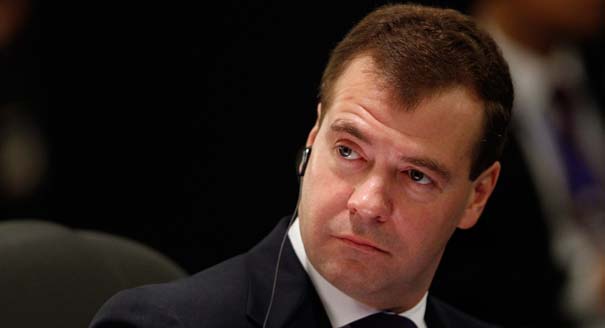
President Medvedev’s modernization program seems more like another attempt to freshen up Russia’s democratic façade while maintaining the status quo, which could potentially worsen the country’s stagnation and perhaps make it irreversible.
Source: The Moscow Times

We are witnessing classic “modernization a la russe” — overblown ambitions that mask what is really only a model for preserving the status quo. The ruling tandem understands perfectly well that the oil- and gas-based economy no longer works and that the political system is not sustainable. They also understand that they have lost the trust of the most dynamic sectors of the population. But they believe that by applying a fresh layer of paint to Russia’s dilapidated Lada, they will be able to continue the Putin-era status quo indefinitely.
This PR strategy is full of paradoxes. Medvedev’s modernization rhetoric is undermining the vertical-power hierarchy that Putin built, and it is delegitimizing the national leader himself. At the same time, Putin’s continued presence on the domestic and international stages gives Medvedev no chance to become a serious player. Moreover, the fact that Medvedev’s proposals will end up no more than just words will discredit the fundamental concept of trying to modernize the country.
It is not clear whether Medvedev realizes that the only thing he is building is another Potemkin village. In reality, he has been assigned the role of a standard-bearer without an army. He has been set up to wave the flag of a huge modernization project that is doomed to fail. Thus, Medvedev will be the perfect fall guy in 2012, at which point Putin will step in to save the country and become the next president.
This latest Kremlin experiment is also unique in that the Russian tandem is attempting to reach its objectives with the West’s assistance. The Kremlin does not hide its intentions, expressing them openly in the words of Medvedev’s first deputy chief of staff, Vladislav Surkov: “The more money, knowledge and technology we can get from advanced countries the stronger and more sovereign our democracy will become.” What this means in practice is that Russia should take from the West whatever will help it keep its sovereign democracy in place. This vision of modernization is in the spirit of Peter the Great and Josef Stalin, borrowing Western technology in order to inject new vigor into a highly personalized, autocratic rule. These tactics may have been partially successful when Russia was just starting its economic development, but it is clear that during the country’s post-industrial development stage, modernization requires freedom of the individual, protection of private property rights, debureaucratization, demonopolization, innovation and competition. Without these elements in place, the Western assistance will do little.
Nonetheless, Russia’s leaders have placed a high value on “resetting” relations with the United States and NATO. This will allow the Kremlin to focus on preserving its vertical power structure. What a smart idea — resetting relations with the West to preserve an anti-Western system. Interestingly enough, this ploy may work given that the West is also very interested in resetting U.S.-Russian relations. The only problem is that this partnership will always be unsteady as long as Russia doesn’t know how it is going to live tomorrow.
Meanwhile, the ruling elite have decided to discuss democratic standards with the West, an initiative that was met warmly by the West. Kremlin spin doctors recently met with leading Western pundits and intellectuals, including gurus Immanuel Wallerstein, Alvin Toffler and Fareed Zakaria, to discuss democracy. But this dialog can help bring the two sides together only if the Western participants actually entered into debate with the Russian officials and were able to convince them that the Kremlin’s vision of democracy and modernization differs from the commonly accepted understanding in the West. But there are no signs of such discussion, thus allowing the Kremlin to consider the West’s silence a mark of agreement. Attempts to criticize Russia for violating the basic tenets of democracy would be clearly out of place now. How can you criticize a country seemingly working so hard to build democracy?
But attempts to freshen up Russia’s facade — in particular by getting the West to help with the painting — will only worsen the country’s stagnation and perhaps make it irreversible. The attempt to reset relations with the West will end in more disappointment for both sides because they both have a fundamentally different understanding of what reset means. Attempts by Western politicians and intellectuals to discuss democratic standards with the Kremlin without standing up for their own views will only end up tarnishing their reputations.
To be sure, the West should try to strengthen its cooperation with Russia in the economic, political and security spheres, but engagement should focus on how to transform and modernize Russia rather than helping it preserve the status quo. This forces the West to go beyond its traditional model for relations with Russia. As for Russian society, it will soon realize that Medvedev’s modernization will fail just like Putin’s El Dorado did. The problem is that Russians will end up paying the price for the modernization sham.
Former Senior Associate, Russian Domestic Politics and Political Institutions Program, Moscow Center
Shevtsova chaired the Russian Domestic Politics and Political Institutions Program at the Carnegie Moscow Center, dividing her time between Carnegie’s offices in Washington, DC, and Moscow. She had been with Carnegie since 1995.
Recent Work
Lilia Shevtsova
Lilia Shevtsova
Carnegie does not take institutional positions on public policy issues; the views represented herein are those of the author(s) and do not necessarily reflect the views of Carnegie, its staff, or its trustees.
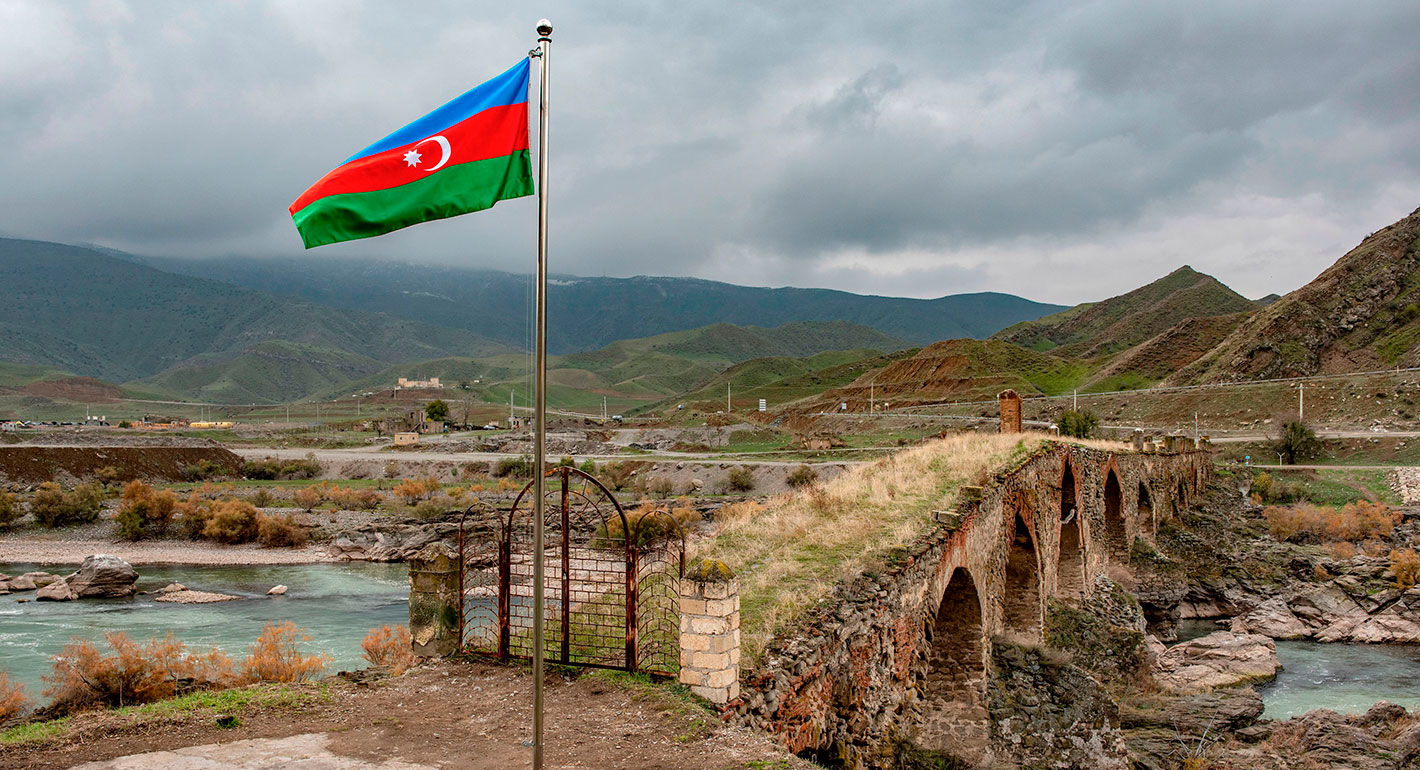
In an interview, Sergei Melkonian discusses Armenia’s and Azerbaijan’s careful balancing act among the United States, Israel, and Iran.

Armenak Tokmajyan

Just look at Iraq in 1991.

Marwan Muasher

A coalition of states is seeking to avert a U.S. attack, and Israel is in the forefront of their mind.

Michael Young

Baku may allow radical nationalists to publicly discuss “reunification” with Azeri Iranians, but the president and key officials prefer not to comment publicly on the protests in Iran.

Bashir Kitachaev
The country’s leadership is increasingly uneasy about multiple challenges from the Levant to the South Caucasus.
Armenak Tokmajyan