

Paper
Douglas H. Paal
{
  "authors": [
    "Douglas H. Paal"
  ],
  "type": "legacyinthemedia",
  "centerAffiliationAll": "dc",
  "centers": [
    "Carnegie Endowment for International Peace"
  ],
  "collections": [],
  "englishNewsletterAll": "asia",
  "nonEnglishNewsletterAll": "",
  "primaryCenter": "Carnegie Endowment for International Peace",
  "programAffiliation": "AP",
  "programs": [
    "Asia"
  ],
  "projects": [],
  "regions": [
    "East Asia",
    "China",
    "Taiwan"
  ],
  "topics": [
    "Security",
    "Military",
    "Foreign Policy"
  ]
}
Source: Getty
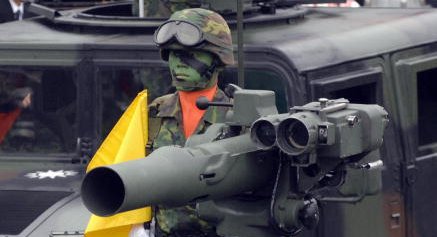
U.S. interests are best served by maintaining the status quo policy toward Taiwan. Washington cannot accommodate Beijing's demands to stop selling arms to Taipei as long as China continues its military buildup opposite Taiwan's shores.
Source: Foreign Affairs

From the early years of the United States' relationship with the People's Republic of China, U.S. presidents have wrestled with strong domestic political support for continued good relations with Taiwan, whatever new arrangements might be reached with Beijing. Over eight successive presidential administrations, this support has morphed from an implicit to an explicit tenet of U.S policy: the outcome between China and Taiwan must be decided with the assent of the Taiwanese people.
Glaser would do well to explain how Taiwanese public opinion would factor into his recommendation. What if an administration took his advice and the people of Taiwan rejected it? Can a desperate bolt for de jure independence be ruled out? Could China's leaders restrain themselves from rushing to grab the spoils to satisfy nationalist opinion and Beijing's long-standing claims on Taiwan? Would any of these outcomes bring about the stability in U.S.-Chinese relations that Glaser seeks? The outlook is doubtful and likely to produce more tensions than reduce existing ones.
There is a reason that eight U.S. administrations have embraced the same policy toward China and Taiwan, and that is because it serves U.S. interests in peace, prosperity, and stability. U.S. arms sales to Taiwan are an important part of maintaining peace in the western Pacific. Despite a gradual easing of tensions between China and Taiwan, Beijing continues to enhance its military capabilities with regard to Taipei. This has developed a vicious cycle. By choosing to increase the military offensive capability deployed opposite Taiwan, Beijing compels Taiwan's leadership to seek outside sources of support and arms to deter Chinese aggression. If Taiwan's leaders failed to find that support, their voters would remove them. Only the United States has the will to fulfill Taiwan's request, compelling any U.S. administration to respond or suffer politically at home. This, in turn, compels Beijing to react strongly to what it considers interference in its internal affairs, since it claims Taiwan as part of China.
If the cycle is to be broken, it needs to start with the mainland's choice to increase or decrease its military deployments, not with Washington conceding Taiwan to Beijing.
Distinguished Fellow, Asia Program
Paal previously served as vice chairman of JPMorgan Chase International and as unofficial U.S. representative to Taiwan as director of the American Institute in Taiwan.
Recent Work
Douglas H. Paal

Douglas H. Paal, Tong Zhao, Chen Qi, …

Just look at Iraq in 1991.

Marwan Muasher

A coalition of states is seeking to avert a U.S. attack, and Israel is in the forefront of their mind.

Michael Young

Baku may allow radical nationalists to publicly discuss “reunification” with Azeri Iranians, but the president and key officials prefer not to comment publicly on the protests in Iran.

Bashir Kitachaev
The country’s leadership is increasingly uneasy about multiple challenges from the Levant to the South Caucasus.

Armenak Tokmajyan
The countries of the region have engaged in sustained competition that has tested their capacities and limitations, while resisting domination by rivals. Can a more stable order emerge from this maelstrom, and what would it require?
Hamza Meddeb, Mohamed Ali Adraoui