

Paper
Douglas H. Paal
{
  "authors": [
    "Douglas H. Paal"
  ],
  "type": "legacyinthemedia",
  "centerAffiliationAll": "dc",
  "centers": [
    "Carnegie Endowment for International Peace",
    "Carnegie China"
  ],
  "collections": [
    "China’s Foreign Relations"
  ],
  "englishNewsletterAll": "asia",
  "nonEnglishNewsletterAll": "",
  "primaryCenter": "Carnegie Endowment for International Peace",
  "programAffiliation": "AP",
  "programs": [
    "Asia"
  ],
  "projects": [],
  "regions": [
    "East Asia",
    "South Korea",
    "China",
    "Japan",
    "North Korea"
  ],
  "topics": [
    "Security",
    "Military",
    "Foreign Policy",
    "Nuclear Policy",
    "Arms Control"
  ]
}
Source: Getty
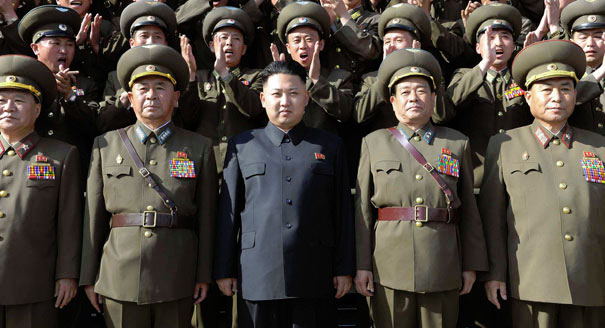
In China, Kerry needs to focus on the broader context of the U.S.-China strategic relationship and how North Korea will harm this relationship.
Source: BBC World News
Speaking with BBC World News, Douglas Paal argued that North Korea is unlikely to change its course of action anytime soon and that the U.S. message is mainly intended for China to reconsider the risks of Kim Jong Un's actions.
Meanwhile, Paal continued, there is not much more that can be done with sanctions at this stage. The primary way that North Korea may alter its course is if Kim Jong Un fails to prove himself as the leader that his grandfather was, by failing to deliver goods, fuel, and food to the North Korean people.
As to Kerry's visit to Asia, Paal noted that the secretary of state needs to reaffirm the U.S. alliance with Seoul and Tokyo. In China, Kerry needs to rise above the short tactical measures preoccupying the Western media and focus on the broader context of the U.S.-China strategic relationship and how North Korea will harm this relationship.
Distinguished Fellow, Asia Program
Paal previously served as vice chairman of JPMorgan Chase International and as unofficial U.S. representative to Taiwan as director of the American Institute in Taiwan.
Recent Work
Douglas H. Paal

Douglas H. Paal, Tong Zhao, Chen Qi, …
Carnegie does not take institutional positions on public policy issues; the views represented herein are those of the author(s) and do not necessarily reflect the views of Carnegie, its staff, or its trustees.

By failing to address Palestinian representation, the current process is bound to lead to just another temporary arrangement.

Nathan J. Brown

The armed forces champion a form of capitalism that is generating revenue, but its reliance on rent faces diminishing returns, leaving the country with massive sunk costs and deferred returns, deepening dependency on external borrowing.

Yezid Sayigh
In an interview, Marc Lynch discusses his new book decrying the post-1990 U.S.-dominated order in the Middle East.

Michael Young

Just look at Iraq in 1991.

Marwan Muasher
A coalition of states is seeking to avert a U.S. attack, and Israel is in the forefront of their mind.
Michael Young