

In The Media
Jessica Tuchman Mathews
{
  "authors": [
    "Jessica Tuchman Mathews"
  ],
  "type": "legacyinthemedia",
  "centerAffiliationAll": "dc",
  "centers": [
    "Carnegie Endowment for International Peace",
    "Malcolm H. Kerr Carnegie Middle East Center",
    "Carnegie Russia Eurasia Center"
  ],
  "collections": [],
  "englishNewsletterAll": "menaTransitions",
  "nonEnglishNewsletterAll": "",
  "primaryCenter": "Carnegie Endowment for International Peace",
  "programAffiliation": "MEP",
  "programs": [
    "Middle East"
  ],
  "projects": [
    "Eurasia in Transition"
  ],
  "regions": [
    "North America",
    "United States",
    "Middle East",
    "Iraq",
    "Syria",
    "Levant"
  ],
  "topics": [
    "Security",
    "Military",
    "Foreign Policy",
    "Nuclear Policy",
    "Global Governance"
  ]
}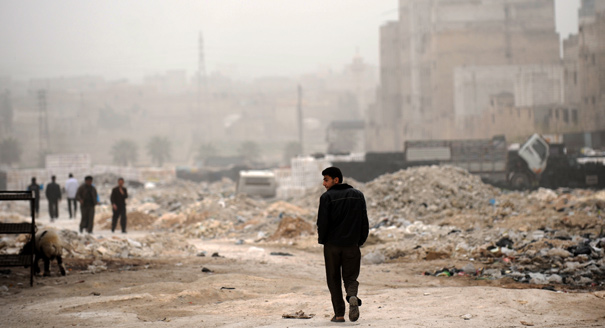
Source: Getty
The Syria crisis presents a great opportunity. If an international effort successfully disarms Syria's chemical arsenal, and that success is recognized, the positive repercussions would be felt far beyond the Middle East.
Source: Washington Post
A little-known truth about the Iraq war has much to tell us — positive and negative — about the prospects of dealing diplomatically with Syria’s chemical weapons. The inspections carried out by the United Nations and the International Atomic Energy Agency (IAEA) were anything but the fool’s mission pooh-poohed by the Bush administration. In fact, they were a striking international success.
The story most Americans remember is that Saddam Hussein turned out not to have nuclear, chemical, biological and missile programs. He had had them, all right, but U.N. inspectors had found and largely dismantled them before the war. From 1991 to 1998, the U.N. Special Commission (UNSCOM) and the IAEA discovered and eliminated most, if not all, of Iraq’s unconventional weapons and production facilities, and they destroyed most of its chemical and biological weapons agents. Iraq’s most secret program — its biological weapons effort — was discovered through painstaking detection. Covert transactions among Iraq and more than 500 companies from 40 countries were uncovered one by one, and a mechanism was put in place to block banned imports. In the lead-up to the war, while national intelligence services were getting the story wrong, U.N. inspectors knew pretty much what was there and where to look for it.
Inspections were not a matter of running around searching for needles in a haystack. They involved conducting lengthy interviews, building relationships with key individuals, assembling a story from person to person, carrying out technical analysis, sifting records and physical visits. Sanctions, procurement investigations and export-import controls were all essential.Any international operation in Syria must be adequately funded. It must not be, as happened with inspections in Iraq, nickeled-and-dimed and its budget simply subtracted from participating agencies. In its seven years, UNSCOM’s annual budget was $25 million to $30 million. In 15 months after the war, a U.S. survey team spent $900 million — and came up empty-handed. If an international effort is mounted, it must be done right. It will still come at a cost equal to hours of a war.
The biggest mistake made after Iraq can’t now be rectified: the failure to recognize success by creating a permanent U.N. inspections and monitoring body. Once again an effort will have to be created from scratch rather than deployed from a trained, standing organization. Inspections are not a magic bullet against proliferation, but they are an obvious part of a layered defense. Intelligence from a distance can never do what a physical presence, armed with an international writ, can do, and international regimes without serious enforcement too easily become a joke.
A similar success could be carried out and sustained indefinitely in Syria if the operation were to build on the lessons of Iraq.
United political backing is a necessity from the beginning. Although the inspection teams in Iraq, particularly in the early years, were poorly equipped, penetrated by Iraqi spying and blatantly obstructed on the ground, their greatest weakness lay in New York. Hussein played the major powers against each other in the United Nations until political support was so eroded that inspections were forced to halt in 1998. Presumably, Syrian leader Bashar al-Assad would seek to do the same. The U.N. Security Council must not again allow the rules of procedure to tilt in favor of the miscreant and against its own agents, and it must recognize that the political accord behind the operation is as important as technology and expertise on the ground. Most of all, that means being clear that this is an effort to corral chemical weapons, not to resolve a civil war.
Stable, two-way communication between the international inspections and many national intelligence agencies also is essential. The arrangements must protect the information provided, prevent misuse by governments and allow feedback at both ends as discoveries are made. In his speech to the U.N. General Assembly in 2003, Secretary of State Colin Powell pointed to pictures of “signature items” in satellite photos that he said were chemical weapons decontamination vehicles. Inspectors who had visited the sites insisted the vehicles were water trucks. How much of the 30 million-page archive produced by the inspectors did U.S. analysts study before the war?
Part of what has made Americans unwilling to take military action in Syria is the obvious discrepancy between what President Obama describes as a global threat and a unilateral U.S. response — perhaps with a few others holding our coats. Because weapons of mass destruction are a global threat, success can never be achieved if the rest of the world views controlling them as a U.S. responsibility or that of a handful of major powers. The Syria crisis, then, presents a great opportunity: If an international effort disarms Syria’s chemical arsenal, and that success is recognized and built upon in ways that success in Iraq was not, the positive repercussions would be felt far beyond the Middle East.
The work will be frustrating and slow. Assad will not cooperate any more than Saddam Hussein did. But as long as he is deterred from using the weapons while the effort is underway, there is no rush. The goal need not be perfection — as it would not be from a military strike. How much better off is the world if just 90 percent of Syria’s weapons are disposed of? The continuing fighting will make things tough for inspectors, but the chemical weapons will be in the regime’s safest, best-guarded places. Technically, this can be done. Politically, it could be a winner.
This article was originally published in the Washington Post.

Distinguished Fellow
Mathews is a distinguished fellow at the Carnegie Endowment for International Peace. She served as Carnegie’s president for 18 years.
Recent Work
Jessica Tuchman Mathews
Jessica Tuchman Mathews
Carnegie does not take institutional positions on public policy issues; the views represented herein are those of the author(s) and do not necessarily reflect the views of Carnegie, its staff, or its trustees.
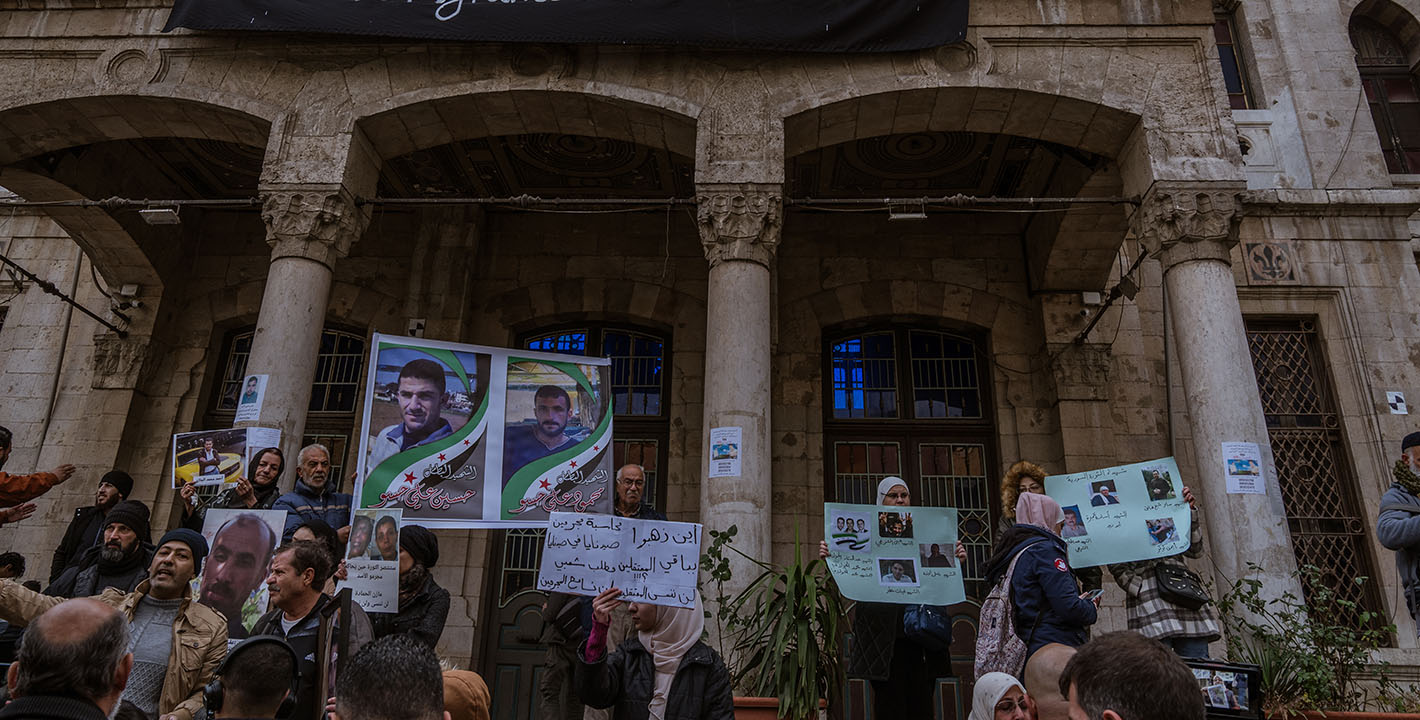
Reconciliation councils are emerging throughout the country to mediate in intracommunal disputes, many from the war years.
Natacha Danon

In an interview, Rozina Ali discusses her new book on the rise and manifestations of Islamophobia in the United States.

Michael Young
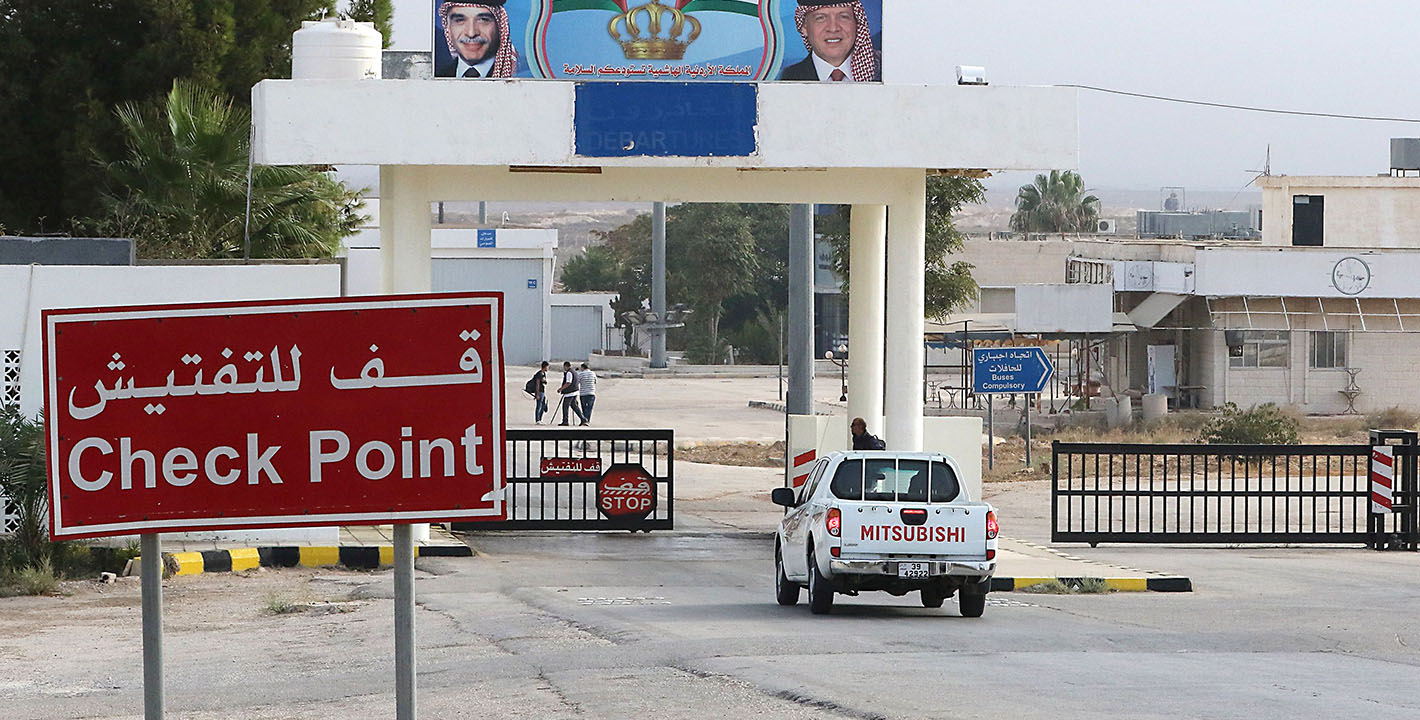
The civil war in Syria may have ended, but the country continues to serve as a source for the trafficking of illegal substances into and via Jordanian territory.

Armenak Tokmajyan, Laith Qerbaa
As the U.S.-led Coalition withdraws, the Kurds’ reliance on Baghdad, and on themselves, will only increase.
Wladimir van Wilgenburg

In an interview, Ian Lustick and Eli Clifton discuss their new book on why a prominent ally has so much influence in America.
Michael Young