

Q&A
Darshana M. Baruah, Satyendra Prasad, Denghua Zhang
{
  "authors": [
    "Darshana M. Baruah"
  ],
  "type": "legacyinthemedia",
  "centerAffiliationAll": "",
  "centers": [
    "Carnegie Endowment for International Peace",
    "Carnegie India"
  ],
  "collections": [],
  "englishNewsletterAll": "",
  "nonEnglishNewsletterAll": "",
  "primaryCenter": "Carnegie India",
  "programAffiliation": "",
  "programs": [],
  "projects": [],
  "regions": [
    "Asia",
    "South Asia",
    "India",
    "East Asia",
    "China"
  ],
  "topics": [
    "Foreign Policy",
    "Economy"
  ]
}
Source: Getty
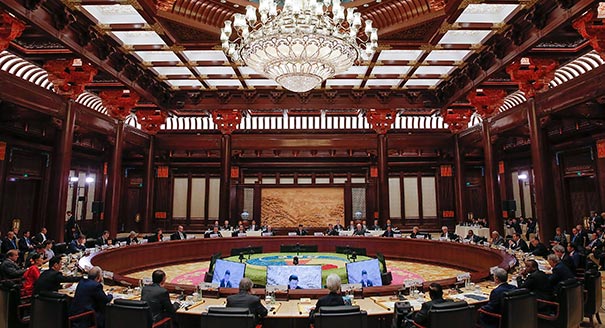
Nepal’s decision to join the Belt and Road highlights the ongoing Sino-Indian competition for strategic space in South Asia, veiled under the guise of connectivity routes and infrastructure development.
Source: Diplomat
A few days before China hosted its biggest diplomatic show in support of the Belt and Road Initiative on May 14 to 15, Beijing was able to bring Nepal on board as a member of its Silk Road plan. While there have been questions about Kathmandu’s decision to join the project, it should not come as a surprise. Nepal’s decision highlights the ongoing Sino-Indian competition for strategic space in South Asia, veiled under the guise of connectivity routes and infrastructure development.
India’s strongest opposition to the project has come in the form of its official absence from the Belt and Road forum. New Delhi also urged all scholars to get prior permission before attending the forum. While India has opposed the forum on grounds of sovereignty, its reasons involve genuine strategic concerns regarding the entire project. New Delhi has time and again referred to India’s commitment to transparency, rule of law, and openness on connectivity projects as an answer to joining the Belt and Road Initiative (BRI), suggesting Beijing does not follow these principles. China in turn has put significant diplomatic muscle into gathering top-level participation from across the globe in support of its ambitious projects and negating any negative perspectives.

Former Nonresident Scholar, South Asia Program
Darshana M. Baruah was a nonresident scholar with the South Asia Program at the Carnegie Endowment for International Peace where she directs the Indian Ocean Initiative.
Recent Work

Darshana M. Baruah, Satyendra Prasad, Denghua Zhang
Darshana M. Baruah
Carnegie does not take institutional positions on public policy issues; the views represented herein are those of the author(s) and do not necessarily reflect the views of Carnegie, its staff, or its trustees.

By failing to address Palestinian representation, the current process is bound to lead to just another temporary arrangement.

Nathan J. Brown

The armed forces champion a form of capitalism that is generating revenue, but its reliance on rent faces diminishing returns, leaving the country with massive sunk costs and deferred returns, deepening dependency on external borrowing.

Yezid Sayigh

Just look at Iraq in 1991.

Marwan Muasher

A coalition of states is seeking to avert a U.S. attack, and Israel is in the forefront of their mind.

Michael Young

Baku may allow radical nationalists to publicly discuss “reunification” with Azeri Iranians, but the president and key officials prefer not to comment publicly on the protests in Iran.

Bashir Kitachaev