

Article
Tong Zhao
{
  "authors": [
    "Tong Zhao"
  ],
  "type": "other",
  "centerAffiliationAll": "dc",
  "centers": [
    "Carnegie Endowment for International Peace",
    "Carnegie China"
  ],
  "collections": [],
  "englishNewsletterAll": "ctw",
  "nonEnglishNewsletterAll": "",
  "primaryCenter": "Carnegie China",
  "programAffiliation": "NPP",
  "programs": [
    "Nuclear Policy"
  ],
  "projects": [],
  "regions": [
    "East Asia",
    "China"
  ],
  "topics": [
    "Security",
    "Foreign Policy",
    "Nuclear Policy",
    "Arms Control"
  ]
}
Source: Getty
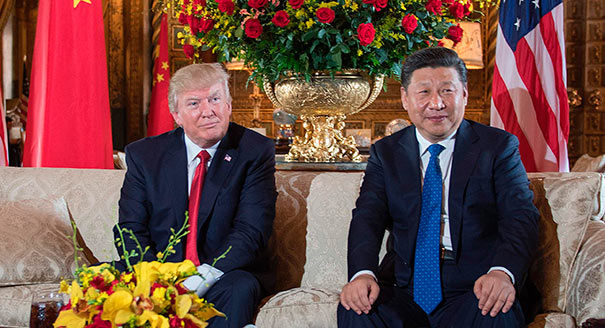
With emerging challenges for the U.S.-China nuclear relationship, the United States can take important steps to prevent further destabilization.
Changes in U.S. nuclear weapons policies introduced by the Trump administration have created new challenges for the U.S.-China nuclear relationship. This is happening at the same time that the bilateral competition is turning increasingly serious and even hostile. As the most important external influencer of China’s nuclear policy, the United States can take a number of steps to prevent this bilateral nuclear relationship from falling into a deeper, more negative cycle of action-and-reaction. Such an effort should include at least five elements: lead by doing (and demonstrate the right values); try to get a more accurate understanding of China; find a common framework for maintaining nuclear stability; start by reducing shared risks; and help China better understand U.S. policy.
This article was originally published in the Bulletin of the Atomic Scientists.

Senior Fellow with the Nuclear Policy Program and Carnegie China
Tong Zhao is a senior fellow with the Nuclear Policy Program and Carnegie China, Carnegie’s East Asia-based research center on contemporary China. Formerly based in Beijing, he now conducts research in Washington on strategic security issues.
Recent Work



Sheena Chestnut Greitens, Oriana Skylar Mastro, Yukon Huang, …
Carnegie does not take institutional positions on public policy issues; the views represented herein are those of the author(s) and do not necessarily reflect the views of Carnegie, its staff, or its trustees.

In an interview, Ian Lustick and Eli Clifton discuss their new book on why a prominent ally has so much influence in America.

Michael Young

By failing to address Palestinian representation, the current process is bound to lead to just another temporary arrangement.

Nathan J. Brown

In an interview, Marc Lynch discusses his new book decrying the post-1990 U.S.-dominated order in the Middle East.
Michael Young

Just look at Iraq in 1991.

Marwan Muasher

A coalition of states is seeking to avert a U.S. attack, and Israel is in the forefront of their mind.
Michael Young