

Paper
Sarah Yerkes, Natalie Triche, Amr Hamzawy
{
  "authors": [
    "Sarah Yerkes"
  ],
  "type": "legacyinthemedia",
  "centerAffiliationAll": "dc",
  "centers": [
    "Carnegie Endowment for International Peace",
    "Malcolm H. Kerr Carnegie Middle East Center"
  ],
  "collections": [],
  "englishNewsletterAll": "menaTransitions",
  "nonEnglishNewsletterAll": "",
  "primaryCenter": "Carnegie Endowment for International Peace",
  "programAffiliation": "MEP",
  "programs": [
    "Middle East"
  ],
  "projects": [
    "Tunisia Monitor"
  ],
  "regions": [
    "North Africa",
    "Tunisia",
    "Maghreb"
  ],
  "topics": [
    "Political Reform",
    "Foreign Policy"
  ]
}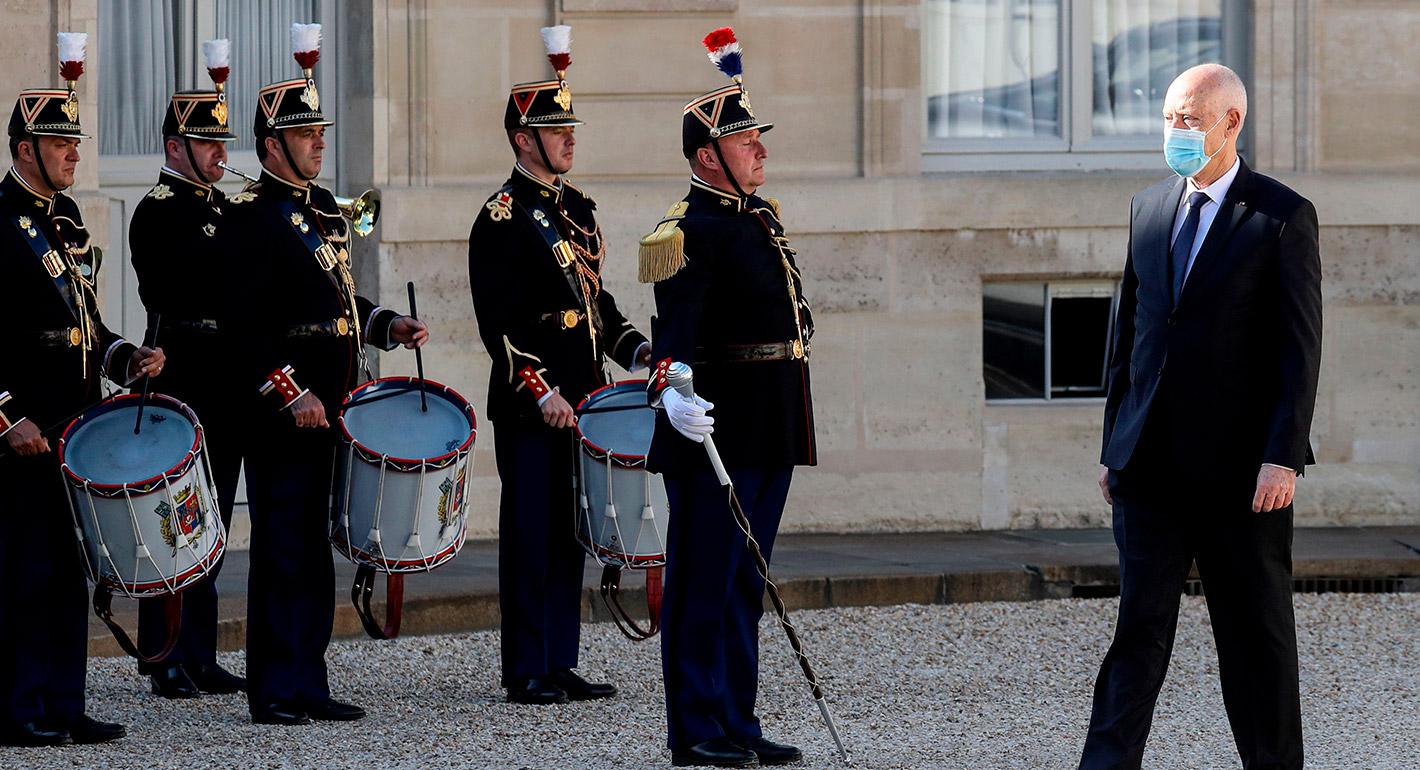
Source: Getty
The current parliament is the most fractured in Tunisia’s history, with no party holding even one-quarter of the seats.
Source: World Politics Review
Following the resignation of Elyes Fakhfakh as prime minister of Tunisia in mid-July, amid corruption allegations and after just five months in office, President Kais Saied designated one of his own advisers, Hichem Mechichi, as the new prime minister. Mechichi has until Aug. 25 to form a government that can win parliamentary approval. Should he fail, Saied has the constitutional right to call for new elections—an arduous task, particularly as Tunisia struggles with a deepening economic crisis and a spike in COVID-19 cases triggered by reopening the country’s borders in late June.
Before he even takes office, Mechichi faces several hurdles, the biggest of which is cobbling together a government that simultaneously appeases enough of Tunisia’s political parties to be approved by parliament, but does not appear too partisan or vest too much power in any one group. This is a particular challenge given that the current parliament is the most fractured in Tunisia’s history, with no party holding even one-quarter of the seats.
This article was originally published by World Politics Review.

Acting Co-Director and Senior Fellow, Middle East Program
Sarah Yerkes is acting co-director and a senior fellow in the Middle East Program at the Carnegie Endowment for International Peace. Her research focuses on democracy and governance, U.S. foreign policy towards the Middle East and North Africa, and political and economic reform in Tunisia.
Recent Work

Sarah Yerkes, Natalie Triche, Amr Hamzawy
Carnegie does not take institutional positions on public policy issues; the views represented herein are those of the author(s) and do not necessarily reflect the views of Carnegie, its staff, or its trustees.

In an interview, Ian Lustick and Eli Clifton discuss their new book on why a prominent ally has so much influence in America.

Michael Young

By failing to address Palestinian representation, the current process is bound to lead to just another temporary arrangement.

Nathan J. Brown

The armed forces champion a form of capitalism that is generating revenue, but its reliance on rent faces diminishing returns, leaving the country with massive sunk costs and deferred returns, deepening dependency on external borrowing.

Yezid Sayigh

Morocco and Algeria, each in its own way, are having to navigate the global economic fallout of the U.S.-Israeli military campaign against Iran.

Yasmine Zarhloule
This will be the region’s most representative tournament, amid broad changes in its footballing landscape.

Issam Kayssi