

Commentary
By failing to address Palestinian representation, the current process is bound to lead to just another temporary arrangement.
Nathan J. Brown
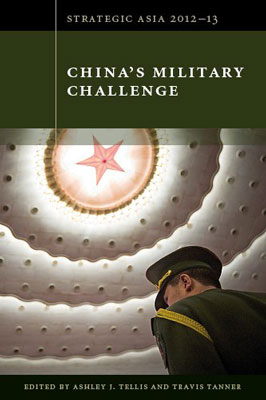
This book examines what China's military rise means for the region and the world, looking at China’s strategic aims and the challenges and opportunities facing the United States.
Source: National Bureau of Asian Research


About the Editors:
Ashley J. Tellis is a Senior Associate at the Carnegie Endowment for International Peace and Research Director of the Strategic Asia Program at NBR, served in the U.S. Department of State as senior adviser to the Undersecretary of State of Public Affairs, and previously as senior adviser to the Ambassador at the U.S. Embassy in India. He also served on the National Security Council Staff as special assistant to the President and senior director for Strategic Planning and Southwest Asia. He is the author of India’s Emerging Nuclear Posture (2001) and co-author of Interpreting China’s Grand Strategy: Past, Present, and Future (2000), as well as the co-editor of the eight most recent volumes of Strategic Asia, published by NBR.
Travis Tanner is is the Senior Project Director and Director of the Pyle Center for Northeast Asian Studies at the National Bureau of Asian Research.
Former Senior Fellow
Ashley J. Tellis was a senior fellow at the Carnegie Endowment for International Peace.
Travis Tanner
NBR
Carnegie does not take institutional positions on public policy issues; the views represented herein are those of the author(s) and do not necessarily reflect the views of Carnegie, its staff, or its trustees.

By failing to address Palestinian representation, the current process is bound to lead to just another temporary arrangement.

Nathan J. Brown

The armed forces champion a form of capitalism that is generating revenue, but its reliance on rent faces diminishing returns, leaving the country with massive sunk costs and deferred returns, deepening dependency on external borrowing.

Yezid Sayigh

Just look at Iraq in 1991.

Marwan Muasher

A coalition of states is seeking to avert a U.S. attack, and Israel is in the forefront of their mind.

Michael Young

Baku may allow radical nationalists to publicly discuss “reunification” with Azeri Iranians, but the president and key officials prefer not to comment publicly on the protests in Iran.

Bashir Kitachaev