

Paper
Douglas H. Paal
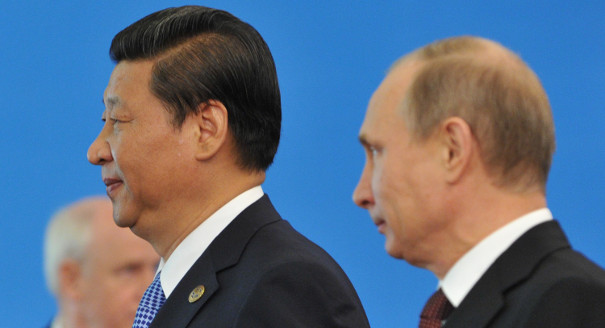
Source: Getty
Beijing has struck an ambivalent posture regarding the Ukrainian crisis and the severing of Crimea, but it is not hurting China’s interests.
Beijing has struck an ambivalent posture regarding the Ukrainian crisis and the severing of Crimea, but it is not hurting China’s interests.
On the one hand, China has long opposed interference in other states’ affairs. This is an article of faith derived from China’s century and a half of internal weakness that invited interference from a host of nations. Beijing has a difficult time justifying Moscow’s interference in Ukraine, but China also defines the imposition of international sanctions as a form of interference, and in principle opposes these, except in very limited, hedged cases, such as on Iran and North Korea.
On the other hand, like Russia and Crimea, China has a claim on Taiwan and islands in the South and East China Seas that it would like to see realized and eventually legitimated. As China continues to deploy paramilitary maritime surveillance vessels and fishing fleets, it is trying to “create facts” in the disputed areas that will strengthen its claims and deflect those of others. So, one can expect there is a certain unexpressed admiration in Beijing for Putin’s bold moves to assert control.
But the chosen legalistic method of Putin—the conduct of a referendum on Crimea’s future—is anathema to China. Beijing occupies autonomous regions within its recognized borders, especially Tibet and Xinjiang, where true plebiscites would not likely support continued Chinese rule. Moreover, the polling record pretty clearly suggests that a referendum on Taiwan’s future would find the bulk of the population rejecting reunification with the mainland.
So Beijing has ended up sounding ambivalent and ineffectual. China abstained from (as Russia vetoed) a UN Security Council resolution condemning the Crimean referendum. Beijing condemned all violent acts, called for maintenance of Ukraine’s territorial integrity, and urged international financial institutions to support Ukraine’s struggling economy. There is no edge to this policy. It places China neither on Russia’s side nor on the West’s.
Nevertheless, China stands to gain from the posture it has struck over the crisis.
First, Russia is isolating itself, leaving China to benefit by both refusing to join in the isolation and offering diplomatic space to Putin. Even if Beijing does not formally reject participation in sanctions on Moscow, its record of enforcement suggests it will hesitate to punish the Russians.
This is likely to increase the economic and diplomatic gravitational pull between Russia and China. Both see the seeds of the crisis in Western efforts to lure Ukraine away from Russia’s sphere of influence, adding to their cohesiveness. China and Russia are closer to each other on the issues of the Syria conflict and Iran’s nuclear weapons development than to the Western parties, and they are likely to find it comfortable to get even closer to shape the outcomes more to their liking.
Second, China has been chafing at the Obama administration’s “rebalance” to Asia. There is considerable skepticism in many Chinese quarters derived from the administration’s inconsistent rhetoric about the rebalance. Beijing will be relieved to the extent it can see the United States bogged down in crises far from the Asia-Pacific region. This in turn may give Beijing a sense that it can be more demanding of its fractious neighbors that are depending on visible signs of support from Washington.
Finally, although there will always be a natural wariness between a resource-deprived, population-rich China and a resource-rich, population-deprived Russia, they are more likely now than before to bridge sensitive gaps in their positions on high-tech arms sales to China and Chinese demands for a lower price for natural gas and oil than has been on offer from Russia.
A Chinese phrase for this is xingzai lehuo, or to take delight in other’s misfortunes (sometimes translated into German as schadenfreude). Despite the sympathies it has expressed, it is likely China feels itself better off for the suffering in Ukraine.

Distinguished Fellow, Asia Program
Paal previously served as vice chairman of JPMorgan Chase International and as unofficial U.S. representative to Taiwan as director of the American Institute in Taiwan.
Recent Work
Douglas H. Paal


Douglas H. Paal, Tong Zhao, Chen Qi, …
Carnegie does not take institutional positions on public policy issues; the views represented herein are those of the author(s) and do not necessarily reflect the views of Carnegie, its staff, or its trustees.

Just look at Iraq in 1991.

Marwan Muasher

A coalition of states is seeking to avert a U.S. attack, and Israel is in the forefront of their mind.

Michael Young

Baku may allow radical nationalists to publicly discuss “reunification” with Azeri Iranians, but the president and key officials prefer not to comment publicly on the protests in Iran.

Bashir Kitachaev
The country’s leadership is increasingly uneasy about multiple challenges from the Levant to the South Caucasus.

Armenak Tokmajyan
The countries of the region have engaged in sustained competition that has tested their capacities and limitations, while resisting domination by rivals. Can a more stable order emerge from this maelstrom, and what would it require?


Hamza Meddeb, Mohamed Ali Adraoui