

Podcast Episode
Steven Feldstein joins Jon Bateman on the world unpacked to discuss his new book, Bytes and Bullets, and explain how drones are reshaping wars from Ukraine to Sudan.
Jon Bateman, Steven Feldstein
Sophia Besch games out NATO’s future, Baltic scenarios, German rearmament, and Europe’s next way of war.
Invalid video URL
NATO’s future remains in doubt as Donald Trump again threatens to pull U.S. troops from Europe. But the practical stakes of these debates aren’t always clear. What military capabilities does Europe stand to lose? How long would it take to replace them? And how might Russia exploit any gap?
Sophia Besch, a German expert on European defense policy who has worked inside NATO, joins The World Unpacked to explore U.S. pullout scenarios — up to and including Russian attacks on the Baltics. She and host Jon Bateman dig into Europe's historic rearmament, its chance to invent a new way of war, and why peace in Ukraine could unleash new dangers.
Note: this is an AI-generated transcript and may contain errors
Jon Bateman: Sophia Besch, welcome to the World Unpacked!
Sophia Besch: Thank you, it's great to be here.
Jon Bateman: I am so excited to talk to a real live European defense expert and a real live European. Welcome to the show.
Sophia Besch: You want me to hem up the accent?
Jon Bateman: Oh, the audience Eats that stuff up. So actually, if you can lean into the accent and give us your authentic German brogue, that would be really appreciated. We're here to talk about the situation for Europe if the US militarily pulls out of or abandons the continent. When you hear that idea of an American pullout, what actually does that mean? Are there different forms that that could take, maybe with different implications?
Sophia Besch: Yeah, I think it's a good place to start. European defense has been organized with and around America for the longest time. We can imagine European defense with less America. We can image European defense with no America. We can imaging European defense against America, right? There are lots of different paths and routes that we can go down.
Jon Bateman: Okay, so maybe let's just start with less or no America. We'll see if we get to against. In Washington, you will hear talk of forced posture changes. Maybe we'll move our troops out of Europe or lessen them, put them somewhere else, or bring them back home. You also hear the political discussion around, will we continue to be a member of NATO? Or maybe we do continue to a member of NATO, but we change the decisions that we're making within NATO. Do you have a kind of worst-case scenario or a set of scenarios that you think are most relevant to this conversation? So...
Sophia Besch: Look, a forced posture review is totally fair. That is something that Europeans can, should live with, should be expected to live with. American leaders are allowed to look at their interests, their commitments, their military commitments and re-prioritize, either based on their threat assessments changing or based on cost assessments and moving troops out of Europe or moving capabilities out of European in and of itself is not a disaster. What makes this tricky for Europe is the capriciousness with which some of this has recently been happening and that it's been fairly unpredictable. Less America, doable. No America overnight, much more difficult. What the Trump administration has been pushing fairly heavily is this narrative of the good allies and the bad allies. And that Article 5, the U.S. Commitment to defending Europe, the NATO commitment to the defending Europe should maybe only apply to the good allies. The problem is that it's not quite clear what gets you on the naughty list, right? Is it lack of defense spending? Is it a lack of political alignment? So there's currently a lot of uncertainty and unpredictability. And that, to my mind, is the biggest problem for Europeans as they look to how to organize their defense around the U.S. Changes.
Jon Bateman: It's not all about Trump. I mean, obviously, Trump is unprecedented in terms of the degree of urgency and almost anger at times that he's bringing to the transatlantic relationship, which is disruptive and shocking. But the underlying issues about the US broadly wanting to shift its military priorities toward Asia and feeling like Europe isn't doing enough. These are longstanding issues that many presidents have had. And many presidents in the future will have post-Trump. So I think I hear you saying, as a European, just show us the plan, right? In other words, if we're actually headed toward an extreme no-America situation, where America isn't even part of European defense architecture. It would almost be better to just have clarity on that and a sense of timelines and milestones and certainty versus this will, they won't, they dynamic where it depends on what side of the bed the president woke up on and what the politics of the moment are and this and that.
Sophia Besch: Yeah, because there are two races against the clock happening, right? You mentioned timelines. That is the crucial factor here. Europe needs to rearm before the U.S. Withdraw significant portions of its commitment. And Europe needs to re arm before Russia is ready to attack.
Sophia Besch: And that is what any European military planner has in the back of their mind. And that's why Europeans really press for an orderly transition. Now, I want to be very clear. There is a real cultural clash. And you can imagine the conversations between Europeans asking for and imagine the European accent, an ordery transition, and then the style of this particular administration, the mercurial nature of this president. And they have made, I would say, or have attempted to make that volatility a virtue recently, where what they're saying is, we don't want you to not be scared. We want you be on your toes, Europeans, because actually the anxiety that Trump has produced is the anxiety that has led you to spend more on defense.
Jon Bateman: And does that work? So yes, if you never know what tomorrow will hold, and Trump is this unpredictable actor, and he could totally pull out tomorrow, that is one form of motivation to rearm, rebuild, become self-sufficient. But also, if were just given the plan and told a date certain, I mean, are there people in Europe who are actually kind of waiting to see what the next president might do? And maybe even this will-they-won't-they idea as actually causing them to. Try to hold on to America a little bit longer than they might?
Sophia Besch: Look There are two audiences here, right? There's the transatlantic relationship where I understand US presidents having been burned by Europeans promising to do more and then not actually living up to their promises for a long time. Because frankly, that was a good deal for Europeans. Yeah. Right? These are grownups making decisions about budgets. And as long as the US was there, they didn't need to spend quite as much money on defense. But also, there is... Relationship with Russia and the Russian audience. And the actual end goal of this should not just be to scare the Europeans and rebalance the relationship, but to make Europe safer and to prevent war with Russia and to deter Russia from ever making a move on the Baltics. And so you are, I think, at risk over the transatlantic dynamics, open up a deterrence and defense gap that Russia might then move on to.
Jon Bateman: Right, those two things are kind of in tension, right? Like if Trump and his administration is trying to scare the Europeans about a US pullout to motivate them to rearm, that may work. But that may also simultaneously be conveying to Russia that there is a gap that will be opening up and uncertainty about deterrence.
Sophia Besch: Who's listening? Yeah.
Jon Bateman: Is there a way to do both at once?
Sophia Besch: Yeah, I think you can have private and public conversations, and there is value in chiding allies, but there is also value in privately coordinating this much better. And then speaking with one voice, because deterrence of a Russian move should be the priority.
Jon Bateman: So let's say where we're headed is no America. As you said, it's hard to imagine this as a likely scenario, but just as an intellectual reference point, let's start talking about what world Europe would be facing there. And maybe a good place to start is what are the core military missions that Europe would then fully focus on with the limited capabilities that it has left? And what are the things that actually it would like stop doing militarily and kind of shed as sort of secondary or tertiary military functions?
Sophia Besch: Okay. This is such a great question. And we should talk about what I think are the most relevant contingencies, which are Baltic contingencies. Two in particular, a sort of Green Man operation in Estonia, maybe, and an invasion of what is called the Suwalki Gap, which is this land strip between Poland and Lithuania at that border that is sort of squeezed between Kaliningrad, the Russian exclave, and Belarus, the Russian ally. And if Russia takes over this strip of land, then it would be able to cut off all possible land reinforcements to the Baltics from NATO.
Jon Bateman: And just for people who need a little bit of geographic remedial education, and I count myself among them, these Baltic states, Estonia, Latvia, Lithuania, three small European nations that are on the front lines of facing Russia and are kind of squeezed between Russia and Belarus on the one hand and the rest of Europe on the other, and they're members of NATO. And these would be the easiest targets to pick off. If you were Russia and had a mind to kind of test NATO's metal, so to speak. Right.
Sophia Besch: And that gets us to an interesting question, which is, what would Russia actually be trying to do there?
Sophia Besch: What would be the Russian motivation to show off the fact that we're not united and that we might fear the escalation and back off, which would kill NATO. That's the end of NATO if we can't defend our own member states. Yeah. And the important factor here is Ukraine. Yeah. As long as Russian troops and forces are bound up in Ukraine, impossible for them to do this, very unlikely. Even when there is a ceasefire, you know, he could rally his forces relatively quickly. We then have reconstitution challenges, how long would Russia be able to maintain and sustain its armed forces. But you know, if you wanted to scare NATO in a couple years, he could do that after ceasefire with Ukraine.
Jon Bateman: Okay, so the Ukraine war, as threatening as this is to Europe, actually is providing a little breathing space in terms of the direct Russian threat to the Baltic states and NATO, right? Because Russia's military is tied down, exhausted, attrited, weakened. That could change over some short to medium, long-term period of time. Okay, what is the feared scenario? Let's say Putin does have a mind. After whatever resolution occurs in Ukraine, Russian's military rebuilds, reconstitutes, replenishes. Putin then looks to the Baltics as his next target. I guess the goal would be to prove that NATO Article 5 is a paper tiger. What precisely would he do that if you're a European military planner, this is what you want to plan against?
Sophia Besch: So these two scenarios, they're useful because they distinguish two different types of attacks. One would be against this Narva, the city in Estonia separated from Russia by a river, 96% Russian population. And so if you think back to the annexation of Crimea in 2014, we could imagine a similar operation there, unmarked troops, little green men take a bite out of Estonia, right? How does NATO respond? Or Svalke Gap, occupy this little land strip, as I said, between Poland and Lithuania to cut off the Baltics from land reinforcement from the rest of NATO. How does Nato respond? And the tricky thing is you need to respond very quickly in these situations because you don't want to allow Russia to create a new status quo to operate from. And you would be worried about Russia escalating, particularly escalating at the nuclear level. Russia would be doing something very low level, low level operational, you know, little green man, small invasion, but threatening with dual capable Iskander missiles in Kaliningrad that could escalate this to the nuclear very quickly. Russian doctrine talks about this as escalate to de-escalate, right? You would basically freeze NATO because NATO is worried about escalating to the nuclear level over something as small as the Baltics, right.
Jon Bateman:And so there's a lot of useful Ukraine analogies here that we can use to understand the Russian playbook. There's the Crimea option, which is Narva, right? They take a bite out of Estonia, as you said, and kind of swoop in, have a fait accompli. But it's just a little bite. And so then you see what people do. And then there's the kind of full invasion scenario where you maybe rush through all three Baltic countries and try to establish some forward control to prevent NATO from sending any troops into these countries.
Sophia Besch: Yeah, you'd have to only occupy this little strip, really, the Sawelki gap between Poland and Lithuania in order to cut off the Baltics, at least on the land route from the rest of NATO. And then, yeah, I think that sums it up quite well. And we should talk about then what that means for NATO if the US is not there.
Jon Bateman: So there's the US version of a response, a normal, quote unquote, world where the US would presume to be exercise strong leadership in this situation, but we're far beyond that now, versus now how would this play out without America involved? OK. Thank you.
Sophia Besch: So maybe a good way to think about this is, what is America's role in NATO, really, right? And I like to think about it as America traditionally has been both the brain and the spine of NATO as a military organization. What do I mean by that? I mean that it has provided the command and control leadership and the political leadership. Inside the organization. Through SACEUR, Supreme Allied Commander Europe, is a double-headed post always filled by a four-star American who's also the head of EUCOM, the European Military Command. Staff officers are American. The very DNA of how NATO organizes itself is American, which means that you often have a American secretary of defense or an American general sitting around the table and saying, you do this, you do with quite a lot of authority. So you have, you can imagine your secretary, Lloyd Austin or General Cavoli, with a lot authority in the room, able to organize the European response. And we saw this after the full-scale invasion of Ukraine, where the Biden administration organized the NATO response very, very quickly and Europeans sort of fell in line. Right? European militaries have been built to plug into this very structure, to plug in to American command structures. That's the brain. And then you have the spine or the skeleton, which are all the US capabilities that are enabling European military operations. Europeans have quite a lot of combat power, right? They have tanks and they have aircraft and they have artillery systems and brigades, what they... Lacking and what they're hurriedly trying to rebuild are what we call the enabling capabilities. So the things that allow you to deploy in a coordinated fashion, that allow you to communicate between all the different domains of warfare, and this is the logistics really of any operations.
Jon Bateman: Tell us a little bit more about some of those enabling capabilities. What would be some examples?
Sophia Besch: Let's start with ISR, Intelligence Surveillance and Reconnaissance. So your eyes on the battlefield, right? What is the adversary doing? Spy planes, satellites. Most of that stuff is American. Europeans are trying to build this up, but they're both lacking the space capabilities and also the fusion abilities to bring all this intelligence together. Another one might be Deep Strike. So, striking targets deep in the enemy's territory, integrated air and missile defense, defending yourself against ballistic missiles, right, that come from very far away, the destruction of enemy air defenses. And the surveillance of enemy air defenses. So how are you making sure that once you get into enemy airspace, you don't get shot down immediately, you need electromagnetic warfare abilities to jam enemy sensors, right? There's the command and control that we already talked about and the personnel that is related to that, who is actually bringing all of these different strands together. There's strategic airlift and refueling capacity that has traditionally been filled by the Americans. There's the nuclear element of this, which we should also talk about as an enabling capability. So really everything that allows you to do what has been the U.S. Way of war, which is multi-domain warfare, multi- domain superiority. You're attacking the enemy on all domains, you know, air, sea, land, space, cyber, electromagnetic warfare, all at the same time to make sure that conflict is over quickly. You destroy their command and control quickly and you're done with it, right?
Jon Bateman: Yeah, it makes me think of the Ukraine war, in a way, because in that war, we also saw Ukraine rely on the US for many of those capabilities. We're talking about high technology, right? Long-range precision strike, like the High Mars system. A certain amount of missile and air defense. ISR, we know that the United States has been providing exquisite intelligence to Ukraine over time. So we do see pieces of that being played out in real life in Ukraine. On the other hand, your point about the way of war, Ukraine has created its own way of war, which is distinct from America's trench warfare, drones. I guess then the question would be, if Europe writ large loses access to these US enablers, do they need to rebuild them one for one? Or is there a European way of war that could emerge that might look a little different from the American-led NATO?
Sophia Besch: Yes, that is exactly the question that European military planners are thinking about. And Ukraine is exactly that example that they're looking to, right? Because in a way, the Ukrainian way of war was born out of necessity. They had some of the enabling capabilities, but they are not a member of NATO. So they did not have all of NATO's force behind them, and so they had to improvise. And they improvise in an ingenious way. There are many, many lessons to learn from how Ukrainians are fighting the Russians, and Europeans are desperately trying to learn those lessons from them. But the question for Europeans is now, if we have to fight with less America, will it look more like Ukraine? Will it look like a long war of attrition where we can bring to bear the full industrial capability? You know, reconstitution ability of Europe in a long in a long attrition war with Russia. I think the answer is probably going to be a mix of both, you know. Europeans have, for instance, air superiority that Ukraine didn't have, they have more than Ukraine started out with. But there's also a lot in terms of the unmanned warfare that Ukraine is modeling that appeals to Europeans who don't necessarily want to put as many of their men and women forward from a political societal standpoint, who don't have those kind of the personnel and who don't have quite as much money. So it's also cheaper to do it the unmammed way. So trying to understand, again, born out of necessity what does it look like? If we have to defend ourselves without the Americans. And I think it's a really useful way to think about it because for a long time, the conversation ended in a very unhelpful place where we would have had the conversation up until here. And then I would have said, well, they don't have this stuff. And then we would've said, well, then I guess it doesn't work then, right? And if you're a European politician, that's not where you can stop thinking about it, right. You're responsible for the defense of your people. And so this is where they're starting to be a bit more creative.
Jon Bateman: OK, so we're going to spend time on that rearmament project. Couple things before we get there. One is, where does AI fit into this? I mean, obviously, a lot of people believe that AI will someday revolutionize armed conflict. Hasn't quite happened yet, but we're seeing previews of it in places like Iran, where US Central Command has said that AI enabled... America to strike 2,000 Iranian targets in the first 96 hours of the war, using frontier language models like Claude to help process targeting intelligence and decision-making more quickly. Now, granted, a Russia-Europe war would be drastically different than a U.S.-Iranian war. But we do know that America has the biggest and best Frontier AI models. Is this a concern to the Europeans? Is this one of the enablers, or maybe it could become the key enabler over time?
Sophia Besch: I do think it's interesting to think about AI as an enabler. And it has not punctured the European defense discourse to this extent yet. The Ukrainians certainly are thinking about it. And I do that actually the Ukrainians are modeling even to the Americans some ways to deploy AI on the battlefield and to use this. Lots of European small companies are working on this. And I will also say just for my... Military studies perspective. It is prudent to be careful in pronouncing a revolution in military affairs where one technology is going to push all other technologies away, right? Usually what happens is you have a new technology, be that gunpowder or drones or AI, and they add to the battlefields, but you still need all of the other kit also. Yes. And, uh...
Jon Bateman: As dozens of these military revolutions have been predicted or pronounced in my lifetime, and yet I've lived through a lot of American wars in which the lower tech side essentially won. Right. And even now in Iran, with all of this AI-driven warfare, a lot people think Iran won. So, let's, let- Sure, and then you-
Sophia Besch: And in Ukraine, you know, you have Russians on horses and you have drones and this all happens on the same battlefield. And so I think it's also the other military planner thing that is relevant to this part of our conversation is that you're always you're trying to prepare for the next war and you're Always preparing for the last war, right? Right now we all we all think about the next War being just like the Ukraine War or just like Iran War. And it probably won't be and that's where this gets difficult.
Jon Bateman: I mean, one thing about AI, it brings me back to where we started, which is what do we mean by no America or America pulls out? It's one thing for America to not provide its own military forces and capabilities and command and control and political will. But it would be another thing for the United States government to block European governments from purchasing software services from American private corporations. Maybe Uncle Sam just doesn't. Involved in those conversations unless it chooses to come in and block.
Sophia Besch: Right. And this is where we are at European defense against America, which is, you know, a whole different scenario to prepare for. But I think you're very right to point to the economic interests that would also determine, I think, a U.S. Response there and the companies involved in that kind of decision making.
Jon Bateman: Obviously, any military nerd is going to be fascinated with all of the pieces of hardware that we've talked about here, the strategic airlift, the ISR. I'm just struck by how the first thing you said America provides is more of the brains and the coordination function and the political will.
Jon Bateman: Could you give people a sense of the texture of that? Maybe going back to the Baltic scenario or scenarios, Russia attacks. There then is a decision that needs to be made about whether and how to respond within NATO and within Europe. What happens if America is not part of that decision? What's the dynamic around the room where there is no Lloyd Austin, no Pete Hegseth? Um, or maybe would you almost? Rather it be clear that this is a European decision, rather than have Pete's head set in the room and who knows what'll happen.
Sophia Besch: Sure, I mean, these are exactly the sort of tricky questions that Europeans are thinking through. The reason I started with coordination and not with hardware is that coordination requires political cohesion and unity, and that is much more difficult to ramp up than capabilities are, right? Europeans are spending so much money on defense right now. I mean, they're... They've doubled their defense spending since 2014. Germany alone is doubling its defense spending since 2021, right? That's a lot more money. And we can talk about all the different ways this money is being wasted and not spending the right stuff. But at some point, if you're going to spend this much more money, you're gonna have more capabilities. The political will and the unity piece, that's where it gets trickier, right. And you're right to point out that having almost an outsider make those initial calls. After, you know, we've noticed Russia moving into Estonia or moving into Lithuania, that can help organize Europeans. I, at this point in time, am fairly confident that European NATO members have a shared assessment of Russia as the driving threat. European military intelligence, I think, across European NATO members agrees on that too. It's a question of degree and obviously the front state members are going to be more worried about this than Western European countries. But I do think that they'd be able or willing to respond quickly. Really interestingly, what Germany has done is put a brigade into Lithuania, troops on the ground, the trip wire, right, that Europeans have always wanted from US forces, skin in the game. Means that if Russia were to move into the Tsevalky Gap, Germany would be implicated fairly quickly.
Jon Bateman: You kind of engineer a situation in which you virtually guarantee German troops would be attacked or killed in such an attack, and then therefore you would be expected to retaliate. And then Russia knows this, and so this is part of the deterrent.
Sophia Besch: Exactly. And so I do think that there is quite a lot of European unity right now, but still Europeans would have to move quite quickly. We mentioned this already, the rapid deployment of forces that depends on your level of readiness of your troops, the military mobility, being able to get the forces where they need to go over bridges, over trade tracks, all of this stuff. Europeans are still investing in that. But yeah, I think the political unity piece is particularly important and then also staying in the fight. And this is where we already mentioned the Russian nuclear umbrella, the sort of threat under which Russia might operate. Europeans do not have an answer to this conundrum right now. And there are definitely different levels of risk aversion. In European countries when it comes to their fear that Russia might escalate in the nuclear domain.
Jon Bateman: On the political unity and how to respond in a crisis, time is very precious. If Russia is moving on or into the Baltic states, these are very small countries. And as we know from Crimea, once territory is seized, potentially it becomes very difficult to dislodge, particularly if they take the Suwaki Gap, like you said, and you just no longer have any land reinforcement route. You would need to do things over the water or the air, and that's tricky. So, time is of the essence. Is there any kind of dynamic where maybe Germany and France and Poland are all happy to defer to the US as somewhat of an outsider to Europe, but maybe Poland doesn't really want Germany to lead this conversation and Germany doesn't want France to lead the conversation? Once it's an intra-European conversation, does that bring out a different kind of political tension or sort of contest for leadership that might cost time? So you're putting your finger
Sophia Besch: something very relevant. I will say in this specific contingency that we're talking about, in the immediate hours after a Russian invasion, the secretary general and SACEUR, the NATO leadership, would take over. They would be able to make some of these decisions in the immediate aftermath, and then countries obviously would have to follow suit. But there are mechanisms.
Jon Bateman: Okay, so even if America leaves NATO, the brain structure is still there and others would take control of it.
Sophia Besch: Yes, which goes to this idea of what is NATO, right? NATO is a pretty glass building and it's a treaty, but it is also a military command structure that is incredibly precious, very, very high-functioning and that would snap into gear in the at least immediate aftermath of a Russian invasion. But what you're putting your finger on is the sort of leadership How are we organizing this in the future, question of European defense? And this is something that people like me have talked about and written about. And there are many, many sort of abstract academic papers where you think, okay, tabula rasa, how do we rebuild a European security and defense architecture without America, with less America? What's the role of the EU? What's role of NATO? Do we build something completely different? The reality right now is much messier than that. It's a bunch of different mechanisms that sort of half work. We need a sort of all hands on deck approach right now, much more pragmatic. Everybody is forced to show that they add value and if they don't, they're out. The leadership question is not solved. And one of the functions that the US has fulfilled is to sort of outsource. This leadership question in the military realm for Europe. Europeans, NATO is a consensus-based organization. There has always been a premise into Paris that has always in the US.
Jon Bateman: Right. First among each-
Sophia Besch: the first among equals, yes. And so you immediately get into sort of European jealousies, some competitiveness around who should be making these decisions now. One sort of constructive way that we're seeing this organized is regionally, you know, you have countries in the North, countries in The Baltics sort of banding together because they have very similar threat assessment, similar geographies. They understand each other. There's a lot of cultural overlap there. An interesting question that is being raised at least sort of in academic think tanky journalist circles is, you know, does this raise the Germany question again? Are we again faced with the challenge that European history has been plagued with, which is that Germany is too big? For Europe, but too small to lead it. And the instability that has been created by that has led to two world wars. And those two world Wars have led Germany to voluntarily, but also led by the allies, restrain and restrict and constrain itself through institutional association with NATO and the EU, a very sort of peace loving strategic culture and defense spending. Now they're doing the opposite. What does that mean for Europe?
Jon Bateman: Clarify this Germany question. This is really fascinating. Is it just as simple as, nobody wants Germany to be the dominant or hegemonic powerful country and kind of throw its weight around in a soft way? Or is it very literally that a more militarily powerful Germany would actually be perceived as a military threat. To other European nations at some point in the future.
Sophia Besch: Yeah, I mean, that's the fear. Listen, I think anybody who actually goes to Germany right now is not worried about that. German leaders are very aware of the specter of their own history. And neither people in Poland nor people in France are currently actually worried about Germany invading them, right? I think what they are worried about and what is maybe fueling some of the high level debates is German dominance in the defense industrial space. France, French defense firms certainly worry about the Rheinmetall and others coming for them in terms of dominating the rebuilding of Europe's defense industrial base. And what if you're in Poland or in other frontline states, the Baltics, Finland, what you might be worried about with German dominance or an outsized German role is Germany uploading its own strategic culture, which is a lot less hawkish, a bit more dovish to the European level. And that might, you know, sort of ruffle some feathers in the Eastern and Central European countries. So I think that is the more real problem right now. The other problem makes for great IR theory pieces and I think we should talk about them, but this is what countries are acutely worried about. I would just say it speaks to your larger point about how are Europeans organizing themselves when it is not the U.S. Disciplining a military response.
Jon Bateman: Yeah, well, there's the old joke about, I think it was NATO that was meant to be keeping the Russians out, the Germans down, and the Americans in. Maybe we're facing a world where all three are in question now. But you brought up defense industries, rearmament, Rheinmetall. Let's now talk about what the Europeans are doing to build up their own defensive strength. In part because of the prospect of America leaving or lessening, in part, because of a rising Russian threat. It's hard to generalize, but just surveying across the continent, what are the broad trends of rearmament, if I could use that word, or defense buildup? And what are some of the particular stories that we should follow in different key countries leading this effort?
Sophia Besch: Yeah, I think we can call it Rearmament. It's a generational project underwritten by a frankly astonishing societal consensus. And the headline is the spending. Europeans are spending much more on their defense than they used to. They doubled their defense spending over the last 10 years, more or less, since 2014. And Germany alone doubled it in the last four years, right? So a lot more. They committed to 3.5% of GDP defense spending at the last NATO summit. Actually, they committed to 5% defense spending, but really it's 3.50 on defense and 1.50% on the critical infrastructure around it, which gave us this beautiful 5 for 5, we're spending 5% GDP on defense to keep the U.S. Committed to Article 5.
Jon Bateman: And there's different accounting games, as you're saying, one can play with these numbers and classifying dollars as defense versus non-defense. But your bottom line assessment is the actual spending on military stuff is dramatically increasing.
Sophia Besch: Is dramatically increasing. And what's important here is the GDP numbers are a really good measure of solidarity, right? You want it across the alliance. You want countries to raise their spending. But in terms of actual money, it matters a lot more what percent of Germany's GDP is spent on defense versus what percent of Portugal's GDP spent on the defense. Exactly. And so Germany is the motor of a lot of this. Most drastic, in terms of increases, are definitely the frontline states where they're nearing four or five percent of defense spending.
Jon Bateman: To be pulling the Balkan.
Sophia Besch: Poland, the Baltics, Sweden, Finland, Norway. Yes, a lot more money being spent there. So there's the money piece. I think anyone who's listened to us up until now knows that money is not the answer to all of this. It doesn't buy you security. It's only a starting point. It is a necessary starting condition. But then you have to organize the spending in a way that it actually goes to these gaps that we've outlined, right, that it actually goes to fill. In particular the enablers, you want to try to spend the money well, you want to spend it ideally as much in Europe as you can, because these big defense spending increases come with tax increases or welfare cuts. The money has to come from somewhere. So it helps, as a European politician, if you can say, it actually helps us with our re-industrialization. It's going to our own techs, right? Like there are jobs in Europe, it's going into our own defense.
Jon Bateman: Interesting. So this kind of contest over defense industries, it's not just an unfortunate internecine battle over getting a piece of the pie. In your view, this is part of making this politically sustainable. That you show to the people that there's non-military benefits flowing back to the population.
Sophia Besch: Yes, absolutely. And look, there are, I mean, I'm skeptical of this narrative that says that defense spending will be the motor behind European reindustrialization. I think it's a bit more complicated than that. But yes, you want the money to be spent at home for sure. There is another piece of it also, which is that security of supply. If you don't actually trust the US to provide you with the systems that you've traditionally bought from America, And that can be because you think they're soft on Russia and wouldn't actually be there in a conflict. But it can also just be that the US defense industry is overstretched. And we have huge delays in the actual deliveries of US systems already. We have the US canceling the deployment of a Tomahawk because, well, because Trump was annoyed with Mets, but also because so many of them were used in the Iran War. That the US is looking to their own needs first. So you want security of supply. Ideally, we want European security of supply and not just national security of supply, but this is where the national industrial jealousies come in, right?
Jon Bateman: So are there some of these key enablers where you feel pretty good about the investments that Europeans are making? And are there somewhere you're worried about the lack of investment?
Sophia Besch: Yeah, I think we're so they're investing in all of them, and it is different timelines in terms of what we can expect when one real success story and we haven't talked about this much, but is munition. Right. A huge story in the initial wars of Ukraine and the initial years of the Ukraine war was the 155 millimeter munition that was the artillery shells. Yeah. And so Europe spent a lot of money on that. And Rymatel is producing a lot of them, so... Solved. Great. They are also investing in long-range strike. They're starting big projects, multinational projects on long- range strike. They're investing in space assets. It's all happening, but it's happening slowly. And that is not because they don't understand how urgent it is. That's just because defense production timelines are long. It takes like 10 to 15 years to build this stuff. That you can buy it somewhere else, and they've already started, but going back to the two races against the clock, the sort of 2029, 2030 is often around about the year when we think that Russia might be ready to attack again, and also round about the time we think we might have some of these enablers, but you really want them to happen in the right order. And I should say one last thing that makes this difficult is that NATO has been on the lead in who produces what in Europe. So the NATO capability coordination mechanism is one of the big things that NATO does, where we have NATO fighting plans, and then from that are derived what capabilities do we need, and then, from that, NATO says you produce this, you do this, you do that, right? This is where we get back to. An American in the room who can hold Europeans accountable to actually build that stuff. The problem that Europeans are facing now is that these NATO plans still count on US enablers being there to a large extent. And so NATO as an organization is not actually telling Europeans to invest in the specific enabler's that they would need to invest in if the US was no longer there.
Jon Bateman: Yeah, I guess as long as the U.S. Is formally part of NATO and saying that it is upholding Article 5, even though we all know politically those confidences have been eroded, you can't just show up in the NATO building and say, all right, guys, let's plan for the No American situation, like America sitting in there with the room with you is just...
Sophia Besch: That's totally right, that's totally right and you know NATO is also a bureaucracy and this bureaucracy is going to defend itself and so the problem that you often have is then Europeans looking to Ukraine and drawing their own conclusions of what do we need looking to the US and trying to understand where might they be or not
Jon Bateman: kind of hushed conversations about this, which is not the best way to organize a multi-hundred billion dollar continental wide green industrialization.
Sophia Besch: Exactly. It's not well coordinated. And that's where also it becomes really relevant to have a first posture review going back to the beginning of our conversation. If the, and the Pentagon has said that they want to publish a Europe first posture of review over the next six months or so, saying when we will withdraw this by then and this then and then NATO can integrate that into its own capability plans, and then Europeans can derive their priorities from that. Yeah, but let's say they do publish that.
Jon Bateman: Do you trust it? Well, I mean, Trump changes his mind a lot. Yep, right.
Sophia Besch: That is the difficulty that Europeans face. And so this is where it is hard, but Europeans sort of also need to be proactive and need to do the most they can justify doing in trying to catch up on this. One final complication in all of this is the role that the US has been playing in terms of encouraging or discouraging European defense industrial buildup. So for a long time, the deal was money can buy you love, right? Like if you buy US arms, the US is probably going to be there and defend you. That was the hope for a lot of European countries. And Now, you would expect the U.S. To say, well, we want a shifting of the burden. We want you guys to do this. We want to withdraw a little bit from our responsibility. And we understand that you need to invest that money in your own defense firms. That's not necessarily the message that is coming. The message that's coming is, well, there's a gold rush in Europe and we want to piece of the pie and you should still be buying from us, right? You should just buy more of it yourselves. And that makes it politically also difficult.
Jon Bateman: Yeah, there's long been these mixed messages from Washington. I served in the Pentagon in the first Trump administration. And people like Jim Mattis and others were infuriated by talk at that time about European strategic autonomy and the development of investment and procurement vehicles that would be targeting Europe specifically. America wants a piece of the pie, too. It seems to me that Europeans face a trade-off between quickly rearming, and in that case, maybe you just buy the best capability available, and maybe that is an American one or an Israeli one, versus building for the long term, in which case you direct those dollars toward your own ecosystem, even if maybe the first thing off the factory floor is not as capable as the high technology from the American defense primes. But it's an investment in being able to build the next generation and the next generation. How do you face up to that as Europe, when, as you said, there's a 2030 timeline that people feel they're racing toward in terms of the resurgence of the Russian threat?
Sophia Besch: Yeah, I think I mean that the short answer is you have to do both. You're going to have to spend more money to both buy this stuff off the shelf from the Americans or the South Koreans or whatever the Israeli and European governments are absolutely doing that and you need to invest in ramping up your own defense industrial production lines and invest in your own industry so that they can deliver those capabilities in the future.
Jon Bateman: Well, for most of this conversation, we've been enumerating a series of problems, challenges, and potential crises that Europe has. And it doesn't sound good. Like from a European perspective, it sounds like, oh, man, this sucks. We're going to have to spend the next five or 10 years replacing things that we're losing. It's kind of a, that's not good. Is that how you see it?
Sophia Besch: No, I think I'm more positive on this. I think if I look at what is happening, there are absolutely real concerns and real fears that there is a deterrence and defense gap. I'm worried about the next few years. I also see the broader rearmament project, and the biggest loser here is Vladimir Putin, who is now facing a Europe armed to the teeth, a Ukraine with... One of the most developed and battle-hardened militaries right on his border. And he has accelerated this emancipation of Europe from the U.S. As a military and defense supplier, I think more so than President Trump has. This is a response to President Putin and his gamble.
Jon Bateman: Failed. That's fascinating. So yeah, when we make this transatlantic discussion, it's like Trump versus Europe and can he rest more money out of them for our defense industries or for collective defense. But stepping back, from Putin's perspective, there's just more military capability being added to the Western bucket right now. Yeah.
Sophia Besch: The transatlantic sensibilities won't matter as much in the future. They matter a lot now, but as Europe is rearming, that becomes less and less important. Now, I will also say, because we are necessarily influenced by this President Trump, who is a very sweet, generous president, who is the first who actually makes us call into question the extent to which America would be involved in a major war in Europe. Previous presidents have. Encourage Europeans to do more, have announced a pivot to Asia, all of that. We've not actually questioned the idea that if Russia attacked a European NATO state, the US would be there. And I also think that there will be future presidents where it'll be a lot less in doubt that the US will be there, right? So I don't think we will return to some status I think we have moved on in the transatlantic defense relationship. There won't be a big America is back moment with the next president, but it will become much more predictable and there will be a much clearer expression of US national interests and how it relates to European security and defense, which makes some of the extreme that we're talking about here. We haven't talked about nuclear much, but like some of the with no America or against America scenarios, less relevant in the future.
Jon Bateman: Possibly. We also don't know who that future American president would be. And I'll say, as the American in the conversation, things could get a lot crazier from here, right? It may not be the case that Trump, for all his hostility to Europe and desire to have allies put up or shut up, his fascination with Russia and strong men, his herky-jerky decision-making, we may not have reached bottom in those areas. It could be that there's other. Space to explore upon this journey.
Sophia Besch: I guess maybe here I tried bringing us to an optimistic close and then I refuse.
Jon Bateman: I absolutely refuse to let you do that, Sophia. What I want to know from you, maybe as we wrap up here, is what are the time periods where the crunch hits? Is there a span of time of maximum danger? I mean, right now, we're in the Trump administration. And yet, as you said, during Trump's second term, even though he is kind of questioning the value of NATO, maybe that's not when Russia actually looms the largest in terms of its capabilities. So that will come online a little bit later. And then that's racing against the European rearmament and also the European political project of continuing to cohere itself toward this issue set. Is there a period that we need to kind of get through in order to get to safety and security on the other side?
Sophia Besch: Okay, let me give you three things to watch out for. A ceasefire in Ukraine, which frees up Russian forces, so post-ceasefire in Ukraine, pre let's say 2029-2030, which is the timeline for a lot of the enablers we've talked about, and watch some of the European elections. Watch the French election, where a far-right party might well take over next year. Watch the German elections where the far right party is second strongest, same in the UK. If you have right now, you are at, I think, a degree of almost maximum European unity when it comes to Russia, that might crumble, right? So you want to watch those timelines as well.
Jon Bateman: Okay. I think that's a good place to leave it, Sophia. I won't let you leave us on a high note. I'll force you to leave us on a note of uncertainty and watchfulness.
Sophia Besch: Yeah, you did invite a German, so...
Jon Bateman: The German question. Here we are. Thank you, Sophia.
Sophia Besch: Thank you, that was fun.
Carnegie does not take institutional positions on public policy issues; the views represented herein are those of the author(s) and do not necessarily reflect the views of Carnegie, its staff, or its trustees.
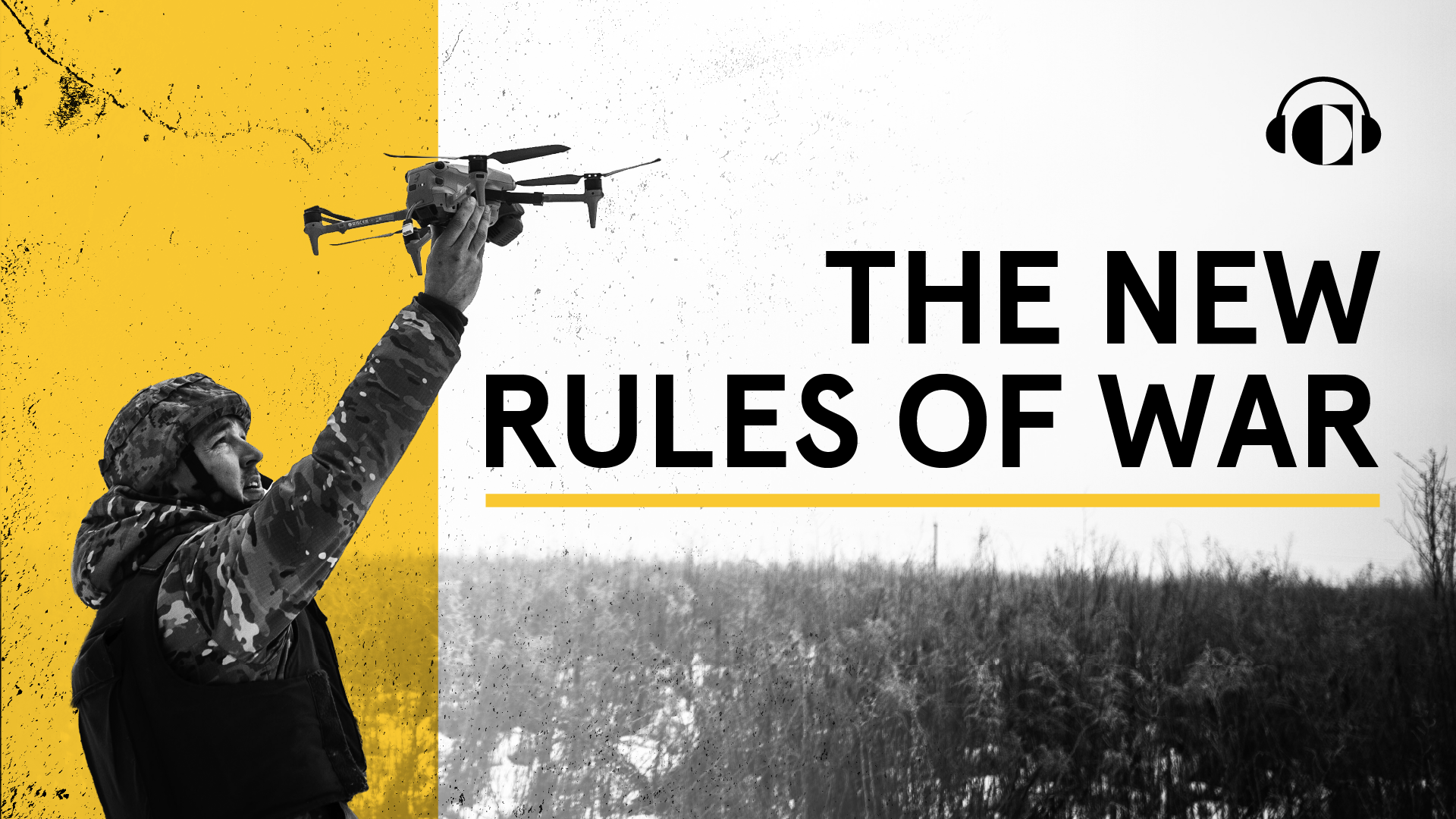
Steven Feldstein joins Jon Bateman on the world unpacked to discuss his new book, Bytes and Bullets, and explain how drones are reshaping wars from Ukraine to Sudan.

Jon Bateman, Steven Feldstein
A new book goes inside the AI industry and calls for a mass movement to restrain it.

Jon Bateman, Garrison Lovely

An ex-head of the Secret Service in his first-ever podcast on growing threats to U.S. leaders.

Jon Bateman, Ronald L. Rowe, Jr.
Brian Merchant on the Industrial Revolution’s failures, how AI undercuts workers, and the social order of technology.
Jon Bateman, Brian Merchant

The missing context that shows how AI isn’t the resource hog everyone thinks it is – with Andy Masley.

Jon Bateman, Andy Masley