

Commentary
Thomas de Waal
{
  "authors": [
    "Thomas de Waal"
  ],
  "type": "commentary",
  "centerAffiliationAll": "",
  "centers": [
    "Carnegie Endowment for International Peace",
    "Carnegie Europe",
    "Carnegie Russia Eurasia Center"
  ],
  "collections": [],
  "englishNewsletterAll": "",
  "nonEnglishNewsletterAll": "",
  "primaryCenter": "Carnegie Europe",
  "programAffiliation": "",
  "programs": [],
  "projects": [],
  "regions": [],
  "topics": []
}
Source: Getty
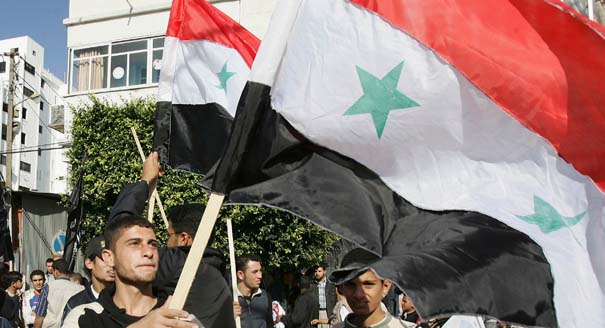
All the shadows and ghosts of the conflicts of the last three decades make it hard for any decision maker to focus on what is the best policy for Syria itself.
In my wanderings this summer from the Caucasus to Western Europe and back to Washington DC, I have had several conversations about Syria that were not really about Syria.
In Armenia, I was struck by the instinctual support of people for the Assad regime. Part of this was the same anti-Western suspicions which have shaped Russian opinion—very few people in the Caucasus seem to have noticed that Barack Obama has spent most of his presidency trying to extricate himself from the Middle East. There was also loyalty to a government which has traditionally protected the Armenian minority and the view that anyone backed by Turkey (the rebels) is up to no good.
One of my Armenian conversations soon led to a discussion about the end of Yugoslavia and the strange thesis that the West wanted to break up the Yugoslav Federation for its own geopolitical ends. My counter-arguments were met with polite skepticism.
In Europe, I do not believe I met a single person who looked forward to Western intervention in Syria. Most of the European and British left, which would once have been most in favor of humanitarian intervention, is still so exercised about the Iraq war (and in Britain by the idea that they were duped by Tony Blair) that it is against using military power pretty much anywhere.
Back in the United States, the conversation is more about President Obama and, put crudely, whether his fear of being seen to do nothing is greater than his fear of being drawn into another Iraq or Afghanistan. (The Obama dilemma is summed up in a grim cartoon in The Guardian.)
President Assad seems to understand all this and in a painfully soft interview with the Russian newspaper Izvestia published on Monday (most of the questions being along the lines of “Tell us about the terrorists destabilizing your country, Mr. President”), he diligently pushed a lot of both Western and Russian panic buttons.
Assad mentioned Vietnam, Afghanistan, Chechnya, and Western plans to subjugate Russia, declaring: “If someone dreams of turning Syria into a puppet of the West, that will not happen.”
All the shadows and ghosts of the conflicts of the last three decades are crowding in so close here, that it is hard for any decision maker to focus on what is the best policy for Syria itself.

Senior Fellow, Carnegie Europe
Thomas de Waal is a senior fellow at Carnegie Europe, specializing in Eastern Europe and the Caucasus.
Recent Work
Thomas de Waal
Thomas de Waal
Carnegie does not take institutional positions on public policy issues; the views represented herein are those of the author(s) and do not necessarily reflect the views of Carnegie, its staff, or its trustees.