• Research
  • Emissary
  • About
  • Experts
Carnegie Global logoCarnegie lettermark logo
DemocracyIran
  • Donate
{
  "authors": [
    "Petr Topychkanov"
  ],
  "type": "commentary",
  "centerAffiliationAll": "",
  "centers": [
    "Carnegie Endowment for International Peace",
    "Carnegie Russia Eurasia Center"
  ],
  "collections": [],
  "englishNewsletterAll": "",
  "nonEnglishNewsletterAll": "",
  "primaryCenter": "Carnegie Russia Eurasia Center",
  "programAffiliation": "",
  "programs": [],
  "projects": [],
  "regions": [],
  "topics": []
}

Source: Getty

Commentary
Carnegie Russia Eurasia Center

The Unfinished 1991

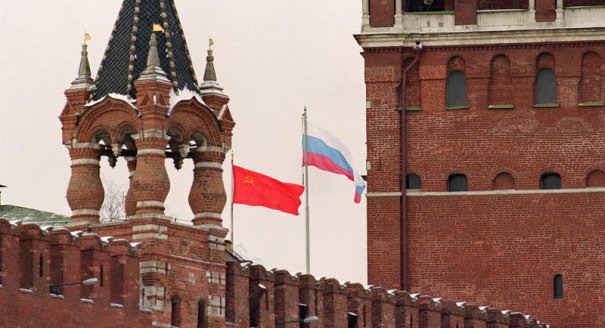
The Soviet Union’s collapse and disintegration did not come all at once. It was a long process, which is still unfinished. Instability, unpredictability, and insecurity of the 1990s became a good launching pad for the current leadership of Russia.

Link Copied
By Petr Topychkanov
Published on Aug 23, 2013

I remember the August of 1991, though I was just a young boy at that time. And I remember disputes between my relatives whether they should be in the crowd near the so-called "White House" in Moscow that gathered to defend the Russian government in the days of the putsch. Finally, several of them joined this crowd of Yeltsin supporters. Later, some of these people became disappointed by this politician.

I remember the curfew regime in Baku, Azerbaijan (at that time still part of the Soviet Union) where I happened to come that summer. There were talks there about a possible evacuation of the Russian community from the republic. This never happened, but many people had to emigrate.

The Soviet Union’s collapse and disintegration did not come all at once. It was a long process, which is still unfinished. During those years, there was everything: crowds in the streets, clashes, tanks and gunmen, life becoming more and more expensive and dangerous, Chechnya, and many other challenges.

But in a teenager’s life all this was just behind the scene. On the scene there was an ordinary family struggle for survival. There were many families like mine. But I still cannot comprehend how my late mother could successfully manage a myriad of problems of those days. It seemed all but impossible.

Instability, unpredictability, and insecurity of the 1990s became a good launching pad for the current leadership of Russia. Thus stability, predictability, and security became the main values of 2000s. This can be understood.

The question is what will be the main values of the new generation that does not have the experience of the 1990s? The political development of Russia clearly depends on the answer to this question.

About the Author

Petr Topychkanov

Former Fellow, Nonproliferation Program, Moscow Center

Topychkanov was a fellow in the Carnegie Moscow Center’s Nonproliferation Program.

    Recent Work

  • In The Media
    Iranian and Russian Perspectives on the Global System

      Petr Topychkanov

  • In The Media
    Premonition of Nuclear Threat

      Petr Topychkanov

Petr Topychkanov
Former Fellow, Nonproliferation Program, Moscow Center
Petr Topychkanov

Carnegie does not take institutional positions on public policy issues; the views represented herein are those of the author(s) and do not necessarily reflect the views of Carnegie, its staff, or its trustees.

More Work from Carnegie Endowment for International Peace

Get more news and analysis from
Carnegie Endowment for International Peace
Carnegie global logo, stacked
1779 Massachusetts Avenue NWWashington, DC, 20036-2103Phone: 202 483 7600Fax: 202 483 1840
  • Research
  • Emissary
  • About
  • Experts
  • Donate
  • Programs
  • Events
  • Blogs
  • Podcasts
  • Contact
  • Annual Reports
  • Careers
  • Privacy
  • For Media
  • Government Resources
Get more news and analysis from
Carnegie Endowment for International Peace
© 2026 Carnegie Endowment for International Peace. All rights reserved.