

Research
- +4
Milan Vaishnav, Rahul Verma, Rukmini S., …
{
  "authors": [
    "Christophe Jaffrelot"
  ],
  "type": "legacyinthemedia",
  "centerAffiliationAll": "",
  "centers": [
    "Carnegie Endowment for International Peace"
  ],
  "collections": [],
  "englishNewsletterAll": "",
  "nonEnglishNewsletterAll": "",
  "primaryCenter": "Carnegie Endowment for International Peace",
  "programAffiliation": "",
  "programs": [],
  "projects": [],
  "regions": [
    "South Asia",
    "India"
  ],
  "topics": []
}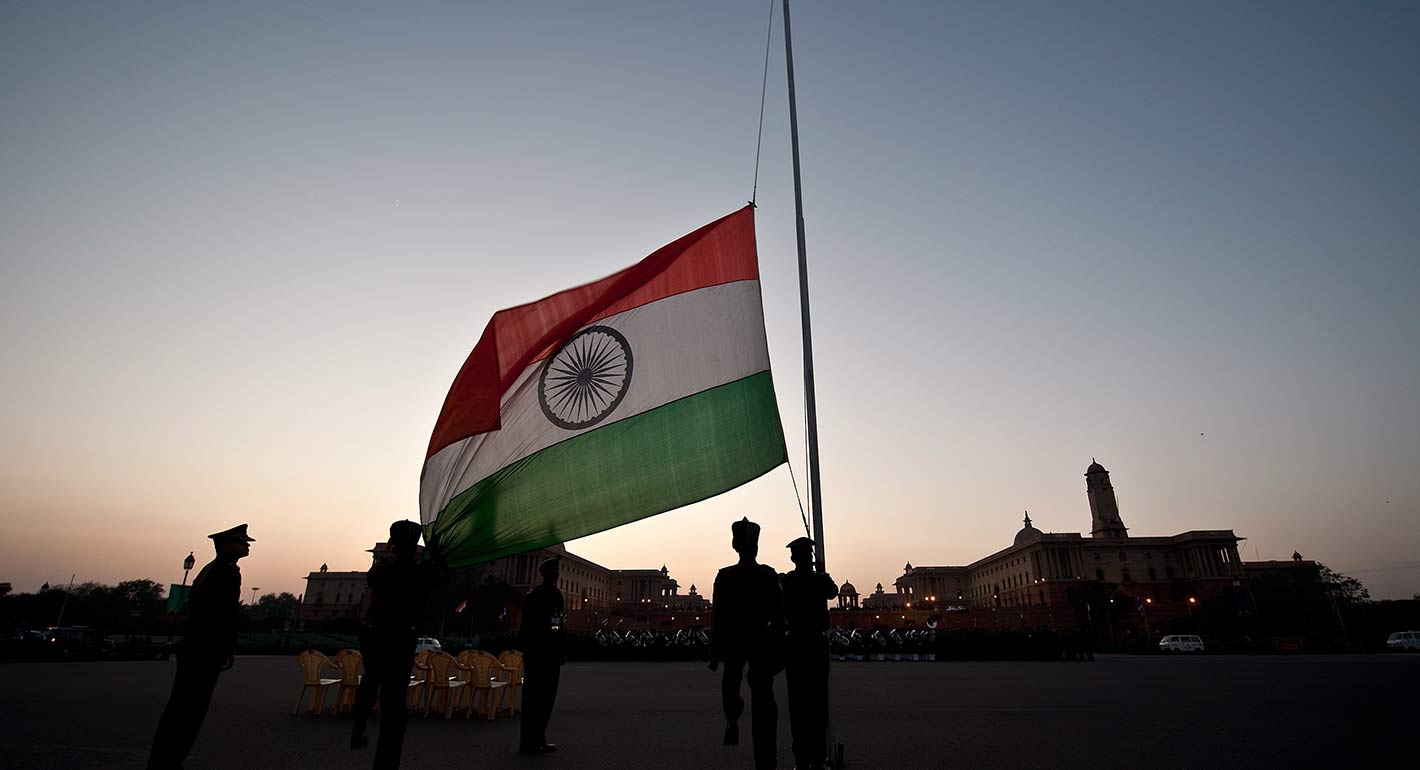
Source: Getty
History got accelerated in the wake of the BJP’s second electoral victory due to the fact that governments can more easily make big decisions immediately after they received a mandate from the voters and the severity of the economic slowdown.
Source: Wire
Indeed, we had not seen such a popular protest since the Anna Hazare movement 10 years ago. In fact, some of those who had demonstrated then may well be on the streets again – except, of course, those belonging to the Sangh parivar, who played such an important role in the Hazare movement, and except Anna Hazare himself.
What strikes me is the over representation of young Indians – girls as well as boys – in this movement, something we may also explain by the economic crisis as the youth is the primary casualty of joblessness.
And this feature calls to mind another comparison, with the mass demonstrations initiated by Mahatma Gandhi during the Freedom movement – non violence and civil disobedience were already the mottos at that time, and were already difficult to implement and maintain…
Former Nonresident Scholar, South Asia Program
Jaffrelot’s core research focuses on theories of nationalism and democracy, mobilization of the lower castes and Dalits (ex-untouchables) in India, the Hindu nationalist movement, and ethnic conflicts in Pakistan.
Recent Work

Milan Vaishnav, Rahul Verma, Rukmini S., …
Christophe Jaffrelot
Carnegie does not take institutional positions on public policy issues; the views represented herein are those of the author(s) and do not necessarily reflect the views of Carnegie, its staff, or its trustees.

The Indian Ocean Region hosts one of the densest concentrations of subsea cables in the world. Yet, despite accounting for a significant share of global internet traffic, India’s participation remains limited.

Charukeshi Bhatt

How is AI reshaping space security, creating governance challenges, and where does international diplomacy stand today?


Tejas Bharadwaj, Almudena Azcárate Ortega

After the chill in ties between 2020 and 2024 that brought India–China relations to their lowest point in several decades, the two countries have engaged each other afresh. This paper argues that there are predominantly four imperatives guiding India’s approach to China, and they exist in an order of priority.

Saheb Singh Chadha

As the experiences of India and the UAE suggest, attaining complete sovereignty is unrealistic for most nations. But that doesn’t mean they must depend on the United States or China.
Shreya Joshi

This piece argues that India’s central challenge is not managing a single flashpoint but resolving the underlying tension between expansion and institutional coherency of the BRICS grouping.

Vrinda Sahai