

{
  "authors": [
    "Alexander Gabuev",
    "Nargis Kassenova",
    "Temur Umarov"
  ],
  "type": "commentary",
  "centerAffiliationAll": "",
  "centers": [
    "Carnegie Endowment for International Peace",
    "Carnegie Russia Eurasia Center"
  ],
  "collections": [],
  "englishNewsletterAll": "",
  "nonEnglishNewsletterAll": "",
  "primaryCenter": "Carnegie Endowment for International Peace",
  "programAffiliation": "",
  "programs": [],
  "projects": [],
  "regions": [],
  "topics": []
}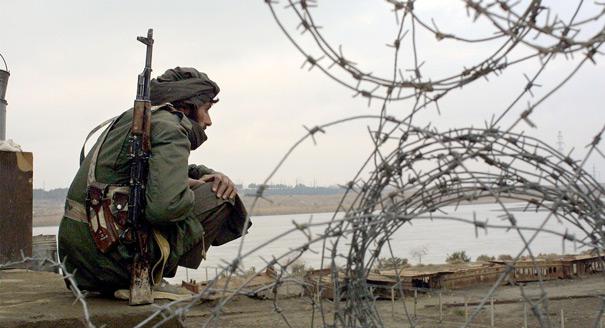
Source: Getty
Podcast: What Are the Implications of the Afghanistan Crisis for Central Asia?
This episode looks at the impact of events in Afghanistan on the broader region and the balance of power there.
Nargis Kassenova, a senior fellow at the Davis Center for Russian and Eurasian Studies’ program on Central Asia, and Temur Umarov, a research consultant at Carnegie Moscow Center, join podcast host Alexander Gabuev to discuss how Central Asian governments have reacted to the Taliban takeover of Afghanistan, what their priorities are, and whether any of them might be prepared to facilitate U.S. military operations in the region from their own territory.
Listen or download: SoundCloud | Subscribe: iTunes, Google Podcasts, Spotify, RSS
About the Authors

Director, Carnegie Russia Eurasia Center
Alexander Gabuev is director of the Carnegie Russia Eurasia Center. Gabuev’s research is focused on Russian foreign policy with particular focus on the impact of the war in Ukraine and the Sino-Russia relationship. Since joining Carnegie in 2015, Gabuev has contributed commentary and analysis to a wide range of publications, including the Financial Times, the New York Times, the Wall Street Journal, and the Economist.

Senior fellow, Harvard Davis Center for Russian and Eurasian Studies
Nargis Kassenova is a senior fellow and director of the Program on Central Asia at Harvard University's Davis Center.

Fellow, Carnegie Russia Eurasia Center
Temur Umarov is an expert on China and Central Asia, and a fellow at the Carnegie Russia Eurasia Center.
Carnegie does not take institutional positions on public policy issues; the views represented herein are those of the author(s) and do not necessarily reflect the views of Carnegie, its staff, or its trustees.