

Research
- +1
Vijay Gokhale, Suyash Desai, Amit Kumar, …
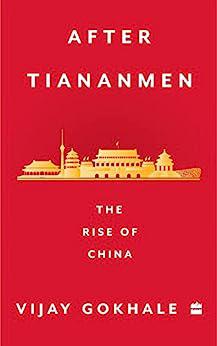
The book traces the developments in contemporary China from 1989 to 2010, delving into the country’s initial political and economic experiments.
After the end of the Cold War, China was faced with fundamental challenges – and had to make some critical choices. After Tiananmen: The Rise of China is the story of how it handled its complex domestic and external environment while silently ascending the hierarchy of world power.
The book traces the developments in contemporary China from 1989 to 2010, delving into the country’s initial political and economic experiments. It examines the adeptness with which challenges like the ‘Malacca Dilemma’ and the resources crunch shaped Chinese policies; how, in the process, the very character of the Chinese Communist Party was fundamentally transformed; and the twists and turns in India’s relationship with China.
The sequel to Tiananmen Square: The Making of a Protest, this is an essential primer for those who wish to understand China’s behaviour today.
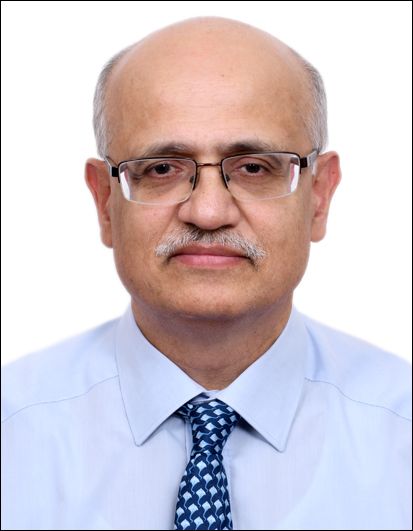
Nonresident Senior Fellow, Carnegie India
Vijay Gokhale is a nonresident senior fellow at Carnegie India and the former foreign secretary of India. He has worked extensively on matters relating to the Indo-Pacific region with a special emphasis on Chinese politics and diplomacy.
Recent Work

Vijay Gokhale, Suyash Desai, Amit Kumar, …
Carnegie does not take institutional positions on public policy issues; the views represented herein are those of the author(s) and do not necessarily reflect the views of Carnegie, its staff, or its trustees.