• Research
  • Emissary
  • About
  • Experts
Carnegie Global logoCarnegie lettermark logo
DemocracyIran
  • Donate
Multilateral Efforts on Information Integrity: Why a Clear Definition Is Needed
Research

Multilateral Efforts on Information Integrity: Why a Clear Definition Is Needed

How existing conceptualizations of the term “information integrity” fall short and how information integrity can achieve conceptual goodness.

Link Copied
By Kamya Yadav, Alicia Wanless, Samantha Lai
Published on Jan 10, 2026
Program mobile hero image

Program

Technology and International Affairs

The Technology and International Affairs Program develops insights to address the governance challenges and large-scale risks of new technologies. Our experts identify actionable best practices and incentives for industry and government leaders on artificial intelligence, cyber threats, cloud security, countering influence operations, reducing the risk of biotechnologies, and ensuring global digital inclusion.

Learn More
Project hero Image

Project

Information Environment Project

Carnegie’s Information Environment Project is a multistakeholder effort to help policymakers understand the information environment, think through the impact of efforts to govern it, and identify promising interventions to foster democracy.

Learn More
Read the Publication

About the Authors

Kamya Yadav

Former Research Analyst, Technology and International Affairs

Kamya Yadav is a research analyst in the Technology and International Affairs Program at the Carnegie Endowment for International Peace. Kamya is a PhD student at the University of California, Berkeley, where she researches gender, representation, and technology in the context of developmental political economy, with a regional focus on South Asia.

Alicia Wanless

Senior Fellow, Technology and International Affairs, Director, Information Environment Project

Alicia is the director of the Information Environment Project and the author of The Information Animal: Humans, Technology and the Competition for Reality. Alicia was a technical advisor to the Aspen Institute’s Commission on Information Disorder and is a founding member of its Global Cybersecurity Group.
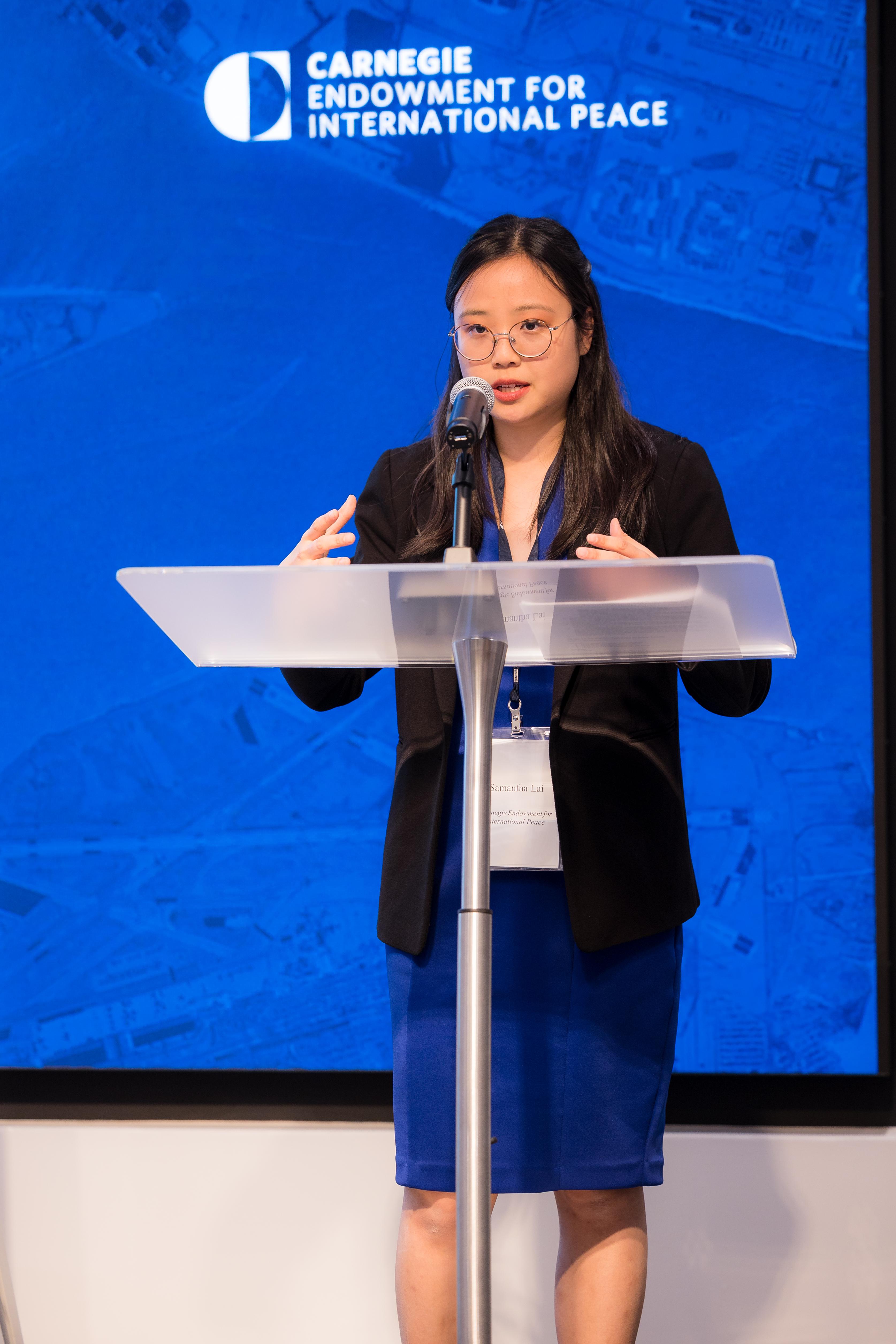

Samantha Lai

Former Senior Research Analyst, Technology and International Affairs

Samantha Lai was a senior research analyst at the Carnegie Endowment for International Peace's Information Environment Project.

Authors

Kamya Yadav
Former Research Analyst, Technology and International Affairs
Alicia Wanless
Senior Fellow, Technology and International Affairs, Director, Information Environment Project
Alicia Wanless
Samantha Lai
Former Senior Research Analyst, Technology and International Affairs
Samantha Lai
Technology

Carnegie does not take institutional positions on public policy issues; the views represented herein are those of the author(s) and do not necessarily reflect the views of Carnegie, its staff, or its trustees.

More Work from Carnegie Endowment for International Peace

  • Commentary
    The Unresolved Challenges in U.S.–India Semiconductor Cooperation

    The U.S.–India semiconductor cooperation story is well-stocked with top-level strategic intent. What remains unresolved, however, are some underlying challenges that will determine whether the cooperation actually functions. Three such friction points stand out.

      Shruti Mittal

  • Tiananmen Gate with US and Chinese flags
    Commentary
    Emissary
    Trump and Xi Should Tackle a Previously Impossible AI Conversation

    Previous dialogues ended in failure. This time could be different.

      Scott Singer

  • Trump and others walking down a red carpet, with Air Force One in the background
    Commentary
    Emissary
    “China Doesn’t Do Anything for Free”

    Why the outcomes of the U.S.-China meetings may be limited.


      Aaron David Miller, David Rennie

  • A drone flies in front of an Iranian flag in southern Tehran, Iran
    Article
    The Unintended Consequences of Iran’s Asymmetric Strategy and America’s AI War

    The Iran war is unique in the scope and scale of asymmetric warfare and AI-enabled conflict. These will test the limits of protecting civilians.

      Steve Feldstein

  • A visitor looks at a simulator for "electronic warfare" at the booth of German Federal Armed Forces Bundeswehr during a tour of the Hannover industrial trade fair for mechanical and electrical engineering and digital industries, in Hannover, northern Germany on April 20, 2026.
    Article
    The Effect of Military AI on Contemporary Battlefields

    AI in warfare has numerous impacts, including how they shape human responses to target recommendations and how they increase the speed at which lawful targets can be recommended.

      Yahli Shereshevsky

Get more news and analysis from
Carnegie Endowment for International Peace
Carnegie global logo, stacked
1779 Massachusetts Avenue NWWashington, DC, 20036-2103Phone: 202 483 7600
  • Research
  • Emissary
  • About
  • Experts
  • Donate
  • Programs
  • Events
  • Blogs
  • Podcasts
  • Contact
  • Annual Reports
  • Careers
  • Privacy
  • For Media
  • Government Resources
Get more news and analysis from
Carnegie Endowment for International Peace
© 2026 Carnegie Endowment for International Peace. All rights reserved.