• Research
  • Politika
  • About
Carnegie Russia Eurasia center logoCarnegie lettermark logo
  • Donate
{
  "authors": [
    "Henri J. Barkey"
  ],
  "type": "legacyinthemedia",
  "centerAffiliationAll": "dc",
  "centers": [
    "Carnegie Endowment for International Peace"
  ],
  "collections": [],
  "englishNewsletterAll": "menaTransitions",
  "nonEnglishNewsletterAll": "",
  "primaryCenter": "Carnegie Endowment for International Peace",
  "programAffiliation": "MEP",
  "programs": [
    "Middle East"
  ],
  "projects": [],
  "regions": [
    "Middle East",
    "Israel",
    "Türkiye",
    "Palestine"
  ],
  "topics": [
    "Security"
  ]
}
Source: Getty

In The Media

No Benefit of the Doubt for Israel?

The only good thing that can come out of this tragedy is that the Israeli public will hold the government accountable for poor decision-making and incompetent execution that has handed Hamas and its allies the victory of their lifetime.

Link Copied
By Henri J. Barkey
Published on Jun 1, 2010

Source: Politico

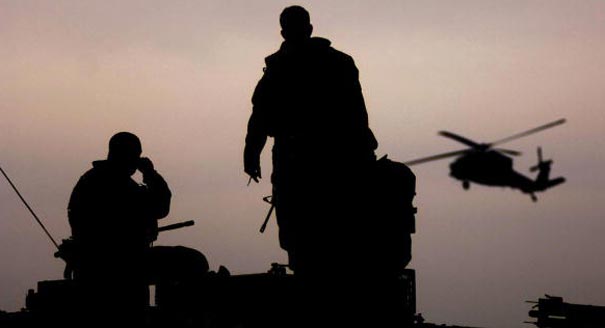
No Benefit of the Doubt for Israel?The real problem that this situation has made clear is that Israel has become insensitive to its own predicament. Even if Israel had every right to board the ship and detain its occupants, Israel should have expected that boarding the ship would result in such a confrontation and the resulting international backlash. It was obvious from the outset that the organizers of the flotilla were only interested in a physical clash with the Israelis and that aid supplies were just the excuse. Quite a bit was known about the primary organizer, a Turkish Islamist charity with deep ties to Hamas and other groups whose rhetoric was quite inflammatory. 

The decision process in this case is eerily reminiscent of group think, the inability to consider alternative explanations and courses of action. Seven cabinet members, without the participation of the whole cabinet, apparently met twice and made the decision. In light of Israel’s international isolation and its delicate relations with the United States, did anyone consider the ramifications of their decision? Moreover, Israel’s actions have diverted the attention of the UN Security Council right at the time they were to take up Iran’s nuclear program - Israel’s paramount concern.
 
Clearly, the current Israeli government lives in a cocoon. The only good thing that can come out of this tragedy is that the Israeli public will hold the government accountable for poor decision-making and incompetent execution that has handed Hamas and its allies the victory of their lifetime.

About the Author

Henri J. Barkey

Former Visiting Scholar, Middle East Program

Barkey served as a member of the U.S. State Department Policy Planning Staff, working primarily on issues related to the Middle East, the Eastern Mediterranean, and intelligence from 1998 to 2000.

    Recent Work

  • Article
    Winners and Losers in Turkey’s Election

      Henri J. Barkey

  • Article
    The Road to Turkey’s June Elections: Crises, Strategies, and Outcomes

      Henri J. Barkey

Henri J. Barkey
Former Visiting Scholar, Middle East Program
Henri J. Barkey
SecurityMiddle EastIsraelTürkiyePalestine

Carnegie does not take institutional positions on public policy issues; the views represented herein are those of the author(s) and do not necessarily reflect the views of Carnegie, its staff, or its trustees.

More Work from Carnegie Russia Eurasia Center

  • Commentary
    Carnegie Politika
    Why Are China and Russia Not Rushing to Help Iran?

    Most of Moscow’s military resources are tied up in Ukraine, while Beijing’s foreign policy prioritizes economic ties and avoids direct conflict.   

      • Alexander Gabuev

      Alexander Gabuev, Temur Umarov

  • Commentary
    Carnegie Politika
    How Far Can Russian Arms Help Iran?

    Arms supplies from Russia to Iran will not only continue, but could grow significantly if Russia gets the opportunity.

      Nikita Smagin

  • Commentary
    Carnegie Politika
    Can the Disparate Threads of Ukraine Peace Talks Be Woven Together?

    Putin is stalling, waiting for a breakthrough on the front lines or a grand bargain in which Trump will give him something more than Ukraine in exchange for concessions on Ukraine. And if that doesn’t happen, the conflict could be expanded beyond Ukraine.

      Alexander Baunov

  • Commentary
    Carnegie Politika
    Once Neutral on the Ukraine War, Arab States Increasingly Favor Moscow

    Disillusioned with the West over Gaza, Arab countries are not only trading more with Russia; they are also more willing to criticize Kyiv.  

      Ruslan Suleymanov

  • Commentary
    Carnegie Politika
    How Will the Loss of Starlink and Telegram Impact Russia’s Military?

    With the blocking of Starlink terminals and restriction of access to Telegram, Russian troops in Ukraine have suffered a double technological blow. But neither service is irreplaceable.

      Maria Kolomychenko

Get more news and analysis from
Carnegie Russia Eurasia Center
Carnegie Russia Eurasia logo, white
  • Research
  • Politika
  • About
  • Experts
  • Events
  • Contact
  • Privacy
Get more news and analysis from
Carnegie Russia Eurasia Center
© 2026 Carnegie Endowment for International Peace. All rights reserved.