

In The Media
Kevin Jianjun Tu
{
  "authors": [
    "Kevin Jianjun Tu"
  ],
  "type": "other",
  "centerAffiliationAll": "dc",
  "centers": [
    "Carnegie Endowment for International Peace",
    "Carnegie China"
  ],
  "collections": [],
  "englishNewsletterAll": "asia",
  "nonEnglishNewsletterAll": "",
  "primaryCenter": "Carnegie China",
  "programAffiliation": "AP",
  "programs": [
    "Asia",
    "Sustainability, Climate, and Geopolitics"
  ],
  "projects": [],
  "regions": [
    "East Asia",
    "China",
    "North America"
  ],
  "topics": [
    "Political Reform",
    "Economy",
    "Climate Change",
    "Domestic Politics"
  ]
}
Source: Getty
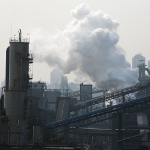
Statistical distortion on the use of coal in China is likely to not only severely undermine Beijing’s energy conservation and carbon abatement policy initiatives, but also make it difficult for the international community to verify achievements claimed by the Chinese government.
Source: Working Paper

Coal currently accounts for about 30 percent of the world’s primary energy consumption, second only to oil. In China, coal is the most dominant fuel, representing 70 percent of the country’s primary energy consumption and 93 percent of its proven reserves of fossil fuels. In 2010, China’s official coal output of 3.24 billion tonnes (Gt, or 3.41 Gt according to industrial sources) represents nearly half of world total. China’s heavy reliance on indigenous coal, notably for more than 80 percent of its electricity generation, brings benefits in terms of energy security. The conversion of coal to chemicals, liquid fuels, and synthetic natural gas can allow an even greater reliance on its domestic resources than possible in many other countries. Recently, the Chinese government has encouraged state-owned energy companies to invest in coal mines outside of China to secure external coal supplies that would further enhance China’s energy security.

Coal has undoubtedly played a key role in China’s rapid economic growth since the Chinese economy was opened to the outside world in 1978; nevertheless, the unprecedented exploitation and utilization of coal has also created enormous environmental and social challenges such as 1) coal mining wastes and land subsidence-related environmental impacts in many areas of the country; 2) severe water shortage in major coal mining regions such as Shanxi, Shaanxi, and Inner Mongolia; 3) mounting safety challenges as more than 250 thousand miners have died in China’s numerous coal mine accidents since 1949; 4) bottleneck of China’s transport infrastructure (especially rail); 5) deteriorating air quality in many urban centres and adjacent regions; and 6) greenhouse gas emissions abatement pressure especially after China overtook the United States as the lead in carbon emissions in 2006.
Historically, China has been a net coal exporter because of a large reserve base, low labor costs, attractive export prices, and government tax incentives. In 2003, China’s coal exports peaked at 94 million tonnes (Mt) with net coal exports at 83 Mt. Since then, spiking domestic coal demand coupled with the central government’s restrictions on coal exports has led to a decrease in exports. In 2009, the prolonged dispute on contract thermal coal prices between China’s major coal enterprises and power companies and attractively priced coal from the international markets led turned the country into a net coal importer.
The world hard coal trade is dominated by seaborne transport mode (as opposed to overland transport via rail), which accounted for 91 percent of world coal exports in 2009.Given that the volume of world seaborne coal trade is less than one third of China’s annual coal production, a moderate shift of China’s coal import/export balance has the potential to disrupt the international coal trade.
Between 2009 and 2011, Kevin Jianjun Tu was contracted by the PESD at Stanford University to examine the industrial organization of the Chinese coal industry.With additional support from the China Council for International Cooperation on Environment and Development, Tu was able to finish a report that aims to 1) comprehensively review the Chinese coal value chain and 2) identify problems and policy challenges in the Chinese coal industry.
Currently, the size of grey markets in the Chinese coal value chain seems to have grown to dangerous levels that are too significant to be ignored; it is recommended that the Chinese government should consider assessing the current situation and keep fixing any inconsistency within its statistical reporting system. Otherwise, ongoing coal statistical distortion is likely to not only severely undermine China’s policy initiatives on energy conservation and carbon intensity abatement in the years to come but also make it difficult for the international community to verify policy achievements claimed by the Chinese government.
Finally, while this study has presented a comprehensive review of the Chinese coal value chain including resources, production, transport, end uses and environmental impacts, a follow up study is planned by the Carnegie Energy and Climate Program to thoroughly explore coal’s role in an energy security conscious and environmentally constrained China.

Former Senior Associate , Energy and Climate Program
Tu was a senior associate in Carnegie’s Energy and Climate Program, where he led the organization’s work on China’s energy and climate policies.
Recent Work
Kevin Jianjun Tu
Kevin Jianjun Tu
Carnegie does not take institutional positions on public policy issues; the views represented herein are those of the author(s) and do not necessarily reflect the views of Carnegie, its staff, or its trustees.

If the Russian-speaking community in Latvia cannot articulate their interests without being seen as disloyal, they could end up embracing a pro-Kremlin agenda.

Sergejs Potapkins

Russia’s ruling party would have benefited from Putin appearing as its distant patron, but as an active frontman imposing his views on the public, he has done nothing but harm both the party’s election campaign and the ruling system overall.

Andrey Pertsev

Depleted financial reserves and a shrinking tax base mean it is no longer possible to simultaneously deliver high defense spending, price stability, and economic growth.

Alexandra Prokopenko

Blurring the line between humans and animals is a long-standing tradition in social utopian prose. In his latest novel, Leonid Bershidsky reminds us that in social experiments, people are often treated no differently than animals.

Alexander Baunov

In the tenth year of his presidency, President Mirziyoyev’s system is becoming even more personalized than that of his predecessor Karimov.

Galiya Ibragimova