Most of Moscow’s military resources are tied up in Ukraine, while Beijing’s foreign policy prioritizes economic ties and avoids direct conflict.
Alexander Gabuev, Temur Umarov
{
"authors": [
"Lina Khatib",
"Ahmed Gaaloul",
"Aymenn Jawad Al-Tamimi"
],
"type": "legacyinthemedia",
"centerAffiliationAll": "dc",
"centers": [
"Carnegie Endowment for International Peace",
"Malcolm H. Kerr Carnegie Middle East Center"
],
"collections": [],
"englishNewsletterAll": "menaTransitions",
"nonEnglishNewsletterAll": "",
"primaryCenter": "Malcolm H. Kerr Carnegie Middle East Center",
"programAffiliation": "MEP",
"programs": [
"Middle East"
],
"projects": [],
"regions": [
"Gulf",
"Levant",
"Maghreb",
"Syria",
"Iraq",
"Tunisia",
"Middle East",
"North Africa"
],
"topics": [
"Security"
]
}Source: Getty
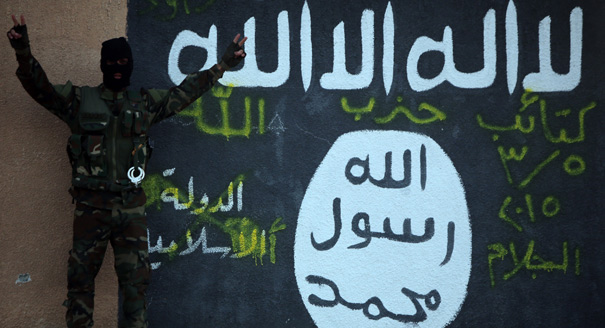
A year after declaring a “caliphate,” self-proclaimed Islamic State fighters are claiming attacks in Kuwait and Tunisia.
Source: Al Jazeera Inside Story
More than 60 people were killed on Friday in two attacks.
The first was a suicide bomb explosion at a mosque for Shia Muslims in Kuwait City—the first such attack in relatively stable Kuwait.
Then in Tunisia, European tourists were targeted in their resort. A gunman randomly opening fire among the beach umbrellas and continuing in a hotel.
The message, for many, is clear: ISIL is expanding its activities beyond areas already seized in Iraq and Syria.
But what are the limits of the group’s expansion?
This interview was originally broadcast on Al Jazeera’s Inside Story.
Former Director, Middle East Center
Khatib was director of the Carnegie Middle East Center in Beirut. Previously, she was the co-founding head of the Program on Arab Reform and Democracy at Stanford University’s Center on Democracy, Development, and the Rule of Law.
Ahmed Gaaloul
Aymenn Jawad Al-Tamimi
Carnegie does not take institutional positions on public policy issues; the views represented herein are those of the author(s) and do not necessarily reflect the views of Carnegie, its staff, or its trustees.
Most of Moscow’s military resources are tied up in Ukraine, while Beijing’s foreign policy prioritizes economic ties and avoids direct conflict.
Alexander Gabuev, Temur Umarov
Arms supplies from Russia to Iran will not only continue, but could grow significantly if Russia gets the opportunity.
Nikita Smagin
Putin is stalling, waiting for a breakthrough on the front lines or a grand bargain in which Trump will give him something more than Ukraine in exchange for concessions on Ukraine. And if that doesn’t happen, the conflict could be expanded beyond Ukraine.
Alexander Baunov
Disillusioned with the West over Gaza, Arab countries are not only trading more with Russia; they are also more willing to criticize Kyiv.
Ruslan Suleymanov
With the blocking of Starlink terminals and restriction of access to Telegram, Russian troops in Ukraine have suffered a double technological blow. But neither service is irreplaceable.
Maria Kolomychenko