

{
  "authors": [
    "Muhammad Abu Rumman"
  ],
  "type": "commentary",
  "blog": "Sada",
  "centerAffiliationAll": "",
  "centers": [
    "Carnegie Endowment for International Peace"
  ],
  "collections": [],
  "englishNewsletterAll": "",
  "nonEnglishNewsletterAll": "",
  "primaryCenter": "Carnegie Endowment for International Peace",
  "programAffiliation": "",
  "programs": [],
  "projects": [],
  "regions": [],
  "topics": []
}
Source: Getty
Jordan’s Parliamentary Elections and the Islamist Boycott
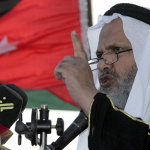
In boycotting the November parliamentary elections, the Muslim Brotherhood hopes to avoid becoming politically marginalized and instead to use their outsider status to push an alternative agenda.
Despite efforts by Jordanian Prime Minister Samir Rifai to dissuade the Muslim Brotherhood from its decision to boycott the November 9 parliamentary elections, the Brotherhood has held its ground, with all attempts at mediation by politicians and officials falling short. The government is eager to have the Brotherhood’s political arm, the Islamic Action Front, take part because it is the only political party that has a significant base of popular support and a clear political platform and therefore can credibly play the opposition role in parliament. Moreover, the government fears that with the Brotherhood boycotting, voter turnout will go from low to downright dismal, particularly in the major cities where most voters are of Palestinian origin and tend to favor the Brotherhood.
Brotherhood leaders decided to boycott after canvassing members and mid-level leaders in various cities. The leaders were surprised to find that more than 73 percent favored an all-out boycott, a result that constrained the leaders’ ability to bargain with the government unless they wished to face sharp internal criticism.
Brotherhood members typically are consulted about parliamentary participation, with polling conducted as to proposed candidates and the results passed up to the leadership (the executive office and the Shura Council within the Brotherhood and the Islamic Action Front), which then indicates its likely course of action. This time, however, the movement’s leaders were divided among themselves about whether to take part in the elections, and so instead asked the members whether or not they favored a boycott. After the decisive result came in, the Shura Councils in both the Brotherhood and the Islamic Action Front voted overwhelmingly to boycott.
Brotherhood members’ frustration with the political process stems from the blatant electoral fraud in the 2007 parliamentary elections. The Brotherhood won a mere six seats out of a total 110, their worst showing since they entered political life, undermining members’ faith in the political system. The push to boycott this year ironically came from those who are called the doves or moderate reformists, who had pushed for participation in 2007 (despite fraud in municipal elections the same year) and felt burned by the results. In addition, Brotherhood leaders were disappointed with the new electoral law passed earlier this year, which they saw as unbalanced and favoring tribal allegiances rather than political parties.
Brotherhood moderates propose structural reform
This reformist group paid the price of the 2007 parliamentary elections twice: once when they lost, and the second time when the Brotherhood’s Shura Council voted to dissolve and hold early internal elections. The result was that the reformists lost the majority they had held within the Brotherhood, and the hawks returned to power in both the Brotherhood and the Islamic Action Front.
The vicious blow to moderates generated a new belief among them that the decision to rig the elections and make them lose had been irrational, and reflected a genuine crisis in the regime’s decision-making process. This belief grew after the 2008 struggle for power between the royal palace and the state intelligence agency, the most powerful decision-making forces in Jordan. The Brotherhood reformists then teamed up with other Jordanian political actors to announce a new initiative (Arabic) entitled “Constitutional Monarchy,” which called for reinstating the 1951 constitution and emphasized the need for an elected government, an effective parliament, regular alternation of power, and changes to the mechanisms of forming governments and making decisions.
Hawks within the Brotherhood blocked the constitutional monarchy initiative by the Brotherhood’s reformist wing (led by Ruhail Gharaibeh, Nabeel al-Kufahi, and Salem Falahat) from being officially adopted as Brotherhood policy, but it was one of the group’s boldest policy moves in recent years. The initiative had demanded radical structural changes to Jordanian politics rather than making do with the usual Brotherhood rhetoric on a limited number of issues such as public freedoms, Islamization, lifting restrictions on political activism, and supporting Hamas in Palestine. For the first time, part of the Brotherhood was putting forward political rhetoric that was explicitly focusing on domestic political structural reform. This represented a quantum leap in the Brotherhood’s political ideology, as it called for building a domestic coalition in support of the initiative and in doing so spoke frankly about a constitutional monarchy, succession of power, and pluralism, which are all leading democratic values as well as an intellectual and political break from traditional Islamist rhetoric centered on the concept of the Islamic state and the application of Shari’a.
The Brotherhood’s reformist elite, although they are a minority within both the organization’s leadership and its rank-and-file, were able to make use of Jordan’s political crisis and the Islamists’ palpable sense of frustration with political involvement to mobilize support for boycotting the elections. They even made political reform—specifically, replacing the elections law with one based on proportional representation--the movement’s main demand in its dialogue with the government, which in and of itself sets a new precedent in the course of government-Brotherhood relations.
Are there alternatives to elections?
The candidate registration phase is now over, and only three members of the Brotherhood and four from the Islamic Action Front disobeyed the orders to boycott; their membership might well be revoked in punishment. In the coming elections, the government is betting on filling opposition spots in parliament with a range of leftist, nationalist, and independent opposition figures, as well as members of the Islamic Wasat Party and independent Islamists. This cannot truly compensate, however, for the Muslim Brotherhood’s conspicuous absence.
For their part, the Brotherhood members are seeking to compensate for their absence with a political opposition platform from outside the halls of parliament that aims for radical reform. This alternative project was launched by the alliance with the opposition Democratic Popular Unity Party, and the formation of the national pro-reform coalition.
The Brotherhood is still haunted by its decision to sit on the sidelines during the 1997 elections, which left the movement without any leverage in confronting the state. This time the Brotherhood is determined not to repeat that experience but to transform the boycott into a political platform, a course of action that will inevitably mean an escalation in the showdown with the government.
About the Author
Muhammad Abu Rumman
Carnegie does not take institutional positions on public policy issues; the views represented herein are those of the author(s) and do not necessarily reflect the views of Carnegie, its staff, or its trustees.