

{
  "authors": [
    "Ilhem Rachidi"
  ],
  "type": "commentary",
  "blog": "Sada",
  "centerAffiliationAll": "",
  "centers": [
    "Carnegie Endowment for International Peace"
  ],
  "collections": [],
  "englishNewsletterAll": "",
  "nonEnglishNewsletterAll": "",
  "primaryCenter": "Carnegie Endowment for International Peace",
  "programAffiliation": "",
  "programs": [],
  "projects": [],
  "regions": [],
  "topics": []
}
Source: Getty
Repression in Algeria: Could It End The Hirak Movement?
Recent crackdowns on protestors in Algeria have put into question the future of the Hirak movement.
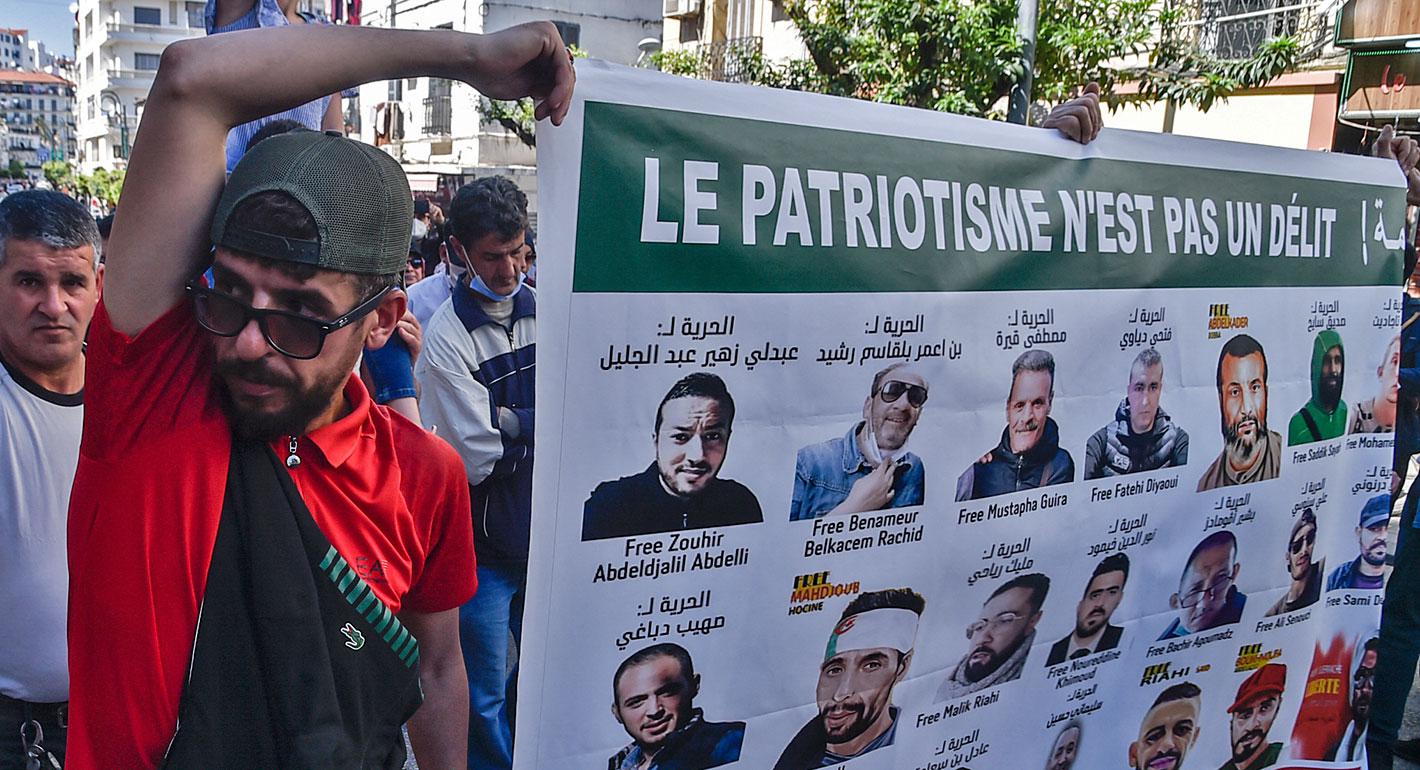
A heavy crackdown has momentarily succeeded in silencing the Hirak after three months of weekly nationwide protests. An unprecedented wave of arrests targeted civil society activists, reporters, university students, professors, and members of political parties. On June 30, the repression escalated when opposition leader and coordinator of the Democratic and Social Movement (MDS), Fethi Ghares, was taken from his home and placed in custody after his house was searched.1
By arresting a party leader, the regime demonstrates that its goal is not simply to get rid of the Hirak, but also to prevent any attempt to build a structured opposition. Previously, Algerian authorities filed a judiciary complaint to dissolve the Union for Change and Progress (UCP) and the Socialist Workers Party (PST), two political parties that support the Hirak and belong to the Forces of the Democratic Alternative (PAD). Additionally, the regime presented a legislative framework to suppress any emerging dissent by labeling dissidents as terrorists, as it did with the Movement for Kabylie’s self-determination (MAK) and the Rachad movement. On June 8, President Abdelmadjid Tebboune promulgated by ordinance a vaguely worded amendment to the penal code that brands citizens or organizations who try to access power or change the system of government in "unconstitutional ways" as terrorists.
In May 2021, in the span of a few days, public demonstrations disappeared because a heavy police presence prevented protestors from taking to the streets, especially in Algiers. The instrumentalization of the judiciary - and the potential of this worsening with the new laws - undoubtedly deterred many others from protesting. The number of politically motivated detentions suddenly rose at the end of April. Up until then, since the resumption of the protests in February, hundreds of people have been arrested each week, but released in most cases. Between February and July, 306 people were jailed for their involvement in the Hirak or being too critical of the government.2
However, this number doesn’t reveal the full extent and the intensity of the repression. Over 6,570 people, many of whom have been repeatedly arrested or summoned, have been detained since last February.3 It is clear that the regime wants activists and journalists to spend a great amount of time in court, instead of actually doing their jobs. Moreover, dozens of people were placed under judicial supervision, limiting their travels and interactions. The intimidation and the judiciary harassment, which are unlikely to decrease, can at times be as efficient as incarcerations in silencing government critics and political opponents.
In an apparent concession, the ministry of justice announced a new wave of releases of political detainees on July 14. According to Algerian Detainees, 196 nevertheless remain in detention. As prisoners were leaving their prison cells, trials were taking place. Activists are aware that these releases do not mean a scaling back of the repression. An atmosphere of fear and disillusionment prevails amongst them. They are forced to devote most of their attention towards the support of political detainees instead of focusing on political action. As political parties are further weakened and as protestors disappear from the streets--therefore depriving the movement of its major strength--the transformation of the Hirak into a viable opposition force seems more remote. It remains to be seen whether Hirak has raised enough political awareness across the country to be able to transform the economic and social crisis, worsened by the pandemic, into an opportunity to capitalize on discontent and bounce back.
Ilhem Rachidi is a freelance journalist focusing on protest movements and human rights issues in Morocco and Algeria. Follow her on Twitter @Ilhemrachidi.
Notes
1 Source National Committee for the liberation of detainees (CNLD)
2 Author interview with human rights activist Zaki Hannache on July 18
3 Author interview with human rights activist Zaki Hannache on July 18
About the Author
Ilhem Rachidi
Carnegie does not take institutional positions on public policy issues; the views represented herein are those of the author(s) and do not necessarily reflect the views of Carnegie, its staff, or its trustees.