

{
  "authors": [
    "Ammar al-Ashwal"
  ],
  "type": "commentary",
  "blog": "Sada",
  "centerAffiliationAll": "dc",
  "centers": [
    "Carnegie Endowment for International Peace"
  ],
  "collections": [],
  "englishNewsletterAll": "menaTransitions",
  "nonEnglishNewsletterAll": "",
  "primaryCenter": "Carnegie Endowment for International Peace",
  "programAffiliation": "MEP",
  "programs": [
    "Middle East"
  ],
  "projects": [],
  "regions": [],
  "topics": []
}
Source: Getty
The Wealth of Ma’rib Is Reshaping the Future of Yemen
In the grueling battle over the oil rich city of Ma’rib, the Houthis stand to win it all as the sluggish efforts for peace continue.
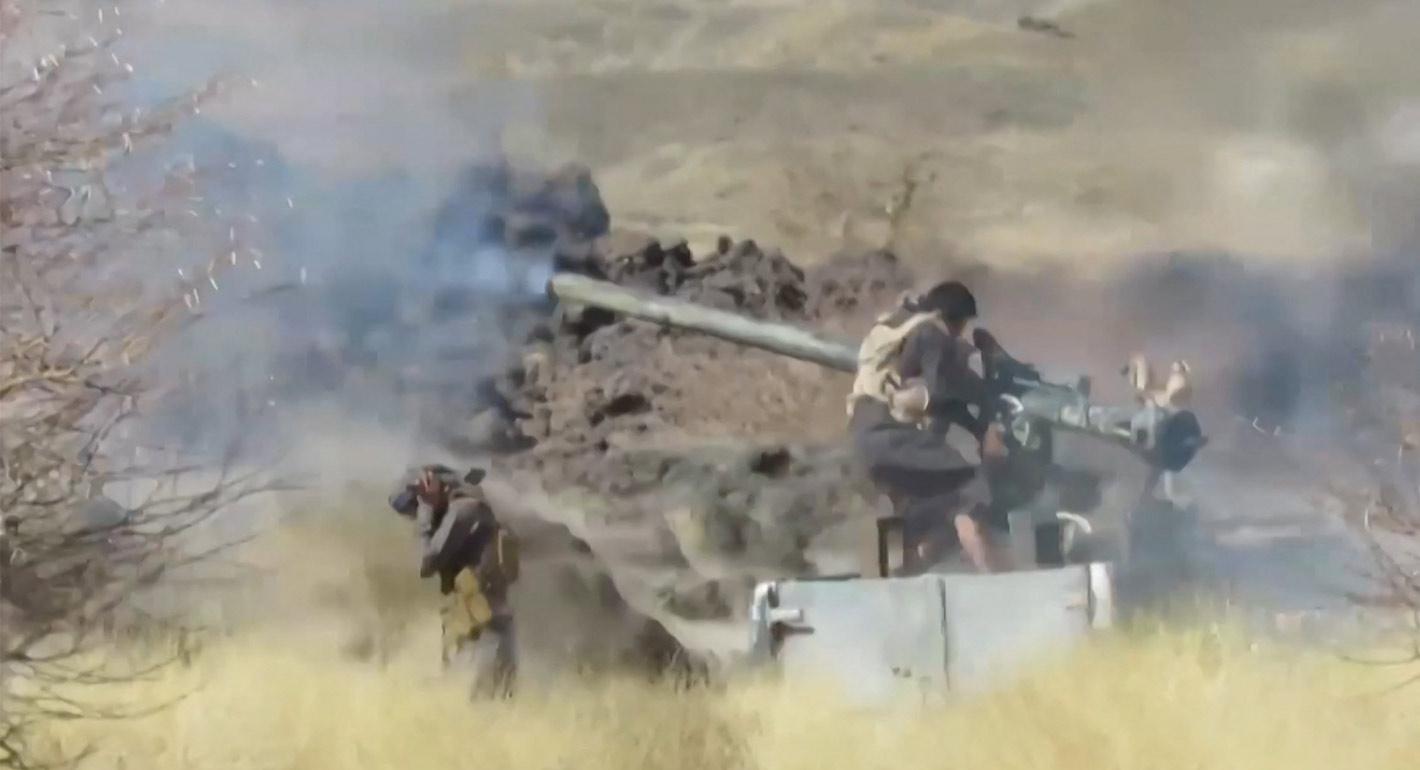
The recent fierce attempts by the Houthis to capture Ma’rib highlight the importance of this province to the group’s ability to rule northern Yemen in the future. In addition to the importance of its location, which links many local trade lines, Ma’arib has the largest station in Yemen for generating electric power, Ma’rib’s location and wealth of natural resources, particularly the oil and gas that supplies 90 percent of the country’s needs, make it a coveted prize for both the Houthis and the Internationally Recognized Government (IRG), for whom Ma’rib is the last stronghold in the north. Thus, the Houthis have escalated their offensive operations in the area to help secure their place in Yemen’s future as a major player.
In early 2015, the Houthis placed President Abed Rabbo Mansour Hadi, Prime Minister Khaled Bahah, and all his cabinet ministers under house arrest – thus tightening their control over Yemen’s Central Bank and establishing a sort of local authority in Ma’rib. Later that year, in a televised interview, Houthi leader Abdelmalek Al-Houthi justified an offensive operation against Ma’rib by warning that there was a conspiracy to allow the governorate to fall in the hands of Al-Qaeda. A few months later, Houthi fighters advanced into the territories west and north of Ma’rib where they encountered military units, tribesmen, and supporters of Al-Islah (Reform) party. The fighting continued for six months until the Saudi led coalition arrived to help re-establish control and stop the intensive Houthi attacks. The local authority immediately announced its official financial and administrative disengagement from Sana’a and instructed the local branch of the Central Bank of Yemen (CBY) to stop sending Ma’rib’s oil revenues to the Sana’a based CBY headquarters starting the 21st of November 2015. The pressures exerted by the Houthis made the local authority in Ma’rib disengage the financial link from the central bank in Sanaa, which is under the control of the Houthis, and this was a prominent challenge between the local authority in Ma’rib and the Houthis.
For six years, sporadic fighting between the Houthis and the Coalition forces over Ma’rib continued, and in February 2021, the Houthis re-escalated its attacks and pushed deeper into the governorate, causing considerable losses for the IRG forces and its allied tribal fighters. In March 2021, Riyadh announced a peace proposal to end the six years of war. This proposal was followed by bilateral talks in Muscat, chaperoned by U.S. Special Envoy Tim Lenderking and the Sultanate of Oman. Despite these talks, the war over Ma’rib continued to rage on. The Houthis have made it clear that they prioritize economic gain over humanitarian concerns – among their many demands was a request for a share of Ma’rib’s oil and gas profits to be deposited in a special account in Yemen’s Central Bank in Sana’a, which they control, in return for paying the long overdue salaries of government employees.
The Houthis believe that they have what it takes to build a proper state in the territories under their control. In these territories they have established centralized security over the land and the people, and have imposed complete de facto authority without concern for whether they are an internationally recognized governing body. They do, however, understand that they lack the financial resources necessary to run and manage the economies of the areas under their control, and thus they believe that their financial woes can be addressed by overtaking Ma’rib and controlling its abundant oil and gas revenues.
To win the battle of Ma’rib, the Houthis have mobilized all of their soldiers and arms, but after four months of bloody war, they realized that a protracted battle for Ma’rib will weaken their southern and western fronts and deter their advances towards the Safer refinery. On the other hand, the IRG and its allies, after suffering considerable losses, have failed to significantly reengage the Houthis in the battle. And although the flurry of Saudi air strikes is a huge obstacle to the Houthis’ advancement, their counter missile and drone attacks have had devastating effects on the peace and economic stability of the Kingdom. This dilemma is likely to convince the Houthis to accept the peace agreement and gain a share in the coveted oil revenues.
The Future of Ma’rib
In exploring alternative futures for Ma’rib, two possible scenarios emerge: either the city falls in the hands of the Houthis, or the diplomatic efforts to solve the conflict succeed.
To the Houthis, the first scenario would mean the inception of a new state, as Ma’rib will provide them with all the funds they need to overcome their financial difficulties in the other territories they control. As for the IRG, the loss of Ma’rib will be a fatal blow to their political and military status, especially as the Transitional Council continues to gain power and resources in the south.
The second scenario assumes that the intensive diplomatic efforts of the United Nations (UN), the U.S., and their trusted mediator, the Sultanate of Oman, will succeed in brokering a ceasefire and restart the political process in Yemen. This scenario is the more likely of the two especially after the terms of the Joint Declaration (JD) of the UN were made available.
The JD stipulated the formation of a coordination committee headed by the UN with members from both parties to monitor the ceasefire and discuss the technical and financial aspects necessary to repair the Ma’rib-Ras Isa pipeline so that it can resume pumping oil. The plan also encourages the Houthis and the IRG to pay the long overdue salaries of all civil servants in the country according to the 2014 payroll and open a joint account in the Central Bank in Sana’a and in other branches so that they can receive the revenues of oil and gas sales from various provinces.
As matters stand now, whether Ma’rib falls in the hands of Houthis or the peace talks are successful, the Houthis will be at an advantage while the IRG stands to lose a lot of resources and terrain. Without a shred of doubt, Yemen’s fate hinges on the battle for Ma’rib – the results of this battle will affect the future struggle for prosperity in this war-torn country. What remains unclear is how this battle will shape Yemen and its leaders.
Ammar Al Ashwal is a Yemeni journalist for a number of Arab and international newspapers. He holds a master's degree in media and communication sciences from the Lebanese University in Beirut. Follow him on Twitter @lshwal.
About the Author
Ammar al-Ashwal
Carnegie does not take institutional positions on public policy issues; the views represented herein are those of the author(s) and do not necessarily reflect the views of Carnegie, its staff, or its trustees.