

{
  "authors": [
    "Souhayb Jawhar"
  ],
  "type": "commentary",
  "blog": "Sada",
  "centerAffiliationAll": "",
  "centers": [
    "Carnegie Endowment for International Peace"
  ],
  "collections": [],
  "englishNewsletterAll": "",
  "nonEnglishNewsletterAll": "",
  "primaryCenter": "Carnegie Endowment for International Peace",
  "programAffiliation": "",
  "programs": [],
  "projects": [],
  "regions": [],
  "topics": []
}
Source: Getty
Doha: Filling the Arab Void in Lebanon
Liberated after the end of the 2017 blockade and encouraged by the United States declaring it a “major non-NATO ally,” Qatar resumes its mediatory role in Lebanon.
The state of Qatar has recently begun further honing its diplomatic tools to actively contribute to current regional affairs. At the top of the country’s list is mediating between Washington and the Taliban, brokering friendship between Turkey and Egypt, and most importantly, activating its presence in the crisis-ridden Lebanese state.
The Qatari presence in Lebanon dates back to the period following the assassination of former Lebanese Prime Minister, Rafik Hariri, in 2005 and the Israeli war on Lebanon in the summer of 2006. During that time, Doha played a pivotal role in stopping the Israeli aggression, as well as sponsoring the Lebanese National Dialogue Conference in 2008 when fighting between Hezbollah and its opponents erupted in Beirut. The conference ended an 18-month long political crisis and resulted in Michael Suleiman, commander of the Lebanese Armed forces, being appointed as a consensus president. Even today, despite Qatar’s disagreement with Iran and Hezbollah on the Syrian file, Doha’s channels of communication with Hezbollah remain effective in the Lebanese arena.
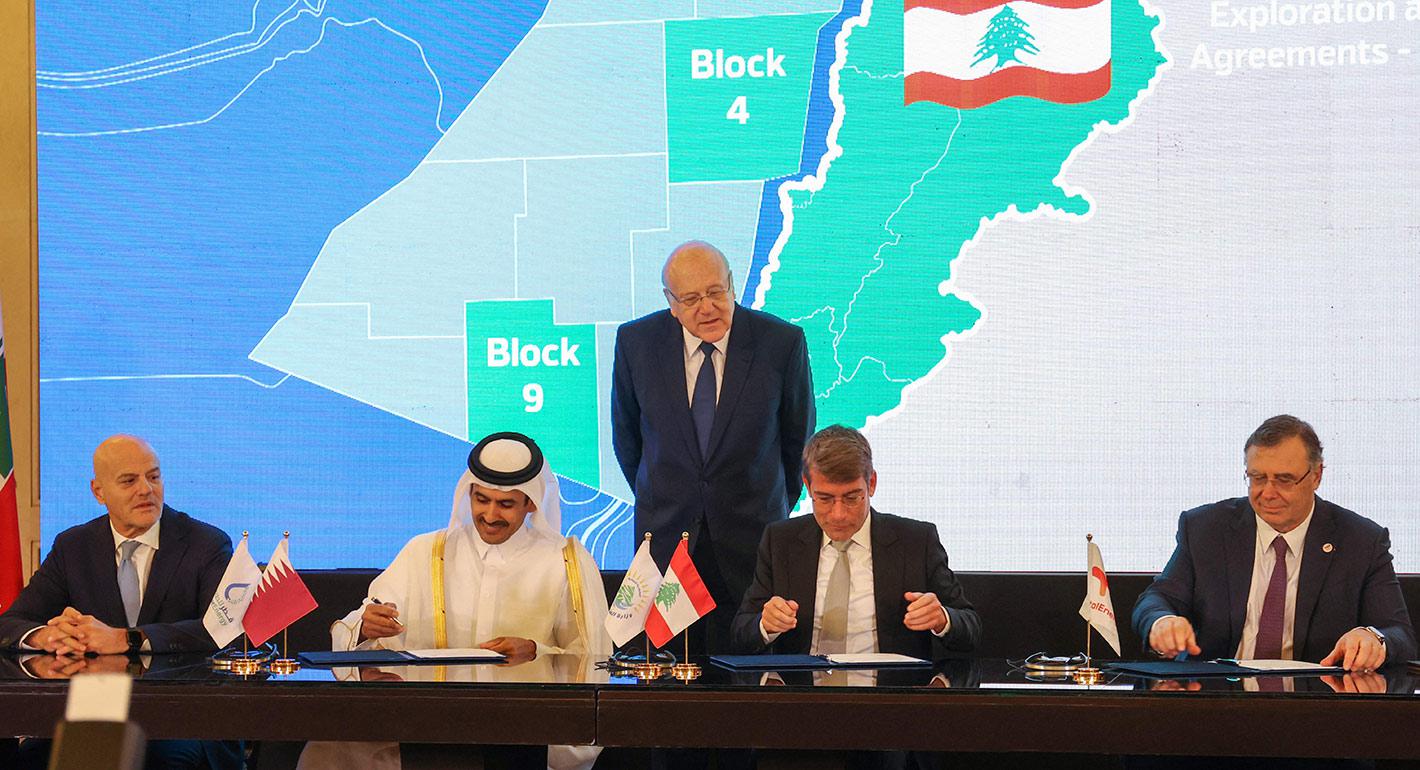
When the maritime border demarcation negotiations between Lebanon and Israel under American auspices were completed, former President Michel Aoun publicly thanked the state of Qatar and officially recognized the Qatari role in achieving this agreement which allowed for gas exploration in the Mediterranean Sea. Behind-the-scenes intelligence confirmed that Doha’s contributions helped put the final touches on the deal by assisting the American mediation efforts. The U.S. mediator, Amos Hochstein, held talks in Doha last February with Gebran Bassil, leader of the Free Patriotic Movement, over sea border demarcation and the gas dispute with Israel. Other Lebanese officials, including presidential negotiator, Elias Bou Saab, announced their desire for Qatar to have a key investment in Lebanese oil blocks, whether in exploration operations or in the extraction stage. Furthermore, the Lebanese Ministry of Energy announced that Qatar is now in talks with the Lebanese government to take a 30 percent stake in the offshore exploration Block 9.
Qatari Initiative Suggests Army Commander as President
Qatar is also among the countries engaged in the effort to find a new president for Lebanon. Leaks indicate that Doha’s preference is for the election of the army commander, Joseph Aoun, who is expected to create consensus inside Lebanon and build trust regionally and internationally. Proof of Qatari interest appeared recently when Doha donated 60 million USD to the Lebanese army in a gesture that the United States commended. This was followed by Qatar’s extension of a formal invitation to Mr. Aoun to visit Doha on December 10, 2022. The invitation received significant attention in Lebanon and in other countries of the region, as Aoun is one of the most prominent and serious presidential candidates, with extensive relations with Arab and Western governments that broker settlements in Lebanon.
The Qataris and Aoun held intensive talks to discuss continued support for the Lebanese army. Lebanese sources indicated that Doha assured Aoun of international and Arab support for his candidacy. However, the problem lies in obtaining the agreement of the local Lebanese powers such as Hezbollah and the Free Patriotic Movement, whose president, Gebran Bassil, will be hosted in Doha to discuss the matter.
In fact, the Qatari presence in all discussions pertaining to Lebanese affairs is becoming abundantly clear. By next spring, a quadripartite meeting organized by Qatar will be held in Paris between officials from the United States, France, Qatar, and Saudi Arabia to discuss the efforts of Doha and Paris to reach a political solution to the Lebanese crisis and to elect a president of the country.
An Adventure in a Minefield
The Qataris seek to play a bigger role in the ongoing international efforts to resolve the Lebanese crisis with Saudi consent, French coordination, and American sponsorship. They are supporting the army and sending aid to support the health, education, and transportation sectors at a time when the support of other Gulf countries is clearly absent. So far, Saudi Arabia has avoided announcing its support for any presidential candidate, and Hezbollah appears to be waiting to see if a consensus emerges around a figure who will unite the government.
Ultimately, the success of any Qatari role in Lebanon is dependent on the desire of the Lebanese parties to consider the proposed solutions, beyond their own political calculations. It also hinges on relations between the actual actors in the region, specifically Washington, Riyadh, and Tehran.
Souhayb Jawhar is a Lebanese journalist and writer for a variety of Arabic sites, a producer of documentary films for Al Araby TV, and a researcher covering Islamist political movements. Follow him on Twitter: @souhaybjawhar.
About the Author
Souhayb Jawhar
Carnegie does not take institutional positions on public policy issues; the views represented herein are those of the author(s) and do not necessarily reflect the views of Carnegie, its staff, or its trustees.