

{
  "authors": [
    "Batu Coşkun"
  ],
  "type": "commentary",
  "blog": "Sada",
  "centerAffiliationAll": "",
  "centers": [
    "Carnegie Endowment for International Peace"
  ],
  "collections": [],
  "englishNewsletterAll": "",
  "nonEnglishNewsletterAll": "",
  "primaryCenter": "Carnegie Endowment for International Peace",
  "programAffiliation": "",
  "programs": [],
  "projects": [],
  "regions": [],
  "topics": []
}
Source: Getty
Erdoğan Rediscovers Kemalism
Ahead of upcoming elections, Kemalism has made a surprising comeback in Turkey.
In the early 2010s, Kemalism, the ideology named after modern Turkey’s founder and first president Mustafa Kemal Atatürk, had gone out of fashion. The country’s professedly foundational ideology appeared dated and blatantly illiberal, seeming to appeal only to a former political and economic elite desperate to cling to power under shifting circumstances. The ideology’s two pillars of militant secularism and forced westernization clashed deeply with Turkish society, harkening back to a tiresome chapter of recent political history that reeked of state violence.
The post-Kemalist epoch in Turkey was thus well underway, bolstered by the political prowess of then-prime minister, now president, Recep Tayyip Erdoğan. Erdoğan had been steadfast in dismantling the sacrosanct tenets of the Kemalist state, namely through reshaping civil-military relations by reducing the autonomy of the armed forces, reevaluating the Kurdish Question through a political process which stipulated negotiations with Kurdish insurgents, and most significantly, increasing the visibility of religious persons in the public sphere.
Today, these trends have almost entirely reversed. Erdoğan has been rediscovering Kemalism since the failed coup attempt of 2016 which the government blamed on the exiled cleric Fethullah Gulen. This event forced Erdoğan into an alliance with supporters of the formerly shunned Kemalist ideology, and as he utilized his newfound coalition to purge the state of Gulenists, his politics shifted in accordance. State cadres that were emptied by the departure of Gulen’s followers were staffed with nationalists. Turkey’s security sector once again became the nexus of public life. On the Kurdish Question, Erdoğan reverted to the state’s original rationale that a military solution is the only appropriate response to attempts at separatism.
However, the president is not only embracing Kemalism, but he is also defining the ideology’s current incarnation. Kemalism à la Erdoğan appeals to a larger segment of society than ever before—bridging Turkey’s nationalists and conservatives. In a country where the center of politics leans unequivocally to the right, these sentiments have natural constituents.
Yet, one clear demarcation between Erdoğan and the Kemalists remains the visibility of religion in the public sphere. Both Erdoğan and his new allies have allowed for pragmatism to prevail in this regard. Despite the republican old guard’s overwhelming disdain for the pious masses, an overarching and almost universally acclaimed nationalism reigns supreme in Turkey. Early republican icons are merged with religious undertones in a blend that evokes the classic Kemalist sentiments of anti-colonialism, distrust of Western powers, and an autarkist model of economic advancement. Erdoğan’s Kemalism is indeed more inclusive, as it re-interprets the ideology to appeal to Turkey’s large conservative populace. In its current iteration, Kemalist ambitions of transforming society are put aside, and the ideology’s maxim of deference to state authority is emphasized.
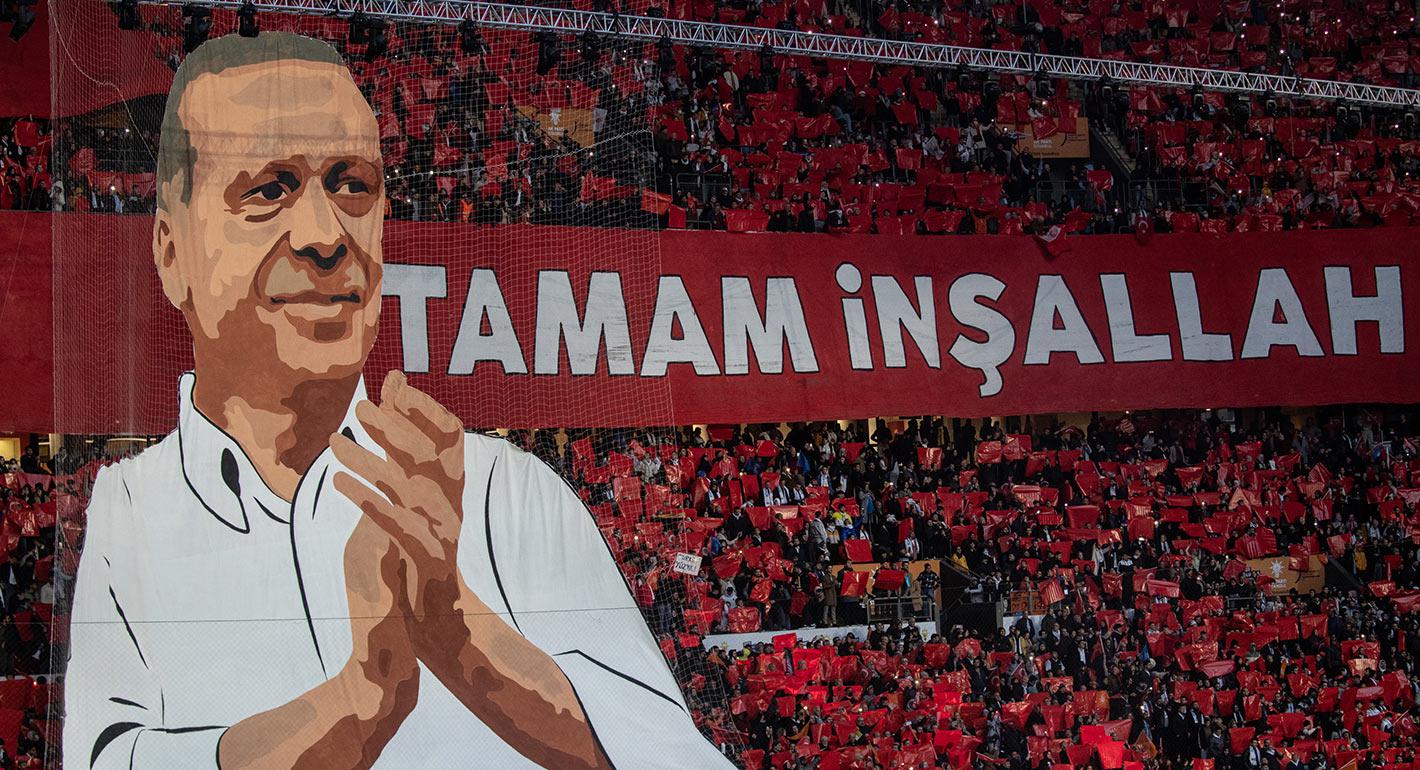
This consensus was on full display in Erdoğan’s recently unveiled grand electoral manifesto “Century of Turkey.” Erdoğan’s electoral program took inspiration from the formative years of republican Turkey, drawing parallels between the struggles of the early Turkish nation state and his current endeavors— a particularly apt comparison as the centenary of the republic approaches. In his bid to shape the ideology, Erdoğan combines the natural Kemalist urge for militarism with Turkey’s burgeoning defense industry, which has grown under the direct auspices his family.
For Erdoğan, the Kemalist alliance has been advantageous on two fronts. First and foremost, he has discovered new constituencies in the political center and right significant enough to fill the void left by the departure of Kurdish voters and liberally inclined city dwellers. Second, Erdoğan now commands the entire extent of the Kemalist state apparatus, including the increasingly significant security institutions, which has allowed him to utilize the state’s coercive mechanisms at will. Whether or not this alliance will prevail will be tested in June 2023, when Turkey heads to one of its most significant elections in recent memory.
Batu Coşkun is a political risk analyst on Turkish affairs and a research fellow at the Sadeq Institute. He tweets at @BatuCoskunn.
About the Author
Batu Coşkun
Carnegie does not take institutional positions on public policy issues; the views represented herein are those of the author(s) and do not necessarily reflect the views of Carnegie, its staff, or its trustees.