

{
  "authors": [
    "Sara Bazoobandi"
  ],
  "type": "commentary",
  "blog": "Sada",
  "centerAffiliationAll": "",
  "centers": [
    "Carnegie Endowment for International Peace"
  ],
  "collections": [],
  "englishNewsletterAll": "",
  "nonEnglishNewsletterAll": "",
  "primaryCenter": "Carnegie Endowment for International Peace",
  "programAffiliation": "",
  "programs": [],
  "projects": [],
  "regions": [],
  "topics": []
}
Source: Getty
Iran’s Uprising and the TikTok Generation
A new generation of tech-savvy and bold Iranians presents an unprecedented challenge to regime hypocrisy.
Thousands of Iranian students of varying ages have joined the ongoing protests in Iran that were sparked by the brutal September killing of the young Kurdish-Iranian woman, Jina Mahsa Amini. While protests have included participation from diverse segments of the population, the fearless attitude of Iranian youth, in particular, has been highlighted in countless videos circulated on social media. Iranian officials have claimed that the average age of arrested protesters is 15, and since September, at least 58 minors have been killed.
The hypocrisy of the governing system in Iran has haunted Iranians since the early years of the Revolution. Yet, members of the immediate post-Revolution generation were exposed to the world primarily through two state-owned television channels. This generation experienced the austerity of the Iran-Iraq war period directly, and was influenced by frightened parents who considered silence the best strategy to survive.
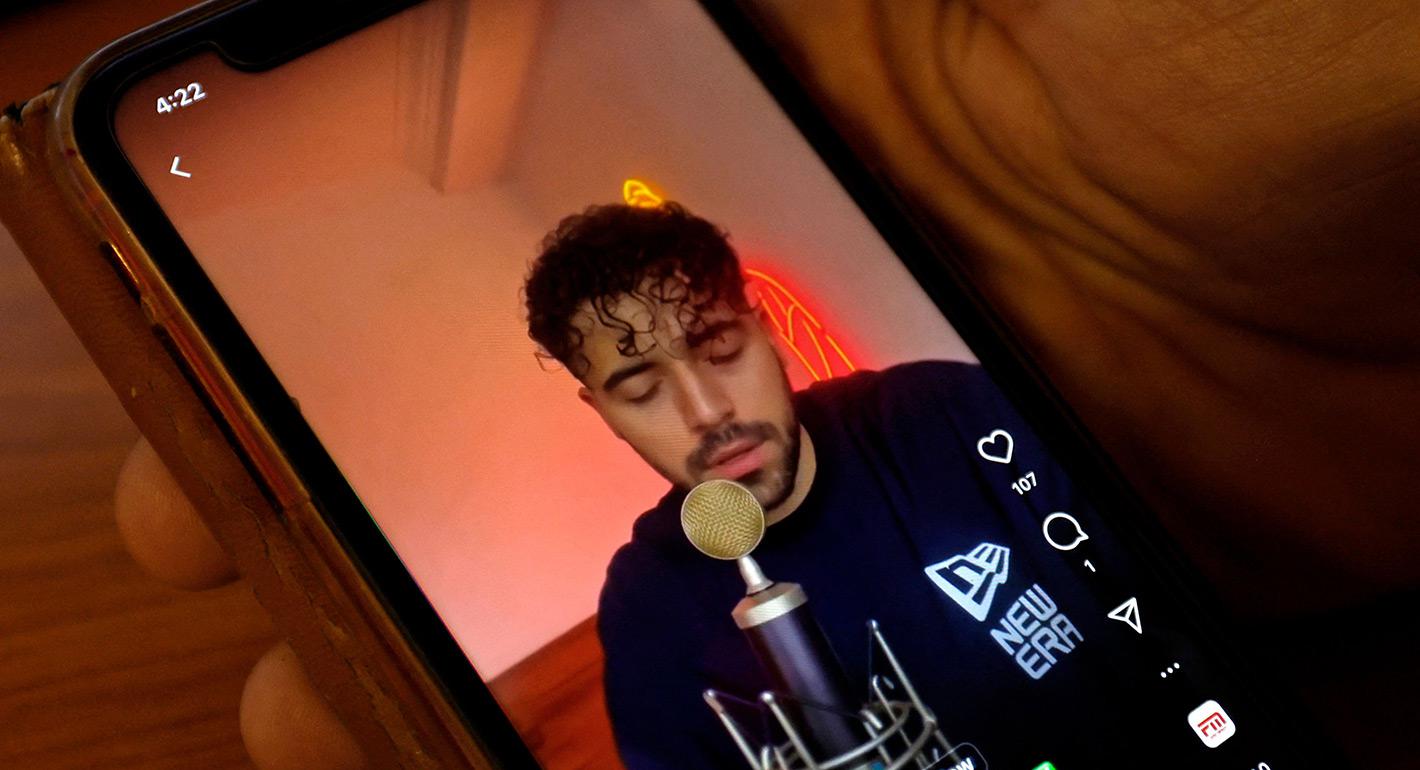
The TikTok generation of Iran, however, has a different degree of connectivity via the internet, which has allowed them to formulate different world views and expectations for their lives. Despite frequent regime restrictions on social media platforms, the use of virtual private networks (VPNs) is common, and it has been estimated that there are 24 million Instagram users in Iran. Sarina Esmailzadeh, a 16-year-old TikTok and Instagram creator who was beaten to death by security forces during protests, was part of this new generation. In an Instagram video, she said: “. . . We’ve also seen those in Los Angeles enjoying life to the fullest, and it’s only natural that as a human you would look onto the better option.”
Furthermore, despite measures that are aimed at systematically preventing political dissenters from entering institutions of higher education in Iran (including quotas for military and regime-affiliated youth), university campuses have been at the forefront of the uprisings. The students’ demand is quite clear: they call for a change of the regime—a notion that previous generations did not dare to speak about openly.
Iranian school students have been filmed tearing the pages of their schoolbooks which depict the current and former Supreme Leaders of Iran, and stomping on frames containing their pictures. The regime, for its part, has violently suppressed all dissenting voices, including those of the students. This response is evidenced in the horrific images and videos that were recorded at Sharif University of Technology where security forces violently broke up demonstrations. More than 130 universities have gone on strike since this brutal attack to express their outrage at the regime’s treatment of Sharif University students.
Meanwhile, more than 5000 children of senior regime officials are reportedly residing outside of Iran, and social media has provided a platform for the Iranian public, and particularly youth, to follow the regime-affiliated diaspora. For example, a video of the former Tehran police chief, General Morteza Talaei, exercising at a mixed-gender gym in Canada went viral in 2021. This was perceived as hypocritical as Talaei was instrumental in the establishment of the special forces that control public behavior. Recently, Talaei was sanctioned by the Canadian government which was under intense pressure to act following the outbreak of protests.
Regardless of the short-term results of the protest movement, it is clear that the TikTok generation is fed up with the environment of multi-layered hypocrisy that it has grown up in. This sizeable group (it is estimated that the share of the population under age 39 is around 60 percent) will undoubtedly shape the future of Iran, all while facing violent pushback from a regime of hypocrites.
Sara Bazoobandi is a Marie Curie Fellow at the German Institute for Global and Area Studies in Hamburg. She is a nonresident senior fellow at the Atlantic Council. Her research focus is political economy of the Middle East, particularly Iran. Follow her on Twitter: @EastRisk.
About the Author
Sara Bazoobandi
Carnegie does not take institutional positions on public policy issues; the views represented herein are those of the author(s) and do not necessarily reflect the views of Carnegie, its staff, or its trustees.