

{
  "authors": [
    "Jesse Marks"
  ],
  "type": "commentary",
  "blog": "Sada",
  "centerAffiliationAll": "dc",
  "centers": [
    "Carnegie Endowment for International Peace"
  ],
  "collections": [],
  "englishNewsletterAll": "menaTransitions",
  "nonEnglishNewsletterAll": "",
  "primaryCenter": "Carnegie Endowment for International Peace",
  "programAffiliation": "MEP",
  "programs": [
    "Middle East"
  ],
  "projects": [],
  "regions": [],
  "topics": []
}
Source: Getty
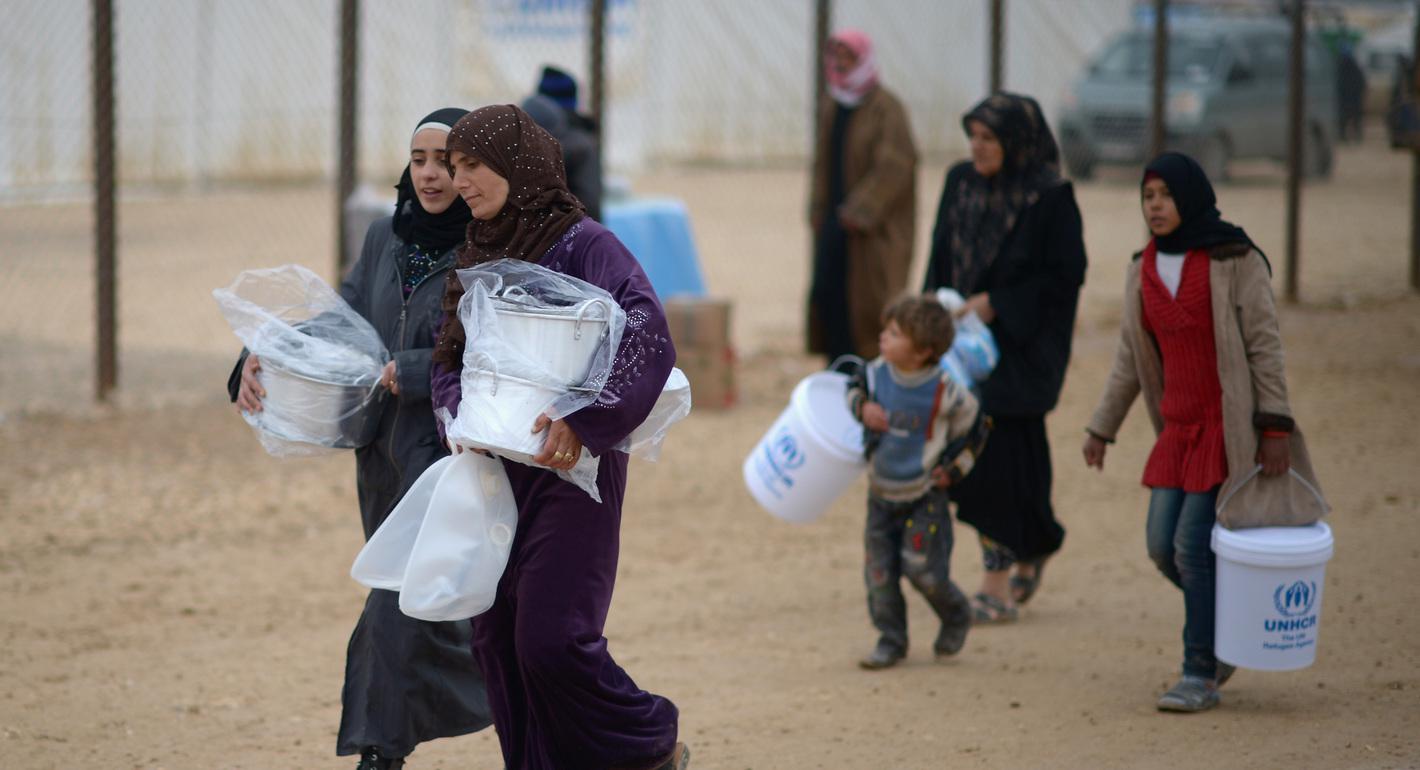
Syrian Refugees in Jordan: A Crisis of Dwindling Humanitarian Aid
With no clear end to Syria’s conflict in sight, the refugee response in neighboring Jordan is at dire risk of unraveling.
Over a decade after the start of the Syrian civil war, Jordan still hosts nearly 1.2 million Syrian refugees. Along with the organizations supporting them, these refugees now face diminishing donor interest, renewed Arab ties with the Syrian government, and a faltering economy. So far, the kingdom has not followed in the footsteps of Lebanon and Türkiye, which are already deporting Syrian refugees in droves. But Jordan has called for collective efforts to improve conditions in Syria and encourage refugee repatriation, and in the meantime, a growing number of Syrian refugees are fleeing Jordan for Europe through Libya.
Jordan has designated UN agencies and international NGOs to lead humanitarian operations for Syrian refugees, with the stipulation that funding comes from donors, not the state's coffers. However, the prolonged nature of the crisis has strained the financial capabilities of these organizations to meet refugee needs. In July 2023, UN agencies announced substantial reductions in their food assistance programs for Syrian refugees in Jordan, affecting those living in urban areas as well as in Jordan’s largest refugee camps, Za’atari and Azraq. Meanwhile, Syrian civil society groups, which are often linked to diverse diaspora support networks and play a large role in the humanitarian response in Türkiye and Lebanon, are legally restricted from operating in Jordan.
These funding shortfalls are part of a broader trend that affects Syrian refugees throughout the region. At the end of 2023, the UN World Food Programme (WFP) announced that it was shutting down its food program in Syria, which supports 5.6 million people, including those displaced in the country’s northwest. This comes as USAID and the State Department roll out further reductions of at least 30 percent in U.S assistance for Syria, which includes aid for Syrian refugees—a move that is expected to be mirrored by other European donors.
Concurrent crises in Ukraine, Sudan, and Gaza have also stretched humanitarian assistance thin, forcing aid organizations to do more with less resources and shifting donor priorities. Host countries like Jordan and Lebanon are thus increasingly concerned about being left to shoulder the financial burden of the refugee response. The gradual loss of funding could create major gaps in services for Syrian refugees and deepen vulnerabilities, especially for women and children. Our research has also found that many Syrian refugees see aid cuts as a concerted effort to push them to return.
Some donors have privately suggested integrating humanitarian aid programs into development strategies for Jordan, which the UN piloted in Iraq this past year. Key refugee services, such as food aid, education, and health care, would be folded into broader bilateral programming that targets Jordan’s own national development goals. This would be funded through mechanisms like the $1.54 billion annual U.S.-Jordan Memorandum of Understanding, rather than humanitarian agencies. However, the kingdom continues to show resistance to any strategy that would further integrate Syrian refugees, due to long-standing concerns about a permanent Syrian refugee presence.
The cumulative impact of these trends point toward a single outcome: a growing call for Syrians to return, by choice or by force. Jordanian officials initially saw normalization with the Syrian regime as a path toward improved conditions in areas where refugees were expected to return. However, this political gamble has produced no substantive improvement for either Jordan or Syrian refugees therein. UN and INGO staff, as well as Syrian refugees themselves, now voice their growing concerns that Jordan may soon join Lebanon and Türkiye in efforts to compel them to leave. In the face of this uncertainty, refugees have choice but to watch and wait.
Jesse Marks is the senior advocate for the Middle East at Refugees International. This article is informed by two months of interviews carried out in Jordan, Türkiye, and Lebanon from June-August 2023.
About the Author
Jesse Marks
Carnegie does not take institutional positions on public policy issues; the views represented herein are those of the author(s) and do not necessarily reflect the views of Carnegie, its staff, or its trustees.