

{
  "authors": [
    "Mohammed Hassan"
  ],
  "type": "commentary",
  "blog": "Sada",
  "centerAffiliationAll": "dc",
  "centers": [
    "Carnegie Endowment for International Peace"
  ],
  "collections": [],
  "englishNewsletterAll": "menaTransitions",
  "nonEnglishNewsletterAll": "",
  "primaryCenter": "Carnegie Endowment for International Peace",
  "programAffiliation": "MEP",
  "programs": [
    "Middle East"
  ],
  "projects": [],
  "regions": [],
  "topics": []
}
Source: Getty
U.S. Withdrawal from Northern Syria: Arab and Kurdish Reactions
Despite a long history of hostilities, Kurdish and Arab tribal forces in the region may be forced to pursue a political settlement with the Syrian regime.
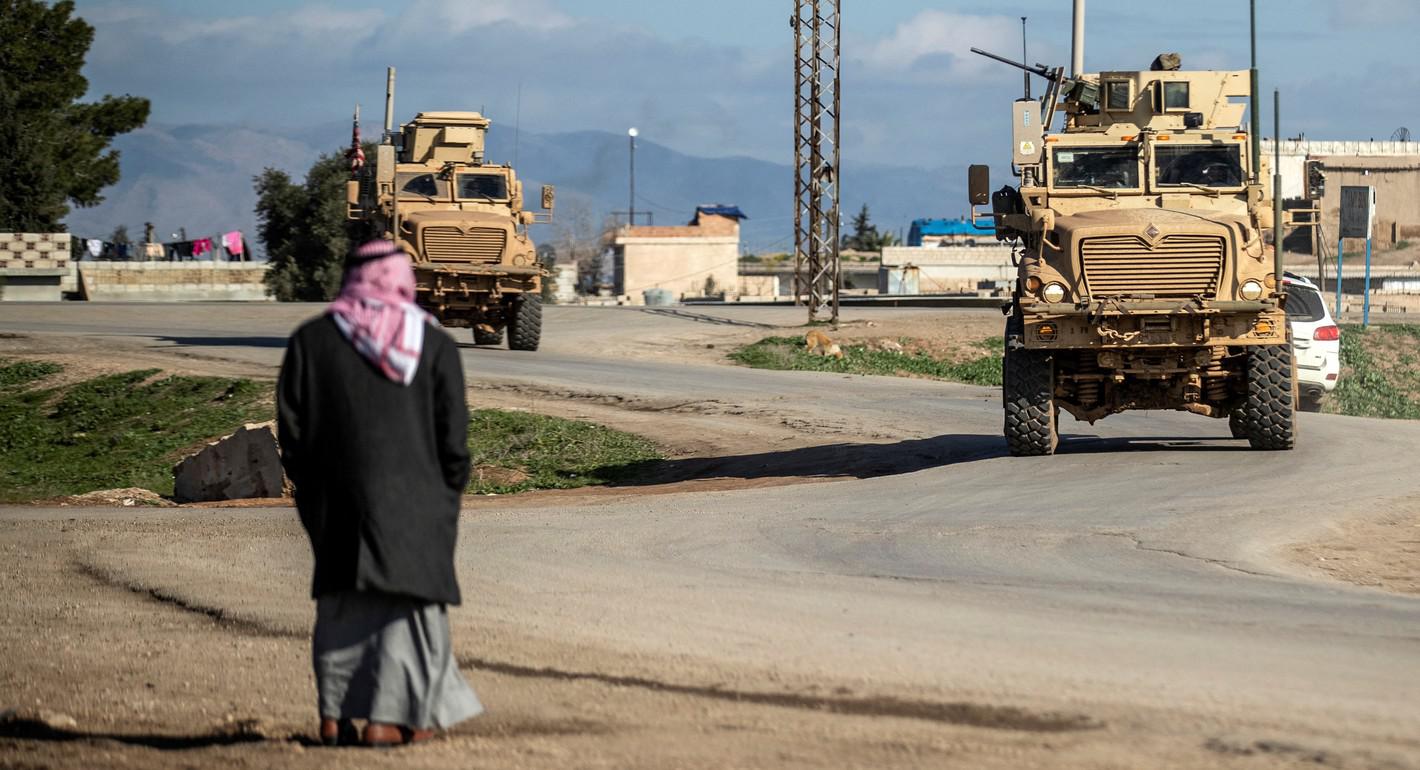
In January 2024, an article in Foreign Policy cited high-level sources within the U.S. Defense and State Departments who suggested that the United States is planning to end its military presence in Syria. According to these sources, the White House is “no longer invested in sustaining a mission that it perceives as unnecessary,” and internal discussions are taking place to determine the logistics and timing of the withdrawal.
While no definitive decision has officially announced, the prospect of withdrawal may compel the tribal northeastern Syria region, the Autonomous Administration (AA), and its military wing, the Syrian Democratic Forces (SDF), to make choices that could shape the future of the entire region. The most likely scenario is that the AA will seek a political settlement with the Syrian government and its ally, Russia. Under such an agreement, the regime would be granted authority over the region while the AA retained some degree of governance, with provisions to preserve the cultural identity and language of the Kurdish community.
The AA has previously employed a similar strategic approach on multiple occasions. In 2019, amid Turkish military operations against AA-controlled regions, the administration executed a tactical withdrawal from several key areas, including the southern countryside of Raqqa, the Hasakah governorate, and the city of Kobani "Ain al-Arab". This allowed the Syrian regime and Russia to deploy their forces into these territories—a pattern that was repeated in 2022, in the outskirts of Manbij, after the withdrawal of US forces from the area.
However, the Syrian regime has consistently rejected all the AA’s demands and insisted on the unconditional surrender of all its territories. It is now banking on the passage of time and the pressure created by Turkish ground and air military operations, which target the AA forces and administrative centers, to weaken and ultimately eliminate the administration. Despite these challenges, the AA continues to offer concessions to the Syrian regime, even without securing any tangible political gains. This willingness to compromise is fueled by the fear of Turkish incursions into Kurdish-majority areas, as previously witnessed in the city of Afrin.
As for the Arab tribes, which constitute the majority population in the northeastern regions of Syria, particularly in the governorates of Raqqa, Deir Ezzor, and certain areas of the Al-Hasakah governate, their position is no different from that of the AA. Despite their strained relations with the Syrian regime, the lack of a viable alternative may compel them to seek a compromise to avoid confrontation with the regime and Russia in the event of an American withdrawal. This is more likely than a renewed alliance with the Islamic State (ISIS), who still retain a presence in the area. The tribal society perceives minimal benefit in affiliating with ISIS, particularly given the organization’s military weakness, which renders them incapable of challenging the regime forces and Russia.
In 2019, the Arab tribes faced a similar situation when U.S. forces and the SDF withdrew from the vicinity of Manbij, enabling the entry of the Syrian regime and Russian forces. This withdrawal prompted discussions about the possibility of a complete U.S. withdrawal from Syria, and the tribes initiated negotiations with Russia to reach a settlement similar to the one between the Russians and opposition factions in Daraa. However, these negotiations were terminated when U.S. forces opted to maintain their presence in the area.
There are several reasons that the tribal community may once again seek an agreement with the regime and Russia following a U.S. withdrawal. Foremost among these is the skewed balance of power, which places the tribes at a disadvantage should military confrontations with the regime occur. The tribes suffered a significant loss of weaponry during the ISIS reign over the region and during the clashes between the tribes and the AA, as evidenced by the tribal uprising in Deir Ezzor in 2023.
The second factor is the absence of non-traditional political leaders within the tribal bloc. During the successive periods of ISIS and SDF control, these leaders were ousted and replaced by traditional tribal sheikhs, who favor peaceful solutions with external forces. Furthermore, there are currently several influential tribal leaders who are aligned with the Syrian regime, such as Nawaf al-Bashir, the sheikh of the al-Bakkārah tribe, and Ibrahim al-Hafel, the sheikh of the al-Uqaydat tribe.
The limited options available to the AA and the Arab tribes in northeastern Syria will compel them to engage in negotiations with the Russians and the Syrian regime in the event of a U.S. withdrawal. Nevertheless, they may try to secure certain benefits, such as the ability to carry weapons, and to exert leverage with their allies, particularly with the Americans, to elevate their demands and improve the terms of their surrender.
Mohammed Hassan is a non-resident scholar at the Middle East Institute and a master’s student in the Department of International Relations at the Higher School of Journalism in Paris. Follow him on X @mohammed_nomad.
About the Author
Mohammed Hassan
Carnegie does not take institutional positions on public policy issues; the views represented herein are those of the author(s) and do not necessarily reflect the views of Carnegie, its staff, or its trustees.