

{
  "authors": [
    "Jalal Al-Attar"
  ],
  "type": "commentary",
  "blog": "Sada",
  "centerAffiliationAll": "dc",
  "centers": [
    "Carnegie Endowment for International Peace"
  ],
  "collections": [],
  "englishNewsletterAll": "menaTransitions",
  "nonEnglishNewsletterAll": "",
  "primaryCenter": "Carnegie Endowment for International Peace",
  "programAffiliation": "MEP",
  "programs": [
    "Middle East"
  ],
  "projects": [],
  "regions": [],
  "topics": []
}
Source: Getty
Syria’s Water and Food Security Crisis
As the primary cause of drought—which has detrimental consequences for agricultural production—climate change is a growing challenge for Syria.
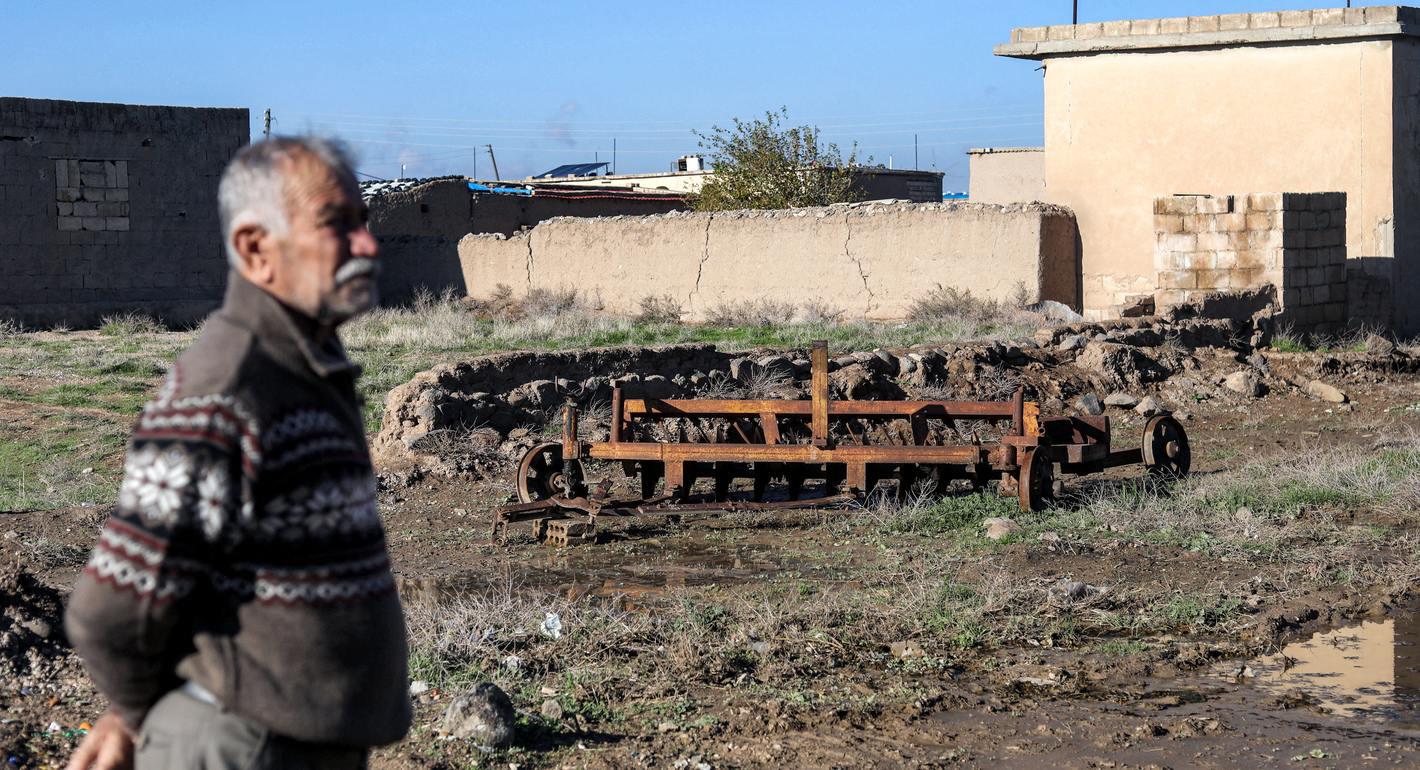
Throughout the Middle East, climate change has heightened the severity of droughts. Since 2020 the entire Euphrates Basin region, particularly the southern and eastern desert areas of Syria, has suffered from low rainfall and exceptionally high temperatures. These conditions have significantly impacted agriculture, reduced access to drinking water, and diminished water reserves. Additional factors such as conflict, political instability, social unrest, and economic crises have further elevated energy and food prices, exacerbating the impacts of drought, particularly on food security.
Climate change and increased drought
Scientific research indicates that these droughts in Syria would not have occurred without climate change, and studies predict that this situation will persist and potentially worsen in the future. One study shows that with a temperature increase of 1.2 degrees Celsius, the probability of droughts increases from a one-in-250-year event to a one-in-10-year event. If temperatures continue to rise to 2 degree Celsius, severe drought may occur once every five years.
The two main factors that affect the occurrence of droughts are low rainfall and elevated evaporation levels. While there has been a slight change in the amount and intensity of rainfall, there is a distinct increase in temperature, which accelerates the rate of water evaporation. This results in soil dryness, a decline in groundwater levels, and the ongoing depletion of water bodies such as rivers, lakes, and dams. The cumulative water loss in Syria until 2022 is estimated at about 2.2 billion cubic meters.
In addition to climate change, water policies imposed by neighboring Turkey, which also suffers from increased drought, has significantly restricted the flow of water from the Euphrates River and its tributaries into Syria. Compared to 1972, the flow of water in 2015 had decreased by approximately 40 percent, and the recorded flow in 2020 reached only about 244 cubic meters per second—less than half of what required according to international agreements. This is coupled with the fact that Syrians continue to extract approximately 34 million cubic meters of groundwater annually, which far exceeds the replenishment capacity of renewable water resources.


The impact of climate change on Syria’s agricultural sector
Rainfall is the lifeline for both agriculture and the general water supply in Syria. Over the past decades, Syria has experienced significant depletion of its water resources, primarily due to economic growth and competition for internationally shared waters. Climate change exacerbates this depletion, as evidenced by data from the World Meteorological Organization (WMO).
Successive droughts in northern and eastern Syria have forced farmers, particularly young ones, to seek work in other non-agricultural sectors—resulting in a 30 percent decline in agricultural production in 2010 compared to previous years. This downward trend has worsened in tandem with the impacts of the Syrian crisis on the agricultural sector. According to the Food and Agriculture Organization (FAO), wheat production plummeted to just 1.05 million tons in 2021. This represents the lowest wheat harvest in nearly fifty years, down from 2.8 million tons in 2020 and only 25 percent of the average annual production between 2002 and 2011, which stood at 4.1 million tons.
The impact of climate change on food security in Syria
Climate change is one of several reinforcing factors that contribute to food security crises in Syria. While droughts reduce the amount of water available for agriculture, the heightened temperatures increase plants' need for water. This vicious cycle leads to decreased agricultural productivity and food resources, consequently increasing the cost and reducing the availability of food—with the greatest impact on poor, vulnerable, and marginalized communities. Food insecurity not only intensifies inequality between social groups, but also forces people to migrate and creates greater social instability. This was seen in the eastern parts of Syria (Al-Hassakeh, Deir al-Zeer and Raqqa) where local populations have been compelled to migrate to major cities such as Damascus, Aleppo and Daraa, putting tremendous pressure on both the displaced people and the host communities.
Adapting to climate change
The government should work to improve infrastructure and develop sustainable, smart urban planning to enhance climate change adaptation efforts. It should improve water resource management, promote the use of modern irrigation systems, foster sustainable agriculture, and encourage the growth of climate-resilient crops that consume less water. To help Syrians adapt, the government should spread awareness about the seriousness of climate change, and strengthen international cooperation with neighboring countries to share water resources and expand renewable energy.
Jalal Al-Attar is an agricultural engineer specializing in agricultural scientific research, and a Business Manager within the Agriculture Department of the Syrian Atomic Energy Commission.
About the Author
Jalal Al-Attar
Jalal Al-Attar is an agricultural engineer specializing in agricultural scientific research, and a Business Manager within the Agriculture Department of the Syrian Atomic Energy Commission.
Carnegie does not take institutional positions on public policy issues; the views represented herein are those of the author(s) and do not necessarily reflect the views of Carnegie, its staff, or its trustees.