The economic crisis may force policy makers to revise their view that open borders are a good thing. Now is the time to take bold steps to forestall a protectionist resurgence.
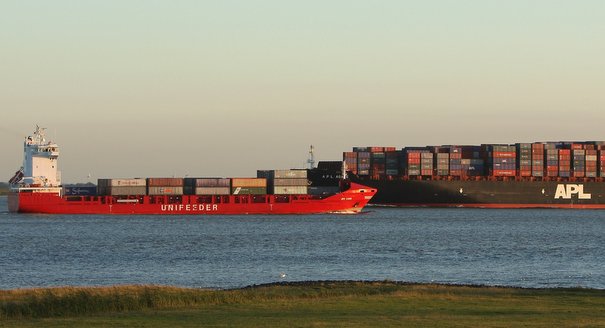
The Threat of ProtectionismAs the global financial crisis intensifies, world leaders are facing growing political pressure to enact protectionist measures. Although protectionism so far has probably had only a modest effect on trade flows, it is clear that countries are increasingly resorting to protectionist measures. Whereas the trend over the last two decades has been toward increased liberalization, since the financial crisis worsened in November 2008, the majority of trade measures enacted around the world (55 out of 77) have been trade restrictive.
The risk of a devastating resurgence of protectionism is real, and, if unchecked, will only grow as the crisis continues. Although an economic recovery beginning later this year or early in 2010 is the most likely forecast at this stage, the downside risks associated with this forecast are very large indeed. Assuming, for example, that this episode conforms to previous financially-driven recessions, the United States currently would be only about one-third to one-half of the way through its recession, while in the vast majority of other countries, where the downturn is younger, recovery would likely require even more time. Further, today’s unprecedented levels of household debt, increasingly complex financial tools, and high capital mobility suggest a potentially more protracted episode than those seen in the past. Falling world trade demand will restrict the essential role that trade has played in past recoveries. The entrenchment of this crisis will likely deepen public mistrust of economic integration.
Counter-cyclical policies and banking bailouts are absolutely necessary to contain the crisis. But they also imply a much expanded role of the state in―and therefore an expanded risk of politicization of―economic decisions. Even when support measures are intended to mitigate the downturn, their unintended effect is often to protect, and such measures can easily be misinterpreted by other governments as protectionist even when they are not intended to be.
Further, even if measures remain within the limits set forth by international agreements, policy makers retain flexibility to discriminate. Developing countries tend to have large gaps between bound (i.e. maximum allowable) and applied tariff rates, which permits them to raise tariffs without breaking any WTO commitments. Industrialized nations can legally withdraw their Generalized System of Preferences (which offers the least developed nations lower tariffs than offered to other nations). All nations are permitted to raise compensating tariffs against a trading partner found guilty of dumping or of implementing distortionary subsidies. Standard setting bodies have wide discretion. Finally, the WTO still has several salient gaps in its jurisdiction, and protectionist bailouts and investment restrictions are allowed in many sectors.
The potential losses from trade restriction could be huge. The International Food Policy Research Institute estimates that if countries raise their tariffs to the maximum rates applied over the past decade, world trade would likely decrease by 3.2 percent, while world welfare would fall by $134 billion. If countries take the more extreme measure of raising their tariffs up to WTO bound rates, world trade would likely decrease by 7.7 percent and world welfare would decline by $353 billion.
Worse, if countries choose to raise tariffs levels and other barriers above WTO limits, we may see a severe contraction of trade not seen since enactment of the Smoot Hawley tariffs in the wake of the Great Depression. These barriers, as well as those enacted in retaliation, may have accounted for over half of the 33 percent decline in world trade during the Great Depression. Furthermore, a resurgence of protectionism today would likely generate even greater losses than it did then, when tariffs were much higher at the outset and countries were less integrated through complex international production chains.
The most effective way to defuse protectionist pressures is to reignite economic growth quickly. Acting aggressively on the broader economic recovery agenda, including injecting fiscal and monetary stimulus, removing non-performing assets from bank balance sheets, and helping the most vulnerable countries and groups, is essential. But how this is done is also important. Stimulus and financial rescue policies should aim to be as non-distortive of competition, both foreign and domestic, as possible. Support measures should be temporary and have a clear exit strategy. Furthermore, the more the burden of economic recovery policies is shared across countries―and is seen to be fairly shared―the easier it becomes to avoid beggar-thy-neighbor trade measures.
G20 policy makers at the recent summit in London answered the urgent call to take up measures to avoid backsliding or, worse, a trade war. They extend the moratorium on new trade measures to 2010 and promised to report all changes in trade policy to the WTO (and sanctioned their publication). However, these declarations are so far just that; we must wait and see if they are translated into action. As long as the economic downturn continues, so will pressures for protectionism.
Since its early manifestations in the middle of 2007, the severity of this crisis has been systematically underestimated. Many years of stable growth, the so called “Great Moderation,” as well as a sense that the lessons of previous crises had been learned, induced complacency. Yet, many things that were difficult to imagine even a year ago are now happening, including a fall in world GDP, a near-collapse in world trade, double digit U.S. budget deficits, and the obliteration of mighty investment banks. The crisis may be about to force policy makers to revise their view that open borders can be taken for granted. Now is the time for policy makers to take bold steps to forestall a protectionist resurgence.
Former Senior Associate, International Economics Program
Dadush was a senior associate at the Carnegie Endowment for International Peace. He focuses on trends in the global economy and is currently tracking developments in the eurozone crisis.
Lauren Falcão
Former Junior Fellow, Trade, Equity, and Development Program
Carnegie does not take institutional positions on public policy issues; the views represented herein are those of the author(s) and do not necessarily reflect the views of Carnegie, its staff, or its trustees.
More Work from Carnegie Endowment for International Peace
As the war between the United States, Israel, and Iran continues, Carnegie scholars contribute cutting-edge analysis on the events of the war and their wide-reaching implications. From the impact on Iran and its immediate neighbors to the responses from Gulf states to fuel and fertilizer shortages caused by the effective shutdown of the Strait of Hormuz, the war is reshaping Middle East alliances and creating shockwaves around the world. Carnegie experts analyze it all.
Donald Trump has repeatedly bashed NATO and European allies, threatening to annex Canada and Greenland and deploring their lack of enthusiasm for his war of choice in Iran. Is this latest round of abuse the final straw?