Q&A
Milan Vaishnav, Ila Patnaik
{
  "authors": [
    "Ila Patnaik"
  ],
  "type": "legacyinthemedia",
  "centerAffiliationAll": "dc",
  "centers": [
    "Carnegie Endowment for International Peace"
  ],
  "collections": [],
  "englishNewsletterAll": "ctw",
  "nonEnglishNewsletterAll": "",
  "primaryCenter": "Carnegie Endowment for International Peace",
  "programAffiliation": "SAP",
  "programs": [
    "South Asia"
  ],
  "projects": [],
  "regions": [
    "South Asia",
    "India"
  ],
  "topics": [
    "Economy"
  ]
}
Source: Getty
The BJP is reportedly evaluating various reform proposals to include in its manifesto. It is important to evaluate these on the basis of both economic theory and international experience.
Source: Indian Express
In a recent speech, Narendra Modi said that India needs tax reform. The BJP is reportedly evaluating various reform proposals to include in its manifesto. It is important to evaluate these on the basis of both economic theory and international experience.
The most prominent proposal on tax reform is the one supported by Baba Ramdev. He has proposed a tax on all bank transactions. According to the proposal, such a tax will eliminate “black money”. Money is considered “black” only when the payment of taxes has been evaded. Under a transaction tax regime, evasion is technologically impossible because the bank will be responsible for the collection and payment of taxes, which will take place electronically. Such a tax is supposed to be simple — with little cost of collection, no filing of tax returns and no possibility for evasion.By implementing this proposal, it is argued that India can get rid of all the complicated taxes it has at present. There will, however, be no taxation of cash transactions because it will be difficult to implement. To ensure that people do not start transacting in cash alone, it is proposed that Rs 500 and Rs 1000 currency notes should be demonetised.
Why is this not a good idea? Transaction taxes are often referred to as “sand in the wheels”. They are meant to discourage certain kinds of transactions. The original “Tobin tax” on currency market transactions was intended to reduce the magnitude of currency trading turnover. Those who argue for transaction taxes do so on the grounds that they will reduce transactions. In other words, it is well understood that when the government starts taxing certain kinds of transactions, people move away from them towards other kinds of transactions. If one method of making payments involves being taxed, people will choose other methods.
Transactions on the street will shift to dollars, gold, bitcoins and other unexpected things. For example, bottles of Tide detergent are reportedly popular as a currency in underworld transactions in the US because they are untraceable. Cigarettes can be used for small transactions. A one cubic centimetre piece of gold weighs 19.1 grams and is worth approximately Rs 56,350. These could be used for larger transactions. This would result in the further decline of the Indian rupee as a trusted vehicle for the storage and transportation of value.
Commentators have highlighted that the international experience of transaction taxes shows that they do not support revenue collection of more than 2 per cent of the GDP, and even this declines over time. Most countries have given up on transaction taxes. Such taxes do not yield the 10 per cent of GDP that even a minimal government, such as the one that Modi is said to want to oversee, will need as revenue.
But lest it be thought that this tax is only dysfunctional in foreign lands, let’s take the example of an Indian transaction tax — the stamp duty. If property is bought or sold, a set percentage of the value of the transaction is supposed to be paid as tax. Only if the transaction takes place through the banking system is it recorded, necessitating the payment of the stamp duty. So what do people do? They transact partly in cash. This part of the transaction is unrecorded and therefore the tax on it is not paid. Of course, this is illegal — the amount that is declared as the value of the transaction for the property is less than what it actually is and duty is being evaded. Does the inconvenience of counting, transporting and paying in notes of, say, Rs 500 prevent this cash transaction from taking place? No, it does not. In fact, in the real estate sector, it is difficult not to transact in cash. Tax evasion has become the norm. This has numerous downstream consequences — a network of illegality in real estate, weakness of the property tax, etc. Public finance experts believe that stamp duty should be eliminated to reduce black money in real estate.
Rather than encourage compliance, the stamp duty incentivises people to move away from the formal economy. With the proposed banking transaction tax (BTT), this is likely to become the norm for the bulk of the economy as there will be a “stamp duty” on all transactions routed through the banking system.
The dream of getting rid of myriad tax collectors is a good one — but it requires a great deal of action at the level of state governments, which have their own tax administrations. A constitutional amendment is needed to take away the taxation powers of states. The negotiations of the empowered group of state finance ministers regarding the GST — one of the few truly good ideas in tax policy in India — have been a long saga over the 2004-13 period. How will all state governments ever be persuaded to abolish their taxes in return for a slice of the BTT?
No country in the world has eliminated all taxes and replaced them with a BTT. If a government wishes to reform India’s tax system and reduce evasion, there are better ways to do this and simplify the system. The right strategy combines a flat low rate of income tax on individuals with an EET (exempt-exempt-taxed) treatment of savings, a removal of myriad exemptions, a clean and simple GST and the removal of most existing taxes so that we end up with exactly two taxes — an income tax on individuals and a GST on firms. Many expert tax and public finance committees have recommended this based not just on rigorous economic theory, but also on international evidence. Tax reform is an important and serious issue and can have a huge impact on economic conditions in India.
This article was originally published in the Indian Express.
Former Nonresident Senior Associate, South Asia Program
Patnaik, an expert on India’s economy, was a nonresident senior associate in Carnegie’s South Asia Program.
Recent Work

Milan Vaishnav, Ila Patnaik
Ila Patnaik, Ajay Shah
Carnegie does not take institutional positions on public policy issues; the views represented herein are those of the author(s) and do not necessarily reflect the views of Carnegie, its staff, or its trustees.
Five problems—and solutions—to make it actually work as a tool of great power competition.

Afreen Akhter
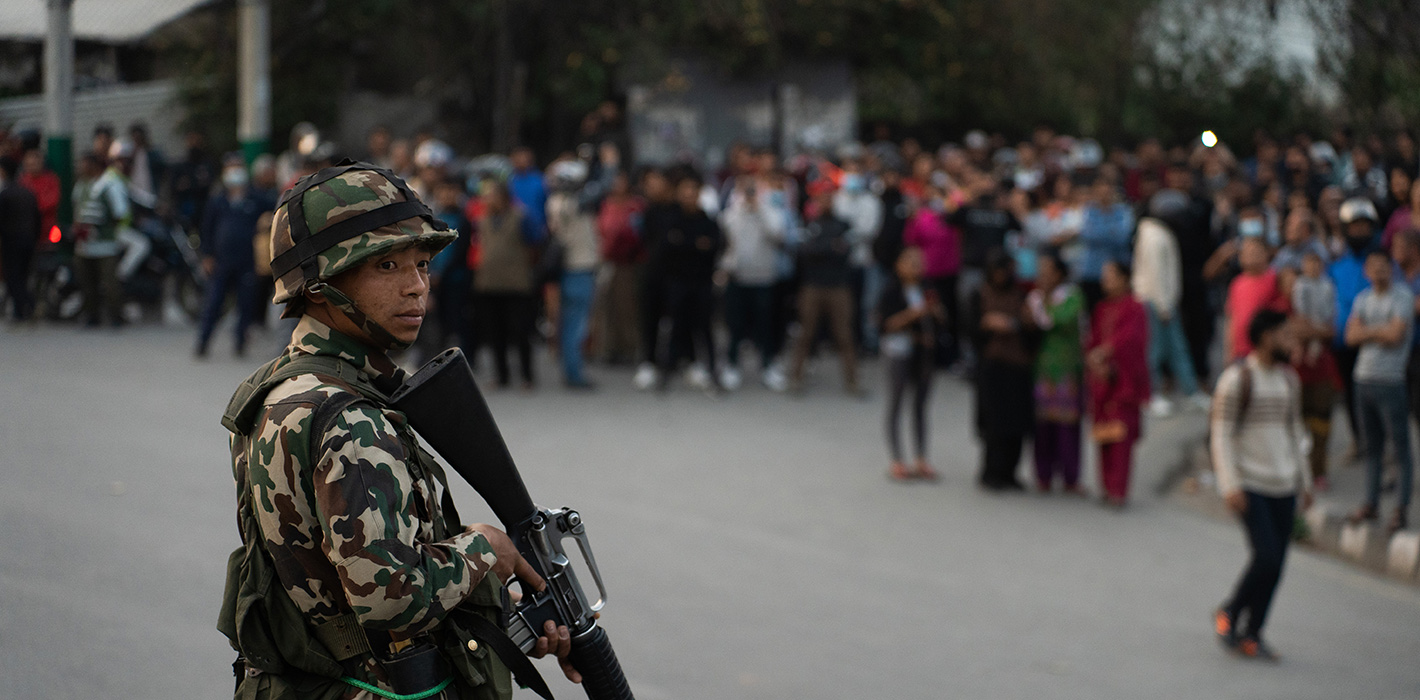
Military rule is now a defining political factor in South Asia. Here’s how analysts can understand and account for it.

Paul Staniland

This piece argues that the present Indian strategy, based on opportunistic diversification and utilization of limited strategic reserves, remains inadequate when confronting supply disruptions. It evaluates India’s options in the short, medium, and long terms.

Vrinda Sahai

As the war between the United States, Israel, and Iran continues, Carnegie scholars contribute cutting-edge analysis on the events of the war and their wide-reaching implications. From the impact on Iran and its immediate neighbors to the responses from Gulf states to fuel and fertilizer shortages caused by the effective shutdown of the Strait of Hormuz, the war is reshaping Middle East alliances and creating shockwaves around the world. Carnegie experts analyze it all.
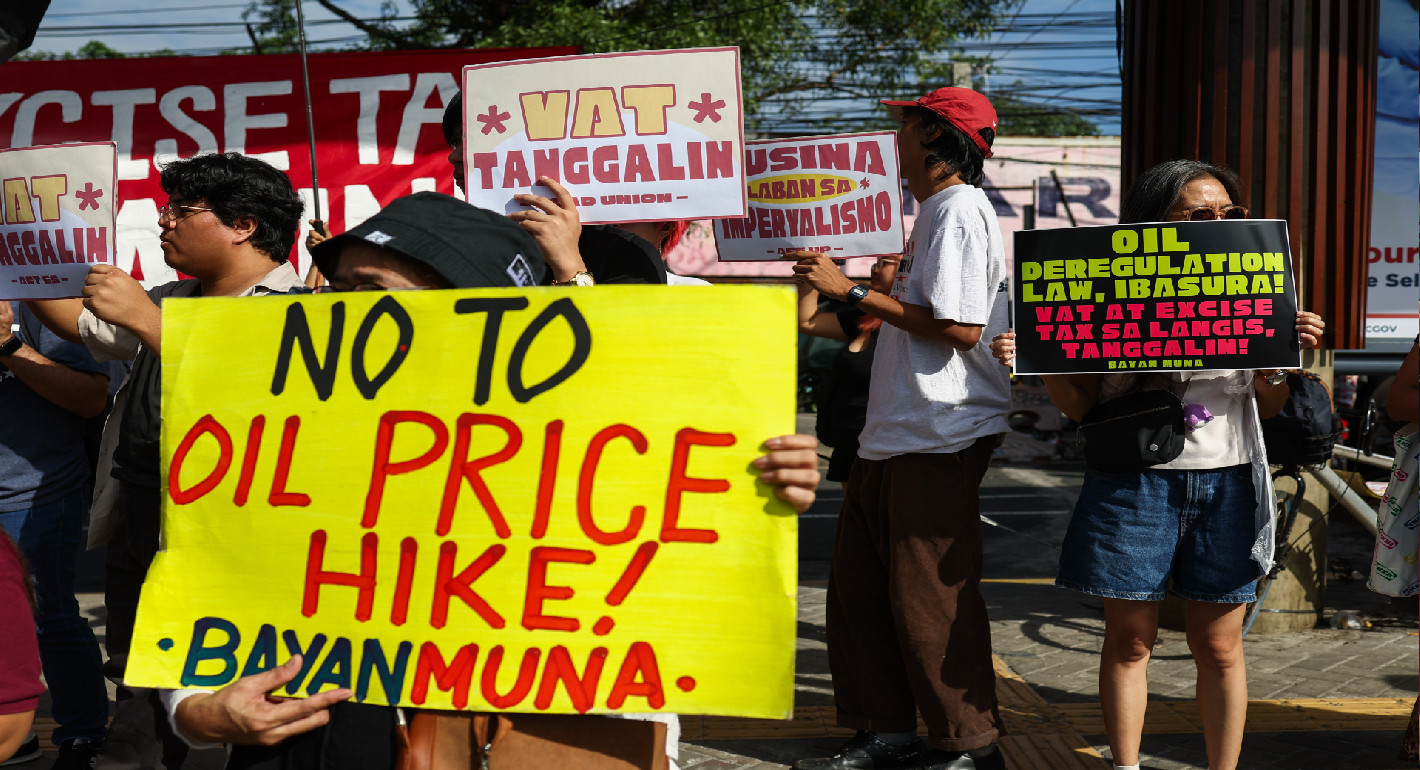
There is no better time for the countries of Southeast Asia to reconsider their energy security than during this latest crisis.
Gita Wirjawan