• Research
  • Strategic Europe
  • About
  • Experts
Carnegie Europe logoCarnegie lettermark logo
EUUkraine
  • Donate
{
  "authors": [
    "Alexey Malashenko"
  ],
  "type": "legacyinthemedia",
  "centerAffiliationAll": "",
  "centers": [
    "Carnegie Endowment for International Peace",
    "Malcolm H. Kerr Carnegie Middle East Center",
    "Carnegie Russia Eurasia Center"
  ],
  "collections": [],
  "englishNewsletterAll": "",
  "nonEnglishNewsletterAll": "",
  "primaryCenter": "Carnegie Russia Eurasia Center",
  "programAffiliation": "",
  "programs": [],
  "projects": [
    "Eurasia in Transition"
  ],
  "regions": [
    "Egypt",
    "Gulf",
    "Levant",
    "Maghreb"
  ],
  "topics": []
}
In The Media
Carnegie Russia Eurasia Center

What Is the Role of Russia in the Middle East Today?

Russia plays an extremely important role as mediator in the current Libyan conflict. If Moscow can succeed in this role, there would be a clear positive benefit to Libya and its neighbors.

Link Copied
By Alexey Malashenko
Published on Jun 14, 2011
Project hero Image

Project

Eurasia in Transition

Learn More

Source: RIA Novosti's Russian Angle

While NATO countries are increasingly involved in fighting against authoritarian leaders in the Middle East and North Africa, Russia is moving closer to the role of the middleman. How Russia reacts to an expected UN referendum condemning Syria for violence against protestors may play a significant part in determining Russia's future role in the region.

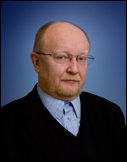
Speaking on RIA Novosti, Carnegie Moscow's Alexey Malashenko notes that Russia plays an extremely important role as mediator in the current Libyan conflict. If Russia can succeed in this role, there would be a clear positive benefit to Libya and its neighbors. Turning to the increasing violence in other parts of the region, Malashenko argued that a Libya-style involvement by the West in Syria would be a “big mistake,” as it could destabilize the region in unpredictable ways, and that a revolution in Yemen could lead to Islamic radicalization in neighboring states, including as Sudan, Somalia, and Eritrea.

Alexey Malashenko
Former Scholar in Residence, Religion, Society, and Security Program
Alexey Malashenko
EgyptGulfLevantMaghreb

Carnegie does not take institutional positions on public policy issues; the views represented herein are those of the author(s) and do not necessarily reflect the views of Carnegie, its staff, or its trustees.

More Work from Carnegie Europe

  • Commentary
    Strategic Europe
    EU-Iran: Time to Revisit Assumptions and Strategize

    For too long, the EU focused on Iran’s nuclear program while mostly ignoring its malign regional activities and missile program. As the consequences of both hit closer to home, the union must pursue a new strategy focused on containing Iran’s regime, supporting Iranian civil society, and engaging with Gulf states.

      Cornelius Adebahr
  • Paper
    Understanding the Energy Drivers of Turkey’s Foreign Policy

    Turkey’s dependence on energy imports has an impact on the country’s economic and geopolitical orientation. Turkish leaders should devise energy policies that respond to domestic priorities, regional ambitions, and the challenges posed by climate change.

      • Francesco Siccardi

      Francesco Siccardi

  • Commentary
    Diwan
    Why Turkey’s Syria Policy May Be About to Change

    As municipal elections near, the Erdogan government feels it is facing a dangerous situation that imposes a new military intervention.

      • Francesco Siccardi

      Francesco Siccardi

  • Commentary
    Strategic Europe
    How the EU Supports Authoritarianism in Egypt

    Brussels is overlooking Egypt’s lack of democratic reforms to secure Cairo’s cooperation in other fields. This short-sighted approach is emboldening the regime and hurting Egyptian civil society.

      Christian Achrainer, Michelle Pace

  • Commentary
    Diwan
    Nagorno-Karabakh: The Broader Implications

    Beyond the tragedy of the Armenians, many countries in the region and internationally have a stake in what happens in the territory.

      Marc Pierini

Get more news and analysis from
Carnegie Europe
Carnegie Europe logo, white
Rue du Congrès, 151000 Brussels, Belgium
  • Research
  • Strategic Europe
  • About
  • Experts
  • Projects
  • Events
  • Contact
  • Careers
  • Privacy
  • For Media
  • Gender Equality Plan
Get more news and analysis from
Carnegie Europe
© 2026 Carnegie Endowment for International Peace. All rights reserved.