

Commentary
As European leadership prepares for the sixteenth EU-India Summit, both sides must reckon with trade-offs in order to secure a mutually beneficial Free Trade Agreement.
Dinakar Peri
{
  "authors": [
    "C. Raja Mohan"
  ],
  "type": "legacyinthemedia",
  "centerAffiliationAll": "",
  "centers": [
    "Carnegie Endowment for International Peace",
    "Carnegie China",
    "Carnegie India"
  ],
  "collections": [
    "China’s Foreign Relations"
  ],
  "englishNewsletterAll": "",
  "nonEnglishNewsletterAll": "",
  "primaryCenter": "Carnegie India",
  "programAffiliation": "",
  "programs": [
    "Asia",
    "South Asia"
  ],
  "projects": [],
  "regions": [
    "South Asia",
    "India",
    "East Asia",
    "China"
  ],
  "topics": [
    "Security",
    "Military",
    "Arms Control"
  ]
}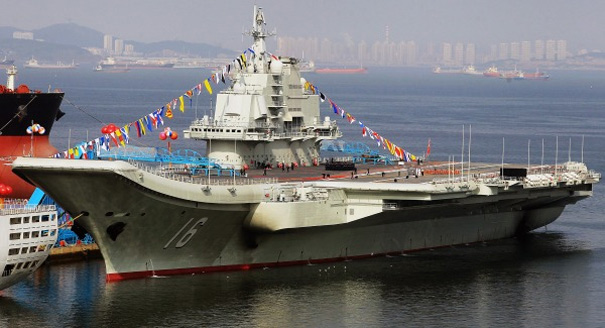
India should take note of China’s rapid, multifaceted expansion of its ability to project power through its navy.
Source: Indian Express
As China's lone aircraft carrier, the Liaoning, gets ready to sail in blue waters this year, Asia and the world must come to terms with Beijing's emerging capabilities to project military power far beyond its shores.
Delhi is having enough trouble dealing with the impact of China's rapid military modernization on its Himalayan borders, as seen in the reported incident in which a unit of the People's Liberation Army set up a post 10 kilometers inside territory claimed by India. But Delhi can't afford to ignore the longer term implications of China's maritime rise.
The Liaoning's first blue-water voyage, after many sea trials in the near seas, was announced in Beijing last week to coincide with the 64th anniversary of the Chinese navy's founding, which was on Tuesday. The Liaoning marks the transformation of the navy from an inconsequential force six decades ago to one that promises to decisively alter the balance of power in the Pacific and Indian Oceans.
The Chinese navy is leading the dramatic shift in the political goals of China's armed forces. Until now, the PLA has focused on internal security and territorial defense. Now, the Chinese armed forces also aim to protect Beijing's expanding interests beyond borders, influence regional security politics and contribute to international peace.
Nothing represents the political will in Beijing to pursue these new objectives better than the Liaoning. China's first aircraft carrier is also the pride of the Chinese people. It has become a powerful rallying point for Chinese patriotism and a catalyst for self-awareness of the nation's importance on the global stage. While Western analysts have scoffed at the Liaoning as a showpiece that is a long way from becoming a combat platform, every advance made on it has been lustily cheered by the Chinese people.
Chinese naval officials, in turn, have acted with considerable deliberation and self-assurance in building the first aircraft carrier. The Liaoning's first officer, Liu Zhigang, told the Chinese media last week that the carrier will be combat-ready much quicker than the current international assessments.
Besides the Liaoning, the Chinese navy is said to be building two carriers based on indigenous designs. China also has plans to build a fourth, nuclear-powered carrier. China might be late in acquiring carriers, but will have them in impressive numbers fairly soon.
For the Chinese leadership, the Liaoning, formally commissioned into service last year after many sea trials, is not about prestige. It is meant to fulfill "the historic missions" for the Chinese armed forces in the modern era, which were identified by the communist leadership nearly a decade ago.
The 18th congress of the Communist Party of China last year declared that the defense of the nation's "maritime rights and interests" was one of China's highest strategic priorities. The new political directive is, in part, about defending China's expansive territorial claims in the East and South China seas. It also underlines the centrality of maritime security for China's economic progress and national well being.
China's latest white paper on defense, issued last week, explained Beijing's new focus on maritime issues. The navy, the white paper said, naturally has the lead role in the "strategy to exploit, utilize and protect the seas and oceans, and build China into a maritime power". Linked to this is a section in the white paper, appearing for the first time, on the role of the Chinese military in "protecting overseas interests". "With the gradual integration of China's economy into the world economic system, overseas interests have become an integral component of China's national interests. Security issues are increasingly prominent, involving overseas energy and resources, strategic sea lines of communication (SLOCs), and Chinese nationals overseas, and emergency rescue have become important ways and means for the PLA to safeguard national interests and fulfill international obligations."
The focus on overseas interests has already been reflected in some of the Chinese military's recent operations. The Chinese navy has conducted anti-piracy operations in the Gulf of Aden since the end of 2008. In the Libyan crisis in early 2011, the navy and air force organised the largest overseas evacuation of its civilians since the founding of the republic, taking home 35,860 Chinese nationals.
Building capabilities to operate in distant waters has become a major priority for the Chinese armed forces. Besides the aircraft carrier, the Chinese navy is acquiring large landing platforms that can move troops to foreign shores and carry helicopters for mission support. Each of the three Chinese naval fleets has an aviation division and marine brigades that are training for amphibious operations. The white paper identifies "strategic projection" as an important objective for the air force, which is acquiring long-range transport aircraft, practicing rapid inter-theater mobility, and modernizing its airborne divisions. The Chinese army, the white paper says, is gearing up for "air-ground integrated operations, long-distance maneuvers, rapid assaults and special operations".
China's development of expeditionary forces is an integral part of the new political intent to "effectively conduct military operations other than war" in distant lands and seas. China's growing participation in international peacekeeping operations, disaster relief and humanitarian missions helps Beijing boost its claim as a responsible global power.
The white paper also points to the PLA's growing engagement with other armed forces through joint exercises and training. China's defense diplomacy also includes military assistance to partners, the cultivation of special political relationships, and building dual-use infrastructure at locations that are critical for the distant operations of the Chinese armed forces.
Beijing's unfolding outward military orientation is an inevitable consequence of the globalization of the Chinese economy. As China's interests extend way beyond its borders, it is naturally looking to project military power. This predictable evolution, however, will have significant consequences that China's neighbors and other powers must prepare to cope with.
This article was originally published in the Indian Express.
Carnegie does not take institutional positions on public policy issues; the views represented herein are those of the author(s) and do not necessarily reflect the views of Carnegie, its staff, or its trustees.
As European leadership prepares for the sixteenth EU-India Summit, both sides must reckon with trade-offs in order to secure a mutually beneficial Free Trade Agreement.

Dinakar Peri
The hyper-personalized new version of global sphere-of-influence politics that Donald Trump wants will fail, as it did for Russia. In the meantime, Europe must still deal with a disruptive former ally determined to break the rules.

Thomas de Waal

Between Greenland and U.S. interference in Europe’s democracies, transatlantic relations risk rising to an unprecedented level of crisis. Amid continued arguments on how Brussels should react, tough times lie ahead for European leaders.

Marc Pierini
2026 has started in crisis, as the actions of unpredictable leaders shape an increasingly volatile global environment. To shift from crisis response to strategic foresight, what under-the-radar issues should the EU prepare for in the coming year?
Thomas de Waal
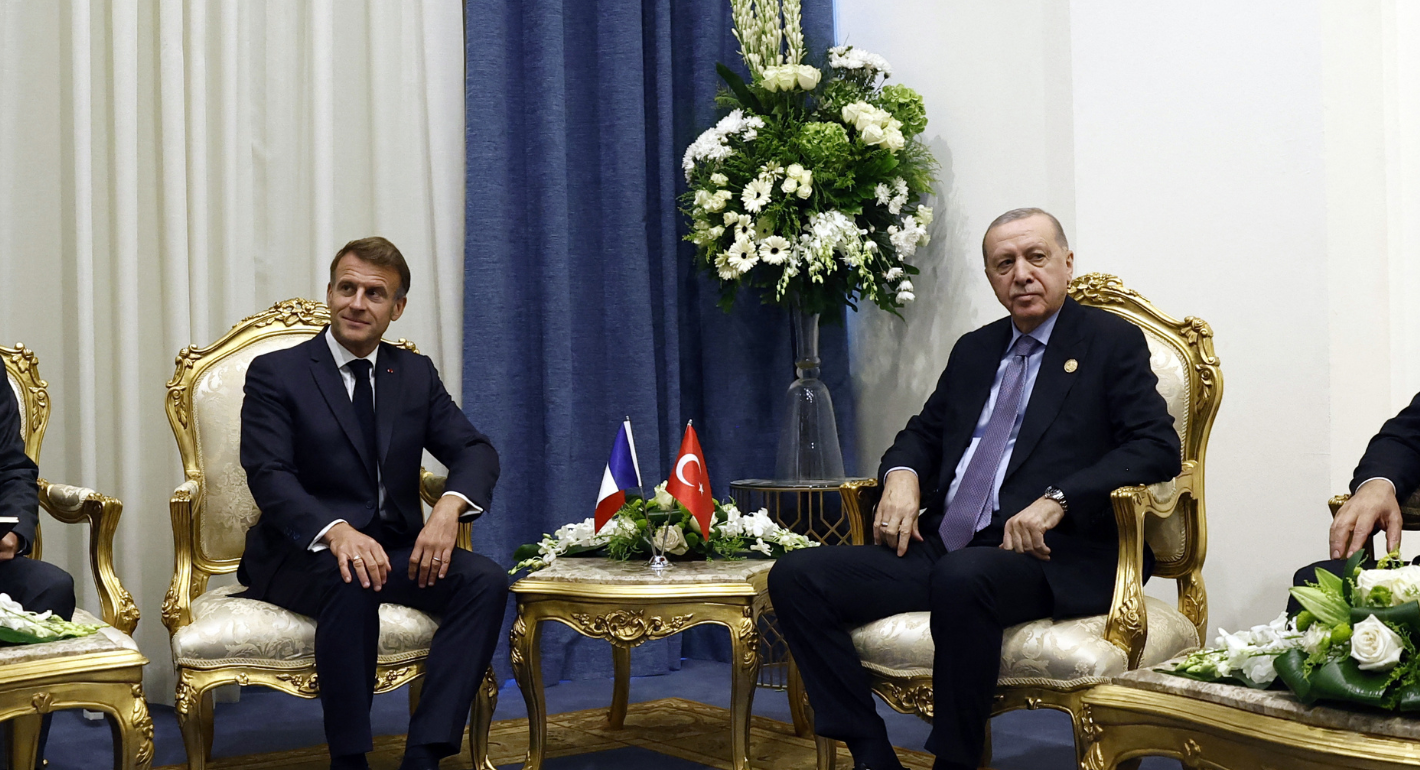
A renewal of relations between France and Turkey is vital to strengthen European strategic autonomy. To make this détente a reality, Paris and Ankara should move beyond personal friction and jointly engage with questions of Black Sea security.

Romain Le Quiniou