

Commentary
Dmitri Trenin
{
  "authors": [
    "Dmitri Trenin"
  ],
  "type": "legacyinthemedia",
  "centerAffiliationAll": "",
  "centers": [
    "Carnegie Endowment for International Peace",
    "Carnegie Russia Eurasia Center"
  ],
  "collections": [],
  "englishNewsletterAll": "",
  "nonEnglishNewsletterAll": "",
  "primaryCenter": "Carnegie Russia Eurasia Center",
  "programAffiliation": "",
  "programs": [],
  "projects": [],
  "regions": [
    "North America",
    "United States",
    "Russia",
    "Eastern Europe",
    "Ukraine",
    "Western Europe"
  ],
  "topics": [
    "Foreign Policy"
  ]
}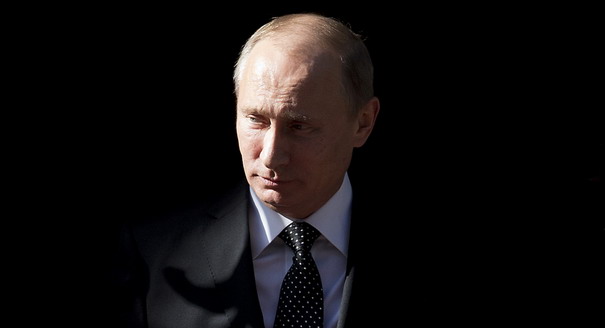
Source: Getty
The Ukraine crisis is testing the complex relationship between Europe, America, and Russia. Yet the gap between the United States and its European allies, as far as policies toward Russia are concerned, is wide and deep.
Source: German Times
It might appear that the signing in June of association agreements between the European Union on the one hand, and Ukraine, Georgia, and Moldova on the other, has dealt a heavy blow to the Kremlin’s plans to build a Eurasian Union centered in Moscow. True, last year President Vladimir Putin worked hard to persuade then Ukrainian leadership headed by Viktor Yanukovych to drop Kiev’s European option in favor of the Eurasian one. Last February’s Maidan revolution dashed those hopes. By the time the Eurasian Union treaty was signed in late May, the new authorities in Kiev had already reconfirmed the country's European direction.
Putin later admitted that his policy of drawing Ukraine into close economic integration with Russia may have been doomed from the start: those who toppled Yanukovych by revolutionary means would probably have come to power through the ballot box anyway, only later, and Russia would have lost the money it was putting on Yanukovych. The truth of Putin’s analysis is even deeper: no matter how much assistance Kiev would have received from Russia, and how much weight it would have gained within the Eurasian Union, the Ukrainian elite would have still been looking west.
Essentially, the problem that Russia has faced in Ukraine – irrespective of the kind of leadership in either country – lies in the sheer incompatibility of the Ukrainian national project with any form of close integration with Russia. If Ukraine – except its western regions, which are culturally distinct – comes too close to its neighbor, with whom it shares so much, it simply ceases to be Ukraine and becomes what it was known as in tsarist times: Little Russia, a region on a par with others in one big country.Despite his early integrationist dreams, Putin has basically remained a realist. In his recent pronouncements about the Eurasian Union, he no longer holds out the prospect of Ukraine joining the arrangement. Instead, he pursues a set of clear geopolitical objectives, essentially defensive in nature.
At the top comes keeping Ukraine away from NATO and making sure that it does not host foreign forces or military bases on its territory. The idea of federalizing Ukraine should have furnished a set of domestic legal obstacles toward joining foreign alliances.
Next sits the need to maintain economic relations with eastern Ukraine, which is tied to the Russian market, including the defense sector.
Finally, Moscow is adamant that the status of the Russian language in Ukraine’s eastern and southern regions must be guaranteed and the cultural identity of Russian speakers in the country preserved.
The strategy and tactics toward reaching those goals can and do change. The hope that Ukraine's entire south-east, the “New Russia” which Putin evoked with reference to the territorial acquisitions of Catherine the Great, would reject Kiev’s Maidan administration and form a federalized state aligned with Russia, evaporated rather quickly.
The referenda in Donetsk and Lugansk, which did reflect widespread public discontent with Kiev, failed to put up a national political alternative to the Maidan, and the situation degenerated instead into an armed rebellion. The rebellion would only have succeeded if Russia had given the insurgents large-scale support and military protection, which probably would have required a cross-border invasion. Putin, however, only intended to use military force in the form of a credible threat. Becoming bogged down in Ukraine and paying a horrendous price for that was something he had resolved to avoid.
Russia now appears ready for a compromise on Ukraine which would take account of its strategic interests as regards to NATO, economic ties, and the Russian language. From Moscow’s perspective, Kiev needs to negotiate a new deal with the country’s regions by giving them more autonomy. The immediate issue, of course, is stopping the fighting in Donetsk and Lugansk and starting a political dialogue between Kiev and a representative group of regional leaders.
For Kiev, however, defeating those it calls “pro-Russian terrorists” with military means comes first. It may be that Kiev will succeed in crushing the armed insurrection, but the deeper problem of laying a stable political foundation for the country could prove elusive.
This may be particularly important against the background of Ukraine’s mounting economic problems. Anticipating dire consequences for Ukraine’s economy flowing from the association agreement, Moscow is already looking ahead to the likely period of socio-political instability when it can bring its economic cards into play.
Gazprom, the Russian state-owned energy giant, has suspended gas shipments to Ukraine, which is not paying its bills. The full effect of this measure may only be felt in the fall or winter. Gazprom is also busy working on the South Stream project, which, if realized, would drastically reduce the amount of gas piped from Russia to the EU countries across Ukraine. And Russia is seeking ways to replace the goods it used to buy in Ukraine through domestic production.
At the same time, Moscow is prepared to deal with Kiev – and with Brussels, again, on its own terms. With Ukraine definitely outside of the Eurasian Union and for the foreseeable future at least also outside of the EU, the country can become a natural area of trilateral cooperation among Kiev, Brussels and Moscow.
In fact, the failure to address this reality throughout 2013 first led to the crisis within Ukraine, and then to the crisis over Ukraine. For Moscow, indeed, this can be a blessing in disguise. Dealing with Ukraine as a foreign country can be much safer and more profitable. With the association agreement in place, Russia would also benefit from Ukraine’s eventual modernization for which Brussels will be financially and politically responsible.
To a large extent, the Ukraine crisis is testing the complex relationship between Europe, America, and Russia. It is clear that there can be no return to the status quo ante. Russia’s integration with Europe and into an inclusive Euro-Atlantic security community has failed. Yet the gap between the United States and its European allies, as far as policies toward Russia are concerned, is wide and deep.
Europe cannot afford to ignore its biggest neighbor and an important trading partner. Sensing this, Putin has been very careful to give those Europeans with the most interest in Russia enough arguments in the intra-Western debates. In his recent remarks to the country’s senior diplomats, the Russian president has again evoked his idea of a common economic and humanitarian space from Lisbon to Vladivostok. Rather than embracing autarchy, Moscow is reaching out to the Europeans.
US-Russian relations are different. The Kremlin has had enough of the US-dominated world order and is now openly challenging it in its immediate neighborhood. The stakes are high: for Russia, it is strategic independence and protection of its vital interests, for the US, its credibility as the global guarantor of the post-Cold War system.
US-Russian rivalry and competition, no matter how skewed and unequal, is a sign of the times. The US-centric world order is also being challenged on the other end of Eurasia by China. Over time, India is likely to join China and Russia in trying to “organize” its own region. Great-power relations are again rising in importance, promising a more diversified and a more competitive global political and strategic environment.
Former Director, Carnegie Moscow Center
Trenin was director of the Carnegie Moscow Center from 2008 to early 2022.
Recent Work
Dmitri Trenin
Dmitri Trenin
Carnegie does not take institutional positions on public policy issues; the views represented herein are those of the author(s) and do not necessarily reflect the views of Carnegie, its staff, or its trustees.
French President Emmanuel Macron has unveiled his country’s new nuclear doctrine. Are the changes he has made enough to reassure France’s European partners in the current geopolitical context?

Rym Momtaz, ed.
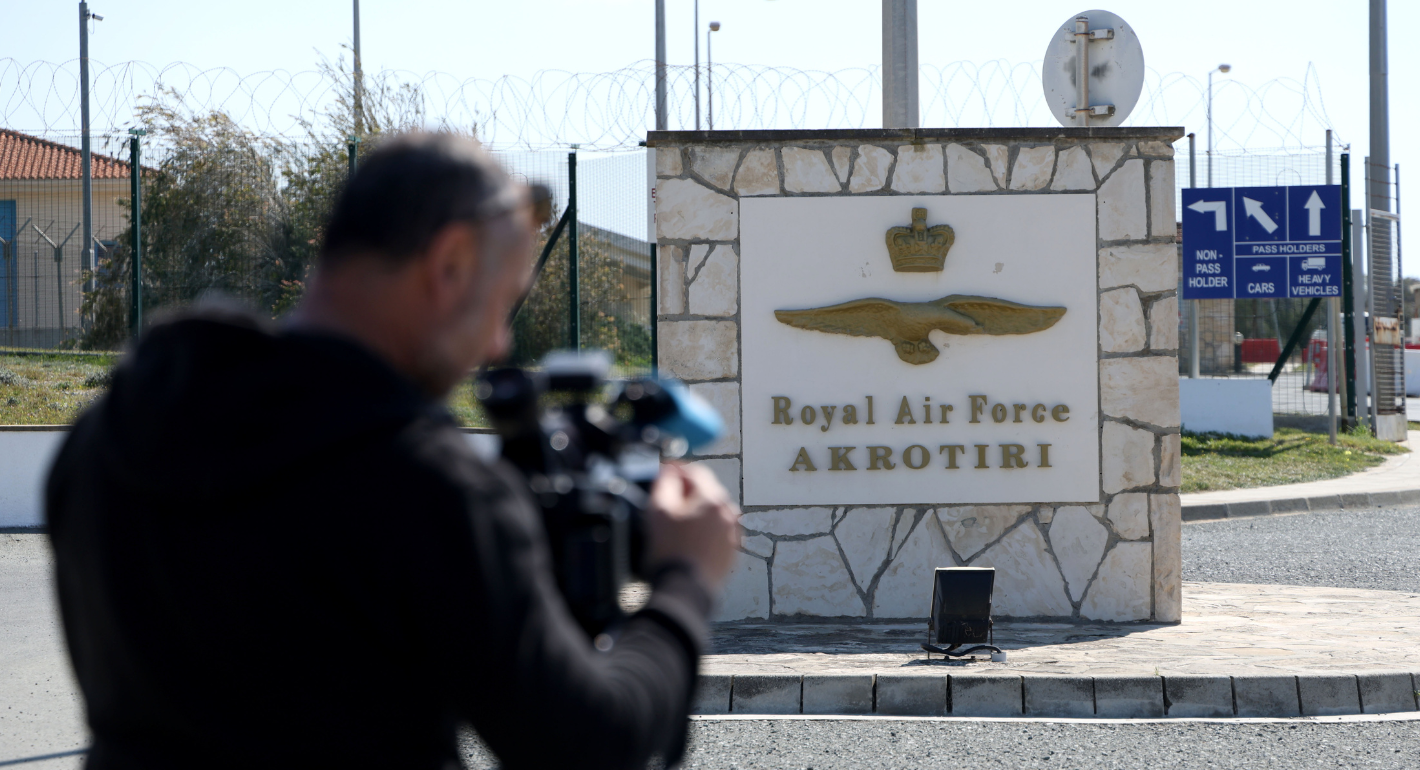
The drone strike on the British air base in Akrotiri brings Europe’s proximity to the conflict in Iran into sharp relief. In the fog of war, old tensions in the Eastern Mediterranean risk being reignited, and regional stakeholders must avoid escalation.

Marc Pierini
European reactions to the war in Iran have lost sight of wider political dynamics. The EU must position itself for the next phase of the crisis without giving up on its principles.

Richard Youngs
For years, the United States anchored global cyber diplomacy. As Washington rethinks its leadership role, the launch of the UN’s Cyber Global Mechanism may test how allies adjust their engagement.


Patryk Pawlak, Chris Painter
Europe isn’t as weak in the new geopolitics of power as many would believe. But to leverage its assets and claim a sphere of influence, Brussels must stop undercutting itself.

Dimitar Bechev