This publication is a product of Carnegie China. For more work by Carnegie China, click here.
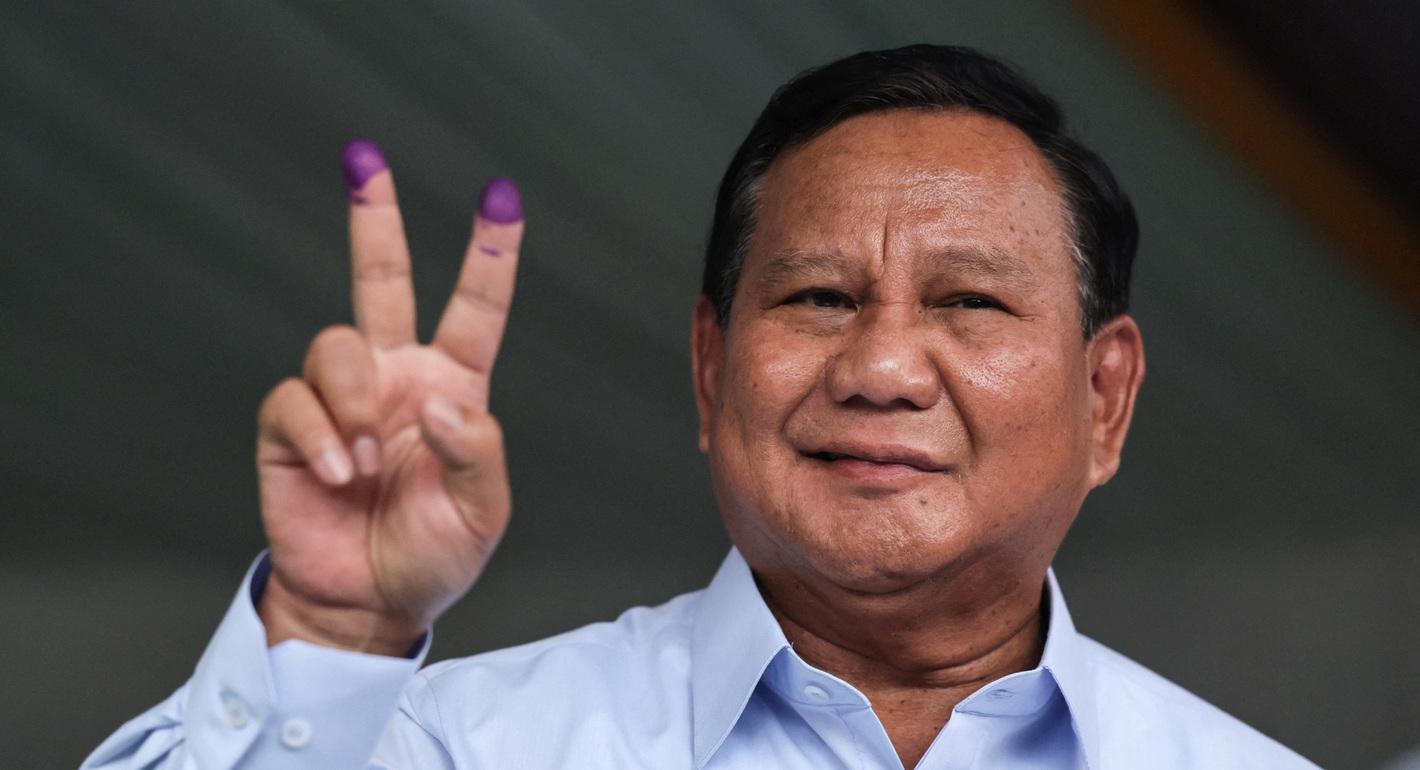
A few days after he was confirmed as Indonesia’s president-elect, Prabowo Subianto surprised many when he traveled to the People’s Republic of China (PRC) at the invitation of President Xi Jinping. In Beijing, Prabowo held talks with Xi, Prime Minister Li Qiang, and Minister of Defense Dong Jun before flying to Tokyo for a meeting with Japan’s prime minister and defense minister. After Tokyo, he traveled to Kuala Lumpur for a meeting with the prime minister of Malaysia—a neighbor and fellow member of the Association of Southeast Asian Nations (ASEAN) with whom Indonesia shares many cultural traits and strategic interests.
Prabowo’s visits to Beijing and Tokyo were the ones that captured headlines. The messages conveyed by Prabowo from the two visits are strikingly similar in tone and substance. In Beijing, he reaffirmed that China is a partner of strategic importance and pledged that he would continue outgoing President Joko Widodo’s push to strengthen bilateral relations between the two countries. In Tokyo, Prabowo stressed that Indonesia also sees Japan as a longtime strategic partner and pledged that he would deepen security and economic cooperation with Japan.
The back-to-back visits suggest that Prabowo wanted to avoid the impression that he favors one country over the other—that China and Japan are Indonesia’s key partners and close friends, and he wants to work closer with both. This demonstrates the strong impulse in Indonesia, regardless of who is the president, to stay true to the sacrosanct principle of bebas-aktif (free and active) in its foreign policy.
Until now, no Indonesian president-elect has ever formally visited another country between election and inauguration. Beijing seems to have wanted assurance as early as possible from Prabowo that his government would continue Widodo’s friendly policies, which Prabowo did. In return, Prabowo received China’s pledge for continued support for Indonesia’s economic interests.
China is an important source of foreign investment for Indonesia, the second largest at $7.4 billion in 2023 after Singapore, followed by Hong Kong at $6.5 billion. China is also Indonesia’s top trading partner at $65.9 billion in 2022. Even though Japan has become the third largest trading partner and fourth largest investor, it still is a strong player in Indonesia’s economy.
The timing also matters. It would be difficult for China to expect Prabowo to visit Beijing immediately after his inauguration on October 20—especially when Prabowo is scheduled to visit Peru for the APEC Summit and Brazil for the G-20 summit in early November. During that trip, a stop in Washington also is likely and would provide an opportunity for the new president to emphasize Indonesia’s willingness to foster close relations with the United States.
Building a relationship with China, however, has always been a challenging task for any Indonesian government. Although Jakarta has become more comfortable in dealing with Beijing over the years, traces of anti-China sentiments still linger. For example, domestic public sentiments and concerns over the growing economic relationship with China often serve as an impediment to close bilateral ties between the two countries. The main concerns relate to China’s migrant workers and the country’s heavy reliance on China for its economic development, especially in the mining sector.
Coupled with rising nationalism at home, these sentiments and concerns could fuel strong nationalist responses to China’s incursion into Indonesia’s exclusive economic zone in the North Natuna Sea and deepen Indonesia’s suspicion of China and Beijing’s intention. Indonesia has consistently expressed its position that China’s nine-dashed line has no legal basis in international law, and China’s intrusion into Indonesia’s exclusive economic zone reflects Beijing’s intention to control the resources in the area.
Prabowo will need to address these constraints. Indonesia under Prabowo will continue to prioritize economic development, and that means economic cooperation with China is of paramount importance for Indonesia. The meeting between Prabowo and Xi would hopefully provide mutual assurance between the two leaders that they would work to manage the challenges in bilateral relationship. If the relationship is to move forward, mutual understanding of each other’s expectation and views, and the commitment to address the relationship’s challenges will be key.
It is likely that Indonesia will be more active in building and managing a balanced relationship with great and major powers, as evidenced by Prabowo’s visit to Japan, which is a staunch ally of the United States. Indonesia is keen to strengthen ties with Washington, but it remains to be seen how Prabowo will navigate that relationship.
The stop in Kuala Lumpur also reaffirms the importance of ASEAN in Indonesia’s foreign policy. However, whether ASEAN will continue to serve as the cornerstone of Indonesia’s foreign policy or just a cornerstone remains to be seen. But through the three visits, Prabowo delivered one clear message: Indonesia’s foreign policy will not fundamentally change except in one respect—it will have a more active president in managing its foreign policy.