• Research
  • Strategic Europe
  • About
  • Experts
Carnegie Europe logoCarnegie lettermark logo
EUUkraine
  • Donate
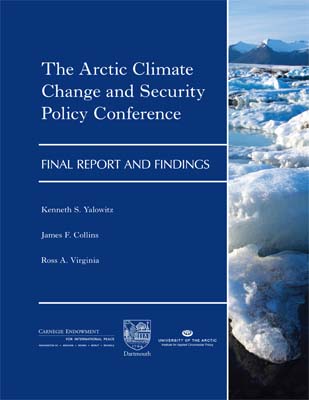
The Arctic Climate Change and Security Policy Conference: Final Report and Findings
Report

The Arctic Climate Change and Security Policy Conference: Final Report and Findings

Minimizing the environmental impact of climate change and resource development in the Arctic must be a top priority, if environmental disaster is to be avoided.

Link Copied
By Kenneth S. Yalowitz, James F. Collins, Ross A. Virginia
Published on Jun 24, 2009

Additional Links

Full Text

The accelerating pace of climate change, increasing competition over resources, and new territorial claims demand that greater attention be paid to the Arctic. As the most immediate and serious threat to the region, minimizing the environmental impact of climate change and resource development must be the top priority, according to a report from the Carnegie Endowment, the University of the Arctic, and Dartmouth College.

Key points:

  • An efficient and multilateral process for responding to environmental disasters is the Arctic’s most pressing need.
  • The Arctic is unlikely to be a security flashpoint in the short term. State-to-state negotiations and multilateral institutions have effectively handled territorial claims thus far, and neither Russia nor the United States is looking for a new source of tension.

As a major Arctic power, the United States has environmental, political, and security interests and responsibilities and should play a key role in preserving the Arctic ecosystem.

Recommendations for U.S. policy makers:

  • Create a sub-cabinet commission on global warming headed by the vice president to address the effects of climate change on the Arctic.
  • Promote the Arctic Council as the principal international forum for addressing Arctic issues.
  • Ratify the UN Convention on the Law of the Sea (UNCLOS) immediately. The UNCLOS provides a framework to adjudicate disagreements over borders and territory claims, which could become more heated as global warming facilitates access to resources. 
  • Support policy-relevant scientific research that can identify critical first steps for policy makers and identify the costs of inaction on the threat of global warming.

The report concludes:

“The environment and the management of natural resources are the most pressing security issues in the North. States are committed to addressing boundary and access issues through existing institutions, principally UNCLOS. Large-scale damage to the Arctic from transportation accidents, energy development, fishing, and pollutants from the South pose greater immediate threats than classic security issues. Existing emergency response systems and contingency plans are not up to the task.” 

Authors

Kenneth S. Yalowitz
Dartmouth College
James F. Collins
Nonresident Senior Fellow, Russia and Eurasia Program; Diplomat in Residence
James F. Collins
Ross A. Virginia
Dartmouth College
North AmericaUnited StatesCaucasusRussiaClimate Change

Carnegie does not take institutional positions on public policy issues; the views represented herein are those of the author(s) and do not necessarily reflect the views of Carnegie, its staff, or its trustees.

More Work from Carnegie Europe

  • Commentary
    Strategic Europe
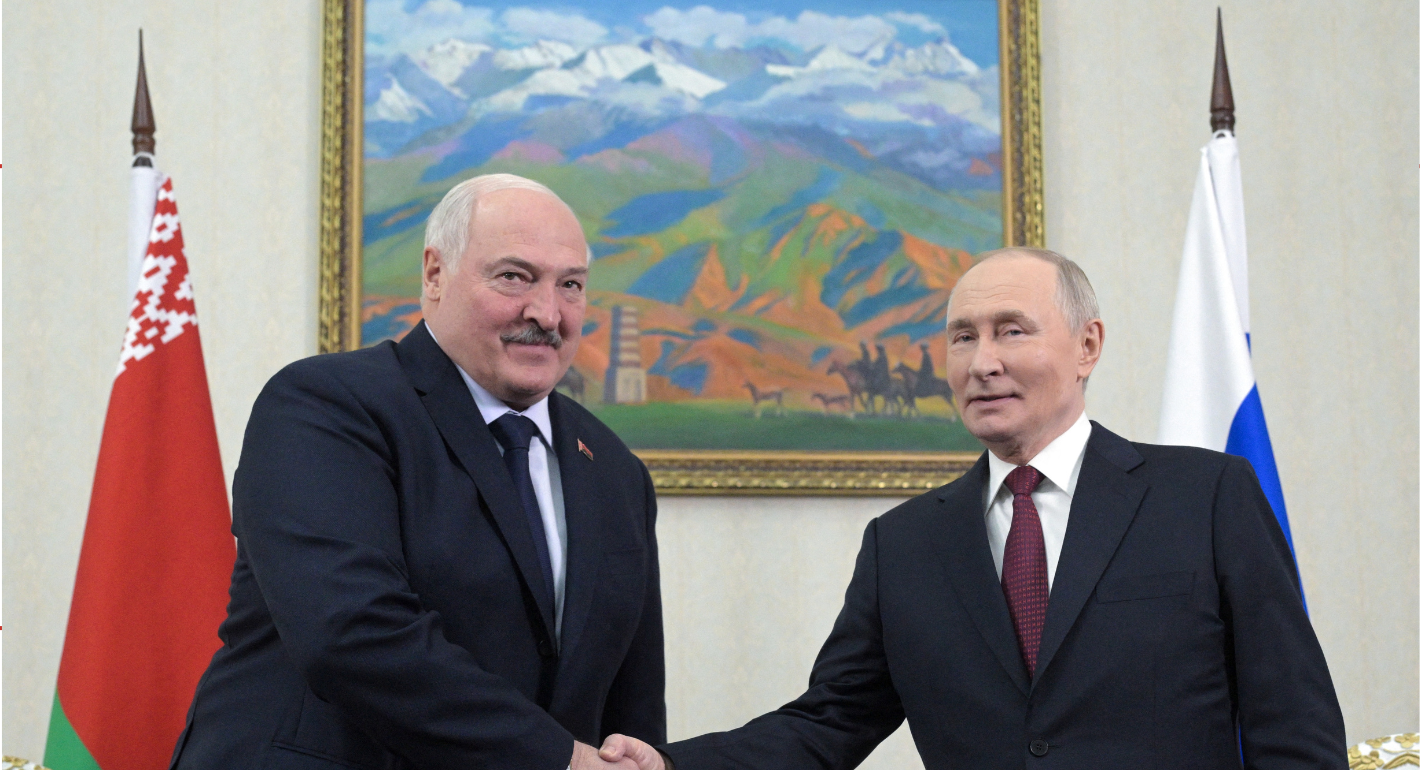
    Taking the Pulse: Is It Time for Europe to Reengage With Belarus?

    In return for a trade deal and the release of political prisoners, the United States has lifted sanctions on Belarus, breaking the previous Western policy consensus. Should Europeans follow suit, using their leverage to extract concessions from Lukashenko, or continue to isolate a key Kremlin ally?

      Thomas de Waal, ed.

  • Trump speaking to a room of reporters
    Commentary
    Emissary
    Unpacking Trump’s National Security Strategy

    Carnegie scholars examine the crucial elements of a document that’s radically different than its predecessors.

      • Cecily Brewer
      • +18

      James M. Acton, Saskia Brechenmacher, Cecily Brewer, …

  • Commentary
    Strategic Europe
    Europe Faces the Gone-Rogue Doctrine

    The hyper-personalized new version of global sphere-of-influence politics that Donald Trump wants will fail, as it did for Russia. In the meantime, Europe must still deal with a disruptive former ally determined to break the rules.

      Thomas de Waal

  • Commentary
    Europe’s American Predicament

    Between Greenland and U.S. interference in Europe’s democracies, transatlantic relations risk rising to an unprecedented level of crisis. Amid continued arguments on how Brussels should react, tough times lie ahead for European leaders.

      Marc Pierini

  • Commentary
    Strategic Europe
    Taking the Pulse: What Issue Is Europe Ignoring at Its Peril in 2026?

    2026 has started in crisis, as the actions of unpredictable leaders shape an increasingly volatile global environment. To shift from crisis response to strategic foresight, what under-the-radar issues should the EU prepare for in the coming year?

      Thomas de Waal

Get more news and analysis from
Carnegie Europe
Carnegie Europe logo, white
Rue du Congrès, 151000 Brussels, Belgium
  • Research
  • Strategic Europe
  • About
  • Experts
  • Projects
  • Events
  • Contact
  • Careers
  • Privacy
  • For Media
  • Gender Equality Plan
Get more news and analysis from
Carnegie Europe
© 2026 Carnegie Endowment for International Peace. All rights reserved.