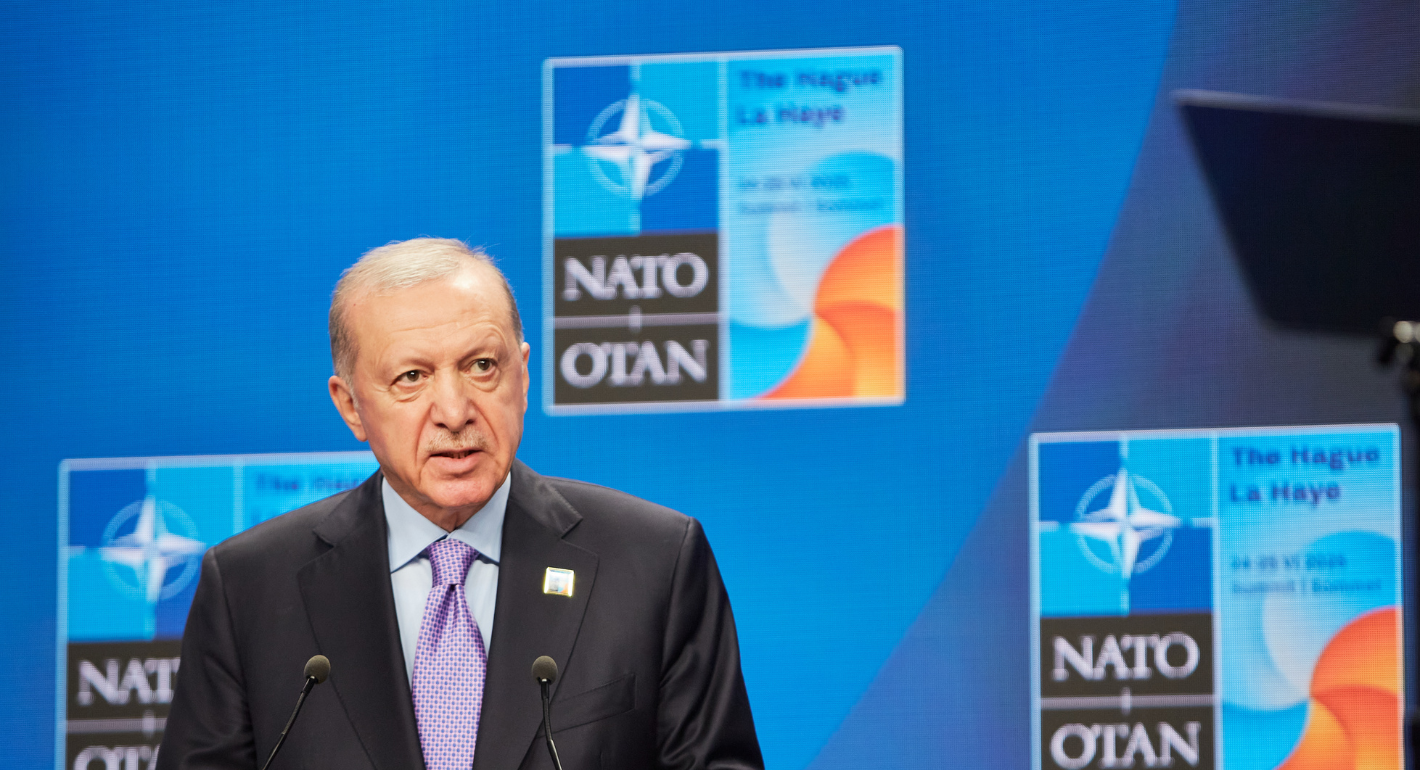
As different options are discussed to end Russia’s war in Ukraine and predicting an outcome remains impossible, Turkey is tentatively staking its claim as a key player to support a ceasefire and provide security guarantees. But Ankara’s relationships with Kyiv and Moscow are both help and hindrance.
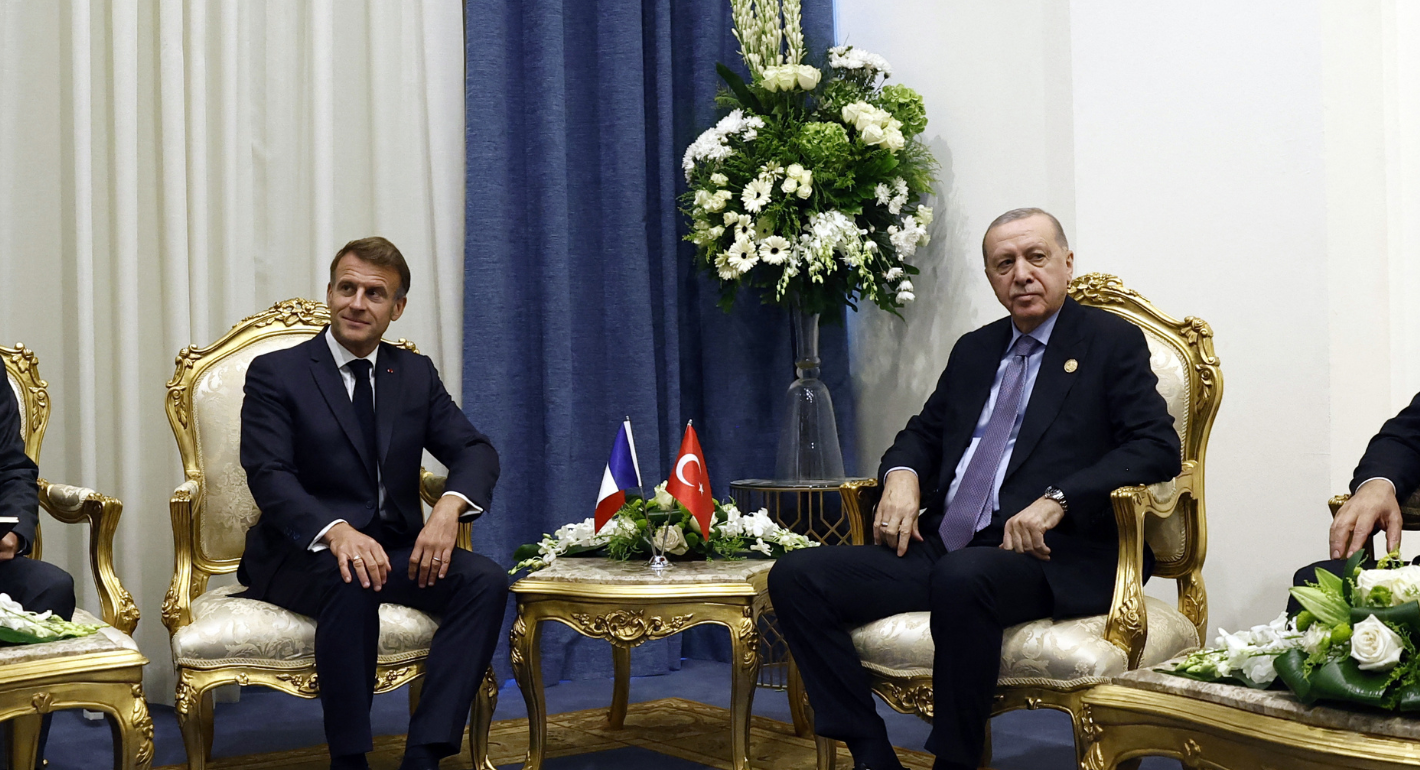
French President Emmanuel Macron cited Turkey—along with the United Kingdom and France—as a potential leading player in the much-discussed reassurance force for Ukraine, stating: "There are British, French, Turkish soldiers who, the day peace is signed, so not in a context of war, are there to conduct training and security operations, as we do in certain countries on NATO’s Eastern flank."
Turkey has the second largest armed forces in the alliance but, perhaps more importantly for Ukraine, it is the gatekeeper of the Black Sea and has naval capacities that can protect Ukrainian shipping and exports from ports like Odesa.
Yet, when it comes to any peace plan, European actors should also note that Ankara is respectful of Russia’s rights in the Black Sea and values its newly rekindled relationship with the United States.
U.S. President Donald Trump’s controversial twenty-eight-point peace plan, widely seen as favoring Russia—which has since been shortened to nineteen points following intense negotiations between American and Ukrainian delegations in Geneva—may have already triggered such a dynamic. European leaders, together with Canada and Japan, signed a statement on the sidelines of the G20 summit in Johannesburg calling for major changes to the initial version of the plan, going against Washington’s strong stance and Moscow’s tacit agreement to it. Notably, Turkey chose not to join this statement, a reminder that Ankara’s balancing act remains intact.
The country has conditioned its participation in any reassurance force both on there being a ceasefire and on the force having a clear mandate that excludes combat operations. Despite these caveats, Turkey can still add meaningful value to such a mission.
Three factors underpin Ankara’s thinking. First, participation would allow it to demonstrate that it is a pivotal security provider and a capable and willing NATO ally. As European partners grapple with questions about future U.S. commitment to the continent’s defense and seek to build greater capacity of their own, Turkey sees involvement as a way of gaining a voice in these efforts.
Second, the country maintains its ambition to play a role in ending the war. It has been applauded for its support of Ukraine and strongly criticized for its relations with Russia. Yet, its engagement with both sides has helped produce tangible outcomes, including the 2022 Black Sea Grain Initiative and several prisoner exchanges. Turkish officials believe participation in a reassurance force can enhance Ankara’s ability to play a broader role in any eventual settlement.
Finally, there is the Black Sea dimension. Turkey seeks to use its leading role in the maritime domain to preserve regional leadership and limit the involvement of non-littoral actors. This goal is not shared by other coastal NATO allies such as Bulgaria and, especially, Romania.
The idea of a European-led reassurance force for Ukraine has evolved since France and the United Kingdom first launched it in early 2025, and questions remain about its viability. Initial ambitions, including a peace enforcement role for the force, have been scaled back, but it is now clear that if it does take shape, it will require a maritime component.
Before the war, around 90 percent of Ukraine’s grain exports flowed through the Black Sea, making this trade route central not only to the country’s economic survival and wartime resilience but also to global food security. Kyiv has so far been largely effective in countering Russian attempts to disrupt this. Preserving this fragile equilibrium would be a core objective of the reassurance force.
Geography, direct interests, and legal and practical considerations make the three NATO allies on the Black Sea—Bulgaria, Romania, and Turkey—natural candidates to assume this role. They are not subject to the restrictions imposed on non-littoral states under the 1936 Montreux Convention, which governs the transit of military and merchant vessels into and out of the Black Sea. Moreover, the three already collaborate closely and, in 2024, activated a joint mine-clearing task force. They are now considering expanding its mandate to include the protection of shipping lanes and critical infrastructure—a growing concern as they develop offshore gas fields.
Two factors give Turkey additional leverage. The first is its governing authority under the Montreux regime. Several days after Russia invaded Ukraine, Ankara announced the closure of the Turkish Straits to warships of the belligerent parties under Article 19 of the convention—only the second such decision since World War II. Since then, Moscow and Kyiv have been unable to reinforce their naval capabilities in the region, while other states have refrained from deployments at sea in deference to discreet requests from Ankara. This situation aligns with Turkey’s longstanding preference for regional ownership and less outside involvement. It also comes with a significant bonus: Russia’s declining naval capacity caused by Ukrainian drone strikes.
The other factor is Turkey’s military capabilities. Analysts estimate that Turkish naval and air assets account for a large and growing proportion of NATO’s maritime domain awareness in the Black Sea, and that the country can perform key maritime functions without third-party support.
Despite all this, other geopolitical factors will inevitably shape Turkey’s ambitions. Its multiple political relationships with all the actors in a potential peace settlement means it must walk a fine line. Ankara’s historic ties and interdependence with Europe are important, but they are not the only factor determining its decisions on Ukraine.