

Article
Thomas de Waal, Areg Kochinyan, Zaur Shiriyev
{
  "authors": [
    "Thomas de Waal"
  ],
  "type": "commentary",
  "blog": "Strategic Europe",
  "centerAffiliationAll": "",
  "centers": [
    "Carnegie Europe",
    "Carnegie Endowment for International Peace"
  ],
  "englishNewsletterAll": "",
  "nonEnglishNewsletterAll": "",
  "primaryCenter": "Carnegie Europe",
  "programAffiliation": "",
  "regions": [
    "Belarus",
    "Europe",
    "United States"
  ],
  "topics": [
    "Domestic Politics",
    "Civil Society",
    "Foreign Policy"
  ]
}
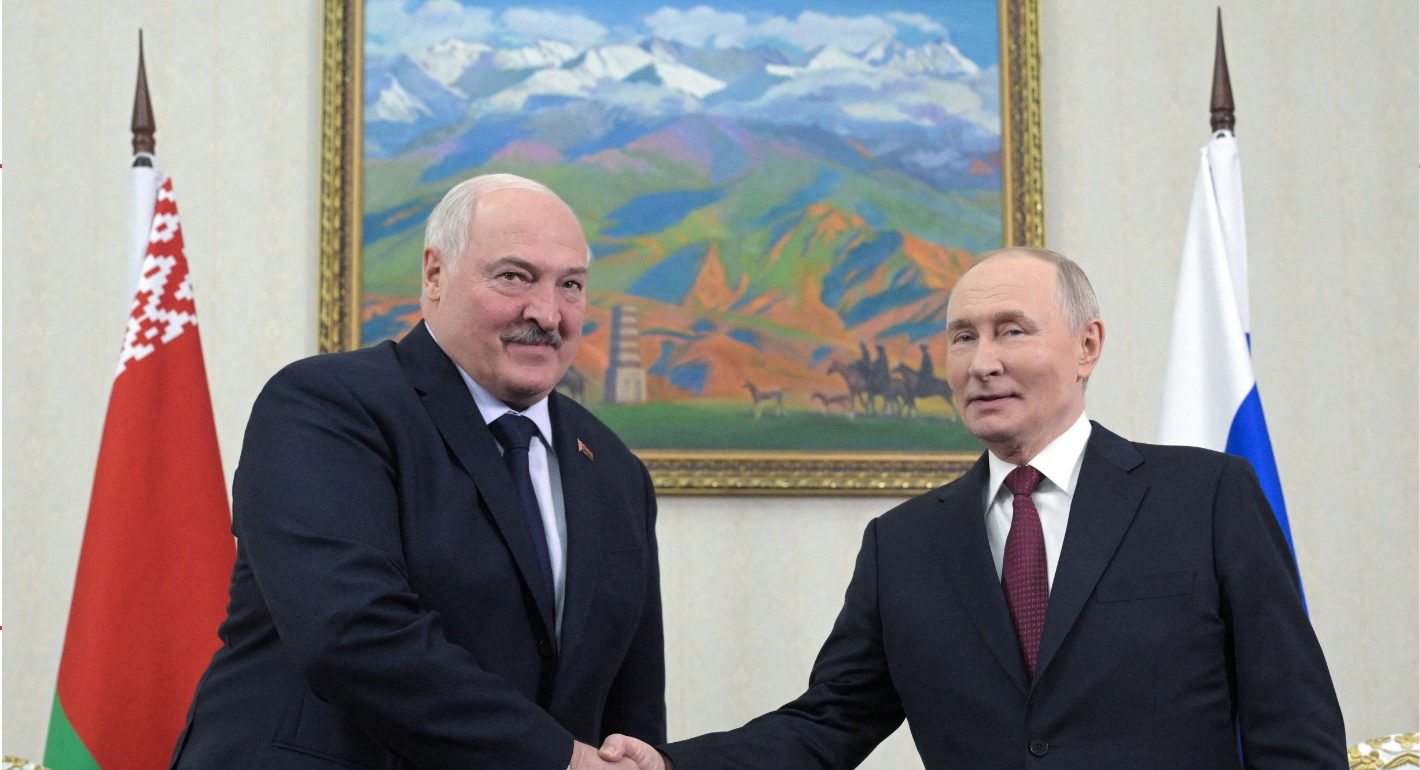
Source: Getty
In return for a trade deal and the release of political prisoners, the United States has lifted sanctions on Belarus, breaking the previous Western policy consensus. Should Europeans follow suit, using their leverage to extract concessions from Lukashenko, or continue to isolate a key Kremlin ally?
Nonresident Scholar, Carnegie Russia Eurasia Center
Yes, if the engagement is leveraged flexibly.
The EU has a wider mix of sticks and carrots than the United States, enabling a more comprehensive approach to Belarus that reflects European values while avoiding steps that strengthen Russia. Until the war in Ukraine ends, any dialogue with Minsk should exclude sanctions relief that could bolster the Kremlin’s war machine. Minsk should be required not only to release current political prisoners but also to halt new arrests, so that bargaining does not become an endless extraction of concessions from the West.
It may be wiser to start with less consequential steps such as organizing visits, unfreezing diplomatic contacts, lifting targeted visa sanctions, and easing access of Belarusian athletes to European competitions. Belarusian leader Alexander Lukashenko has shown that he values symbolic gestures of recognition no less than sanctions relief. Given Minsk’s record of bad faith, any EU concessions should be reversible wherever possible and clearly tied to specific deescalatory steps.
No one should have illusions that such dialogue can democratize the Lukashenko regime or meaningfully pull it away from Russia; the incentives Brussels can offer are incomparable to those from Moscow. Still, restoring ties with Belarusian society and diversifying Belarus’s foreign relations—even under Lukashenko—would better support the future democratization of post-Lukashenko Belarus than maintaining the status quo.
Deputy Head of Foreign Policy, New Eurasian Strategies Center
The short answer is no. Conditions for meaningful European reengagement with Belarus are not in place, and premature moves would repeat a familiar and damaging cycle.
Repression inside Belarus continues unabated. More than 1,100 people remain imprisoned on politically motivated charges, and new cases continue to emerge on a weekly basis. Those released are forced into exile. A regime that still criminalizes dissent and expels its opponents is not on a reform trajectory.
A de facto division of labor has emerged between the United States and Europe. Washington has focused narrowly on securing the release of individual political prisoners, offering limited incentives in return, such as high-level diplomatic engagement and selective sanctions relief. This has not altered the overall dynamics of repression.
Europe’s position is different, and so is its leverage. The EU holds far more consequential tools, notably sectoral sanctions on potash, timber, oil products, and the banking sector. These measures strike at the core of the regime’s revenue base and remain among the few instruments that Lukashenko takes seriously. Relinquishing them without irreversible change would weaken Europe’s influence.
A conditional pathway does exist, but only after all political prisoners have been released. Europe could signal privately that limited sanctions relief is possible if repression genuinely ceases. If the latter happens, the EU could temporarily suspend one or two sanctions with snapback clauses, monitor compliance, and only then consider dialogue, including on prisoner returns, and steps away from Russia’s war. Experience shows that premature engagement leads nowhere.
Member of the European Parliament, Group of the European People's Party
Belarus lies at the geographical center of Europe. The Belarusian nation has a European past and a shared history with Lithuanians, Poles, and Ukrainians, reaching back to the Grand Duchy of Lithuania and as an important part of the Polish–Lithuanian Commonwealth.
We are united by a common struggle for freedom, which is why today we must help Belarus return to the European path. This should be not only the strategic goal of Lithuania, Poland, and Ukraine, but of the entire EU.
Lukashenko’s regime has done everything to turn Belarus into part of Russian President Vladimir Putin’s concept of “the Russian World” (Russky Mir), and he will continue to do so. This is the result of the Kremlin’s imperial and colonial policy.
This answers the question of whether cooperation with Lukashenko is necessary.
If the EU’s strategic aim is to expand democracy in Europe, cooperation with his regime only helps the Kremlin maintain a policy that serves its interests. Europe and the United States have tried this approach before, and it has always ended badly.
It is naive and dangerous to believe that Lukashenko is an independent actor. His regime is an integral part of the Kremlin. Support for the Belarusian opposition and continued assistance to Ukraine are essential, as Belarus’s future is also being decided in Ukraine.
Founder of the political risk consultancy Minority Report
Europe does not need to embrace Lukashenko, but it does need a sober policy review. The U.S. shift did not emerge from naivete about Minsk; it came from a routine reassessment of whether sanctions were still producing outcomes. Washington concluded they were not—and its limited reengagement has already yielded tangible results, including the release of political prisoners. This does not legitimize the regime, but it shows that dialogue, not sanctions alone, can shape behavior.
The EU, by contrast, remains locked in a maximalist stance formed in the heat of the unprecedented 2020 protests and subsequent repression. That response was morally justified, but over time it has hardened into a position with no flexibility. The debate inside the EU is also heavily influenced by the security anxieties of neighboring member states and by an exiled opposition whose expectations—understandably—do not always align with what European diplomacy can deliver.
The core strategic dilemma for Europe is not merely Belarus but Russia. If the EU refuses any channel to Minsk—even when Washington uses one—how will it eventually sustain dialogue with Moscow, what will be unavoidable for European security? A policy review is therefore not a concession, but a prerequisite for restoring strategic coherence.
Academy Fellow in the Russia and Eurasia Program, Chatham House
The Trump administration’s renewed dialogue with Minsk marks a departure from the previously united Western policy of isolating Lukashenko’s regime. The rationale behind this shift appears largely transactional. Washington seeks tangible humanitarian outcomes and diplomatic wins, primarily through periodic releases of political prisoners. In return, Minsk gains a measure of recognition through high-level talks, alongside the prospect of economic relief via calibrated lifting of U.S. sanctions.
So far, this approach has worked reasonably well to ensure releases—and subsequent deportations—of Belarusian political prisoners while offering relatively little in return. Yet this does not mean that Europe should follow suit.
The EU and U.S. sanctions frameworks are grounded in different strategic logics. U.S. measures, introduced in 2021, responded primarily to Lukashenko’s antidemocratic practices and domestic repression. EU sanctions, by contrast, are tied to Belarus’s role in enabling Russia’s war against Ukraine and its orchestration of hybrid pressure along the EU’s eastern border.
Engaging in high-level dialogue and easing sanctions under current conditions would carry far greater geopolitical risks for the EU. Beyond legitimizing the regime and incentivizing further hostage-style bargaining, it could create additional room for Russia to leverage Belarusian territory and defense-industrial capacity. Any EU engagement should therefore remain limited to quiet, working-level diplomacy focused on humanitarian concerns and support for Belarusian society beyond the state—not political normalization.
Senior Analyst, EU Institute for Security Studies
Alexander Lukashenko has done little to merit the rapprochement he clearly wants. His regime’s misdeeds remain many. But that is beside the point: Diplomacy is not a reward. As Belarus’s agency continues to diminish, a policy of isolation will achieve little in practice while Russia’s deepening foothold poses a growing threat to European security.
The EU should maintain its hardline stance while at the same time seeking selective engagement with the regime that knows well that the status quo is not sustainable—and is not a monolith. The end goal should be a negotiated transition—opposition leaders in exile must be represented—that safeguards Belarus’s sovereignty; a process that will need to be protected, potentially together with the United States, by deterring Moscow’s attempts at subversion.
In parallel, the EU must make Belarus a subject of future discussions on the European security architecture—especially once a ceasefire in Ukraine is negotiated. The union’s dilemma here will be whether to keep open the prospect of Minsk’s future membership, or accept its role as a neutral buffer state. How that dilemma is resolved will ultimately depend on what kind of power the EU emerges as out of the current geopolitical tempest.
Senior Fellow for Russia and Eurasia, International Institute for Strategic Studies
No. Belarus is a cobelligerent in Russia’s war against Ukraine and provides Moscow with a wide range of valuable military services. Any conciliatory step that Europe might take, such as sanctions relief, would only enhance Belarus’s ability to help Russia wage its war. Nor can the regime offer anything in return. It is subordinate to Moscow and could not distance itself even if it wished to.
Belarus has done nothing to merit any rapprochement. On the contrary: It is escalating its threat to European security. It continues to bring migrants from the Middle East and Africa and send them across EU borders. It floats large balloons to disrupt European air space. It has allowed Russia to deploy nuclear-capable hypersonic intermediate-range weapons. It continues to arrest and repress its own citizens even as it releases and expels a small number for U.S. sanctions relief.
Belarusian leader Alexander Lukashenko has repeatedly played this game for over twenty years: release of political prisoners to secure sanctions relief until the next crackdown. This never achieved lasting change then, and would not do so now. On the contrary: It would stabilize a Russian puppet and convey European weakness. The winner would be Moscow.
Professor of International Politics, University or Warwick
Yes, it is high time for Europe to reengage seriously with a democratic Belarus. The EU should strategically support the initiatives of this resilient, spatially dispersed political community, led by opposition leader Sviatlana Tsikhanouskaya, in order not to be late again, as Ukrainian President Volodymyr Zelensky noted in relation to the 2020 protests. And a formidable No to engaging with the Lukashenko regime.
Why engage, with a murderous Lukashenko regime, who uses political prisoners as slaves to profit from, to replenish his concentration camps to continue his dealings? Why even consider engaging, if Europe has the upper hand? Lukashenko is used to these trading games, based on the past, and Europe must not be lured into them again. Being a co-aggressor in Russia’s war against Ukraine and now hosting its tactical nuclear weapons, has changed everything. Lukashenko is a threat that needs securitizing.
The regime evidently is vulnerable to sanctions, having exposed its pressure points via negotiations with the administration of U.S. President Donald Trump. Lukashenko is also deeply frightened by the prospects of former Venezuelan President Nicolás Maduro’s destiny. He is also aware that Putin, who plays his own games, is unlikely to save him. So, what is there to lose? Let the United States play the good cop in negotiations, and Europe be the principled and hard player as before: After all, what separates the United States from the culprits is a “beautiful ocean”; whereas Europe’s future is on its doorsteps, needing a decisive action.
Director of the Belarus Initiative, Chatham House
If dialogue with Belarus is understood as an intermediate step within a coherent strategy to reduce Russian influence and strengthen its society, there is little reason to reject it outright. The main challenge lies in communication, as reengaging with Lukashenko is widely perceived as a sign of weakness and an implicit admission of the failure of EU policy.
At the same time, negotiations between the Trump administration and the Lukashenko regime suggest that Minsk is capable of making concessions. The release of numerous detainees—including not only opposition figures but also some individuals who likely cooperated with Ukrainian intelligence—demonstrates this point. Similarly, after the reopening of two border crossings with Poland, the regime ceased using irregular migration as a tool of pressure.
The West also retains a range of restrictive measures against Belarus, the selective suspension of which could serve Western interests without strengthening Russia’s military machine. Poland’s decision to reopen border crossings illustrates this logic: It supported the economies of the country’s eastern regions while potentially reinforcing pro-European sentiments in Belarus through renewed people-to-people contacts.
In this sense, the West has instruments to influence the Lukashenko regime that, while unlikely to change its nature, can shape its behavior and help create conditions for Belarus’s longer-term transformation.
Joint Research Fellow, Egmont Institute and European Policy Center
No, but communication on selected tactical issues has its logic for keeping the strategic space necessary for Belarus’s future democratic transition.
Once again, the EU is facing a dilemma in its policy toward Belarus, requiring a careful equilibrium between human rights considerations, security interests, and support for pro-democracy aspirations of Belarusian people.
Today’s situation is marked by a stark realization that reengagement would not bring meaningful change in the country and a moral argument that any means should be used to try to save lives of political prisoners.
This strategic deadlock is not new: Following previous state-led crackdowns, Brussels repeatedly normalized relations with Minsk and lifted sanctions. While this policy contributed to the release of political prisoners, it did not alter the regime’s nature and instead provided it with legitimacy and economic support, often at the cost of the EU’s relations with Belarusian civil society.
There is an understanding that Belarus under its current regime will remain a threat producer. However, the EU’s position will depend on a fragile consensus among its member states, as current policy of isolation has already been undermined by some capitals.
The critical imperative is to see beyond the regime and invest into the society that bravely mobilized to change their country and has been paying a high price for that.

Senior Fellow, Carnegie Europe
De Waal is a senior fellow at Carnegie Europe, specializing in Eastern Europe and the Caucasus.
Recent Work

Thomas de Waal, Areg Kochinyan, Zaur Shiriyev
Thomas de Waal
Carnegie does not take institutional positions on public policy issues; the views represented herein are those of the author(s) and do not necessarily reflect the views of Carnegie, its staff, or its trustees.
Hungarians head to the polls on April 12 for an election of national and European consequence. Three different outcomes are on the cards, each with their own implications for the EU.

Zsuzsanna Szelényi
The far right failed to win big in France’s municipal elections. But that’s not good news for the country’s left wing, which remained disunited while the broader right consolidated its momentum ahead of the 2027 presidential race.

Catherine Fieschi
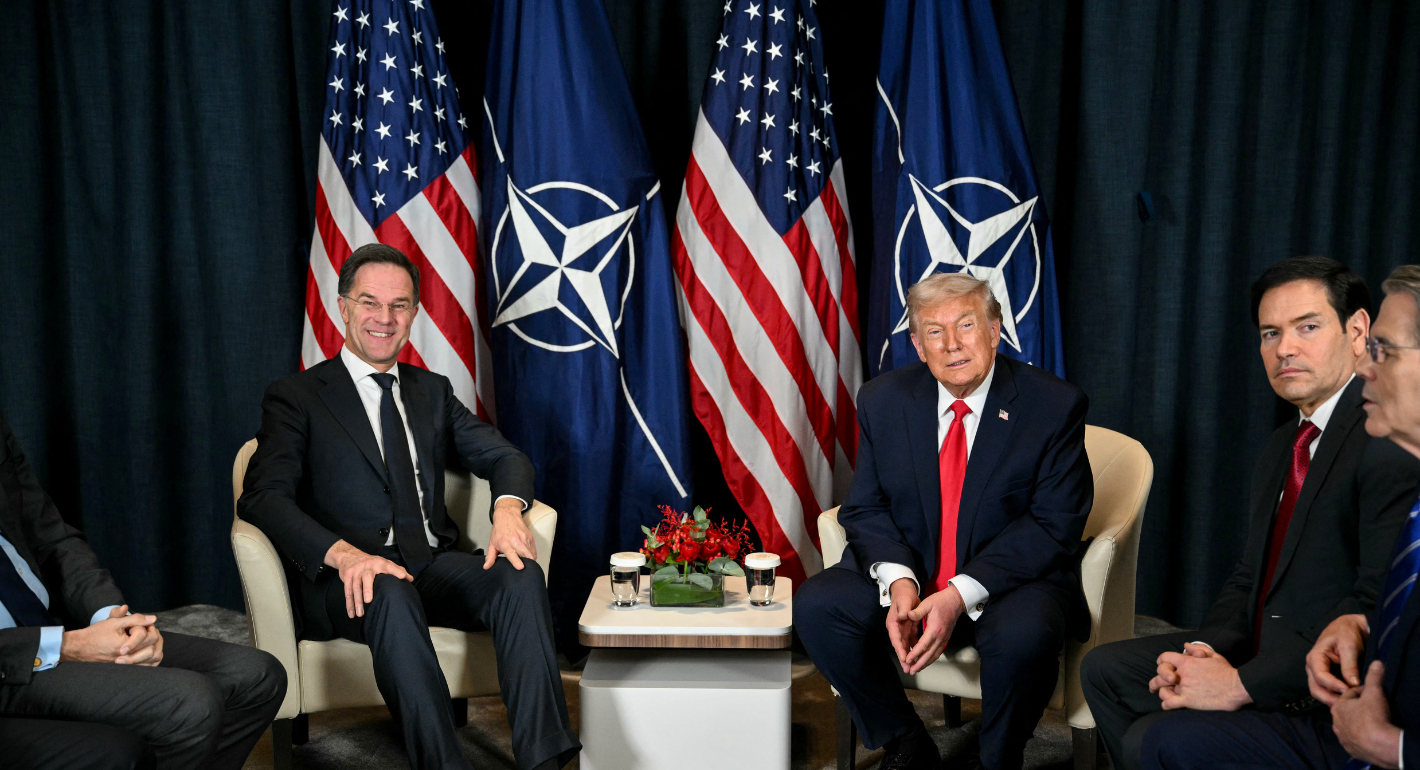
Donald Trump has demanded that European allies send ships to the Strait of Hormuz while his war of choice in Iran rages on. He has constantly berated NATO while the alliance’s secretary-general has emphatically supported him.

Rym Momtaz, ed.
The EU is structurally incapable of reacting to today’s foreign policy crises. The union must fold the EEAS into the European Commission and create a security council better prepared to take action on the global stage.

Stefan Lehne
The war in Ukraine is costing Russia its leverage overseas. Across the South Caucasus and Middle East, this presents an opportunity for Europe to pick up the pieces and claim its own sphere of influence.


William Dixon, Maksym Beznosiuk