

Commentary
Israeli-Lebanese talks have stalled, and the reason is that the United States and Israel want to impose normalization.
Michael Young
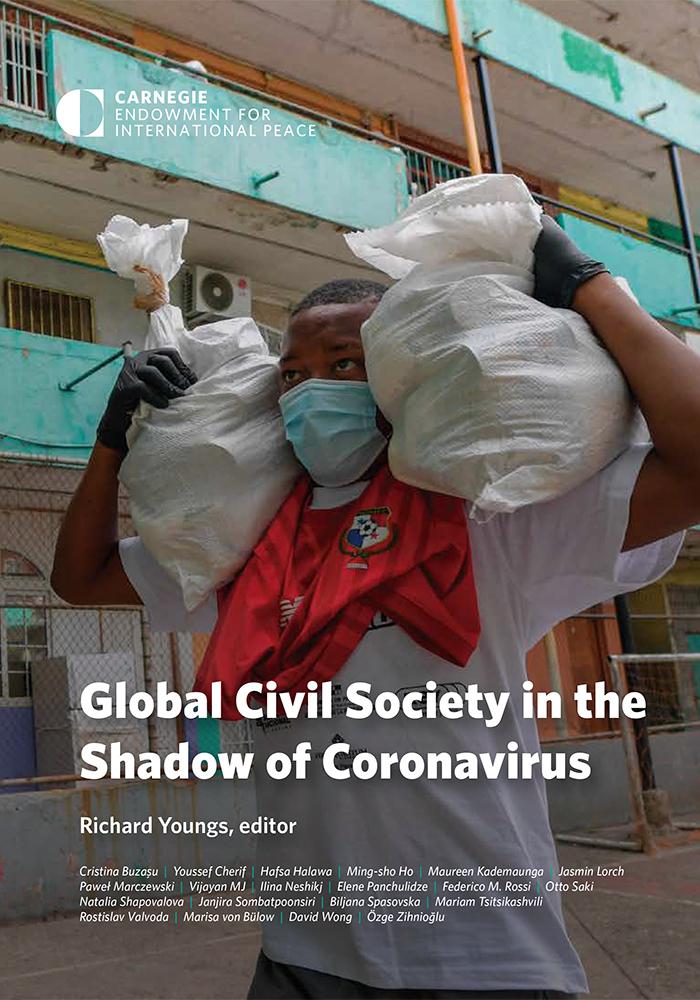
The coronavirus has been a wake-up call for global civil society. It will come out of the pandemic looking very different—and this change will be a significant factor in a now highly fluid international politics.
The coronavirus pandemic has placed acute stress and high expectations on governments around the world. Much has been written on a return to big government. The focus on government responses is understandable, as citizens have looked to authorities for effective responses—and often, these responses have made the difference between life and death. Yet, the pandemic has had a profound impact not only on government policies but also on societies. The crisis has played out at the public authority level and, equally, at the community and civil society levels. Somewhat unnoticed amid the focus on governments’ crisis responses, the coronavirus pandemic has sharpened and intensified the importance of organized civil society action.
This compilation examines the nature of these coronavirus-related shifts in global civil society. It is based on the contention that a deeper understanding is required of society-level responses to the crisis and the ways in which the pandemic is reshaping the relationship between states and societies. Across several regions and countries, the compilation asks a series of questions: How far has the pandemic galvanized new forms of civic activism? How far has it led governments to tighten control over civil society actors? To the extent that they have emerged, what do new forms of civic activism look like? Do they portend a different kind of global civil society, a remolded civic sphere likely to influence global politics in different ways in the post-pandemic world? If so, what are the political implications of this civic adjustment?
The compilation explores these issues through twelve chapters that cover Southeast Asia, Taiwan, India, the Middle East and North Africa, Eastern Europe and Central Asia, Ukraine, Georgia, Poland and Romania, the Western Balkans, Zimbabwe, the United States, and Latin America. The cases show that the pandemic has acted as a powerful catalyst for global civil society. In all regions, demand for civic activism has risen and new spaces have opened for civil society organizations (CSOs) to play prominent and multilevel roles in the crisis. The pandemic has given global civil society a new sense of urgency, unleashed a spirit of civic empowerment, and prompted CSOs to deepen their presence in local societies. In some countries, civic activism has also had to move up a gear and assume stronger defensive strategies because regimes have used the pandemic to attack critical civil society voices. The coronavirus pandemic period has seen heightened demand for, and an increased supply of, civic activism as well as a need for CSOs to push back against harsher government restrictions.
In terms of the ways civil society has expanded, the case studies reveal three levels of new, coronavirus-related civic activism. First, the crisis has prompted CSOs to step into emergency relief roles to help manage the effects of the pandemic. This has involved both new civic groups emerging, often at a very local community level, and existing CSOs repurposing themselves away from their normal activities. Civil society has moved in to fill the gaps left by governments in their often strained and chaotic policy responses to the emergency. In some countries, these gaps have been left by sheer government negligence and obliged societies to adopt a self-help mentality of managing the crisis for themselves. In other countries, the gaps reflect the scale of the tragedy, with governments taking wide-ranging measures more in constructive cooperation with civil society. Coronavirus-related activism has been a matter of both compensation for government failure and partnership with government intervention.
This strand of civic activism has seen many civic organizations assume new functions and identities. Many CSOs have sought to prove themselves in ways that are relevant to the health emergency and have taken on vital coronavirus-related roles. This has, in many places, helped civil society actors gain greater prominence and even a renewed legitimacy with their local societies. Not all civil society actors have adjusted, but in many countries they have shown themselves more attuned with local communities than for many years. This is true of both very new, informal, mutual aid initiatives and the more structured parts of organized civil society.
At a second level, a more confrontational form of civic activism has gained force as CSOs have increased their role as watchdogs over state authorities. In nearly all the cases studies here, civil society has moved up a gear to monitor government responses to the pandemic. This has entailed a focus on the emergency powers that executives have appropriated to manage the crisis. While these measures have clearly infringed on many basic freedoms, they have also triggered a wave of new monitoring initiatives as civil society seeks to keep governments under close scrutiny in the way they use these powers.
This level of activism has also focused on the basic governance effectiveness of crisis responses and on the breadth of measures to offset the economic impacts of the coronavirus. Governments that have scored badly on these counts have been subject to sharper critical pressure from civil society. Civic groups have been ready not only to support governments in consensual spirit but also to engage in confrontational tactics when governments fall short.
At a third level, the crisis has galvanized global civil society into pushing harder for far-reaching, radical change to social, economic, and political models. The coronavirus crisis has magnified many of the imbalances of countries’ political and economic systems. As many governments have reacted in restrictive and ineffective ways, civil society has pushed back hard. It has begun to mobilize more proactively and with vibrancy for major reform of social and economic models whose shortcomings the pandemic has cruelly revealed. This is, so far, the least widespread and least prominent of the three levels of modified activism; yet, it could prove to be the most significant over the long term.
The balance between these three dynamics has varied dramatically across countries. If this is civil society’s moment, CSOs are rising to the challenge better in some countries than in others.
Civil society is gaining importance in many contrasting ways. The balance between cooperative and conflictual dynamics differs across states, depending on government policies. Those countries in which regimes have downplayed the virus or resisted wide-ranging responses have seen the most game-changing, crisis-like civic activism. In some states, the powerful dynamic is one of conflict, contention, and political crisis, while in others, governments have contained turbulence. In some countries, incumbent regimes have doubled down on their assaults against civil society, while elsewhere, CSOs have found ways to participate more cooperatively and consequentially in key government decisions.
An important question is how these different levels of civic activism sit in relation to each other—both in the immediate crisis and in the longer-term recovery period. Many CSOs now face the challenge of cooperating with authorities on coronavirus relief while trying to retain their more critical agendas on political issues. Civic organizations will increasingly wrestle with the question of how far their new, repurposed pandemic identities can coexist with their previous identities.
These chapters show that in some countries, sharp political tension is likely to crowd out positive cooperation between governments and civil society, while in other places, the danger is more one of co-optation as CSOs work with regimes on health issues and then may struggle to revert to more contentious political strategies. In some countries, governments’ mismanagement of the pandemic has awoken more critical pressure on wider political aims; yet in others, the pandemic has somewhat diverted attention from pressing reform imperatives. In this sense, global civil society may be in a phase of adjustment with significant ramifications: some activism is set to become more practical and community rooted, while other civic mobilization will become more overtly politicized.
In sum, the coronavirus has been a wake-up call for global civil society. The pandemic has placed heavy responsibilities and strains not only on governments but also on societies around the world. While much attention has focused on governments’ emergency responses, at a deeper level the crisis is changing the relationship between states and societies. Global civil society will come out of the pandemic looking very different—and this change will be a significant factor in a now highly fluid international politics.
In Southeast Asia, the coronavirus pandemic presents both challenges for civic engagement and opportunities for positive change. On one hand, the pandemic has provided a pretext for autocrats to tighten their grip on power, deepening existing regional trends in autocratization and shrinking civic space. On the other hand, civil society organizations (CSOs) have emerged to focus on economic and social welfare needs, and their activism may challenge autocrats in the long run.
Although some regimes have been effective in addressing the health emergency and nascent economic setbacks, others have performed poorly and faced growing domestic criticism. Southeast Asian civil society will need to leverage the weaknesses of autocratic governance that the pandemic has revealed by creating broad-based alliances, challenging autocratic narratives, and proposing democratic visions for post-pandemic societies.
Five trends are emerging in Southeast Asia as a result of the pandemic and are pushing in very different political directions: tougher government restrictions on CSOs, contentious civil society action, new mutual aid initiatives, organized relief efforts, and repurposed advocacy groups.
The spread of the coronavirus is potentially accelerating autocratization in the region as leaders in many countries have used the pandemic as a pretext to increase their power.1 All major Southeast Asian governments except Indonesia’s have imposed emergency decrees, curfews, or similar laws in light of the pandemic.2 This has helped consolidate effective government responses to the pandemic in countries such as Singapore and Vietnam, but such laws have also been used to crack down on government critics and undermine opposition parties, furthering authoritarian power grabs.
A worrying case occurred in the Philippines, where Congress, dominated by President Rodrigo Duterte’s loyalists, granted the president emergency powers under an act that also contained a provision penalizing fake news. This was widely seen as an instrument to go after opponents, and indeed, the National Bureau of Investigation pressed charges against online critics of the government’s crisis management.3 Similarly, in the middle of the pandemic, Congress passed a new antiterrorism law, which defines terrorism in such broad terms as to allow the government to classify political criticism as terrorism.4 In September 2020, Duterte extended the national “state of calamity” by a year.5
Things are not looking brighter in Thailand or Myanmar. The Thai military-backed government’s March 2020 emergency decree remains in place even though the threat of the coronavirus has been contained in the country.6 Along with other draconian laws, the decree has been used to charge anti-government protesters as young as sixteen years old and circumvent parliamentary checks on executive power.7 The decree has also limited the public backlash against allegations of the government’s involvement in human rights violations, including the forced disappearance of an exiled activist who was critical of the government.8
Myanmar’s quasi-civilian government has refrained from invoking a nationwide emergency but has arrested large numbers of people for disobedience. Journalists have likewise been prosecuted for alleged violations of pandemic-related regulations, and a group of street artists was charged with offending religion in their artwork about the coronavirus. Meanwhile, restrictions on meetings between CSOs and parliamentarians on grounds of health protection have further limited CSO advocacy for fundamental rights, reinforcing a trend that existed before the pandemic.9 After a spike in coronavirus infections, the Myanmar government imposed partial lockdowns in Rakhine state and the country’s largest city, Yangon, in late August and early September 2020, respectively. Myanmar’s State Counselor Aung San Suu Kyi warned that disrespecting coronavirus regulations would be punished with up to a year’s imprisonment.10
Apart from emergency laws, existing media and cyber laws in most Southeast Asian countries have proved useful in silencing civic and democratic criticisms of governments’ pandemic responses. For instance, Indonesia’s 2008 law on electronic information and transactions was used against an independent researcher who was critical of the coronavirus measures taken by the government of President Joko Widodo.11
In Vietnam between January and March 2020, police responded to 654 cases of so-called fake news, sanctioning 146 people including a dissident publisher.12 In Singapore, the 2019 Protection From Online Falsehoods and Manipulation Act has been used to target not only spreaders of fake news about the pandemic but also journalists and political rivals of the ruling People’s Action Party government. Eighty-five percent of all online posts defined as false under the law consisted of negative portrayals of the government’s activities or policies.13
In Malaysia, citizens have been arrested for what the government has branded fake news about the pandemic.14 For instance, through the 1998 Communications and Multimedia Act, the Malaysian police summoned a journalist who was questioning the government’s treatment of migrant workers amid the pandemic.15
The Cambodian regime tightened its grip on power by declaring a state of emergency in March 2020. Activists were detained on charges of spreading false information about the coronavirus, and the country’s prime minister directly threatened with arrest the leader of a local human rights nongovernmental organization (NGO) who had commented on the government’s crisis response.16 The allegation of spreading fake news also led to the arrests of key members of the opposition, a practice all too common since the Cambodian Supreme Court dissolved the main opposition party before the 2018 general election.17
The second trend contrasts with the first, as contentious civic activism has occurred despite and, at times, against draconian government restrictions. This activism has been driven mostly by economic and social welfare needs in conjunction with ensuing grievances against regimes. Most Southeast Asian countries rely on tourism and export industries. Without substantive compensation for workers, governments’ lockdown measures have aggravated the lot of the unemployed, who have sometimes responded by staging spontaneous protests. Regimes’ unsympathetic responses have stirred public anger.
For instance, in the Philippines, a small group of urban poor people affected by the Duterte government’s harsh lockdown protested in Manila to demand livelihood support. They were soon arrested, with Duterte calling on law enforcers to “shoot them dead” if they caused any “trouble.”18 CSOs such as the leftist Solidarity of Filipino Workers were quick to condemn the arrests.19 Meanwhile, rights groups and ordinary citizens tweeted their criticism with hashtags such as #DuterteResign and #OustDuterteNOW.20
In Myanmar, factory workers staged small-scale protests against the government’s pandemic-related measures, resulting in the legal prosecution of some workers.21 In May 2020, over thirty Cambodian and international NGOs issued a joint statement urging the Cambodian government to allow around 150 Cambodian migrant workers stranded in Malaysia to re-enter their home country.22 With growing job losses and layoffs, independent labor unions in Cambodia, Myanmar, and the Philippines have called on their respective governments to provide urgent compensation for workers.23
In Thailand, growing economic concerns due to lockdown measures have taken a new turn. Since mid-July 2020, young people, whose job prospects have dimmed and whose grievances over the country’s autocratization are deepening, have been leading nationwide protests against the regime. Students were already on the streets in February and early March 2020 after Thailand’s constitutional court disbanded a progressive party. Defiance against the regime diminished with the advent of the coronavirus and the subsequent lockdown but then resurfaced even more strongly. As of this writing, students—together with LGBTQ groups, labor movements, and development NGOs—have organized more than 200 protests across the country. One major event on September 19, 2020, gathered between 50,000 and 100,000 people—the biggest protest since Thailand’s 2014 military coup.24 In what has become one of the world’s most prominent revolts, protesters are demanding the prime minister’s resignation and democratic reform of the constitution and the monarchy. Corresponding to these three demands is a three-finger salute that protesters have taken from the movie series The Hunger Games as an anti-dictatorship symbol.25
Another type of contentious civil society action has countered problematic government narratives about the coronavirus and related government relief efforts. In several Southeast Asian countries, civil society activists and journalists have actively disputed government misinformation about the pandemic, for instance through online campaigns. In the Philippines, civil society activists have worked with the nonprofit media organization Vera Files in a fact-checking community on Facebook whose existence predates the pandemic. In Malaysia, civil society activists and media outlets such as the online magazine Malaysiakini have sought to hold the government accountable during the crisis and lobbied against government attempts to curtail online expression.26
New volunteer groups have emerged to provide humanitarian relief and welfare services in place of governments. These groups are not necessarily run by seasoned activists but often by local residents who have organized to cope with the health crisis, subsequent economic setbacks, and coronavirus-related lockdown measures.
A striking example is the citizen-organized task force of the village of Gumuk Indah in Yogyakarta, Indonesia, where the government’s responses to the pandemic have been slow and uncoordinated.27 The task force has provided health responses, including health education and hygiene measures, to prevent transmission of the virus; supported people affected by the lockdown with aid kits; and sought to counter the security impacts of the pandemic and associated lockdown measures. The task force has drawn on volunteers, some of whom were previously active in neighborhood associations and local community-building organizations. The example of Gumuk Indah has sparked discussions in the international humanitarian community of ways to include people-centered approaches in humanitarian programs better and, possibly, move from community engagement to community-led engagement.28
While in March 2020 the Indonesian authorities still downplayed the seriousness of the pandemic, professional groups were quick to respond. Tech start-ups launched crowdfunding campaigns to raise funds for informal-sector workers and buy personal protective equipment (PPE) for healthcare workers. By late March, around 15,000 medical students from 158 universities across Indonesia had volunteered in understaffed hospitals.29 The Women’s Police in West Java donated their already low salaries to buy food for affected residents.30
In Myanmar, CSOs, religious organizations, and local companies have provided food and other emergency supplies for the needy, filling gaps left by the state. In addition, Buddhist monks, religious leaders of the Muslim minority, and Christian churches have allowed their religious compounds to be used as quarantine centers.31 Similarly, in the Philippines, citizens have come together to make PPE for frontline health professionals, distributed food packs for the homeless, and made cash transfers to the unemployed.32 In Cambodia, diverse actors, including CSOs and business tycoons, have made donations to support the government’s efforts to counter the coronavirus.33
Organized CSOs have played critical roles in helping vulnerable communities. In Malaysia, Thailand, and Vietnam, charity groups were set up to raise funds to buy medical supplies and food for slum dwellers, disabled people, and migrant workers.34 Although these charities are not by nature advocacy organizations, some have urged the government to adopt more comprehensive social policies that aid economically and socially vulnerable people in times of crisis.35
In Malaysia, NGO relief efforts kick-started a renegotiation of NGO-government relations in the field of care for vulnerable migrant and refugee communities. The Movement Control Order, issued by the government to counter the spread of the coronavirus, initially barred NGO access to migrant and refugee populations, with the military and a paramilitary corps distributing all pandemic-related aid to these communities.36 But after NGOs launched a campaign called Let Us Work With You, the government adjusted the order to allow NGOs to distribute food and other emergency supplies to affected communities.37 Subsequent cooperation has improved relations between the government and some NGOs.38 Still, a recent study also shows that Malaysian CSOs that help vulnerable communities themselves face serious challenges in light of the pandemic, including financial shortages and the disruption of staff development due to economic uncertainties.39
In Myanmar, Aung San Suu Kyi’s government has for a long time been reluctant to cooperate with civil society and so far failed to provide adequate support for CSOs that work to counter the coronavirus pandemic.40 Yet, the country’s CSOs play important roles in mitigating the social and economic impacts of the coronavirus and have engaged in critical advocacy to influence the government’s response to the health crisis.
For instance, the Livelihoods and Food Security Fund, a multidonor fund managed by the United Nations Office for Project Services, estimates that over 80 percent of its coronavirus response activities are conducted by its local partners, with local CSOs engaging in relief efforts as different as welfare and health service delivery, education, awareness training, and the provision of legal assistance to migrant workers.41 In May 2020, over 200 CSOs from diverse professional and ethnic backgrounds issued a joint statement in which they urged Myanmar’s government to provide food and financial support for people in need; advocated respect for human rights, democracy, and social justice in the government’s crisis response; and demanded an end to armed conflict in ethnic areas.42
Finally, advocacy groups that repurpose their agendas for social and economic welfare activities have been able to leverage the health crisis to carve out a new civic space, counter regimes’ narratives, and generate progressive social visions for the post-coronavirus context. In Thailand, student activists who launched anti-junta campaigns before the pandemic have partly shifted to humanitarian work by distributing food packs to the unemployed, slum dwellers, and affected sex workers.43 Meanwhile in Myanmar, some ethnic minority activists have reoriented themselves from human rights campaigns to health advocacy and service provision, including by distributing food and other basic goods in remote areas.44
Challenging Duterte’s militaristic framing of the fight against the pandemic, Filipino human rights groups such as Active Vista have refocused their activities to link human rights with equal access to public health. These groups hope to reshape human rights discourses in terms of “people working together out of generosity to achieve a common goal” and “a shared sense of identity and treating others with respect and dignity as [equals].”45
A similar trend has occurred in Singapore, where xenophobic rhetoric against migrant workers has surged in light of the country’s second coronavirus wave. An outspoken LGBTQ movement, Pink Dot, has extended its support to migrant workers by raising funds for, and delivering care packages to, many of those who were trapped in dormitories because of coronavirus restrictions. Based on the informal modes of activism the movement has developed, Pink Dot has organized online activities such as livestreamed performances and interactive discussions. On June 27, 2020, the movement invited supporters to light up their homes and workplaces in pink and share pictures of small gatherings with close ones. These activities sent a message of solidarity between Singaporeans and migrant workers, countered xenophobic attitudes toward migrants, and, most importantly, ignited conversations about social justice in post-pandemic Singapore.46
It is clear that the coronavirus pandemic is reinforcing an existing trend of autocratization in Southeast Asia and that this trend will persist in the short to medium term. This will have detrimental effects on contentious antiregime activism, although it remains to be seen whether Thailand’s high-profile, ongoing protests will yield substantive outcomes in the coming months. All Southeast Asian regimes have imposed severe legal or de facto restrictions on civil liberties, preventing the development of strong, civil society–based opposition movements. However, increasing social engagement in the context of the health crisis seems to be enlarging civic space in the area of social service provision. This engagement may have the potential to strengthen links between national and international civil society as well as between formally organized CSOs and informal, community-based groups in individual Southeast Asian countries.
This new dynamic of civic activism in the welfare sector does little to alter the autocratizing trend in the region. However, improved relations between organized CSOs and local communities may, in the long term, contribute to creating a more legitimate and organic civil society in many Southeast Asian countries. Thus, new and reorienting civic groups with socioeconomic welfare agendas may slowly gather the political force necessary to resist autocratization.
For this to happen, politically contentious civic groups will need to form alliances with welfare-based groups that are gaining traction among local communities. Human rights and pro-democracy advocacy organizations will need to connect their political agendas with issues of citizens’ welfare, including healthcare and economic redistribution. Civic coalitions must counter regime narratives that depict authoritarian leadership as a success factor for an effective crisis response. In Singapore and Vietnam, where governments have responded swiftly and effectively to the pandemic, such narratives are difficult to crack. However, in Indonesia, Malaysia, Myanmar, the Philippines, and Thailand, where governments have often failed to meet citizens’ expectations, CSOs may well be able to challenge regime narratives about authoritarian effectiveness. And finally, the pandemic should push Southeast Asian civil society to develop more appealing visions of democracy that leave no one behind in the post-pandemic world.
1 Autocratization has been defined as a “substantial de-facto decline of core institutional requirements for electoral democracy” that can take place in both democratic and nondemocratic regimes. Anna Lührmann and Staffan Lindberg, “A Third Wave of Autocratization Is Here: What Is New About It?,” Democratization 26, no. 7 (2019): 1096, 1099.
2 James Gomez and Robin Ramcharan, “Coronavirus and Democracy in Southeast Asia,” Bangkok Post, April 1, 2020, https://www.bangkokpost.com/opinion/opinion/1890655/coronavirus-and-democracy-in-southeast-asia. For a comprehensive list of laws implemented in Southeast Asia in light of the pandemic, see “COVID-19 Civic Freedom Tracker,” International Center for Not-for-Profit Law, https://www.icnl.org/covid19tracker/.
3 Jason Castaneda, “Why Duterte Wants to Extend His COVID-19 Emergency,” Asia Times, June 9, 2020, https://asiatimes.com/2020/06/why-duterte-wants-to-extend-his-COVID-19-emergency/; Mariejo S. Ramos, “Rights Groups Wary as NBI Summons 17 for ‘Fake News,’” Inquirer, April 4, 2020, https://newsinfo.inquirer.net/1253684/rights-groups-wary-as-nbi-summons-17-for-fake-news.
4 Nick Aspinwall, “The Philippines’ Broad Anti-Terrorism Law Takes Aim at Dissent,” Diplomat, June 5, 2020, https://thediplomat.com/2020/06/the-philippines-broad-anti-terrorism-law-takes-aim-at-dissent/.
5 Pia Ranada, “Duterte Extends State of Calamity Due to Coronavirus Until September 2021,” Rappler, September 18, 2020, https://rappler.com/nation/duterte-extends-state-of-calamity-due-to-coronavirus-until-september-2021.
6 “State of Emergency Extended Until End of July,” Nation, June 29, 2020, https://www.nationthailand.com/news/30390469.
7 Sunai Phasuk, “Thai Activist Arrested on COVID-19 Pretext,” Human Rights Watch, May 15, 2020, https://www.hrw.org/news/2020/05/16/thai-activist-arrested-COVID-19-pretext; “Chiang Rai Students Summoned for Violating Emergency Decree,” Post Today, July 21, 2020, https://www.posttoday.com/social/local/40326; Shawn W. Crispin, “COVID-19 Gives Prayut New Political Life in Thailand,” Asia Times, July 3, 2020, https://asiatimes.com/2020/07/COVID-19-gives-prayut-new-political-life-in-thailand.
8 George Wright and Issariya Praithongyaem, “Wanchalearm Satsaksit: The Thai Satirist Abducted in Broad Daylight,” BBC, July 2, 2020, https://www.bbc.com/news/amp/world-asia-53212932.
9 RSF Hub, “Covid-19 in Myanmar: Effects of the Pandemic on the Rule of Law,” Rule of Law Promotion in Times of Covid-19, no. 4, June 2020, https://www.polsoz.fu-berlin.de/polwiss/forschung/international/atasp/forschung/projekte_laufende/RSF-Hub/RSF-Hub-CP_4-Impacts-of-Covid-19-in-Myanmar.pdf.
10 Zaw Zaw Htwe, “Myanmar’s COVID-19 Cases Exceed 1,000,” Irrawaddy, September 3, 2020, https://www.irrawaddy.com/specials/myanmar-covid-19/myanmars-covid-19-cases-exceed-1000.html.
11 Ary Hermawan, “The Curious Case of Ravio Patra: Why Indonesian Cyberspace Is a Dystopian Nightmare,” Jakarta Post, April 24, 2020, https://www.thejakartapost.com/academia/2020/04/24/the-curious-case-of-ravio-patra-why-indonesian-cyberspace-is-a-dystopian-nightmare.html.
12 David Hutt, “Some Thoughts on Vietnam’s COVID-19 Repression,” Asia Times, May 22, 2020, https://asiatimes.com/2020/05/some-thoughts-on-vietnams-COVID-19-repression/.
13 Paul Meyer, “Singapore’s First Election Under the Fake News Law,” Diplomat, July 7, 2020, https://thediplomat.com/2020/07/singapores-first-election-under-the-fake-news-law/.
14 Felix Bethke and Jonas Wolff, “COVID-19 as a Threat to Civic Spaces Around the World,” PRIF Blog, Peace Research Institute Frankfurt, April 1, 2020, https://blog.prif.org/2020/04/01/COVID-19-as-a-threat-to-civic-spaces-around-the-world/.
15 Hadi Azmi, “Malaysian Police Question Reporter Over Tweets About Migrant Roundup,” Benar News, May 6, 2020, https://www.benarnews.org/english/news/malaysian/journalist-questioned-05062020163143.html.
16 “Cambodia: Rights Groups Concern Over Arrests & Harassment of Activists During the Covid-19 Pandemic,” Business & Human Rights Resource Center, April 3, 2020, https://www.business-humanrights.org/en/latest-news/cambodia-rights-group-concerns-over-arrests-harassment-of-activists-amid-the-covid-19-pandemic-measures/.
17 “Cambodia: COVID-19 Clampdown on Free Speech,” Human Rights Watch, March 24, 2020, https://www.hrw.org/news/2020/03/24/cambodia-COVID-19-clampdown-free-speech.
18 Sofia Tomacruz, “‘Shoot Them Dead’: Duterte Orders Troops to Kill Quarantine Violators,” Rappler, April 1, 2020, https://www.rappler.com/nation/256705-duterte-orders-troops-shoot-kill-coronavirus-quarantine-violators.
19 Rambo Talabong, “Quezon City Residents Demanding Help Amid Lockdown Arrested by Police,” Rappler, April 1, 2020, https://www.rappler.com/nation/256628-residents-quezon-city-protesting-help-coronavirus-lockdown-arrested-by-police-april-1-2020.
20 Lynzy Billing, “Duterte’s Response to the Coronavirus: ‘Shoot Them Dead,’” Foreign Policy, April 16, 2020, https://foreignpolicy.com/2020/04/16/duterte-philippines-coronavirus-response-shoot-them-dead/.
21 RSF Hub, “Covid-19 in Myanmar.”
22 “Joint Statement on Repatriation of Cambodia Nationals to Cambodia,” Human Rights Watch, May 29, 2020, https://www.hrw.org/news/2020/05/29/joint-statement-repatriation-cambodia-nationals-cambodia.
23 “South East Asian Unions Turn Online to Defend Workers’ Rights,” IndustriALL Global Union, May 12, 2020, http://www.industriall-union.org/south-east-asian-unions-turn-online-to-defend-workers-rights.
24 “19 September Demonstrations,” BBC, September 20, 2020, https://www.bbc.com/thai/thailand-54217719.
25 Janjira Sombatpoonsiri, “Thailand’s Anti-Establishment Protests,” International Politics and Society, August 31, 2020, https://www.ips-journal.eu/regions/asia/article/show/thailands-anti-establishment-protests-4604/.
26 “Stronger Alliance of Civil Society and Media in Asia Called to Fight Infodemic,” Digital Thinkers Forum/CoFact Thailand, April 16, 2020, https://www.freiheit.org/stronger-alliance-civil-society-and-media-asia-called-fight-infodemic.
27 Sana Jaffrey, “Coronavirus Blunders in Indonesia Turn Crisis Into Catastrophe,” Carnegie Endowment for International Peace, April 29, 2020, https://carnegieendowment.org/2020/04/29/coronavirus-blunders-in-indonesia-turn-crisis-into-catastrophe-pub-81684.
28 “Fighting COVID-19 in Indonesia / Melawan COVID-19 di Indonesia,” Sphere webinar, June 25, 2020, recording available at https://spherestandards.org/wp-content/uploads/COVID19-WEBINAR-INDONESIA.mp4.
29 Ghina Ghaliya, “Medical Students Ready to Join Fight Against COVID-19,” Jakarta Post, March 27, 2020, https://www.thejakartapost.com/news/2020/03/27/15000-medical-students-ready-to-join-fight-against-COVID-19-house.html.
30 Renne R. A. Kawilarang and Zahrul Darmawan, “Polwan di Depok Sumbang Gaji Bantu Warga Miskin,” Vivanews, April 24, 2020, https://www.vivanews.com/berita/metro/46588-polwan-di-depok-sumbang-gaji-bantu-warga-miskin.
31 Kyi Kiy Sein, “The Coronavirus Challenges Myanmar’s Transition,” United States Institute for Peace, March 26, 2020, https://www.usip.org/publications/2020/05/coronavirus-challenges-myanmars-transition.
32 Filomin Gutierrez, “Solidarity and Sharing in an Unequal Society: COVID-19 in the Philippines,” openDemocracy, May 2, 2020, https://www.opendemocracy.net/en/democraciaabierta/solidarity-and-sharing-unequal-society-COVID-19-philippines/.
33 Kimkong Heng and Len Ang, “Who’s Helping Cambodia Weather COVID-19?,” Diplomat, July 8, 2020, https://thediplomat.com/2020/07/whos-helping-cambodia-weather-COVID-19/.
34 Kornkamol Sriwiwat, “X-Ray Thailand: On the Day We Say We Would Leave No One Behind,” 101, May 20, 2020, https://www.the101.world/living-with-covid-3/; “COVID-19: Impact on Migrant Workers and Country Response in Malaysia,” International Labor Organization, May 8, 2020, https://www.ilo.org/wcmsp5/ groups/public/---asia/---ro-bangkok/documents/briefingnote/wcms_741512.pdf; Tania Nguyen, “Realising Rice and Rights: The Role of Civil Society in Realising the Right to Food in Vietnam During the COVID-19,” SHAPESEA, April 17, 2020, https://shapesea.com/op-ed/COVID-19/realising-rice-and-rights-the-role-of-civil-society-in-realising-the-right-to-food-in-vietnam-during-the-COVID-19/.
35 “Civil Society Suggest State Aid for Everyone,” Thai News Agency, June 4, 2020, https://www.mcot.net/viewtna/5ed89cdfe3f8e40af844cfdd.
36 R. Loheswar, “Send Food for Homeless to District Collection Centres, RELA and Army Will Disburse, Defence Minister Tells NGOs,” Mail Malaysia, March 28, 2020, https://www.malaymail.com/news/malaysia/2020/03/28/send-food-for-homeless-to-district-collection-centres-rela-and-army-will-di/1851112; Natalie Shobana Ambrose, “Malaysia’s Marginalized and COVID-19,” Asia Foundation, May 13, 2020, https://asiafoundation.org/2020/05/13/malaysias-marginalized-and-COVID-19/.
37 Grace Chen, “JKM’s New Guidelines Allow NGOs to Distribute Food to Needy Folk,” Star, April 2, 2020, https://www.thestar.com.my/metro/metro-news/2020/04/02/jkms-new-guidelines-allow-ngos-to-distribute-food-to-needy-folk.
38 Ambrose, “Malaysia’s Marginalized.”
39 “Survey Report: Impact of COVID-19 on Civil Society Organisations (CSOs) in Malaysia,” Yayasan Hasanah Foundation, 2020, https://caps.org/doing-good/survey-report-impact-covid-19-civil-society-organisations-csos-malaysia/.
40 Authors’ email and phone conversations with experts, July 2020.
41 Thu Thu Nwe Hlaing, “No COVID-19 Response Is Possible Without Civil Society Involvement,” Livelihoods and Food Security Fund, June 16, 2020, https://www.lift-fund.org/blog/no-covid-19-response-possible-without-civil-society-involvement.
42 “Myanmar Civil Society Organizations and Networks Urge the Myanmar Government and Other Relevant Stakeholders to Take Urgent Measures During the COVID-19 Pandemic,” Transnational Institute, May 28, 2020, https://www.tni.org/files/article-downloads/cso_leaders_covid-19_urgent_statement_english.pdf.
43 Duanpen Chuipracha, “Netiwit and #SongTorKwamImm: Sharing Campaigns for Mutual Survival,” A Day, May 20, 2020, https://adaymagazine.com/food-sharing-project/.
44 Maggi Quadrini, “Civil Society Grapples With COVID-19 Impact in Myanmar’s Ethnic Areas,” Myanmar Mix, May 4, 2020, https://www.myanmarmix.com/en/articles/civil-society-grapples-with-COVID-19-impact-in-myanmars-ethnic-areas.
45 James Savage, “How Civil Society Is Fighting Back Against Coronavirus Crackdowns,” OpenDemocracy, June 24, 2020, https://www.opendemocracy.net/en/how-civil-society-fighting-back-against-coronavirus-crackdowns/.
46 Lynn Ng Yu Ling, “What Does the COVID-19 Pandemic Mean for PinkDot Singapore?,” Interface 12, no. 1 (2020): 72–81, https://www.interfacejournal.net/wp-content/uploads/2020/07/Interface-12-1-Ng.pdf.
Taiwan adopted a widely acclaimed, successful strategy to cope with the coronavirus pandemic. This tempered criticism from civil society organizations (CSOs). Unlike in most other countries covered in this compilation, in Taiwan the pandemic did not trigger a major political crisis or polarization in civil society. Nevertheless, Taiwanese civic activists have engaged strongly to make sure the government respects fundamental rights in its responses to the coronavirus. On several specific issues, this has involved heightened civic mobilization during the pandemic.
Despite its geographic proximity to China and high flows of travelers to and from the mainland, the island nation of 23.7 million people had recorded only around 500 confirmed cases of the coronavirus and seven related deaths as of mid-September 2020.1 Because of rigorous preventive measures, Taiwan’s residents did not experience lockdowns or stay-at-home orders, and most commercial and civil activity went on as usual. While the world’s economy plunged, Taiwan’s gross domestic product has continued to grow in 2020.
In April, as Western countries began to experience rapid spikes in infections, Taiwan launched an international aid campaign, branded online with the hashtag #Taiwancanhelp, and donated face masks and medical supplies to countries in need. The campaign garnered significant attention, raising Taiwan’s profile as an international actor during the pandemic and effectively neutralizing attempts by China and the World Health Organization to isolate the nation. Taiwan’s success has broader implications: a democracy that honors information transparency can generate effective responses to the health crisis without resorting to draconian measures, and citizens are voluntarily complying with the government’s directives without giving up their rights and liberties.
There are several ingredients in Taiwan’s successful recipe for responding to the pandemic. The government adopted early and proactive measures, such as travel bans and border screenings, to prevent the virus from entering the island. After its experience with the 2003 outbreak of severe acute respiratory syndrome (SARS), a disease caused by an earlier coronavirus that came from China, Taiwan already had legal and physical frameworks in place for responding to a public health crisis. Once news of COVID-19 broke, Taiwan’s government leaders activated the Central Epidemic Command Center on January 21, 2020, two days before a lockdown was imposed in Wuhan, China.2 Taiwan’s public healthcare system, National Health Insurance, played a critical role in this emergency. It provided universal protection for citizens and residents, and the system’s database and pharmacy networks were vital in distributing rationed face masks.3
Taiwan’s strong machinery industry was a valuable asset in helping to combat shortages of medical masks, goggles, and protective clothing. Before the outbreak, Taiwan relied heavily on imports of masks, but with concerted action by officials and industries at the outset of the pandemic, Taiwan quickly set up new manufacturing lines that dramatically increased the daily production of masks. With this, Taiwan became the world’s second-largest producer of face masks, not only achieving self-sufficiency but also producing a surplus for international aid and export.
Finally, due to its previous experience of contagious diseases, particularly SARS, the Taiwanese public generally embraces a hygienic lifestyle. Hand washing before meals is rigorously promoted in kindergartens and elementary schools, and hand sanitizers are commonly available at the entrances to public buildings. Wearing a face mask does not carry an unwelcome stigma but is seen as a considerate gesture to protect one another’s health. Adherence to government guidelines on quarantine, physical distancing, and the compulsory wearing of masks is generally seen as a civic virtue and duty.4
On January 11, 2020, Taiwan held presidential and legislative elections, which yielded landslide victories to the incumbent, independence-leaning Democratic Progressive Party (DPP). President Tsai Ing-wen won a second term, and her party maintained its legislative majority. If the elections had taken place after the coronavirus outbreak, politics could have prevented coordinated responses. And if the China-friendly opposition Kuomintang party had won the elections, government officials might have been reluctant to issue timely travel restrictions and regulations for passengers entering Taiwan from China.
What is more, the winning DPP government boasted public health specialists among its top brass. Former Taiwanese vice president Chen Chien-jen is a leading epidemiologist with hands-on experience in the SARS crisis, and Chen Chi-mai, a former vice premier, has a background in preventive medicine. These specialists were instrumental to the government’s ability to craft a robust package of responses.
Taiwan’s civil society, however, did not have to play a prominent role in the nation’s crisis response, simply because the government reacted preemptively and generated creditable results. It is sobering to see that many affluent democracies have failed to deliver sufficient personal protective equipment to frontline medical workers and that charities and other CSOs have had to take care of these basic provisions instead. While some democratically elected leaders have flouted the expertise of scientific communities and promoted contradictory and inconsistent messages, Taiwanese civil society has been spared the thankless task of correcting misinformation and disseminating scientific knowledge about personal hygiene.
The trend of civil society repurposing itself to fulfill urgent needs is absent in Taiwan.5 Yet, Taiwan’s civil society is not lying dormant in the ongoing health crisis. It has closely monitored the government’s coronavirus policies and decrees to make sure that these temporary measures do not violate the fundamental principles of democracy and human rights or unnecessarily marginalize vulnerable groups. And Taiwanese civil society has collaborated with government agencies to ensure citizens receive undistorted information and rationed face masks. In short, Taiwan’s civil society remains active simultaneously as a watchdog to, and a partner of, the government.
With its stellar management of the coronavirus emergency, the DPP government is enjoying high public approval—an unusual phenomenon for a second-term presidency. In a June 2020 poll, 97 percent of respondents assessed the Taiwanese government’s response positively, while 80 percent judged the Chinese government’s performance negatively.6 Chen Shih-chung, Taiwan’s emergency commander in chief and minister of health and welfare, emerged as a household name and Taiwan’s most popular politician, receiving a startling approval rating of 94 percent in a May 2020 opinion poll.7
By contrast, those critical of the government’s policies have been met with a public backlash. The Kuomintang party’s approval rating has continued to nosedive since its electoral setback in January. One of the reasons for the slump is that opposition politicians are perceived to have politicized the government’s responses to the coronavirus, from banning exports of face masks in January to rationing them in February to donating them internationally in April.
Taiwan’s advocacy groups have stepped up their watchdog functions. The groups have been largely free from short-term political considerations because their missions are inspired by universal values or commitments to underprivileged groups. One concern of advocacy groups has been the pervasive use of digital technology by authorities to prevent the spread of the coronavirus. In a health emergency, Taiwan’s laws allow the government to link databases of immigration, household registration, and national health insurance to improve the surveillance of individuals with suspected travel and contact histories.
The government also accessed the global positioning system information of mobile network operators and sent text messages to people who might have been in the same place at the same time as those who were reported to be infected with the coronavirus.8 The government enforced a strict fourteen-day quarantine order for people who had recently returned from abroad and those who were permitted to enter Taiwan. These people were put on a rather intrusive scheme of electronic surveillance by a mandated use of government-issued SIM cards in their cell phones.
While many officials appeared complacent about these new digital tools and their efficacy, CSOs such as the Taiwan Association for Human Rights expressed grave concern about the pernicious implications of suspending privacy protections in favor of tracing the spread of the virus. Such human rights advocates have issued many statements to remind the Taiwanese government that temporary measures need to be proportionate and terminated in due course and that collected personal data must be properly disposed of after the pandemic.
Another concern flagged by civil society was that an existing law authorized the government to reveal, if necessary, the personal information of those who had violated a quarantine order. Taiwan’s human rights activists urged the government not to invoke this emergency authorization. Many feared that these reinforced measures of surveillance might become permanent features, because they had popular support and were perceived as necessary for safeguarding public health.
In February 2020, several illegal migrant workers were found to be infected with the coronavirus, which quickly generated a nationwide wave of nervousness. Many migrants had either stayed beyond their permitted period or changed employer without due process during the pandemic. Taiwan’s civil society activists and academics urged the government not to stigmatize these illegal migrants or escalate deportation measures, because, the activists argued, such steps would be counterproductive by driving the migrants further into hiding.9 Taiwan’s health officials took heed and formally promised not to take further action against illegal migrant workers.
Because the job of sex workers involves intimate contact with customers, the government ordered the immediate suspension of related businesses, such as karaoke clubs and dancing halls. The decree brought about acute economic distress to many sex workers and their coworkers because of the lack of cash income. Feminist scholars and women’s rights groups argued that the order was disproportionate and discriminatory, pointing out that confirmed cases in universities, hospitals, accounting firms, and other workplaces outside the sex industry were not shut down and were treated differently. In June, the restrictions were lifted, although it remained unclear whether CSOs’ criticisms had been influential.
Some activism and protests erupted around Taiwanese-Chinese family links. Affected family members took the lead in organizing these protests, and their voices were amplified with the endorsement of Kuomintang politicians. In what became a controversial move, certain Chinese nationals with kinship ties to Taiwan were forbidden from entering the island from late January 2020 onward. The DPP government initially attempted to lift the ban in late February, but an outpouring of negative opinion brought about a policy U-turn. Protests by the affected families followed, and the ban was finally lifted in mid-July.
Clarity and accuracy of information about the pandemic has been another focus of emergent civic activism. In Taiwan’s experience, transparent information has been necessary to maintain citizens’ trust in the government’s emergency responses. One of the reasons for Chen Shih-chung’s surging popularity is that he held daily press conferences over one hundred consecutive days. In this period, tuning in to his daily announcements became an everyday routine that helped people manage their anxieties. Chen was not a charismatic speaker, but his willingness and patience to answer all the reporters’ questions, including some patently hostile and misinformed ones, made him an effective political communicator during the crisis.
However, despite officials’ commitment to transparency, rumors and fears were bound to circulate in the present age of disinformation. Starting in February, news that purported to reveal mass deaths in Taiwan began to spread on several online platforms. Lurid and untrue information, such as a claim that mass graves had been dug in many places to bury the dead hastily, went viral. Additionally, unfounded conspiracy theories were abundant, for example that officials kept a secret stash of face masks from which to profiteer during nationwide rationing. Many of these rumors were found to have been generated by online chatbots based in China and deliberately spread by pro-China collaborators based in Taiwan.
As Western countries later experienced, China’s propaganda machine was at full throttle, even when the coronavirus was killing thousands of people on a daily basis. In response, the Taiwan FactCheck Center (TFC), a nonprofit set up by communication scholars and activist journalists, launched a project to monitor coordinated inauthentic behaviors in cyberspace and respond with fact-checked clarifications. TFC attempted to cultivate digital media literacy so that users were less likely to be misinformed. TFC also collaborated with Facebook, and as a result, more than sixty accounts were taken down because of their role in spreading coronavirus-related disinformation.10
Another area of partnership between the government and civil society focused on providing information about the distribution of face masks when the government began to ration them in February 2020. G0v, an open-source platform for digital activists and programmers, worked with the government to design several free cell phone apps that gave real-time information about the locations of face mask distribution centers and stocks of masks so that citizens could find and buy their rations. This collaboration was made possible by Taiwanese Digital Minister Audrey Tang, a former Silicon Valley entrepreneur and a pioneer of Taiwan’s civic technology. It was due to her intervention that software engineers could access the government’s database and build accessible platforms for cell phone users.
The worldwide coronavirus pandemic is far from over, and Taiwan’s achievement in containing the virus remains precarious at best. Yet, Taiwanese civil society has been an integral part of the country’s effective strategy for dealing with the unprecedented health crisis and is an often-ignored source of the island nation’s resilience.
CSOs can assume different roles vis-à-vis the government. They can scrutinize the executive’s policies and raise red flags when those policies have consequences in the form of human rights violations or discrimination. Alternatively, CSOs can enter into partnership with the government to improve legislative measures. Whether Taiwan’s civic activism can maintain these two sources of vitality and resourcefulness remains to be seen for the post-pandemic era.
The coronavirus pandemic has exposed democracies’ vulnerabilities across the globe. Many popularly elected leaders have either ignored scientific expertise or hesitated to implement necessary but unpopular preventive measures for political reasons. Unfortunately, the universal guarantee of citizens’ rights has often been abused for frivolous lawsuits, divisive protests, or the spread of inauthentic information, which all stand in the way of a coordinated response to the health emergency. In the spring of 2020, China promoted the narrative that its decisive yet draconian lockdown in Wuhan province was instrumental in flattening the curve of contagion. Yet, Beijing’s claim was met with universal skepticism because it was precisely the dictatorial regime’s lack of transparency that had led to the global spread of the virus.
Authoritarianism is emphatically not a solution to the common threats that confront human beings, be they climate change or the coronavirus pandemic. In this regard, Taiwan’s success story stands out as a vindication of democracy. Democratically elected leaders are obliged to abide by the norm of transparency so that official figures are unlikely to be doctored. What is more, a vibrant civil society can thrive only in an environment that fully respects human rights and the rule of law. As such, while robust and timely government responses make up the necessary frontline defense against the coronavirus, CSO efforts embody the resilience that can sustain a democratic nation over the longer term.
1 Paula Hancocks, “Taiwan Led the World in Closing Down for Covid-19, Now It Wants to Do the Same With Opening Back Up,” CNN, September 22, 2020, https://edition.cnn.com/2020/09/21/asia/taiwan-model-coronavirus-hnk-intl/index.html.
2 C. Jason Wang et al., “Response to COVID-19 in Taiwan: Big Data Analytics, New Technology, and Proactive Testing,” Journal of the American Medical Association 323, no. 14 (2020): 1341–1342, https://jamanetwork.com/journals/jama/fullarticle/2762689.
3 Ya-wen Lei, “National Health Insurance, Health Policy, and Infection Control: Insights From Taiwan,” Contexts Magazine: Sociology for the Public, March 25, 2020, https://bit.ly/2C6KM99.
4 Ming‑Cheng Lo and Hsin‑Yi Hsieh, “The ‘Societalization’ of Pandemic Unpreparedness: Lessons From Taiwan’s COVID Response,” American Journal of Cultural Sociology, 2020, https://doi.org/10.1057/s41290-020-00113-y.
5 Saskia Brechenmacher, Thomas Carothers, and Richard Youngs, “Civil Society and the Coronavirus: Dynamism Despite Disruption,” Carnegie Endowment for International Peace, April 21, 2020, https://bit.ly/2DeeM3z.
6 Radio Taiwan International, June 2, 2020, https://bit.ly/2DbVKux.
7 Newtalk, May 13, 2020, https://bit.ly/3e2ZGe2.
8 Chi-Mai Chen et al., “Containing COVID-19 Among 627,386 Persons in Contact With the Diamond Princess Cruise Ship Passengers Who Disembarked in Taiwan: Big Data Analytics,” Journal of Medical Internet Research 22, no. 5 (2020): 1–9, https://www.jmir.org/2020/5/e19540/.
9 Ming-cheng Lo, “Taiwan’s State and Its Lessons for Effective Epidemic Intervention,” Contexts Magazine: Sociology for the Public, March 25, 2020, https://bit.ly/2C6KM99.
10 Yi-ting Lien, “Why China’s COVID-19 Disinformation Campaign Isn’t Working in Taiwan,” Diplomat, March 20, 2020, https://bit.ly/3e53yLm.
The curve of the coronavirus pandemic will likely flatten sooner or later; the upward curve of authoritarianism that has effectively used the pandemic and associated lockdown measures may take much longer to do the same. In India, the government converted a health crisis into a law-and-order issue, and democratic governance slid into a police raj. The pandemic has helped the executive cover up misadventures with economic and foreign policies and gain unchallenged authority under a narrative of protecting citizens.
In the Indian case, the battle against the pandemic cannot be separated from the battle to regain democracy, the rule of law, constitutionalism, and human rights. Indian civil society has intensified its actions and been at the forefront of the struggle; in short, the pandemic has been a game changer for civic activism. A revival of democracy is needed to underpin this resurgence of civic action.
The coronavirus hit India gradually but severely. The country had become a global hot spot for the disease by September 2020, when India was registering close to 100,000 new cases a day with an exponentially rising curve of infections that reached 6 million.1Many factors have contributed to India’s particular struggles with the disease: a large population, high-density urban dwellings that do not allow for physical distancing, and the fact that India’s impoverished majority simply does not have the option of sitting at home to ride out the pandemic.
The Indian government was slow to react. Although the earliest case of the coronavirus in India was detected in late January 2020, there was no stringent government advice of any sort for the public throughout February and well into March. Many mass religious congregations and social gatherings were still allowed, and business went on as usual. International arrivals were not screened or quarantined, and Indian Prime Minister Narendra Modi himself hosted U.S. President Donald Trump in a large public gathering in the state of Gujarat.2Exactly a month later, on March 24, 2020, Modi announced a countrywide lockdown.3
Having reacted late, the government moved quickly into an authoritarian response mode. It amended the 1897 Epidemic Diseases Act to expand the powers of the central government. The police began intervening on the streets with striking brutality. Left with no income, migrant workers started returning to their hometowns en masse; the police were on the highways and roads harassing, abusing, and detaining thousands of these destitute workers.4At the same time, a handful of pro-government media houses ran a campaign blaming the Muslim community and, in particular, a sect called Tablighi Jamaat for spreading “corona jihad” in India.5
The authoritarian drift entailed a direct attack on civil society. The government used the lockdown to clamp down on protests against the controversial, religion-based Citizenship Amendment Act (CAA)—the so-called anti-CAA protests, which had been raging since November 2019.6 A violent crackdown on Muslim and Dalit leaders engendered widespread criticism of the government. Anti-Muslim violence in February 2020 killed fifty-three people.7 The Delhi Minority Commission reported that the Muslim minority community had suffered extensive damage to property and economic losses.8 Despite leaders of the ruling Bharatiya Janata Party (BJP) being directly linked to the incitement of violence, no inquiry was initiated.9 Instead, young Muslims and supporters from women’s groups like Break the Cage were jailed.10
A wider witch hunt began against leading civil rights activists, linking them to violence at a 2018 celebratory gathering in the village of Bhima Koregaon.11 Well-known human rights defenders and public intellectuals like Anand Teltumbde, Gautam Navlakha, and Hany Babu were arrested. Activists were jailed under the draconian Unlawful Activities (Prevention) Act, which gives the government and police the absolute authority to declare individuals or organizations to be terrorists and detain them without bail for months or even years.12 The act was amended in 2019 for these purposes by the Indian parliament, in which the ruling coalition enjoys a clear majority.13
More specifically, the government introduced new restrictions on civil society activism related to the disputed territory of Jammu and Kashmir and to rising tensions with Pakistan and China. The national government and many media houses took the threat of war as an opportunity to divert attention away from poor governance and the failure to curb the pandemic. The government used military casualties—like the June 2020 Galwan Valley tragedy, in which twenty Indian soldiers were killed by the Chinese People’s Liberation Army—and so-called coffin nationalism to promote chest-thumping about a strong ruler and sacrificial armed forces.14
The territory of Jammu and Kashmir was already under a militarized lockdown after India revoked the state’s constitutional autonomy in August 2019.15 Thousands of activists were arrested and jailed under preventive detention clauses of draconian legislation like the Public Safety Act and the Unlawful Activities (Prevention) Act.16 The government used the pandemic to double down on these restrictions and impose a near-total communication ban, despite the requirements of dealing with the coronavirus.
This creeping authoritarianism did not provide effective pandemic governance. The Indian government put out hundreds of often contradictory notifications in quick succession. The Kerala state government was applauded for its supportive actions to control the pandemic while assisting the people, but it was an exception. A survey of migrant workers found that almost 96 percent had received no government rations and around 90 percent of those had also received no wages in the first month of the lockdown.17 A group study by this author in working-class areas of New Delhi found a pervasive sense from the population that the government had abandoned them and was getting little relief support out to communities.18 The Indo-Global Social Service Society, a nongovernmental organization, noted that government measures were more about exerting control than about offering democratic responses to what citizens needed.19
It was in an effort to fill this gap that Indian civil society began to mobilize. Citizens organized themselves in thousands of small, local clusters to respond to the crisis. Organizations of all shapes and sizes stepped in by arranging for the provision of food, rations, and relief to migrant workers on national highways and in urban centers. A May 2020 media survey pointed out that in two-thirds of India’s mainland states, it was essentially civic initiatives that had helped feed the poor in the early phases of the lockdown.20 An area in which the central and state governments failed and civic actors made a significant impact was arranging the logistics and transportation of stranded migrant workers.21
Civic activism focused primarily on providing food relief, medical assistance, transportation, shelter for the needy in urban centers, help for the elderly, and guidelines and alerts in India’s vernacular languages. Rights-based groups, which have little experience with relief-based services, repurposed themselves and were deeply involved in training and delivering assistance on the ground. The emancipatory role played by religious bodies, faith-based groups, and secular organizations, often working hand in hand, sent an important social message of tolerance.
Another layer of interventions by rights-based civic groups was composed of consistent responses to government orders and actions. These responses focused on the threat to political rights as it became clear that the government was intent on bypassing the parliament and democratic norms. Civil society organizations (CSOs) critically monitored instances in which the government pushed forward legislative and policy changes that had nothing to do with the emergency situation. Enhancing the watchdog role of civil society was no easy task at a time when veteran public intellectuals and CSO leaders were being targeted by the government and even jailed. CSOs stepped up their efforts by filing legal interventions, using traditional and social media to counter communal hate propaganda, and issuing criticisms of the government’s assaults on labor rights and environmental norms.22
This more political focus included campaigns for the release of political prisoners like those accused of involvement in the Bhima Koregaon violence, the activists behind the anti-CAA protests, or those implicated in riots in northeast New Delhi. In the early months of the pandemic, the campaigners demanded the activists’ release not only for political reasons but also for fear of them contracting the virus in crowded jails. In July 2020, veteran teacher and poet Varavara Rao tested positive for the coronavirus in the Taloba jail in the state of Maharashtra.23 Under pressure from civil society, the government shifted him to a private hospital for better treatment, although as of this writing, the judiciary has not yet conclusively intervened for his bail and better medical care. Similarly, leaders of the anti-CAA protests in the state of Assam, such as Akhil Gogoi and his colleagues, are at risk of coronavirus infection while in custody.24
As the human race has faced an unprecedented crisis, humanism has reemerged through civic interventions. If it had not been for the collective efforts of people and civic actors, India would have had substantially more deaths from the coronavirus.25 This was recognized by the Policy Commission of the Government of India, which wrote to thousands of organizations across the country to thank them for their significant contributions in organizing relief.
A final feature of CSO action during the lockdown consisted of new initiatives by peace and justice movements. People-to-people relationships and track 2 efforts have increased with respect to Jammu and Kashmir. Civil society ran solidarity gestures—like the social media campaign Counting Days, which describes itself as “dedicated to counting the days of Kashmir under Indian occupation”—led by young scholars and artists.26 Engaging use of social media platforms and messenger services like Facebook, Instagram, Telegram, and Twitter became the face of campaigns such as Stand With Kashmir.27 CSOs like the Jammu and Kashmir Coalition of Civil Society produced impactful documentation and conducted research and advocacy with international organizations to counter the military siege and rights violations by the occupying Indian forces in the territory.28
After its repurposing in the early stages of the pandemic to help manage the immediate crisis, Indian civil society is now engaged in careful reimagining, realigning, and restrategizing. Civil society has undertaken important roles during the pandemic and gained in prominence. CSOs have been able to talk about other crises, like the climate crisis, alongside the pandemic. Reimagining labor, livelihoods, and people’s relationships with nature and natural resources—while pushing forward alternative visions of education, healthcare, tourism, and the economy—has become the crux of such conversations curated by new alliances of CSOs.29 Organized as online meetings and webinars, several such exercises have enhanced the role of civil society groups as architects for a different, better future and have helped CSOs engage with new actors in society.
Technology has played a pivotal role in these conversations: Zoom and Google meetings, podcasts, YouTube channels, Facebook Live events, and Instagram TV broadcasts have helped these discussions and outreach efforts. Often, this engagement has become a rallying point for groups that have been advocating different futures and developmental alternatives. Such intellectually rich, rejuvenating conversations help keep the battle for democracy going. In this sense, the pandemic has opened up new avenues and ambitions for civic activism as the health crisis has revealed the failings of existing economic, social, and political models.
1 Rhythma Kaul, “India’s Covid-19 Tally Crosses 6 Million,” Hindustan Times, September 28, 2020, https://www.hindustantimes.com/india-news/india-s-covid-tally-crosses-6mn/story-cY2wlOzpbM1UoDTGJOwgAN.html.
2 Hannah Ellis-Petersen, “‘Namaste Trump’: India Welcomes US President at Modi Rally,” Guardian, February 24, 2020, https://www.theguardian.com/world/2020/feb/24/namaste-donald-trump-india-welcomes-us-president-narendra-modi-rally.
3 Jeffery Gettleman and Kai Schultz, “Modi Orders 3-Week Total Lockdown for All 1.3 Billion Indians,” New York Times, March 24, 2020, https://www.nytimes.com/2020/03/24/world/asia/india-coronavirus-lockdown.html.
4 “Coronavirus Lockdown | Police Cane Migrant Workers Near Vijayawada,” Hindu, May 16, 2020, https://www.thehindu.com/news/national/andhra-pradesh/police-cane-migrant-workers-near-vijayawada/article31602812.ece.
5 Apoorvanand, “How the Coronavirus Outbreak in India Was Blamed on Muslims,” Al Jazeera, April 18, 2020, https://www.aljazeera.com/opinions/2020/4/18/how-the-coronavirus-outbreak-in-india-was-blamed-on-muslims/.
6 Zoya Hasan, “An Anatomy of Anti-CAA Protests,” Hindu, January 1, 2020, https://www.thehindu.com/opinion/op-ed/an-anatomy-of-anti-caa-protests/article30446145.ece.
7 “Delhi Riots Death Toll at 53, Here Are the Names of the Victims,” Wire, March 6, 2020, https://thewire.in/communalism/delhi-riots-identities-deceased-confirmed.
8 “Minority Body Faults Police Role in Anti-Muslim Riots in Delhi,” Al Jazeera, July 17, 2020, https://www.aljazeera.com/news/2020/07/minority-body-faults-police-role-anti-muslim-riots-delhi-200717110600080.html.
9 “‘Delhi Riots Began With Kapil Mishra’s Speech, Yet No Case Against Him’: Minority Commission Report,” Wire, July 16, 2020, https://thewire.in/communalism/delhi-riots-kapil-mishra-minority-commission-report.
10 Hannah Ellis-Petersen, “Delhi Police Accused of Filing False Charges Over February Riots,” Guardian, June 23, 2020, https://www.theguardian.com/world/2020/jun/23/delhi-police-accused-after-charging-activists-over-february-riots.
11 “The Bhima Koregaon Case: What Really Happened,” Leaflet, January 2, 2019, https://theleaflet.in/videopodcast/watch-the-bhima-koregaon-case-what-really-happened/.
12 “The Unlawful Activities (Prevention) Act,” India Code, 1967, https://www.indiacode.nic.in/handle/123456789/1470.
13 Nitika Khaitan, “New Act UAPA: Absolute Power to State,” Frontline, October 25, 2019, https://frontline.thehindu.com/cover-story/article29618049.ece.
14 Nirupama Rao, “Galwan: Postscript to a Tragedy,” Hindu, June 19, 2020, https://www.thehindu.com/opinion/lead/galwan-postscript-to-a-tragedy/article31863515.ece.
15 Yojna Gusai, “Article 370 Scrapped, J&K Loses Its Special Status; State to Be Bifurcated Into 2 UTs,” Asian Age, August 6, 2019, https://www.asianage.com/india/all-india/060819/article-370-scrapped-jk-loses-its-special-status-state-to-be-bifurcated-into-2-uts.html.
16 Devjyot Ghoshal and Alasdair Pal, “Thousands Detained in Indian Kashmir Crackdown, Official Data Reveals,” Reuters, September 12, 2019, https://www.reuters.com/article/us-india-kashmir-detentions/thousands-detained-in-indian-kashmir-crackdown-official-data-reveals-idUSKCN1VX142; Sruthi Radhakrishnan, “Explained: The Jammu & Kashmir Public Safety Act,” Hindu, September 17, 2019, https://www.thehindu.com/news/national/explained-the-jammu-kashmir-public-safety-act/article29438694.ece.
17 “Data | 96% of Migrant Workers Did Not Get Rations From the Government, 90% Did Not Receive Wages During Lockdown: Survey,” Hindu, April 27, 2020, https://www.thehindu.com/data/data-96-migrant-workers-did-not-get-rations-from-the-government-90-did-not-receive-wages-during-lockdown-survey/article31384413.ece.
18 The group study and survey were an extension of the relief efforts conducted by CSOs in New Delhi. The evidence collection was largely to safeguard the interests and incomes of the migrant workers in the National Capital Region of Delhi vis-à-vis contractors and employers, who owed them payments from the pre-lockdown months of December 2019 and January–March 2020.
19 “Seeking Justice for the Informal Sector During the COVID-19 Lockdown,” Indo-Global Social Service Society, May 2020, https://igsss.org/wp-content/uploads/2020/05/Analysis-of-Informal-Sector-Circulars_COVID.pdf.
20 Mukesh Rawat, “Coronavirus in India: In 13 States, NGOs Fed More People Than Govt Did During Lockdown,” India Today, April 9, 2020, https://www.indiatoday.in/india/story/in-13-states-ngos-fed-more-people-than-govt-during-coronavirus-lockdown-1665111-2020-04-09.
21 “NGOs Deserve All Appreciation for Helping Migrants During COVID 19 Pandemic: SC,” Hindu, June 9, 2020, https://www.thehindu.com/news/national/ngos-deserves-all-appreciation-for-helping-migrants-during-COVID-19-pandemic-sc/article31786947.ece.
22 Ashima Obhan and Bambi Bhalla, “India: Suspension of Labour Laws Amidst Covid-19,” Mondaq, May 8, 2020, https://www.mondaq.com/india/employment-and-workforce-wellbeing/935398/suspension-of-labour-laws-amidst-COVID-19; Rohit Jain, “Environmental Law: Proposed Norms Dilute the Process Rigours, Experts Say,” Bloomberg, April 8, 2020, https://www.bloombergquint.com/law-and-policy/environment-law-proposed-norms-dilute-the-process-rigours-experts-say.
23 Soutik Biswas, “Varavara Rao: Outrage As Jailed Indian Poet Contracts Covid-19,” BBC, July 17, 2020, https://www.bbc.com/news/world-asia-india-53441846.
24 “Assam: Prisoners Go on Hunger Strike Demanding Akhil Gogoi’s Release,” Wire, June 30, 2020, https://thewire.in/rights/assam-akhil-gogoi-prison-COVID-19-hunger-strike.
25 Annie Banerji, “Nearly 200 Migrant Workers Killed on India’s Roads During Coronavirus Lockdown,” Reuters, June 2, 2020, https://www.reuters.com/article/us-health-coronavirus-india-migrants/nearly-200-migrant-workers-killed-on-indias-roads-during-coronavirus-lockdown-idUSKBN2392LG.
26 Counting Days (@countingdaysk), Instagram, https://instagram.com/countingdaysk; Pipfpdindia (@pipfpdindia), Twitter, https://twitter.com/pipfpdindia.
27 Stand With Kashmir, https://www.standwithkashmir.org/.
28 Jammu and Kashmir Coalition of Civil Society, www.jkccs.net.
29 “Webinar: Re-Imagining the Future,” Centre for Financial Accountability, September 15, 2020, https://www.cenfa.org/RTF; Vikalp Sangam, www.vikalpsangam.org; “Lockdown Janta Bulletin #18 Vishal, Uttar Pradesh,” Soundcloud, May 23, 2020, https://soundcloud.com/media-collective/lockdown-janta-bulletin-18.
The public health response and emergency assistance in a pandemic are hardly roles for civil society, yet across Eastern Europe and Central Asia, it is civil society that has risen to the occasion by providing critical assistance where authorities have failed to act. Civic activists, university students, small businesses, and other groups refocused almost overnight to respond to new needs in their communities, filling the gaps in services their governments would not provide. Detached from the concerns of ordinary people, the region’s autocrats have handled the pandemic worse than some neighboring democracies, and this failure has significantly damaged their credibility. At the same time, the swift response and practical assistance provided by civic groups have boosted their reputation and given rise to a sense of solidarity in society that is proving troublesome for the autocrats.
Decaying post-Soviet healthcare systems were woefully ill equipped for the coronavirus crisis after thirty years of neglect and corruption. Autocrats downplayed the severity of the virus or denied its existence in their countries even as cases continued to rise. In Central Asia, Turkmenistan was reporting zero cases of the coronavirus at the height of the pandemic, and President Gurbanguly Berdymukhamedov suggested inhaling the smoke from burning a native grass to ward off infection.1 Belarusian President Alexander Lukashenko famously recommended vodka, the fresh air of a tractor ride, and a steam in the sauna as coronavirus curatives.2 His dismissive response to the virus proved a grave misstep and was among the factors that drew people to the streets in protest after the August 9, 2020, presidential election. Although Russian President Vladimir Putin did not dispense folk remedies, Russian hospitals were desperately short of equipment to treat those infected, and anyone who criticized the medical system risked retribution from authorities.
In the absence of sufficient official responses, civil society has stepped in to compensate for the shortfall with aid and volunteering. Civil society organizations (CSOs) sourced protective gear and medical equipment for overrun hospital staff. They also delivered food and other essentials to those most vulnerable to the disease and the immediate economic downturn that resulted from the lockdowns eventually put in place. In many cases, civil society took the lead in spreading public health information and fighting dangerous disinformation about the virus. CSOs used creative campaigning to crowdfund and cooperated with local businesses and the information technology (IT) sector to quickly set up platforms providing everything from distance learning to crisis interventions for victims of domestic violence.
In early April 2020, a group of Belarusian activists organized a crowdfunding campaign to buy, collect, and distribute medical and protective equipment for health professionals and other frontline workers fighting the coronavirus. The group, called ByCovid19, is led by experienced civil society activists but also attracted many volunteers who were new to this kind of civic engagement and were inspired to help in the crisis. The confidence that society gained from self-reliance during the pandemic contributed to an atmospheric shift in Belarus, where unprecedented mass demonstrations demanding the ouster of Lukashenko have since swept the country.
Like other civil society activists across the region, the leaders of ByCovid19 pivoted their focus and reached out to new sectors like IT and the business community to offer mutual aid in a time of crisis, filling the gaps where their governments had fallen disgracefully short. Civic groups quickly reorganized to deliver food and medicine to the elderly, support small businesses unable to operate during lockdowns, provide psychological counseling and other social services, ensure IT infrastructure and connectivity for children learning from home, and help hospitals in desperate need of equipment.
In Tajikistan, the Office of Civil Freedoms, a group normally focused on protecting the rights of military conscripts, launched Help Us Help, an initiative to provide food and other essentials to those in need. The group’s crowdfunding campaign attracted donations from at home and abroad, raising $2,000 in a matter of weeks—a sizable amount in Tajikistan, where the average monthly income is less than $150 and a culture of charity donations is not well established. With these funds, the activists bought and delivered food and hygiene products for several hundred people.
In Russia, human rights activists teamed up with IT specialists, creatives, psychologists, and journalists to create digital resources on community building and mutual aid for local, independent volunteers who want to help their neighbors. In the city of Perm, a consortium of civic groups united under the name SOSedi, a Russian portmanteau for “SOS neighbors,” to provide information and resources on how to safely help the elderly, single parents, and those who were sick or quarantined. Under the tagline “In Perm we are all neighbors,” the groups designed posters and leaflets with public health information that volunteers could print out and post in their neighborhoods and online. In partnership with an e-shop, SOSedi launched a platform that allowed people to donate toward grocery orders for those in need.
As the coronavirus crisis deepened, legal associations and human rights organizations that normally provided legal advocacy to victims of human rights abuses by government officials expanded their services to the broader public. Agora, a Russian human rights organization that usually focused on the legal defense of journalists, artists, activists, and other persecuted groups and on the state’s abuse of power in the court system, began offering legal and tax assistance to small businesses that were struggling during lockdowns.3 This gesture of solidarity with larger society has strengthened the organization’s support base in its community and boosted an already strong reputation.
Similarly, in Azerbaijan, where the government’s belated assistance for those who had lost their livelihoods as a result of the pandemic proved overwhelmingly bureaucratic, a group of human rights lawyers created an ad hoc organization to help people navigate the benefits system. The group was quickly inundated with requests for help, and this service for the broader public has laid a foundation for trust in the lawyers.
As CSOs have regrouped and joined different types of initiatives for the first time, a new dynamism has appeared in the sector. Experienced activists and first-time volunteers alike have grown their networks and deepened their experiences in civic engagement. When life increasingly moved online to accommodate physical distancing, civic groups began cooperating with the tech sector in new and interesting ways. Because of the need for private donations to fund mutual aid initiatives, the pandemic has been a catalyst for forging new connections between civil society and private businesses.
Despite the economic hardships that have hit businesses and individuals, civic groups in Russia have reported that their donations have grown during the pandemic as the crisis has helped foster solidarity and charitable giving. One media outlet that pairs its multimedia storytelling about social problems with a platform for collecting donations reported a significant increase in donations at the height of the pandemic.
While some civic initiatives launched in response to the pandemic had a meaningful impact on both the civic sector and society as a whole, others, especially in Russia and Azerbaijan, were stopped in their tracks by authorities. In the initial stages of the pandemic, authorities reacted especially severely to initiatives related to the healthcare sector, which they perceived as challenges to the state’s authority. By contrast, self-help and horizontal aid cooperation—providing food to the elderly and the like—were generally allowed. As the pandemic developed, however, authorities used it as a pretext to crack down on civic activists generally.
In Russia, activists and health workers alike faced retaliation for drawing public attention to inadequate supplies of medical equipment. As the Human Rights Watch regional director documented, “instead of listening to health workers’ legitimate concerns about safety and trying to address them, employers and officials in some cases disciplined or even prosecuted them for speaking out.”4 Anastasia Vasilyeva, the head of a doctors’ union, who was critical of the government’s response to the coronavirus crisis, was arrested and convicted of violating lockdown orders while attempting to deliver medical equipment to hospitals in Russia’s regions.5 A well-known activist from the town of Kolomna, just south of Moscow, who began collecting money and equipment for a local hospital was threatened by security service officers, who accused him of spreading panic. The local hospital that would have benefited from his donation was similarly pressured by the security apparatus to refuse his help.
In Azerbaijan, where crackdowns on civic activism are even harsher than in other autocracies in the region, several decentralized communities formed on Facebook to provide mutual aid, but authorities were very sensitive to any overt campaigning or collective actions related to the coronavirus crisis. For example, a group of volunteers was detained and fined for trying to hang signs and distribute flyers with reliable information on how to prevent the spread of the disease. Early in the lockdown, authorities in Azerbaijan took advantage of the opportunity to arrest several opposition politicians for alleged quarantine violations.6
In Tajikistan, authorities accused activists who were providing public health information of spreading panic and threatened them with arrest. Independent journalists and vloggers attempting to report the facts about the pandemic have been arrested, beaten, and intimidated and had their credentials revoked.7 In Uzbekistan, the government issued a blanket ban on humanitarian activities, citing the potential for volunteerism to add to the spread of coronavirus, but later invited groups that wanted to help distribute food and supplies to join a government-run consortium whose activities could be closely monitored.
Beyond governments’ botched handling of the public health crisis, a lack of policies to soften the economic blow caused by the pandemic has further heightened mistrust of authorities and dented the legitimacy of the region’s autocrats. Conversely, as civil society continues to help those affected by the pandemic, grow its networks, and build its social capital, there is a clear potential for CSOs to expand their influence and credibility in society.
In Russia, Putin’s position has been significantly undermined by poor handling of the pandemic. When the Kremlin arrested the governor of the far-eastern Khabarovsk region in July 2020, thousands of people took to the streets against the move in protests that were unprecedented for the region in pre-pandemic times. The crucial question is whether the expanded networks that civil society has formed during the crisis will crystallize into a challenge that can take advantage of these cracks in the regime’s legitimacy.
The Khabarovsk demonstrations may be an early sign that the mixture of dissatisfaction with the authorities’ incompetence during the crisis and the sense of empowerment gained from the experience of mutual aid and self-reliance is translating into political action. If so, it would not be the first time that this phenomenon has occurred in Russia. Droves of volunteers mobilized and self-organized as wildfires raged in 2010, and the connections they made laid the groundwork for broader public support for the wave of protests that started in 2011 calling for fair elections.
The consequences of inept handling of the pandemic are perhaps most apparent in Belarus, where Lukashenko’s ludicrous response to the public health crisis was one factor that led to the first real threat in his twenty-six-year reign. The official incompetence and apparent disregard for people’s suffering fueled broad popular discontent before the disputed presidential election, which is widely recognized to have been fraudulent. Lukashenko’s handling of the pandemic had dealt a serious blow to his legitimacy even before the election. But it was the brutality of the postelection crackdown and torture of detained demonstrators, photos of which spread rapidly on social media, that galvanized broader society to join calls for him to step down. Opposition to Lukashenko included factory and public transportation workers and even some members of the security apparatus and others who were traditionally loyal to the president. Multiple segments of society were emboldened by a confidence and a sense of unity that had been reinvigorated by the surge in civic engagement in response to the pandemic.
The coronavirus crisis has allowed CSOs to prove to communities that they are capable of rapidly mobilizing resources and alleviating suffering through collective action. Civic groups can now build on this trust through continued engagement in mutual aid initiatives. They can then leverage this bolstered confidence to push for more ambitious change on an ever more systemic level. As civil society matures, expands its horizontal networks, and becomes more self-assured, tensions will inevitably grow between populations and the paralyzed regimes of corrupt elites, which are increasingly out of touch and out of step. The pandemic has brought this conflict into focus and may well prove a factor in intensifying it.
How the confrontation plays out will depend on how harshly the elites are prepared to crack down on dissent, on the one hand, and how emancipated, skilled, and numerous the civic-minded part of society becomes, on the other. What will come of the revived civic engagement that has followed the global coronavirus pandemic will be a central question of this decade.
1 Abdujalil Abdurasulov, “Coronavirus: Why Has Turkmenistan Reported No Cases?,” BBC, April 7, 2020, https://www.bbc.co.uk/news/world-asia-52186521.
2 “Waving Slippers at the ‘Cockroach’ President of Belarus: Alexander Lukashenko, Who Touted Vodka for Covid-19, Faces Real Opposition,” Economist, June 20, 2020.
3 Agora, openinform.ru.
4 “Russia: Health Workers Face Retaliation for Speaking Out,” Human Rights Watch, June 15, 2020, https://www.hrw.org/news/2020/06/15/russia-health-workers-face-retaliation-speaking-out.
5 Matthew Luxmoore, “Russian Doctor Who Criticized Government’s COVID-19 Response Detained,” Radio Free Europe/Radio Liberty, April 3, 2020, https://www.rferl.org/a/head-of-russian-doctors-union-arrested-on-trip-to-equip-provincial-hospitals-battling-virus/30527912.html.
6 “Azerbaijan Arrests Opposition Activists During Covid-19 Outbreak,” OC Media, March 24, 2020, https://oc-media.org/azerbaijan-arrests-opposition-activists-during-covid-19-outbreak/.
7 Muhammad Tahir and Bruce Pannier, “Majlis Podcast: Media Freedom and the Coronavirus in Tajikistan,” Radio Free Europe/Radio Liberty, July 12, 2020, https://www.rferl.org/a/majlis-podcast-media-freedom-and-the-coronavirus-in-tajikistan/30721966.html.
Two European Union (EU) member states, Poland and Romania, show not only the importance of the civil society dimension of the coronavirus pandemic but also the ways in which civic responses have differed markedly across countries. In Poland, the pandemic has sharpened tensions and hostilities between the government and civil society organizations (CSOs). Polish CSOs have mobilized around the pandemic, but the government has failed to channel this energy into coordinated efforts, exacerbating social conflicts and deepening an existing rift with civil society. In contrast, in Romania the government and CSOs have worked together in a more cooperative fashion to mitigate the impacts of the coronavirus.
The pandemic has had equally important but contrasting effects on civil society in these two countries. In turn, CSO actions have differed, becoming more partnership oriented in Romania but more critical in Poland.
The coronavirus has deepened mistrust between the Polish government and CSOs. Instead of treating civic actors as partners and allies, the government in Warsaw has aggravated existing tensions and created new ones. The pandemic seems to have made the right-wing Law and Justice government more determined to deepen the rift that separates it from large segments of civil society. While in some countries the pandemic has been an impulse to enhance cooperation between state and civic actors, the Polish government has not only escalated tensions with civil society but also, in some cases, deliberately started new conflicts to consolidate its power.
The pandemic has been a catalyst for a great deal of new civic activism. According to a survey by the Klon/Jawor Association, a nongovernmental organization, 32 percent of Polish CSOs started new activities in response to the pandemic and another 17 percent were planning such activities.1 New forms of assistance and activism have ranged from organizing social and information campaigns and helping people in high-risk groups to assisting medical workers and producing face masks. Only 4 percent of organizations that took on new and creative ways of dealing with the health crisis have partnered with the government or other state institutions.
Given the unprecedented nature of the challenge, the state and civil society might have been expected to form national and local cooperative networks to deal with the crisis. But such partnerships have been few and far between. The situation is slightly different, however, at the local level. There, many of the CSOs that actively seek to help vulnerable citizens or exposed professionals have worked with local authorities. This difference between the national and the local level is deeply political, as it reflects mistrust between CSOs and the central government that predates the pandemic.
When Law and Justice came to power in 2015 after eight years in opposition, reshaping the landscape of Polish civil society quickly became part of its agenda. The government did not openly say it was intent on suppressing civic activities but claimed it wanted a balance between different types of CSOs. The main proponent of this rebalancing was Piotr Gliński, who, as newly appointed minister of culture, initiated the creation of the National Freedom Institute—Center for the Development of Civil Society (NIW-CSO). This new institution was tasked with taking over the financing of existing civic activities in various ministries and developing new activities. The institution received a significantly larger budget than those of earlier, separate programs, benefiting Polish civic organizations.
NIW-CSO’s main goal was to enhance the capacities of organizations that worked outside large urban centers and lacked sufficient funds to secure their long-term activities. The aim was allegedly a de-oligarchization of the Polish third sector, even though the percentage of funds administered by large Polish CSOs is very similar to that in other countries with a robust civic life: in Poland in 2018, 74 percent of funds were governed by 4 percent of the biggest CSOs, while in the United Kingdom, 74 percent of funds were managed by 3 percent of the largest organizations.2
The Polish government’s somewhat misguided justification for reforming the third sector would not have been so detrimental to its pre-pandemic image in the eyes of many CSOs if it had not been accompanied by a smear campaign in state-controlled public media. This campaign targeted some organizations that criticized Law and Justice’s reforms for undermining the independence of the judiciary or cutting public funds for organizations that help groups deemed by the government to be unwelcome or potentially dangerous, such as refugees or LGBTQ individuals. Moreover, in some cases, public funds were provided to organizations that lacked necessary experience but were ideologically close to the government; such practices did not go unnoticed by Polish civil society and exacerbated mistrust toward central authorities.
When the coronavirus broke out in Europe, after some initial foot-dragging, in mid-March the Polish government imposed a lockdown and physical distancing measures. Trust in the Polish healthcare system is very low in comparison with other EU countries. According to the European Foundation for the Improvement of Living and Working Conditions (Eurofound), an EU agency, the average level of trust in the Polish healthcare system, on a seven-point scale in which 7 is the highest, is 4.1. That is below the EU average of 6.4 and places Poland among three EU countries whose citizens are the most distrustful of their healthcare systems.3
Given this widespread belief that Poland’s medical services are inadequate, it did not come as a surprise that most Poles accepted a severe lockdown and physical distancing measures. A fear of becoming infected with the coronavirus was accompanied by a well-grounded belief that if the number of infections exceeded a certain level, the healthcare system would not be able to cope and might collapse.
CSOs were aware of the dire situation and started new initiatives to compensate for this lack of trust in government-run medical responses. They repurposed many of their activities to help medical professionals in their daily efforts to contain the pandemic. These new activities took many different forms, from delivering hot meals to hospitals to crowdfunding for protective gear. These actions were usually spontaneous and were rarely coordinated with the central government.
The government responded with further attacks on civil liberties. Tensions reflected not only an existing legacy of mistrust but also the harsh way in which the government treated medics who had pointed out the unpreparedness of the Polish healthcare system to deal with the pandemic. There were disciplinary dismissals of healthcare workers who had spoken out about bad conditions in their institutions; hospital directors forbade doctors from talking to the media; and the health ministry officially obliged its regional consultants not to comment in public on the epidemiological situation.4 Instead of treating whistleblowers as allies who were working to close loopholes in healthcare systems and effectively contain the coronavirus, the government treated them as disloyal, further discouraging civil society from cooperating with the authorities.
Building on these tensions, the government sought to tighten its control over the civic sector on the back of the pandemic. The ministers of justice and the environment proposed a new register of CSOs that benefit from foreign funding.5 The official justification for the register was that it would enhance transparency, but most organizations are already obliged to submit financial reports to governmental institutions, and those that are well respected publish extensive information about their financing on their websites. The government also proposed that CSOs whose foreign financing exceeds a certain level must label all their materials accordingly. Neither proposal seemed to serve any practical purpose apart from stigmatizing CSOs and presenting them as alien or even hostile to Polish national interests.
Mistrust between civic actors and the government was also deepened by the way in which Warsaw handled the political crisis caused by the timing of the May 10, 2020, presidential election. Before the vote, the government failed to announce a state of emergency, which would have allowed the election to be pushed back because of the coronavirus in accordance with the constitution. There followed heavy criticism from the opposition, internal strife with a coalition partner, and a series of innovative civic protests, which were conducted despite the lockdown and involved honking car horns and playing an alarm signal from balconies. The government did not want to risk a record low turnout in the election and decided to postpone it simply by announcing the fact and presenting the country’s electoral commission with a fait accompli. The turmoil, and the fact that approximately 70 million zloty ($18 million) was wasted on postal ballots that became useless after the vote was postponed, created another point of contention between the government and civil society.6
The coronavirus fed into other instances of ongoing tension, too. The central authorities further stoked polarization by holding the reading of a bill that would effectively make it illegal to terminate a pregnancy under any circumstances and ban sexual education in schools. The bill had been proposed by radical antiabortion organizations during the previous term of the parliament and was signed by the required number of citizens, so the ruling majority was legally obliged to hold the reading. But by keeping this obligation (and ignoring others), despite the health crisis and without any indication that it would distance itself from the new law, the government provoked a series of creative, physically distanced street protests in many Polish cities. The bill was later buried in a parliamentary committee, but the tension with civic organizations that were critical of the government escalated further. The pandemic has accentuated Poland’s culture wars, rather than encouraging actors to set their differences aside.
The situation has been different in Romania. There, the government has managed to avoid a major political and economic crisis and worked constructively with civil society, the private sector, and other relevant stakeholders to contain the negative effects of the coronavirus. Romanian civil society has been proactive in contributing to solving the medical and socioeconomic problems generated by the pandemic and adopted a fairly collaborative attitude toward the government, rather than the zero-sum approach prevalent in some other countries in the region. In this regard, there has been a noticeable shift from the confrontational relationship between Romania’s previous social democratic government and civil society, which focused during much of the 2010s on fighting corruption and upholding the rule of law and the independence of the justice system.
Some watchdog organizations have drawn attention to the corruption that lies at the root of the poor functioning of the medical system and insufficient sanitary supplies and hospital staff in the context of the pandemic; but this is generally regarded as the nefarious legacy of three decades of poor governance in the country.7 CSOs’ main priority has been to help with service provision and emergency relief, complementing the state’s capacity in those areas. As such, civil society in Romania has gone through a slight change of focus during the coronavirus pandemic but has not taken on a new identity or undergone structural change.
Many nongovernmental organizations (NGOs), including those that focus on democracy and governance issues, have redirected their activities to service delivery to help provide medical supplies and a wide variety of social services, particularly for disadvantaged and vulnerable people. In this context, CSOs have formed several coalitions and partnered with public institutions and private companies to join the fight against the virus. For instance, several prominent CSOs have started fundraising campaigns to buy medical equipment and supplies, mainly protective gear for doctors and nurses.8
One of the most proactive CSOs has been Red Cross Romania, which has substantive expertise in preventing and combating diseases, working in permanent collaboration with central and local authorities, and offering logistical support in the fight against the coronavirus.9 Red Cross Romania signed a memorandum with the government and launched a national fundraising campaign. In partnership with public authorities, Red Cross Romania also conducted a national campaign to raise awareness of the coronavirus among the population and combat fake news.
Another well-known CSO, Give Life, which launched the construction of Romania’s first oncology and radiotherapy hospital for children with money donated by private citizens and companies, started an online crowdfunding campaign. The initiative was joined by other associations, such as Day of Good and Save the Children.10 The funds collected have been used to equip hospitals and staff working directly with coronavirus patients with protective and medical equipment and to help build a modular hospital to supplement the number of beds for severe coronavirus cases. According to one of the founders of Give Life, Carmen Uscatu, “for Romania to be able to face the coronavirus epidemic, collaboration between authorities, doctors, and civil society is necessary.”11
There are hundreds of examples that showcase the strong impact of CSOs on the local communities in which they work. According to data collected by the Association for Community Relations from over eighty organizations, CSOs have provided hospitals with medical equipment worth over $16 million. The groups raised money to buy more than 115 ventilators, twenty-one polymerase chain reaction (PCR) testing devices, 30,000 PCR tests, seventy monitors, and another 60,000 medical devices. More than 1.5 million surgical masks and almost 500,000 filter masks have reached medical units throughout Romania.12
Hundreds of other local organizations and informal civic groups not captured by the official numbers have been actively working to protect doctors, support vulnerable people, and do their utmost to fulfill their civic missions. These efforts, which are based on informal CSOs’ extensive links with local communities and those communities’ trust in them, mark a boost in the importance of these civic groups vis-à-vis the more professional organizations that operate at the national level. It is yet to be seen, however, whether these local CSOs and networks will be sustainable in the long term.
On the government’s side, there has been an important shift in citizen and civil society engagement from a reactive approach to more proactive arrangements through modernized tools of engagement. Since March 2020, the government has organized several public consultations with professional associations and CSOs. The aim has been to integrate civil society’s input into the creation of socioeconomic measures and a comprehensive plan to relaunch economic growth and development after the crisis.
During the consultations, senior officials have committed to develop an institutional mechanism to collaborate with NGOs, enable a permanent and systematic dialogue with CSOs on issues of interest, and devise tools for monitoring, evaluation, and reconfiguration by both sides.13 This mechanism has so far translated into several sectoral meetings with line ministries and other relevant public authorities. As a result, the government included many of the CSOs’ views and much of their expertise in the preparation of its crisis response and recovery measures, to tailor these better to the needs of citizens and local communities, as voiced by civic groups. CSOs also welcomed the government’s reestablishment of the Department for Cooperation with the Associative Environment as an important contact point for CSOs at the governmental level.14
There has been some criticism from Romanian CSOs, too. Organizations have called for increased transparency in the political decisionmaking process. In an open letter to the Romanian parliament and the parliamentary political parties, almost forty professional and civil society organizations called for participation in the online public meetings of parliamentary committees not to be restricted. These organizations complained that they had been prevented from expressing their points of view and that parliamentarians had ignored civil society during the pandemic.15 CSOs legitimately expected to find solutions for greater transparency in policymaking with public authorities, including through the use of new technologies. The government itself provided an example of the openness of other public authorities, and the 2020–2022 Open Government Partnership National Action Plan, due to be adopted later in 2020, aims to make transparency a priority.16
In addition, several CSOs have drawn attention to the fact that civil society, and the third sector in general, requires more support. The Civil Society Development Foundation drew up a position paper that shows that civil society needs to be included among the sectors deeply affected by the pandemic. The paper, supported by almost 600 CSOs, argues for active measures to support the activities of NGOs and ensure the continuity of the services they provide, including by serving vulnerable groups in critical need during the pandemic.
CSOs have also warned against possible harm to democratic processes. After local elections planned for June 2020 were delayed because of the coronavirus, CSOs made concrete proposals to improve the electoral process in the context of the pandemic. Suggestions included increasing the number of days for voting, introducing additional hygiene measures, and reorganizing polling stations.17 The government took on board many of these suggestions in its organization of the postponed elections, which took place on September 27, 2020.
In general, CSOs have not supported the criticisms from some prominent opposition party members of the government’s quarantine and isolation rules; these opposition figures have publicly encouraged citizens to disobey health and safety measures and accused the government of “instating a police state” run by doctors.18 CSOs have also stressed that the legal provisions for removing false information about the coronavirus should be implemented with caution and balance.19
Despite rallies being forbidden during Romania’s state of emergency for public health reasons, a few hundred people participated in two protests against face masks in front of the government’s headquarters in Bucharest’s Victoria Square. On May 15 and July 12, 2020, the protesters, who were standing very close to each other and not wearing protective equipment, denounced the health and safety measures imposed by the government.20 The military police reacted peacefully by talking to protesters and informing them of the legal provisions and the importance of wearing masks. The police told the protesters about the measures to be taken in case of noncompliance and issued several fines. After retreating from Victoria Square, the protesters stood and applauded in front of the Russian embassy in Bucharest, pointing to potential disinformation attempts by Russian-backed agents.21
These two cases from Central and Eastern Europe show how civic activism has moved up a gear in response to the pandemic but in very different ways and with contrasting political implications. In Poland, the coronavirus has deepened the rift between the government and civil society that had been opening up for some years before the pandemic struck. In this sense, the emergency has fed into ongoing contentious politics in which CSOs confront an increasingly authoritarian government. CSOs’ new health activism has sought to compensate for poor medical responses by the government and dovetail with a broader political agenda.
In Romania, the pandemic seems to have improved the relationship between the government and civil society—a relationship that had been problematic in many ways in the years before the coronavirus. Many Romanian CSOs have reoriented their work to provide service delivery and emergency relief with the aim of complementing the state’s capacity in those areas. Civil society has adopted a fairly collaborative attitude toward the government and been proactive in contributing to mitigate the socioeconomic impacts of the pandemic, including by forming coalitions and partnering with public authorities and businesses. In response, the Romanian government has made its policymaking and crisis response measures more transparent and collaborative by organizing consultations and including CSOs in decisionmaking, enabling genuine cooperation.
This comparison suggests that the pandemic is likely to change civic activism in directions related to countries’ underlying political situations, leading to more confrontational politics in some states and more collaborative politics in others.
1 Beata Charycka and Marta Gumkowska, “2020 – organizacje pozarządowe wobec pandemii” [2020: CSOs in the face of the pandemic], Klon/Jawor Association, May 2020, https://api.ngo.pl/media/get/135421.
2 Lidia Kuczmierowska, “Czy nowa strategia nas rozwinie?” [Will the new strategy develop us?], Trzeci sektor 03, no. 43 (2018).
3 Daphne Ahrendt et al., “Living, Working and COVID-19,” European Foundation for the Improvement of Living and Working Conditions, September 28, 2020, https://www.eurofound.europa.eu/publications/report/2020/living-working-and-COVID-19-first-findings-april-2020.
4 Karolina Nowakowska, “Lekarze mają milczeć o koronawirusie. Dyrektorzy wyciszają medyków” [Doctors are to be silent about the coronavirus. Directors silence medics], Gazeta Prawna, March 26, 2020, https://serwisy.gazetaprawna.pl/zdrowie/artykuly/1463864,koronawirus-w-polsce-uciszanie-lekarzy.html.
5 “Czy powstanie publiczny indeks organizacji pozarządowych finansowanych z zagranicy?” [Will there be a public index of non-governmental organisations financed from abroad?], ngo.pl, August 7, 2020, https://publicystyka.ngo.pl/czy-powstanie-publiczny-wykazu-organizacji-pozarzadowych-finansowanych-przez-podmioty-zagraniczne.
6 Juliette Bretan, “70 Million Zloty Bill for Poland’s Abandoned Presidential Election,” Notes from Poland, May 27, 2020, https://notesfrompoland.com/2020/05/27/70-million-zloty-bill-for-polands-abandoned-presidential-election/.
7 Radu Dumitrescu, “De ce în România nimeni nu îi aplaudă pe medici. Presa britanică face legătura dintre corupție și faptul că spitalele au ajuns focare de infecție cu coronavirus” [Why in Romania no one applauds doctors. The British press links corruption to the facts that hosptials have become outbreaks of coronavirus infection], G4Media, April 6, 2020, https://www.g4media.ro/ce-in-romania-nimeni-nu-ii-aplauda-pe-medici-presa-britanica-face-legatura-dintre-coruptie-si-faptul-ca-spitalele-au-ajuns-focare-de-infectie-cu-coronavirus.html.
8 George Gurescu, “Ce fac ONG-urile în vreme de pandemie,” Mindcraft Stories, May 1, 2020, https://mindcraftstories.ro/societate/ce-fac-ong-urile-in-vreme-de-pandemie/.
9 “Comunicate,” Red Cross Romania, https://crucearosie.ro/cauze-urgente/doneaza-si-lupta-impotriva-pandemiei-covid19/comunicate.
10 “Responsabilitate și #solidaritate pentru a lupta cu COVID-19,” Give Life Association, https://www.daruiesteviata.ro/campanii/sprijinim-lupta-cu-COVID-19/bG3DOJ2da.
11 Author’s translation from Mirela Dădăcuș, “Coronavirus | “Dăruiește Viață”: Statul trebuie să aibă dialog cu societatea civilă și să spună exact de ce este nevoie” [Coronavirus | “Give Life”: The state must have a dialogue with civil society and say exactly what is needed], RFI, March 20, 2020, https://www.rfi.ro/social-119361-coronavirus-daruieste-viata-statul-trebuie-sa-aiba-dialog-cu-societatea-civila-si-sa.
12 “Sectorul nonguvernamental a dotat spitalele cu echipamente și aparatură în valoare de 14 milioane de euro și a sprijinit mii de persoane vulnerabile în toate județele,” ArcRomania, April 30, 2020, https://arcromania.ro/arc/sectorul-nonguvernamental-a-dotat-spitalele-cu-echipamente-si-aparatura-in-valoare-de-14-milioane-de-euro-si-a-sprijinit-mii-de-persoane-vulnerabile-in-toate-judetele/.
13 “Informare cu privire la întâlnirea premierului Ludovic Orban cu un grup de ONG-uri” [Information on the meeting of prime minster Ludovic Orban with a group of NGOs], Center for Independent Journalism, May 4, 2020, https://cji.ro/informarea-fdsc-cu-privire-la-intalnirea-premierului-ludovic-orban-cu-un-grup-de-ong-uri/.
14 “Informarea FDSC cu privire la intalnirea premierului Ludovic Orban cu un grup de ONG-uri,” Civil Society Development Foundation, May 4, 2020, http://www.fdsc.ro/library/files/informare_ong_intalnire_pm_04.05.2020_final.pdf.
15 “Scrisoare deschisă privind transparența procedurilor parlamentare semnată de 38 de organizații ale mediului de afaceri și societății civile” [Open letter on the transparency of parliamentary procedures signed by 38 business and civil society organizations], STIRI.ONG, April 23, 2020, https://www.stiri.ong/institutii-si-legislatie/romania/scrisoare-deschisa-privind-transparenta-procedurilor-parlamentare-semnata-de-38-de-organizatii-ale-mediului-de-afaceri-si-societatii-civile.
16 “Grup de lucru – Angajamente guvernare deschisă – PNA 2020-2022” [Working group – open government commitments – NAP 2020-2022], Government of Romania, https://sgg.gov.ro/new/guvernare-deschisa-2/.
17 “Informarea FDSC,” Civil Society Development Foundation.
18 Author’s translation from Timeea Teodoru, “Ciolacu: „NU vom permite transformarea țării în lagăr medical”… după ce PSD a votat „lagărul”” [Ciolacu: “We will NOT allow the transformation of the country into a medical camp” after PSD voted “the camp”], Qmagazine, July 10, 2020, https://www.qmagazine.ro/ciolacunu-vom-permite-transformarea-tarii-in-lagar-medical-dupa-ce-psd-a-votat-lagarul/.
19 “Informarea FDSC,” Civil Society Development Foundation.
20 “Protest în Piața Victoriei. Jandarmeria a dat amenzi” [Protest in Victoriei Square. The gendarmerie gave fines], Digi 24, July 12, 2020, https://www.digi24.ro/stiri/actualitate/protest-in-piata-victoriei-jandarmeria-a-dat-amenzi-1337065.
21 Ana Popescu, “Protestatarii anti-COVID s-au oprit în fața Ambasadei Rusiei ca să aplaude/Doi oameni care au refuzat să se legitimeze au fost amendați” [Anti-COVID protesters stop in front of Russian Embassy to applaud/Two people who refused to identify themselves were fined], G4 Media, July 14, 2020, https://www.g4media.ro/protestatarii-anti-covid-s-au-oprit-in-fata-ambasadei-rusiei-ca-sa-aplaude-doi-oameni-care-au-refuzat-sa-se-legitimeze-au-fost.html.
The coronavirus crisis has brought about significant challenges for democracy and civil society in the Western Balkans. The pandemic has tested governments’ capacities to manage weak institutions while winning parliamentary elections that were scheduled to happen in most countries in the region in summer 2020. At the start of the pandemic, all countries in the Western Balkans declared a state of emergency with severe restrictions on movement aimed at preventing the spread of the virus. Most countries’ governments have conveniently used these restrictions as an excuse for shortcomings in good governance, transparency, and accountability as well as to limit civil society’s involvement in crisis response mechanisms.
Civil society organizations (CSOs) across the Western Balkans have struggled to adjust their operations and priorities to respond adequately to the emergency and meet the immediate needs of their constituencies while striving to reach their goals and address a lack of funding and support from states and donors. Nevertheless, CSOs have been filling the gaps left by governments by responding to citizens’ needs during the pandemic. CSOs’ actions have varied from direct support through humanitarian and social services to advocacy on behalf of the most vulnerable groups in society to calls for more government transparency and accountability. As governments in the Western Balkans have disappointed in their efforts to protect citizens, the role of CSOs as watchdogs has been reinforced by a need to monitor how governments respond to the coronavirus crisis.
Government responses to the coronavirus pandemic in the Western Balkans have included wide-ranging, necessary, and temporary restrictions on people’s fundamental human rights, including the right to peaceful assembly. All countries in the region introduced partial or full bans on movement, closures of border crossings, and absolute bans on public assemblies. Gatherings of more than five people—in some countries, more than two—were forbidden. The scope of the restrictions on free movement has gradually increased in each country as the numbers of coronavirus infections have risen. Yet, the restrictions imposed, and the ways in which they have been implemented, have remained largely proportionate as the pandemic has evolved, and they have been lifted as soon as possible.
While most countries have ended their strict lockdown measures and states of emergency, democracy is still in peril as coronavirus cases increase and societies endure slow and inefficient recoveries. States of emergency have not only imposed temporary restrictions on movement but also posed long-term challenges for the region’s unstable democracies and the principles of good governance and accountability. The effects of the pandemic have caused devastating economic consequences and opened up the prospect of social unrest and turmoil. Cases of opaque procurement, especially for purchases of medical supplies, have emerged in almost all countries in the region.
The unfortunate timing of scheduled elections in Croatia, North Macedonia, and Serbia, as well as proceedings for a vote of no confidence in the government in Kosovo, has also spread suspicions about governments’ transparency and accountability in their responses to the crisis. In Serbia, just a day after the June 21, 2020, parliamentary election, a news story by investigative journalists revealed that the government had been underreporting the numbers of coronavirus infections and deaths.1 Serbian CSOs and media have demanded access to official coronavirus information.2
Before that, a Serbian journalist was arrested for reporting on the difficult working conditions of medical staff during the pandemic and accused of spreading panic.3 A similar attempt to put political and institutional pressure on the media happened in Bosnia and Herzegovina, where there were reports of irregularities in the procurement of ventilators for medical facilities. In another case, the police detained television journalists and deleted coronavirus interviews that had been recorded.4 National and regional CSOs condemned both actions.
In Serbia, the government’s handling of the crisis has created broad dissent and threatened democracy. Thousands took to the streets on July 7, 2020, after the president announced a decision to reimpose a weekend curfew amid a surge in the number of coronavirus infections. The protesters demonstrated against the move and criticized the government’s handling of the pandemic. They argued that the Serbian authorities had self-servingly lifted restrictions before the election, which was won overwhelmingly by the president’s Serbian Progressive Party, tightening its grip on power.
The protests, which started in Belgrade, spread to other cities, including Niš, Kragujevac, and Novi Sad. During two consecutive nights of demonstrations, there were reports of violent attacks on journalists and activists, causing concern among the European and International Federations of Journalists, which condemned the assaults.5 The Human Rights House Foundation condemned police brutality during the protests in Belgrade, stating that the police’s reaction to the demonstrations contained elements that severely violated the freedom of assembly and the freedom from torture.6
Although the circumstances have been difficult, CSOs throughout the Western Balkans have channeled their activities toward helping the most vulnerable groups in the communities they serve. Civic groups have also conducted actions to monitor and advocate governmental transparency and accountability during the states of emergency.
Even during the lockdowns, CSOs continued their work online by using different platforms to communicate and cooperate with their partners and beneficiaries and keep fulfilling their objectives and obligations. In response to the coronavirus crisis, most CSOs have extended their regular activities to provide assistance, services, and products to the constituencies they serve: young people; the elderly; women and children, especially those prone to domestic violence; the Romani community; the homeless; disabled people; LGBTQ people; migrants; and other underrepresented groups. CSOs that support the development of civil society capacity have extended their services to help civic groups and citizens cope with new challenges and have launched emergency grants.7
Civil society groups that provide social services for specific groups have quickly adjusted their activities to distribute food and protective equipment to vulnerable communities, establish help lines, offer psychological assistance, and protect victims of domestic violence. Many organizations have also provided online educational tools and resources for the groups they work with. CSOs that conduct research and monitoring have prepared valuable analyses of the impact of the crisis on specific areas. Many organizations have taken action to advocate for the interests and rights of their constituencies by submitting requests or proposals to governments and public institutions.
There have been numerous positive examples of successful advocacy actions by CSOs across the region. In Serbia, a group of eighty-nine CSOs filed a complaint with the country’s information commissioner over an incomplete response by the Serbian Institute of Public Health to an inquiry about the manipulation of citizens’ health data before the parliamentary election.8 In Kosovo, a child protection coalition led a successful advocacy campaign to include several socially vulnerable groups in the government’s emergency packages. A Kosovar women’s network proposed measures to address the coronavirus from a gender perspective; the government is considering these measures as of this writing.9
In Montenegro, a local nongovernmental organization filed a complaint with the constitutional court against the government’s decision to publish the names of people who were self-isolating, claiming that the decision violated the constitutional right to privacy.10 In North Macedonia, requests from a national network that seeks to end violence against women and domestic violence led the government to amend restrictions on free movement.11 In Bosnia and Herzegovina, some of the larger watchdog organizations restructured their resources to establish services aimed at monitoring the government’s crisis management. The watchdogs also publicly reacted to substantial violations of democracy and human rights as well as cases of disinformation.12 Across the region, professional organizations that represent the sectors most hit by the crisis have voiced their constituencies’ concerns and demanded adequate action from governments.
While CSOs have greatly contributed to filling the gaps left by governments and responding to citizens’ increased needs during the pandemic, their efforts have rarely been recognized by governments or public institutions.
One of the biggest challenges for civil society in the Western Balkans is the dismissive attitude of governments and public institutions toward CSOs. Despite states’ lack of experience and capacities to manage such unprecedented social and economic crises, governments and public institutions have not been keen to involve civil society in their responses. For example, in North Macedonia at the beginning of the crisis, the health minister stated that the assistance of CSOs should be limited to humanitarian support and that the authorities should be left to do their job without interference.13
The problem of weak civil society participation is not new to the region, but it has been aggravated by the coronavirus crisis, as this has increased mistrust between civil society and governments. CSOs that provide services for marginalized and vulnerable groups have had to overcome serious challenges to respond to the needs of those they assist. Because almost all Western Balkan countries introduced strict curfews and long lockdowns lasting several days, CSOs required special permits to work during curfew hours. In most countries, the procedure for obtaining such permits was simple, but in Serbia, the procedure was not introduced until much later, while in Montenegro, permits were granted only to the Red Cross, restricting the abilities of other CSOs to continue their activities.14
Civil society participation has suffered even in countries with positive trends before the crisis, such as North Macedonia. Because of the states of emergency, all countries in the region made decisions on coronavirus response measures without discussions in parliaments or the involvement of different stakeholders. In Albania and North Macedonia, the prime minister centralized all such measures and introduced them without seeking the approval of the parliament or including CSOs in any consultations or crisis bodies.15 In North Macedonia, the Council for Cooperation With and Development of Civil Society, a consultative body of the government whose members include CSOs and government officials, demanded that civic groups be involved in crisis bodies at the central level. However, the government has not responded positively to this demand.16
In Bosnia and Herzegovina, the state of emergency did not significantly change the relations between the government and civil society, and the management structures adopted to deal with the pandemic have been highly decentralized and complex. The relations between national and local crisis management structures have been purely formal and irrelevant to the actual challenges of the pandemic.
In Montenegro, CSOs report that there has been no coordination between the government and civil society and that civic groups have not been represented in any crisis bodies—but the National Coordination Body for Communicable Diseases has rejected these suggestions. Before the crisis, the Montenegrin prime minister started a dialogue process with prominent CSOs to jointly identify critical issues and provide solutions. Yet, there have been no consultations with civic groups during the crisis.17
So far, only Albania’s action plan for the coronavirus has envisaged the involvement of CSOs. The plan included civic groups among the actors responsible for implementing coronavirus measures. However, although one of the measures is the “preparation of CSOs to help in the process of social services provided for the population,” the plan did not allocate any financial support to CSOs.18 On a local level across the region, though, there has been a higher level of cooperation. One positive example occurred in the municipality of Gostivar in North Macedonia, where the president of the local crisis management body was a CSO representative.
Civil society’s contribution to fighting the pandemic has been overlooked in other ways, too. In all Western Balkan countries except Kosovo and Serbia, CSOs have been excluded from economic support provided by governments. In some countries, even existing public funding for CSOs has been decreased and redirected for other purposes. More broadly, the region has lacked a systematic or consistent approach to supporting CSOs’ work. For example, the government of North Macedonia has been sending mixed signals: after previously cutting CSO funding, the government launched a public call for civil society projects aimed at coping with the coronavirus crisis, with financing totaling $570,000. Donors have also redirected funding for CSO actions, leaving organizations that already faced challenges of sustainability and donor dependency in a survival mode rather than able to invest in long-term strategies to tackle citizens’ problems.19
Despite a lack of support from governments, CSOs in the Western Balkans have proven that they can be relevant and irreplaceable partners to their respective states, even in such unprecedented times, by providing necessary services to the most vulnerable and voicing the concerns of those in need. CSOs have also showcased their resilience and ability to act as advocates and thus affect some of the measures taken by governments. Positive outcomes of civil society activism in this period include the withdrawal of government actions that breach privacy or other human rights and moves to defend women’s and children’s rights in violent households.
While CSOs in the region have raised their profiles through concrete initiatives to address citizens’ needs, it is not clear whether this shift has improved public perceptions of civic groups in the Western Balkans. The U.S. Agency for International Development’s Civil Society Organization Sustainability Index, which has followed the state of civil society for several years, shows that growing attacks on civil society are more visible than CSOs’ achievements. Negative rhetoric toward civic groups that are critical of governments has been affecting the public image of civil society in some countries in the region for years.20 The scope and scale of smear campaigns can vary from country to country, but negative coverage and disinformation have become more prevalent in the media in recent years, led mostly by political parties. It would be a significant gain if CSOs’ responses to the pandemic helped reverse this trend.
The coronavirus crisis and states of emergency imposed as a result have also flagged the need for CSOs to be more actively involved as pro-democracy actors in their respective countries. Opaque governance in Western Balkan countries has provoked protests, unrest, and, in some situations, abuse of power—or, at least, the suspicion of it. While the role of CSOs and the need for their action have been clear, the situation has affected the sustainability of civic groups, many of which face financial difficulties in terms of covering salaries and administrative costs, endangering the organizations’ continued existence and work.
Early analysis of the effects of the crisis on CSOs and their impact during the pandemic reaffirms the essential role of donors as partners and supporters of civil society both to ensure CSOs’ sustainability and to support their efforts and shifted priorities. Domestic and international donors need to recognize and address the discrepancy between the needs of citizens on the ground, on the one hand, and financial and political support for CSOs’ work, on the other.
In the global coronavirus crisis, there is, more than ever, a need for the governments of the Western Balkans to recognize and support CSOs as effective service providers, employers, and partners that contribute to countries’ sustainable democratic, social, and economic development. The crisis has revealed that states alone cannot adequately respond to the severe social, health, and economic challenges caused by the coronavirus pandemic; as such, it is clear that all societal actors, including civil society, must be involved in managing the crisis. As the numbers of coronavirus infections and deaths continue to rise, it seems that the post-crisis recovery may be even more difficult than the current crisis management. However, the recovery can also be an opportunity to reinvent societies and rebuild them on the principles of inclusion, trust, and cooperation between governments and civil society.
For CSOs, the crisis has further amplified existing challenges. But the pandemic has also given civic groups an opportunity to showcase their work, principles, and relevance to governments, societal actors, and, most importantly, citizens. CSOs have responded to the needs of citizens: they have helped those most in need and contributed to safeguarding democracy and human rights. Yet, citizens still know little about CSOs’ actions, and governments do not recognize their efforts. This underlines the need for civic groups to improve the ways they communicate and engage with society. Winning the hearts and minds of the people, leading by example by showcasing accountability, and involving different stakeholders in CSO actions should help regain governments’ support. Although the circumstances are tragic, some of the outcomes might prove positive for civil society.
This chapter draws on data that BCSDN’s fourteen members across the Balkans gathered through the online resource “Balkan Civic Practices: Civil Society in the COVID-19 Pandemic,” which is available at bcp.balkancsd.net.
1 Natalija Jovanovic, “Serbia Under-Reported COVID-19 Deaths and Infections, Data Shows,” Balkan Insight, June 22, 2020, https://balkaninsight.com/2020/06/22/serbia-under-reported-covid-19-deaths-and-infections-data-shows/.
2 Sandra Maksimović, “Serbian CSOs and Media Demand Access to Official COVID-19 Information,” European Western Balkans, July 22, 2020, https://europeanwesternbalkans.com/2020/07/22/serbian-csos-and-media-demand-access-to-official-covid-19-information/.
3 Vlagyiszlav Makszimov, “Serbian Journalist Detained for Coronavirus Reporting,” Euractiv, April 2, 2020, https://www.euractiv.com/section/enlargement/news/serbian-journalist-detained-for-coronavirus-reporting/.
4 “COVID-19: Number of Media Freedom Violations by Region,” International Press Institute, accessed October 9, 2020, https://ipi.media/covid19-media-freedom-monitoring/.
5 “Serbia: Violent Attacks Against Journalists During Two Consecutive Nights of Protests,” European Federation of Journalists, July 9, 2020, https://europeanjournalists.org/blog/2020/07/09/serbia-violent-attacks-against-journalists-during-two-consecutive-nights-of-protests/.
6 “Serbia: CIVICUS Calls on Serbian Authorities to Stop Attacks Against Peaceful Protesters,” CIVICUS, July 13, 2020, https://www.civicus.org/index.php/media-resources/news/4504-serbia-civicus-calls-on-serbian-authorities-to-stop-attacks-against-peaceful-protesters.
7 “BCSDN Published Its Thematic Newsletter: Solidarity in Times of Corona Crises!,” Balkan Civil Society Development Network, April 7, 2020, http://www.balkancsd.net/bcsdn-published-its-thematic-newsletter-solidarity-in-times-of-corona-crises/; “BCSDN Published the Second Edition of Its Thematic Newsletter: Solidarity in Times of Corona Crises!,” Balkan Civil Society Development Network, April 21, 2020, http://www.balkancsd.net/bcsdn-published-the-second-edition-of-its-thematic-newsletter-solidarity-in-times-of-corona-crises/.
8 Maksimović, “Serbian CSOs.”
9 “CSO Involvement in the Crisis Response,” Balkan Civil Society Development Network, accessed October 9, 2020, http://bcp.balkancsd.net/covid-19-regional-overview/cso-involvement-crisis-response/.
10 Ibid.
11 National Network to End Violence Against Women and Domestic Violence, accessed October 9, 2020, https://www.glasprotivnasilstvo.org.mk/en/.
12 “CSO Involvement,” BCSDN.
13 Ibid.
14 “COVID-19: The Effects to and the Impact of Civil Society in the Balkan Region,” Civic Space Watch, May 14, 2020, http://civicspacewatch.eu/wp-content/uploads/2020/06/78-6-Balkan-Civil-Society-in-the-COVID-19-Crisis-Part-II.pdf.
15 “FES: Pandemic Causes Further Centralisation of Power and Political Polarisation in the WB,” European Western Balkans, April 27, 2020, https://europeanwesternbalkans.com/2020/04/27/fes-pandemic-causes-further-centralisation-of-power-and-political-polarisation-in-the-wb/.
16 “CSOs’ Response to COVID-19,” Civil Society Resource Center, May 14, 2020, https://rcgo.mk/en/news/csos-response-to-covid-19/.
17 “COVID-19,” Civic Space Watch.
18 “CSO Involvement,” BCSDN.
19 “Donors Responses,” Balkan Civil Society Development Network, accessed October 9, 2020, http://bcp.balkancsd.net/covid-19-regional-overview/donors-responses/.
20 “2019 Civil Society Organization Sustainability Index: North Macedonia,” U.S. Agency for International Development, June 2020, http://www.balkancsd.net/novo/wp-content/uploads/2020/07/North-Macedonia_CSOSI-Index-2019_ENG.pdf.
Zimbabwe has not been hit as hard by the coronavirus as many countries have; as of September 22, 2020, it had recorded just over 7,700 cases and 226 deaths from the virus.1 Yet, the government’s management of the crisis has been poor and deepened existing political tensions that were already brought to the fore by the November 2017 military coup.
The Zimbabwean government has failed to improve the country’s healthcare system. The military-political elite has largely arranged its own private medical care—to much popular anger. The government has not put forward a strong economic recovery plan as the economy has contracted sharply and poverty has intensified. Funds intended for managing the pandemic have often not reached their intended beneficiaries. Government officials and individuals connected with the first family and the presidency are implicated in the corrupt procurement of personal protective equipment (PPE) and other, related medical requirements. The health minister was fired for alleged corrupt practices.2 Retired army commander and current Zimbabwean Vice President Constantino Chiwenga was appointed to replace him and has promised to reform the health sector and stop foreign medical trips.3
Against this backdrop, many civil society organizations (CSOs) have developed new identities to focus on supporting basic needs during the pandemic. But the regime has also used the virus to clamp down hard and further restrict CSOs’ activities. The increase in civic activism has not been strong or widespread enough to counteract repression, so the regime has been able to consolidate its authoritarian rule. The virus has presented Zimbabwean civil society with an opportunity to build new social and community alliances and put the regime on the back foot; but overall, civic groups have not fully taken advantage of this chance.
The pandemic has presented an opportunity for Zimbabwean CSOs to show that they are organizing around community priorities and public goods. The country’s largely pro-democracy and civil liberties organizations have been able to work with new stakeholders and the many constituencies affected by a government clampdown disguised as coronavirus lockdown measures.
The Zimbabwe Association of Doctors for Human Rights has come to the fore in demanding PPE for frontline healthcare workers, while the Zimbabwe Lawyers for Human Rights have represented citizens whose rights have been violated by the military and the police. In Harare, the Community Water Alliance and the Combined Harare Residents Association forged a partnership to distribute masks and sanitizers in the high-density suburbs where the working class resides. The Zimbabwe Elections Support Network is using its research capacity to monitor the government’s coronavirus response. The Media Institute for Southern Africa has defended the rights and freedoms of journalists who are being harassed while covering coronavirus-related issues.
Many CSOs have begun to forge new alliances that will increase their reach and enhance their work. For example, the Zimbabwe Congress of Trade Unions (ZCTU) has been excluded from engaging with government workers, many of whom are victimized for joining or associating with the union because of its historical role in trying to bring the government to account. However, the plight of healthcare professionals, who are demanding better pay and PPE, is a cause for which ZCTU can form new alliances with the civil service with little resistance.
Economic justice organizations, such as the Zimbabwe Coalition on Debt and Development, have established social accountability and tracking platforms that monitor government and private sector commitments and expenditure on fighting the coronavirus. Groups that have historically focused on health rights at the community level, such as the Community Health Working Group, are now more visible in engaging with policy and practices in response to the pandemic.
Women’s groups have become notably more active by connecting their rights agenda to the pandemic. Women have suffered targeted victimization by soldiers in the lockdown. Women’s groups and CSOs have an opportunity to improve and deepen their connections with women who are victims of brutality and violence at the hands of elements of the security services. The Women’s Coalition of Zimbabwe produces a daily report that records women’s experiences during the pandemic and policy inconsistencies.
Other CSOs have explored ways to collaborate in response to the coronavirus. A good example is that of three women’s organizations—the Musasa Project, the Zimbabwe Women’s Lawyers Association, and the Adult Rape Clinic—that have collaborated to create a platform to assist people who may be under lockdown in abusive home environments. The organizations provide counseling and temporary shelter and have been agitating for antiretroviral treatment to be accessible for HIV-positive women in the lockdown.
Emerging voices such as that of investigative journalist Hopewell Chin’ono, who has spoken out to expose acts of corruption, have gained a platform during the pandemic. Some sections of the Christian church have also become quite prominent in voicing their disenchantment with the government’s corruption and authoritarian tendencies under the cover of regulations to contain the virus.4 Namatai Kwekwedza, a twenty-one-year-old female activist from the WeLead Trust, has dominated headlines and public discourse by defending Zimbabwe’s 2013 constitution, which is being amended before it has even been implemented.5 The changes will create an imperial-style presidency and a dominant executive with sweeping powers, including an unchecked ability to choose judges. Kwekwedza, together with activist Vongai Zimudzi, was arrested for voicing her concerns over the consultative process.
Artists and musicians have also become more prominent in their opposition to the regime’s actions. Tsitsi Dangarembga, an internationally acclaimed writer, has taken to holding one-woman protests and demanding the release of those arrested for exposing corruption. A musician popular among the young, Winky-D, has used social media to demand action against coronavirus-related corruption. Zimbabwean CSOs have moved online to adapt to the new realities and replaced public debates with webinar summits and online panel discussions.
Although these are all great examples of individuals and CSOs that have strategically positioned themselves in response to the pandemic, much of civil society has missed this opportunity by failing to repurpose itself or identify strategic roles it can play in its coronavirus responses. Traditional civil society work has not stopped, but the reality clearly puts the management of the pandemic ahead of other, competing priorities. Instead of gaining more legitimacy in communities, some organizations have decreased their impact as they have failed to adjust to new demands and the expectations of communities. Digital activism has also struggled to gain traction: the cost of internet data in Zimbabwe is beyond the reach of many, limiting the reach of civil society cyber initiatives.6 Further, online activities can lead to offline reprisals, including arrests and prosecution, as the government and the ruling party consider social media a battleground for critical narratives.
While new kinds of activism have intensified in the pandemic, the other side of the coin has been the regime’s repression of civil society. The government of Zimbabwean President Emmerson Mnangagwa imposed something akin to a state of emergency under the guise of coronavirus lockdown measures. The deployment of soldiers to conduct policing duties in townships has helped the regime’s autocratic consolidation. As of July 19, 2020, a total of 105,000 citizens had been arrested for lockdown-related crimes, but only 101,375 Zimbabweans had been tested for the coronavirus.7 These statistics clearly show that the regime has deployed at least equal, if not more, resources to arrest and intimidate citizens than to fund the public healthcare system.
This situation means that civil society faces two enormous hurdles: first, the challenges related to organizing in the context of the pandemic and, second, the regime’s militaristic approach toward activist spaces and dissenting voices. The state’s heavy-handedness has resulted in a shrinking civic space. Activists and civil society actors who have confronted the regime’s actions during the pandemic have been harassed, arbitrarily arrested, and, in some instances, abducted and tortured; their attempts to protest have been ruthlessly quashed. Civil society has been seriously crippled by stringent surveillance measures and the targeted victimization of critical voices.
The regime has used civil society’s limited capacity to physically organize in communities to introduce constitutional amendments that will reverse the gains of the 2013 constitution. The regime carried out a token consultative process, which was weakened by citizens’ inability to gather due to restrictions. Civil society made tremendous efforts to organize despite this limiting environment. Yet, those efforts were met with intimidation and harassment of citizens who opposed the consultative process and the amendments themselves.
A case that highlights the regime’s deepening autocratic tendencies relates to unfolding corruption scandals. Zimbabwe’s governance system has proved incompetent to deal with the considerable corruption risks associated with the country’s crisis response, even though donor and multilateral organizations hold the government’s hand in managing the pandemic. As the central coordinating and implementing organ of the country’s coronavirus responses, the government has failed to make sure that resources reach their destinations.
The regime has deployed military-style responses to thwart critical voices. An anticorruption demonstration scheduled for July 31, 2020, was accompanied by an increase in human rights abuses as the government frantically attempted to silence citizens. Security forces besieged the homes of Obert Masaraure, the president of an association of rural teachers, and ZCTU President Peter Mutasa. Opposition leaders have faced arrest for organizing other anticorruption protests. Several people have been detained on trumped-up charges ranging from inciting public violence to undermining the authority of the president on social media.
In Zimbabwe, corruption, a healthcare crisis, and a general economic crisis are long-standing ills that have been heightened by the pandemic. While there is an opportunity for civil society to agitate and organize on these issues, the regime has used the same opportunity to tighten its grip and close civic space. On July 19, 2020, Mnangagwa announced a raft of measures as part of a new blanket lockdown. A mooted cybersecurity bill is set to further curtail citizens’ capacity to engage online.
The attack on civic space by the Zimbabwean regime appears to have failed in deterring civil society from mobilizing. Rather, the assault has fueled a more radical and robust response from civic actors. The pandemic has exposed the Zimbabwean government’s systemic flaws and floundering governance architecture, making it urgent for civil society to increase its role as a watchdog. Collaborative efforts among new civic voices, traditional civil society actors (in particular, the Zimbabwe National Students Union and ZCTU), the church, and progressive elements of the media led to a widespread campaign against corruption and rights abuses.
The anticorruption protests that began online in May 2020 after Chin’ono exposed a huge scandal involving corrupt procurement in the government’s coronavirus relief aid morphed into a protest movement. Independent voices, political activists, and civic actors called for a street protest on July 31 against corruption and human rights abuses during the lockdown. Citizens used online platforms such as Facebook, Twitter, and WhatsApp to mobilize for the protest. A week before the demonstration, the government launched a witch hunt against the activists, followed by a violent clampdown on the protest itself. The leaders of the planned protest—including activist Jacob Ngarivhume, who leads the political party Transform Zimbabwe, and Chin’ono—were arrested for inciting public violence.
On July 31, the government deployed soldiers onto the streets to prevent citizens from exercising their constitutional right to protest. The Zimbabwe Peace Project later recorded that forty-eight people had been unlawfully detained, 168 harassed, fifteen abducted or tortured, and fifty-eight assaulted for organizing or participating in the protest.8 The regime also targeted political leaders and activists in a desperate attempt to create a counternarrative of a power wrangle between the leading opposition Movement for Democratic Change Alliance party and the government. Despite the repression, the protest was amplified online and civic actors continued to demonstrate.
Traditional civil society groups used their networks, resources, and experience to support the efforts of the campaign and help victimized activists and citizens. The Zimbabwe Doctors for Human Rights and other groups provided medical care and referral support, while organizations such as the Zimbabwe Peace Project documented rights violations. When serious human rights abuses were exposed, the campaign escalated online. A hashtag inspired by the worldwide Black Lives Matter movement started to trend online: #ZimbabweanLivesMatter brought global attention to the violent clampdown on civic and political actors. Artists, political leaders, journalists, and international civil society endorsed the online campaign, which had close to 1 million tweets in its first three days.9 Civic actors increased their push for the government to account for human rights abuses that included abduction, torture, arbitrary arrests, and raids of homes.
Civil society’s increased watchdog role brought about the effective collaboration of social movements, new civic actors, labor groups, students, and CSOs. Civil society will need to deepen this collaboration beyond the pandemic as a way of building common ground and pooling intellectual and material resources. This type of cooperation is also a useful way of organizing that will increase CSOs’ resilience in the face of a clampdown by an autocratic regime that is constantly attacking civic space.
At the same time, the July 31 protest enabled Zimbabwean civil society to join the global conversation about the effects of the coronavirus on civic space. The case of Zimbabwe—in particular, the way in which the regime has closed civic space under the guise of coronavirus emergency laws—contributes to the need for a global conversation about effective strategies for funding civil society during and after the pandemic.
Some Zimbabwean CSOs have repurposed and expanded their mandates to include public health issues. These organizations have also been a pillar for those who have suffered at the hands of a regime that continues to engage in unconstitutional acts. More CSOs need to adjust and grow under pressure by adopting new identities, becoming cyber champions, providing alternative thought leadership, fostering new partnerships, and playing coordinating roles. This is a path that will award civil society with greater legitimacy and recognition.
Civil society’s increased oversight role, which came in response to the government’s abuse of coronavirus resources, is a positive opportunity for CSOs to find new ways to safeguard dissent and build resilience against state repression. The July 31 protest brought about new collaboration among emerging voices, social movements, progressive media, and traditional CSOs. This collaboration may be an option for exploring new ways of organizing in the face of regime repression, which is being concealed behind emergency laws to manage the pandemic.
The increased watchdog role of civic groups has also contributed to greater legitimacy for civil society in communities. Coupled with this is the ability of CSOs to diversify and become hybrid organizations that not only deal with their traditional niche but also provide civic leadership and support in managing the pandemic. While access to information is a limitation in Zimbabwe, civil society’s pushback against repression has demonstrated that virtual spaces are now central and effective in civic organizing in the country. Without taking away from the harms caused by militarization and repression in this period, there are new opportunities for a creative reorganization of civic space to ensure continued resilience and vibrancy beyond the pandemic.
1 Ministry of HealthZW (@MoHCCZim), “COVID-19 Update: As at 22 September 2020, Zimbabwe had 7 711 confirmed cases, including 5 979 recoveries and 226 deaths,” Twitter post, September 22, 2020, https://twitter.com/MoHCCZim/status/1308471554196504576.
2 “Zimbabwe Health Minister Obediah Moyo Sacked Amid Graft Scandal,” Al Jazeera, July 8, 2020, https://www.aljazeera.com/news/2020/07/zimbabwe-health-minister-obediah-moyo-sacked-graft-scandal-200708070434612.html.
3 Anna Chibamu, “Zimbabwe: No More Overseas Treatment for Senior Govt Officials – Chiwenga,” allAfrica, September 8, 2020, https://allafrica.com/stories/202009080709.html.
4 “Position Paper: Proposed Constitutional Amendment Bill No. 2,” Zimbabwe Council of Churches, June 15, 2020, http://kubatana.net/2020/06/15/position-paper-proposed-constitutional-amendment-bill-no-2/.
5 “Bill Summary: Constitution of Zimbabwe Amendment (No. 2) Bill [H.B.23, 2019],” Southern African Parliamentary Support Trust, February 12, 2020, http://kubatana.net/2020/02/12/bill-summary-constitution-of-zimbabwe-amendment-no-2-bill-h-b-23-2019/.
6 “ZOL Announces Price Increase – Here’s What You’ll Pay Now (May 2020),” TechZim, May 24, 2020, https://www.techzim.co.zw/2020/05/zol-announces-price-increase-heres-what-youll-pay-now-may-2020/.
7 “Coronavirus: Zimbabwe Arrests 100,000 for ‘Violations’ of Measures,” BBC, July 19, 2020, https://www.bbc.com/news/world-africa-53462259.
8 “ZPP Monthly Monitoring Report (July 2020),” Zimbabwe Peace Project, August 3, 2020, https://reliefweb.int/report/zimbabwe/zpp-monthly-monitoring-report-july-2020.
9 Ray Ndlovu, “Zimbabwean Lives Matter Movement Grows With Support From Big Names,” Business Live, August 4, 2020, https://www.businesslive.co.za/bd/world/africa/2020-08-04-zimbabwean-lives-matter-movement-grows-with-support-from-big-names/.
The United States has faced significant turbulence in recent months, first with the global coronavirus pandemic and then with mass protests against police killings of Black Americans, such as George Floyd and Breonna Taylor. These challenges have exposed government shortcomings and provided an opportunity for civil society to occupy a more significant role in U.S. policy debates. A combination of newer and more established civil society groups has sought to respond to the pandemic and confront the government’s mismanagement of the crisis. There has been some overlap between pandemic-related civic initiatives and the civil society responses to racial and ethnic violence and injustices. Mutual aid initiatives, labor unions, and rights-based nongovernmental organizations (NGOs) active on the coronavirus have worked alongside organizations that have been active on criminal justice issues for many years.
The particularly ineffective management of the coronavirus crisis by the administration of U.S. President Donald Trump has galvanized intensely committed responses from U.S. civil society. New actors, such as faith-based groups and mutual aid initiatives, have helped communities respond to the pandemic. More established actors, such as labor unions, have taken vocal stances in addressing safety challenges in the workplace that have been exacerbated by the pandemic, causing a renewed interest in workplace organization. Large nonprofits that focus on human rights or civil liberties have led the way in documenting the pandemic’s danger to neglected populations, such as detained immigrants, and in filing lawsuits to protect those populations while fighting to uphold civil liberties.
A range of religious groups has embraced roles of helping local communities deal with the pandemic and its second-order effects. The evangelical organization Samaritan’s Purse deployed a field hospital in Central Park to help New York City treat the wave of coronavirus patients—although the organization’s devout Christian principles, which include opposition to same-sex marriage, drew significant criticism.1 Seeds of Hope, the food justice ministry of the Episcopal Diocese of Los Angeles, addressed food insecurity through its existing efforts to provide farm-grown fruits and vegetables to over 30,000 families a week.2
Sikh communities across the country have prepared free meals for local communities, as their places of worship—called gurdwaras—are equipped with the tools and manpower to feed large populations.3 Although some religious communities have faced ire for defiantly continuing in-person services, others have made services available online to ensure the spiritual and emotional well-being of congregants or organized services such as grocery deliveries to support elderly people.4
Mutual aid initiatives have grown increasingly prominent to meet the urgent needs of community members by delivering groceries, running errands, and paying bills.5 Mutual aid has a rich history among Black liberation movements, from early independent Black churches in the eighteenth century to the Black Panthers or Nation of Islam in the twentieth century.6 Mutual aid has been geared toward populations that are excluded from government assistance, such as undocumented immigrants.7
In the current pandemic, a range of actors has spearheaded mutual aid initiatives: advocacy groups that have directly assisted populations in need, diaspora organizations that have looked to capitalize on transnational networks to obtain resources from members abroad, religious groups for which helping others has aligned with their religious principles, and individual citizens who have been motivated to fill the void left by existing state systems.8 Many of these groups have relied on tech platforms such as Airtable, Facebook, GitHub, Google Docs, and Slack to coordinate their efforts and compile useful information.9
The pandemic has also sparked a resurgence in labor activism. Workers have mobilized for higher wages, protections against coronavirus-related risks in the workplace, and financial packages from severance pay to sick leave. In the early stage of the pandemic, most labor action took place outside unions; instead, unorganized workers (employees in nonunion companies) held work stoppages, using the tactics of direct action to pressure superiors to address their demands—techniques termed “solidarity unionism.”10 Workers at Amazon, Instacart, Target, Walmart, and Whole Foods co-organized a nationwide sick-out on May 1.11 However, more recently, existing unions and labor organizers have been more visible in leading strikes or supporting workers in major nonunion companies, such as Amazon, to pressure the business into making concessions.12
Large organizations that focus on human rights and civil liberties have concentrated on documenting the effects of the pandemic on marginalized populations and using legal means to prevent infringements of rights and liberties. Amnesty International has analyzed the dangers of the coronavirus in immigration detention centers.13 The American Civil Liberties Union (ACLU) has filed lawsuits to ensure voters in several states can vote by mail, to release people vulnerable to severe illness or death from the coronavirus in detention centers, to block efforts to cut abortion access during the pandemic, to challenge fake news laws in Puerto Rico that endanger press freedom, and to release people from jails due to the challenges of adhering to physical distancing guidelines.14
More indirectly, the pandemic has created conducive conditions for protests against police brutality by exacerbating existing societal issues, elevating the role of social media, and creating fiscal crises at the local level that pressure local leaders into undertaking significant reforms.
First, the pandemic has illuminated and sharpened the disparities that America’s Black population has long endured, as Black Americans have died from the coronavirus at a higher rate than other racial groups. According to the American Public Media Research Lab, Black Americans’ coronavirus death rate is 69.7 per 100,000 people, whereas the corresponding figure for white Americans is only 30.2 per 100,000.15 The higher death rate may be because structural and environmental racism lead Black Americans to have a higher prevalence of underlying health conditions, such as diabetes and heart disease, that increase the risk of the coronavirus and because they constitute a disproportionate percentage of essential workers.16
The damage also extends into the economic sphere: during the pandemic, Black people have experienced layoffs at a higher rate than all other racial groups except Hispanics. Black families are particularly vulnerable to the financial effects of a layoff because of lower levels of household wealth. In 2016, the median middle class Black household held $13,000 in wealth, compared with almost $150,000 for the median middle-class white household.17
In this moment, when Black Americans have suffered disproportionately in health and economic terms from the coronavirus pandemic, the deaths of George Floyd, Breonna Taylor, and others at the hands of police officers made clear how systemic racism is inextricably woven into the fabric of U.S. institutions. Systemic racism affects not only policing but also public health, economic development, and other areas of civilian life. As an illustration of systemic racism, Floyd’s last words, “I can’t breathe,” are particularly chilling considering that this coronavirus, which has significantly affected the Black community, manifests itself in victims being unable to breathe.
For many Black protesters, the seemingly inescapable reach of systemic racism made protest necessary despite the risk of contracting the coronavirus or suffering physical injury. In the words of one protester, “If it’s not police beating us up, it’s us dying in a hospital from the pandemic. I’m tired of being tired. I’m so tired, I can’t sleep.”18 The simultaneity of the pandemic and the protests against police brutality also made it far more difficult for white Americans to ignore issues of systemic racism.
Second, the coronavirus lockdown has increased the use of social media, which, in turn, has added momentum to civic activism. According to market research company GlobalWebIndex, during the pandemic 49 percent of Americans polled have been reading more news stories on social media and 30 percent have been sharing more news on social media.19
Increased use of social media likely accelerated the spread of footage and information about the death of George Floyd. With clear video documentation of police officer Derek Chauvin’s knee on Floyd’s neck for almost nine minutes, Floyd’s death was uniquely visceral and prolonged compared with previous police killings of Black Americans, dispelling justifications that the officer was merely acting in self-defense.
After Floyd’s death, the #BlackLivesMatter hashtag, frequently used after police killings of Black Americans, was tweeted so frequently as to suggest the mainstreaming of the movement in a way not seen before. Only two days after Floyd’s death, the #BlackLivesMatter hashtag was used 8.8 million times on May 28 alone and was then used over 2 million times a day until June 7. For context, the previous highest number of daily uses was around 1.2 million after the 2016 police shootings of Philando Castile and Alton Sterling.20 Increased use of social media for news purposes, combined with a heightened level of activism among Black social media users, likely provided the optimal conditions for social media to allow the police brutality protests to grow into the largest and most multiracial demonstrations in years.
Activists have since used social media platforms to circulate footage of police violence against protesters. This footage has increased public support for the protests as police have been documented dispersing crowds by using tear gas, rubber bullets, batons, and even vehicles.21 Public opinion is shifting: in a June 2020 Washington Post–Schar School poll, 69 percent of Americans considered recent police killings of Black Americans to reflect broader problems with police treatment of Black people, up from 43 percent in 2014.22
Finally, the pandemic has created an economic environment that is more conducive for civil society groups to achieve radical policy change, such as defunding the police. The pandemic has led to a severe shortage of municipal funding around the country that may force many mayors to reduce police budgets, which, for many cities, constitute a major portion of the city’s overall budget. Cutting funding for other departments that provide services for citizens in need, such as education or health, will likely spark an outcry from activists who argue that such cuts exemplify the problem of systemic racism and police overfunding.
Already, several major cities have significantly reduced police funding. The city of Los Angeles slashed the police budget by $150 million, and New York City will cut $1 billion from the police department’s budget. Seattle’s mayor and the City Council recently agreed on a 20 percent budget cut to Seattle’s Police Department.23 Activists have also used this moment to step up pressure for policy reforms beyond the pandemic.
The protests against police brutality have brought together traditional activists who have spent years advocating criminal justice reforms and newer actors who have gained prominence during the pandemic and aided with the protests or advocacy.
In the years leading up to these protests, many criminal justice advocacy organizations, such as Black Visions Collective and the Minnesota Freedom Fund, and other activists were working on issues of police reform but had limited success in convincing political leaders to consider reforms, let alone enact them. The police brutality protests have dramatically elevated the efforts of activists, who have seen an outpouring of donations that far exceed previous contributions and political leaders who are more receptive than before to significant reforms to U.S. policing.24
Additionally, mutual aid groups that have gained significance during the pandemic have provided protesters with supplies such as food, drinks, face masks, first aid equipment, and even information on dealing with tear gas or contacting a lawyer. These resources are critical, given that the protests are occurring in a pandemic, to ensure that citizens can follow basic precautions while protesting. The demonstrations have pushed some of the newer relief organizations in a more political direction as the overlaps become clear between the pandemic and underlying injustices in U.S. society.25 Religious leaders and clergy—from Latino and immigrant ministries in Los Angeles to interdenominational groups in Connecticut—have also mobilized congregants to protest and lobby state and federal legislators to support reforms to improve racial justice.26
Many labor unions and workers have taken a vocal stance in favor of the police brutality protests. In cities across the country, some unions joined ongoing protests or even called their own rallies or strikes to demand cuts to police funding. Bus operators in several cities refused to transport police on city buses, while teachers in Denver, Minneapolis, Portland, Rochester, and Seattle ousted police from their schools.27 On June 24, 2020, the International Longshore and Warehouse Union shut down twenty-nine ports along the West Coast, not only demanding defunding the police but also protesting against rezoning projects. This was an unprecedented level of mobilization that likely stems from the impact of the pandemic on Black and Hispanic Americans.28
Journalist unions and organizations have criticized police arrests of and violence toward journalists.29 Nurses have been particularly vocal in their advocacy, from attending protests and highlighting racial disparities in healthcare to providing medical treatment to protesters and speaking out against police force against protesters and systemic racism.30 Notably, the participation of nurses in the demonstrations may be particularly beneficial for the protests, as polling by Gallup has found that U.S. adults have rated nurses as having the highest honesty and ethics standards among many professions, including medical doctors, for almost twenty years.31
The Strike for Black Lives on July 20, 2020, saw the most significant labor mobilization yet, with tens of thousands of workers across 200 cities walking out to demand better wages and greater efforts to address systemic racism.32 Overall, the upsurge in labor union mobilization foreshadows potential collaboration between organized labor and antiracism advocacy in the future.
Rights-based NGOs have been at the forefront of collecting information about police violence against protesters. Amnesty International mapped 125 incidents of police violence against protesters across the country from late May to early June 2020, with each incident accompanied by video evidence sourced from social media.33 The ACLU has filed lawsuits around the country on the topic of police violence against protesters. The ACLU of Minnesota filed a class-action lawsuit against Minnesota law enforcement for targeting journalists, while the ACLUs of Seattle and Indiana sued the cities of Seattle and Indianapolis, respectively, to halt police use of tear gas and projectiles against protesters. The ACLU of Washington, DC, filed a lawsuit against Trump and administration officials for using federal authorities to disperse crowds with rubber bullets and tear gas; the organization sought an order that would bar officials from conducting such activities again and claimed damages for protesters’ injuries.34
The combination of the coronavirus pandemic and the police brutality protests in the United States has brought civic activism to the fore in pushing for social change. In a way, the pandemic may have incubated civil society groups by exposing the government’s shortcomings in such a visible way as to compel citizens around the country to take matters into their own hands. Some of the same groups that have been strengthened or summoned to action by the pandemic—religious communities, labor unions, mutual aid initiatives, and rights-based groups—have also proved critical for maintaining the protests against police brutality.
Already, new alliances are forming between groups such as labor organizations and antiracist activists, and recent reforms to policing in different cities reflect the successful efforts of civic groups. As the United States struggles to control the coronavirus pandemic and protests continue across the country, civil society groups may have ample opportunity to push for even greater reforms in coming months.
1 Liam Stack and Sheri Fink, “Franklin Graham Is Taking Down His N.Y. Hospital, but Not Going Quietly,” New York Times, May 10, 2020, https://www.nytimes.com/2020/05/10/nyregion/franklin-graham-samaritans-purse-central-park-hospital-tent-coronavirus.html.
2 Kathryn Pitkin Derose and Michael Mata, “The Important Role of Faith-Based Organizations in the Context of COVID-19,” RAND Corporation, April 16, 2020, https://www.rand.org/blog/2020/04/the-important-role-of-faith-based-organizations-in.html.
3 Priya Krishna, “How to Feed Crowds in a Protest or Pandemic? The Sikhs Know,” New York Times, June 8, 2020, https://www.nytimes.com/2020/06/08/dining/free-food-sikh-gundwara-langar.html.
4 Tara Law, “‘It’s Like a Lifeline.’ How Religious Leaders Are Helping People Stay Connected in a Time of Isolation,” Time, April 1, 2020, https://time.com/5813521/religion-coronavirus/.
5 Rinku Sen, “Why Today’s Social Revolutions Include Kale, Medical Care, and Help With Rent,” Zocalo Public Square, July 1, 2020, https://www.zocalopublicsquare.org/2020/07/01/mutual-aid-societies-self-determination-pandemic-community-organizing/ideas/essay/; “Town Hall Project,” Mutual Aid Hub, https://www.mutualaidhub.org/.
6 Aysha Khan, “Faith-Based Mutual Aid Flourishes Amid Pandemic, Protests,” Oakland Press, July 6, 2020, https://www.theoaklandpress.com/lifestyles/faith-based-mutual-aid-flourishes-amid-pandemic-protests/article_423d389a-b719-11ea-b74c-6f0c17e6abc9.html.
7 Lizzie Tribone, “Mutual Aid, for and by Undocumented Immigrants,” American Prospect, July 1, 2020, https://prospect.org/coronavirus/mutual-aid-for-and-by-undocumented-immigrants/.
8 Annette Lin, “Diaspora Organizations Are Stepping Into the Void on COVID-19,” Nation, July 1, 2020, https://www.thenation.com/article/world/diaspora-mutual-aid-covid/; Samantha Fields, “Mutual Aid Grows in Popularity During Protests and Pandemic,” Marketplace, June 4, 2020, https://www.marketplace.org/2020/06/04/mutual-aid-grows-in-popularity-during-protests-and-pandemic/; Aysha Khan, “Solidarity, Not Charity: Why Mutual Aid Reemerged in the Pandemic, and Is Flourishing Amid Protests,” Religion News Service, June 23, 2020, https://religionnews.com/2020/06/23/solidarity-not-charity-why-mutual-aid-reemerged-in-the-pandemic-and-is-flourishing-amid-protests/.
9 Kaitlyn Tiffany, “Pandemic Organizers Are Co-opting Productivity Software,” Atlantic, May 28, 2020, https://www.theatlantic.com/technology/archive/2020/05/coronavirus-mutual-aid-groups-slack-airtable-google/612190/.
10 Shane Burley, “Coronavirus Fight: Some US Worker Unions Become More Aggressive,” Al Jazeera, May 1, 2020, https://www.aljazeera.com/ajimpact/coronavirus-fight-worker-unions-aggressive-200417212003336.html.
11 Noam Scheiber and Kate Conger, “Strikes at Instacart and Amazon Over Coronavirus Health Concerns,” New York Times, March 30, 2020, https://www.nytimes.com/2020/03/30/business/economy/coronavirus-instacart-amazon.html; Erik Oritz, “Target, Walmart Workers and Others Plan ‘Sickout’ Protests Over Coronavirus Safety,” NBC News, May 1, 2020, https://www.nbcnews.com/news/us-news/target-walmart-workers-others-plan-sickout-protests-over-coronavirus-safety-n1195126.
12 Robert Combs, “ANALYSIS: COVID-19 Has Workers Striking. Where Are the Unions?,” Bloomberg Law, April 14, 2020, https://news.bloomberglaw.com/bloomberg-law-analysis/analysis-COVID-19-has-workers-striking-where-are-the-unions; Nandia Bose and Krystal Hu, “How Big Unions Smooth the Way for Amazon Worker Protests,” Reuters, May 21, 2020, https://www.reuters.com/article/us-health-coronavirus-amazon-com-workers/how-big-unions-smooth-the-way-for-amazon-worker-protests-idUSKBN22X19Q.
13 “USA: ‘We Are Adrift, About to Sink,’” Amnesty International, April 7, 2020, https://www.amnesty.org/download/Documents/AMR5120952020ENGLISH.PDF.
14 “How the ACLU Is Responding to the Pandemic, Visualized,” American Civil Liberties Union, April 30, 2020, https://www.aclu.org/news/civil-liberties/how-the-aclu-is-responding-to-the-pandemic-visualized/; Brian Hauss, “We’re Suing to Protect Press Freedom During the COVID-19 Pandemic,” American Civil Liberties Union, May 20, 2020, https://www.aclu.org/news/free-speech/were-suing-to-protect-press-freedom-during-the-COVID-19-pandemic/.
15 “The Color of Coronavirus: COVID-19 Deaths by Race and Ethnicity in the U.S.,” American Public Media Research Lab, July 8, 2020, https://www.apmresearchlab.org/covid/deaths-by-race.
16 Elise Gould and Valerie Wilson, “Black Workers Face Two of the Most Lethal Preexisting Conditions for Coronavirus—Racism and Economic Inequality,” Economic Policy Institute, June 1, 2020, https://www.epi.org/publication/black-workers-covid/.
17 Tracy Jan and Scott Clement, “Hispanics Are Almost Twice as Likely as Whites to Have Lost Their Jobs Amid Pandemic, Poll Finds,” Washington Post, May 6, 2020, https://www.washingtonpost.com/business/2020/05/06/layoffs-race-poll-coronavirus/.
18 Akilah Johnson, “On the Minds of Black Lives Matter Protesters: A Racist Health System,” ProPublica, June 5, 2020, https://www.propublica.org/article/on-the-minds-of-black-lives-matters-protestors-a-racist-health-system.
19 “Coronavirus Research | April 2020, Series 4: Media Consumption and Sport,” GlobalWebIndex, April 20, 2020, https://www.globalwebindex.com/hubfs/1.%20Coronavirus%20Research%20PDFs/GWI%20coronavirus%20findings%20April%202020%20-%20Media%20Consumption%20(Release%204).pdf.
20 Monica Anderson et al., “#BlackLivesMatter Surges on Twitter After George Floyd’s Death,” Pew Research Center, June 10, 2020, https://www.pewresearch.org/fact-tank/2020/06/10/blacklivesmatter-surges-on-twitter-after-george-floyds-death/.
21 Mike Baker, “Corrosive Effects of Tear Gas Could Intensify Coronavirus Pandemic,” New York Times, June 3, 2020, https://www.nytimes.com/2020/06/03/us/tear-gas-risks-protests-coronavirus.html.
22 Scott Clement and Dan Balz, “Big Majorities Support Protests Over Floyd Killing and Say Police Need to Change, Poll Finds,” Washington Post, June 9, 2020, https://www.washingtonpost.com/politics/big-majorities-support-protests-over-floyd-killing-and-say-police-need-to-change-poll-finds/2020/06/08/6742d52c-a9b9-11ea-9063-e69bd6520940_story.html.
23 Nick Bowman, “Seattle Council, Mayor ‘Turn Corner,’ Find Common Ground on SPD Budget Cuts,” MyNorthwest, November 11, 2020, https://mynorthwest.com/2305039/seattle-council-mayor-common-ground-spd-budget/; Dana Rubinstein and Jeffery C. Mays, “Nearly $1 Billion Is Shifted From Police in Budget That Pleases No One,” New York Times, June 30, 2020, https://www.nytimes.com/2020/06/30/nyregion/nypd-budget.html; Daniel Villarreal, “LA Mayor Faces Backlash for Defunding Police With $150 Million Budget Cut,” Newsweek, June 5, 2020, https://www.newsweek.com/la-mayor-faces-backlash-defunding-police-150-million-budget-cut-1509131.
24 Arian Campos-Flores and Joshua Jamerson, “Black Lives Matter’s Years of Pressure Paved Way for Sudden Police Overhaul,” Wall Street Journal, June 18, 2020, https://www.wsj.com/articles/black-lives-matters-years-of-pressure-paved-way-for-sudden-police-overhaul-11592516422; Shane Goldmacher, “Racial Justice Groups Flooded With Millions in Donations in Wake of Floyd Death,” New York Times, June 14, 2020, https://www.nytimes.com/2020/06/14/us/politics/black-lives-matter-racism-donations.html.
25 Laura Bliss, “To Sustain the Protests, They Brought Snacks,” Bloomberg, June 5, 2020, https://www.bloomberg.com/news/articles/2020-06-05/mutual-aid-supports-protests-with-food-face-masks; Diana Budds, “Can a Neighborhood Become a Network?,” Curbed, June 23, 2020, https://www.curbed.com/2020/6/23/21294321/mutual-aid-societies-nyc-pandemic.
26 Alejandra Molina, “‘Your Fight Is My Fight’: Latino Clergy and Faith Leaders Rally Behind Black Lives Matter,” Religion News Service, June 25, 2020, https://religionnews.com/2020/06/25/how-latino-clergy-and-faith-leaders-are-addressing-black-lives-mater/; Isabella Zou, “‘A Very Broad Power Base’: CT Faith Leaders in the Black Lives Matter Movement,” CT Mirror, June 23, 2020, https://ctmirror.org/2020/06/23/a-very-broad-power-base-ct-faith-leaders-in-the-black-lives-matter-movement/.
27 Saurav Sarkar, “Unions Take Up the Black Lives Banner,” LaborNotes, June 19, 2020, https://labornotes.org/blogs/2020/06/unions-take-black-lives-banner.
28 Karina Piser, “Unions Are Taking a Stand for Black Lives,” Nation, June 24, 2020, https://www.thenation.com/article/economy/oakland-dock-shutdown/.
29 James Walker, “Journalist Unions Condemn ‘Blatant Abuse’ of Police Power After CNN Reporter Arrested,” Newsweek, May 29, 2020, https://www.newsweek.com/journalist-unions-condemn-abuse-police-powers-cnn-reporter-arrested-1507362; “6-6-20-New-York-Press-Letter.pdf,” Reporters Committee for Freedom of the Press, June 6, 2020, https://www.rcfp.org/wp-content/uploads/2020/06/6-6-20-New-York-Press-Letter.pdf.
30 Zack Budryk, “Nurses, Still Fighting Coronavirus, Serve as Medics at George Floyd Protests,” Hill, June 2, 2020, https://thehill.com/policy/healthcare/500802-nurses-offer-support-for-black-lives-matter-as-they-continue-fighting; “Nurses in Wake of Protests: ‘Weapons of War Have No Place in a Caring Society,’” National Nurses United, June 5, 2020, https://www.nationalnursesunited.org/press/nurses-wake-protests-weapons-war-have-no-place-caring-society.
31 RJ Reinhart, “Nurses Continue to Rate Highest in Honesty, Ethics,” Gallup, January 6, 2020, https://news.gallup.com/poll/274673/nurses-continue-rate-highest-honesty-ethics.aspx.
32 Charisse Jones, “A ‘Strike for Black Lives’ Will Bring Together Workers Calling for End to Systemic Racism,” USA Today, July 8, 2020, https://www.usatoday.com/story/money/2020/07/08/workers-go-strike-black-lives-amid-reckoning-racism/5400095002/; Jacob Bogage, “Thousands of U.S. Workers Walk Out in ‘Strike for Black Lives,’” Washington Post, July 20, 2020, https://www.washingtonpost.com/business/2020/07/20/strike-for-black-lives/.
33 “Black Lives Matter Protests: Mapping Police Violence Across the USA,” Amnesty International, June 2020, https://www.amnesty.org/en/latest/news/2020/06/usa-unlawful-use-of-force-by-police-at-black-lives-matter-protests/.
34 Brian Hauss and Teresa Nelson, “Police Are Attacking Journalists at Protests. We’re Suing,” American Civil Liberties Union (ACLU), June 3, 2020, https://www.aclu.org/news/free-speech/police-are-attacking-journalists-at-protests-were-suing/; Ariella Sult, “ACLU of Indiana and Indy10 Seek Court Order Barring Use of Chemical Weapons on Protesters,” ACLU Indiana, June 18, 2020, https://www.aclu-in.org/en/press-releases/aclu-indiana-and-indy10-seek-court-order-barring-use-chemical-weapons-protesters; “ACLU, Groups Sue Trump for Firing Tear Gas at Protesters Outside the White House,” ACLU, June 4, 2020, https://www.aclu.org/press-releases/aclu-groups-sue-trump-firing-tear-gas-protesters-outside-white-house.
Carnegie does not take institutional positions on public policy issues; the views represented herein are those of the author(s) and do not necessarily reflect the views of Carnegie, its staff, or its trustees.
Israeli-Lebanese talks have stalled, and the reason is that the United States and Israel want to impose normalization.
Michael Young
Baku may allow radical nationalists to publicly discuss “reunification” with Azeri Iranians, but the president and key officials prefer not to comment publicly on the protests in Iran.

Bashir Kitachaev
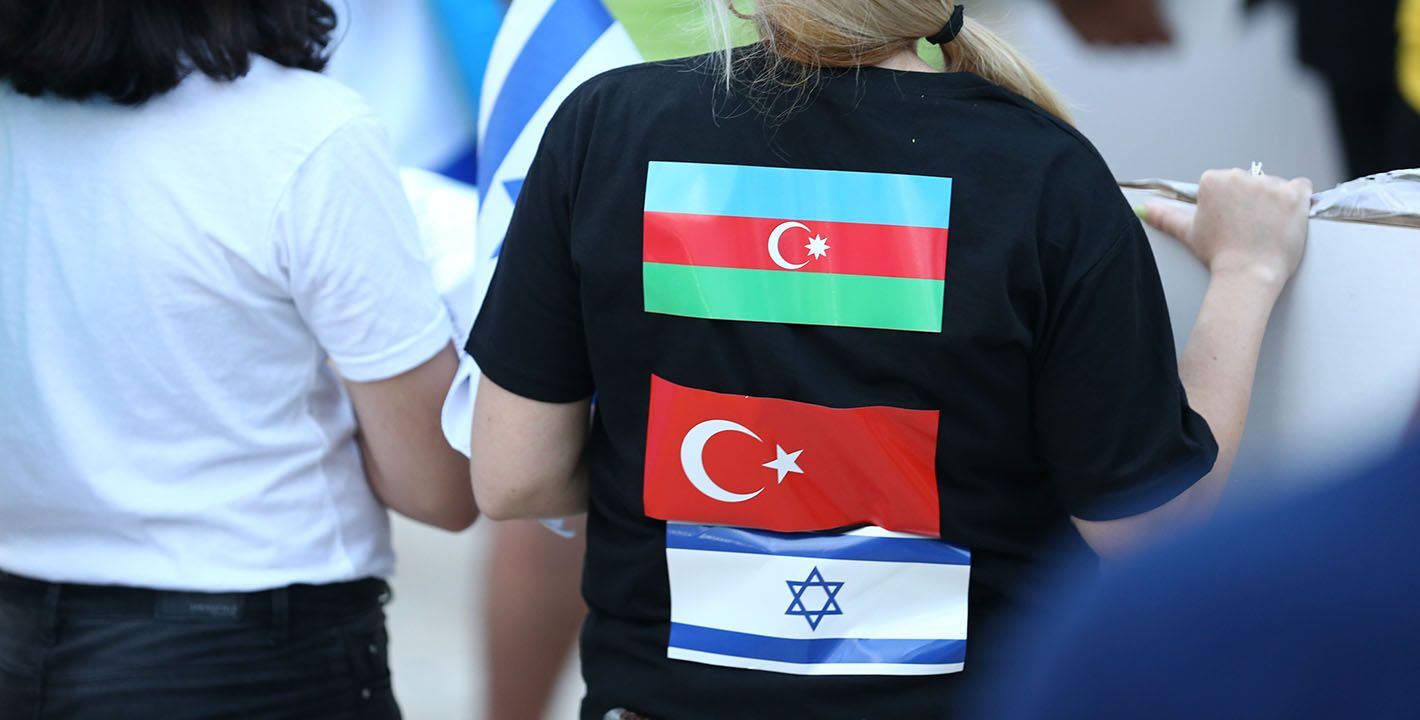
The country’s leadership is increasingly uneasy about multiple challenges from the Levant to the South Caucasus.
Armenak Tokmajyan
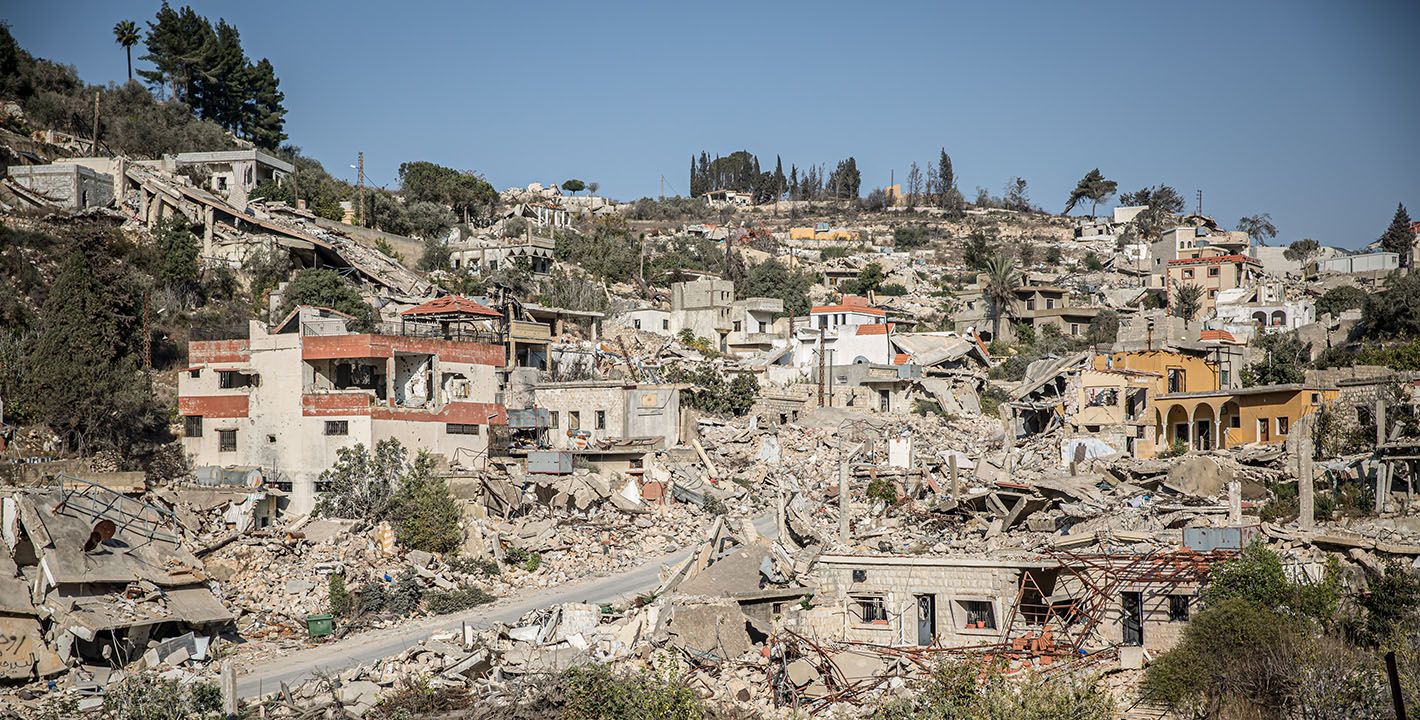
The U.S. is trying to force Lebanon and Syria to normalize with Israel, but neither country sees an advantage in this.
Michael Young
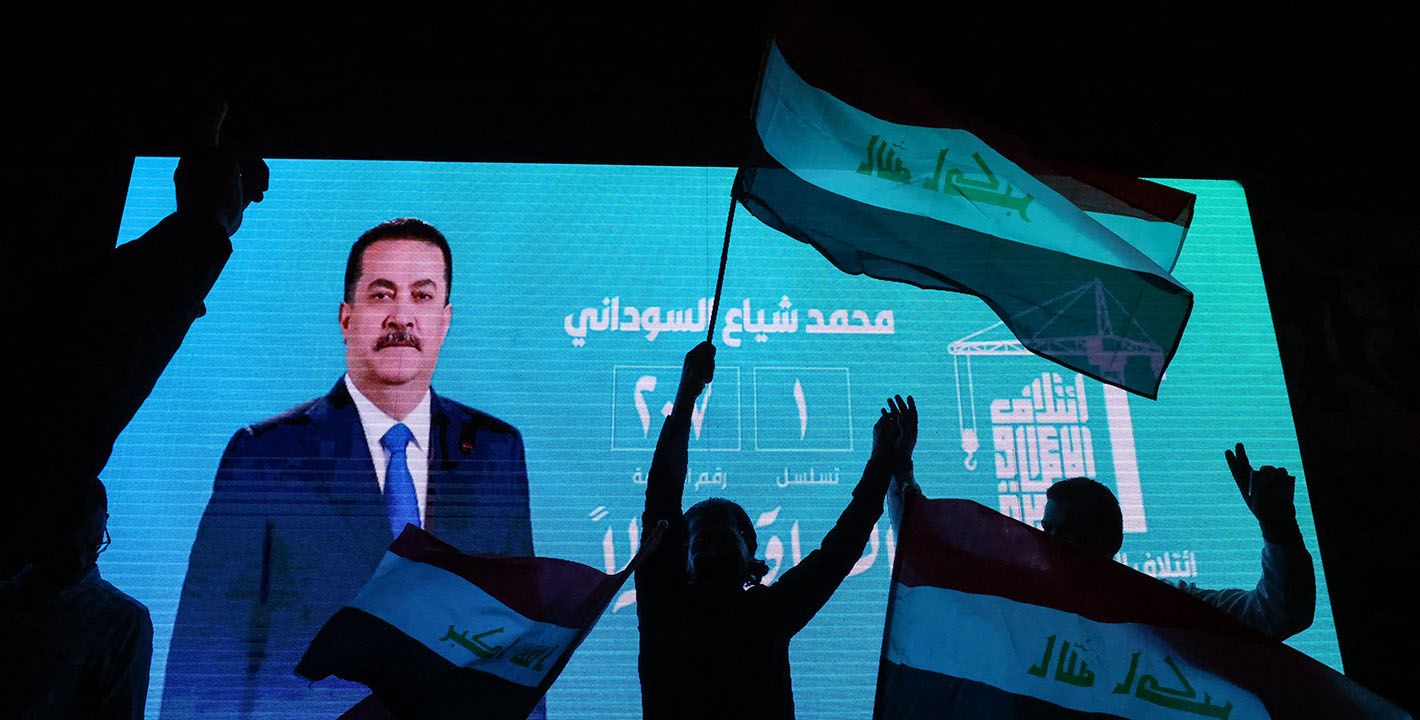
In an interview, Shahla al-Kli discusses the country’s parliamentary elections and what they reveal.
Rayyan Al-Shawaf