

In The Media
Michele Dunne, Robert Kagan
{
  "authors": [
    "Robert Kagan"
  ],
  "type": "legacyinthemedia",
  "centerAffiliationAll": "",
  "centers": [
    "Carnegie Endowment for International Peace"
  ],
  "collections": [],
  "englishNewsletterAll": "",
  "nonEnglishNewsletterAll": "",
  "primaryCenter": "Carnegie Endowment for International Peace",
  "programAffiliation": "",
  "programs": [],
  "projects": [],
  "regions": [],
  "topics": [
    "Foreign Policy"
  ]
}
REQUIRED IMAGE
Source: Carnegie
Reprinted from the Washington Post, July 23, 2000
As the 10th anniversary of Iraq's invasion of Kuwait approaches, imagine for a moment what the world would look like if Saddam Hussein's Aug. 1, 1990, conquest had been allowed to stand. Imagine that George Bush had not launched Operation Desert Storm but had decided to draw the line at Saudi Arabia and let Saddam keep Kuwait. Or, to put it another way, imagine what might have happened had President Bush listened to Colin Powell.
Such musings are pertinent now because Powell, who was chairman of the Joint Chiefs of Staff under Bush the elder, is a safe bet to become secretary of state if Bush the younger gets elected. George W. may even announce Powell's "appointment" at next week's Republican convention, so eager is he to link himself to the charismatic general's national popularity. Recently Bush said he felt "honored" that Powell would even consider the job.
Slow down, W. Naming Powell may be good politics, but will it make for a good foreign policy? Not if past performance means anything.
Powell's thinking after the Iraqi invasion of Kuwait is well documented. As Michael R. Gordon and Gen. Bernard E. Trainor reported in "The Generals' War," Powell argued in internal deliberations that "we can't make a case for losing lives for Kuwait--we must communicate to Saddam Hussein that Saudi Arabia is the line." Like a majority of Senate Democrats (but not Al Gore), Powell wanted to limit the American response to economic sanctions. Like Pat Buchanan, Powell believed "the American people do not want their young dying for $ 1.50 a gallon oil." Defending Saudi Arabia and leaving the Iraqi army in Kuwait was the "prudent option."
Powell was shocked when President Bush announced that Saddam's invasion "will not stand." At the time, Dick Cheney and other top Bush officials were aghast at Powell's timid response. As Brent Scowcroft writes in his memoirs (co-authored with Bush), "I was frankly appalled at the undertone of the discussion, which suggested resignation to the invasion and even adaptation to a fait accompli." Scowcroft recalls "a huge gap between those who saw what was happening as the major crisis of our time and those who treated it as the crisis du jour." To Lawrence Eagleburger the invasion of Kuwait was "the first test of the postwar system." But Powell acted as if "the crisis was halfway around the world and doing anything serious about it would be just too difficult."
Cheney, Scowcroft and Eagleburger were right. Powell's judgment at this historic juncture was dreadful. Had Bush followed his advice, Saddam would now be dominant in the Middle East and a potent figure on the world stage--flush with a decade's worth of revenues from conquered Kuwaiti oil fields, controlling a decisive share of the world's petroleum supply and backed by a victorious and confident army loaded for bear with modern weaponry. Had there been no Desert Storm, and hence no inspections to reveal and curtail Saddam's hidden weapons programs, Iraq would now be bristling with missiles carrying nuclear, chemical and biological warheads.
Powell's error was no isolated case of faulty reasoning. His judgment during the gulf crisis fit within a broader doctrine of nonintervention derived from his experience in Vietnam. In his memoirs Powell wrote that when his generation's "turn came to call the shots, we would not quietly acquiesce in halfhearted warfare for half-baked reasons that the American people could not understand or support." A perfectly sensible doctrine when intelligently applied. But, unfortunately, Powell applied it to the Iraqi aggression of August 1990. And a couple of years later, he applied it to Bosnia and opposed intervening to stop Serbian aggression, too.
Powell's military judgment is not the problem. He rightly insists that overwhelming military force and ground troops serve American purposes better than gradual escalation and airpower alone. During last year's Kosovo war, Powell criticized President Clinton for ruling out the ground option. When it comes to planning and carrying out a military mission after the president has already decided to act, Powell is pretty sound. But he's not the guy you want helping to make that big decision.
The problem with Powell is his political and strategic judgment. He doesn't believe the United States should enter conflicts without strong public support, but he also doesn't believe the public will support anything. That kind of iron logic rules out almost every conceivable post-Cold War intervention.
But the logic is flawed at both ends. It discounts the kind of political leadership President Bush displayed in 1990 and underestimates the public's willingness to support military action when moral and strategic interests are at stake--not only in the Persian Gulf but even in the Balkans.
It's also out of sync with the kind of foreign policy George W. Bush claims to favor. Bush is no wild interventionist; if anything, he talks too often about paring foreign deployments. But Bush's sense of America's role and the use of force is a good deal more expansive than Powell's. His view seems much closer to his dad's. What he needs at the State Department is a sober-minded Republican foreign policy heavyweight such as Dick Cheney, Richard Lugar or Chuck Hagel.
Will poor strategic judgment disqualify Colin Powell as a potential secretary of state? Probably not. We live in strange times. If Powell had forgotten to pay nanny taxes 10 years ago, he'd be history. But who is going to hold it against him that on the most important strategic questions of the post-Cold War era, Powell has come up with the wrong answers?
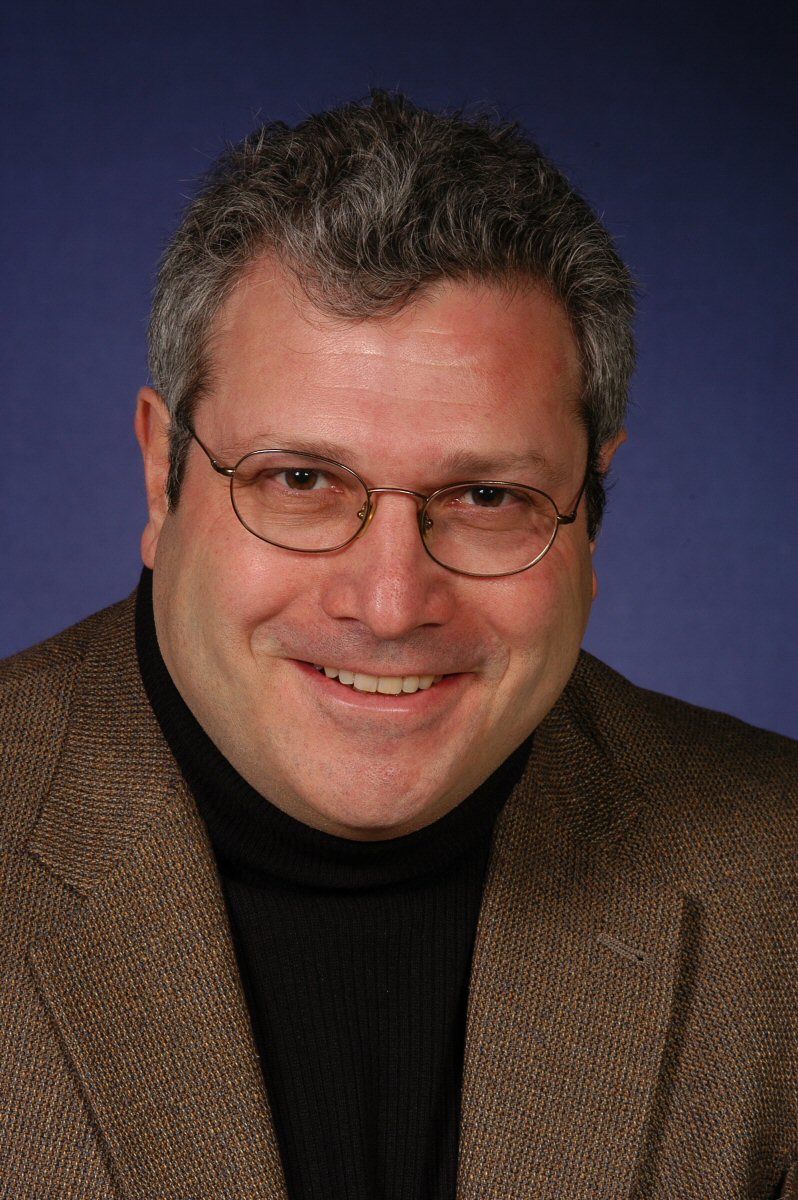
Former Senior Associate
Kagan, author of the recent book, The Return of History and the End of Dreams (Knopf 2008), writes a monthly column on world affairs for the Washington Post and is a contributing editor at both the Weekly Standard and the New Republic.
Recent Work

Michele Dunne, Robert Kagan
Robert Kagan, Michele Dunne
Carnegie does not take institutional positions on public policy issues; the views represented herein are those of the author(s) and do not necessarily reflect the views of Carnegie, its staff, or its trustees.

Russia is testing the waters of NATO’s mutual defense clause. What do strikes in Romanian territorial waters mean for the alliance’s posture toward Moscow?

Dimitar Bechev

With its public finances in shambles, the far right polling at 35 percent ahead of the 2027 presidential election, and a growing protest movement, is France’s crisis a threat to the EU’s geopolitical awakening?

Rym Momtaz, ed.

Ahead of a tough winter for Ukraine, Donald Trump’s swing back toward Russia bodes ill. But instead of panicking, Kyiv’s European allies are focusing on action.
Rym Momtaz

Funding Ukraine remains a priority for European leaders. As Russia’s war of aggression heads into another winter, two feasible options to mobilize support for Kyiv should be fast-tracked.


Vladyslav Rashkovan, Gregory P. Wilson

While the EU and European governments are embracing the much-lauded middle-power moment, this entails three difficult conundrums.

Richard Youngs