

Commentary
Rym Momtaz, ed.
{
  "authors": [
    "Rym Momtaz"
  ],
  "type": "commentary",
  "blog": "Strategic Europe",
  "centerAffiliationAll": "",
  "centers": [
    "Carnegie Endowment for International Peace",
    "Carnegie Europe"
  ],
  "englishNewsletterAll": "",
  "nonEnglishNewsletterAll": "",
  "primaryCenter": "Carnegie Europe",
  "programAffiliation": "",
  "regions": [
    "Europe",
    "United Kingdom"
  ],
  "topics": [
    "EU",
    "Foreign Policy",
    "Trade"
  ]
}
Source: Getty
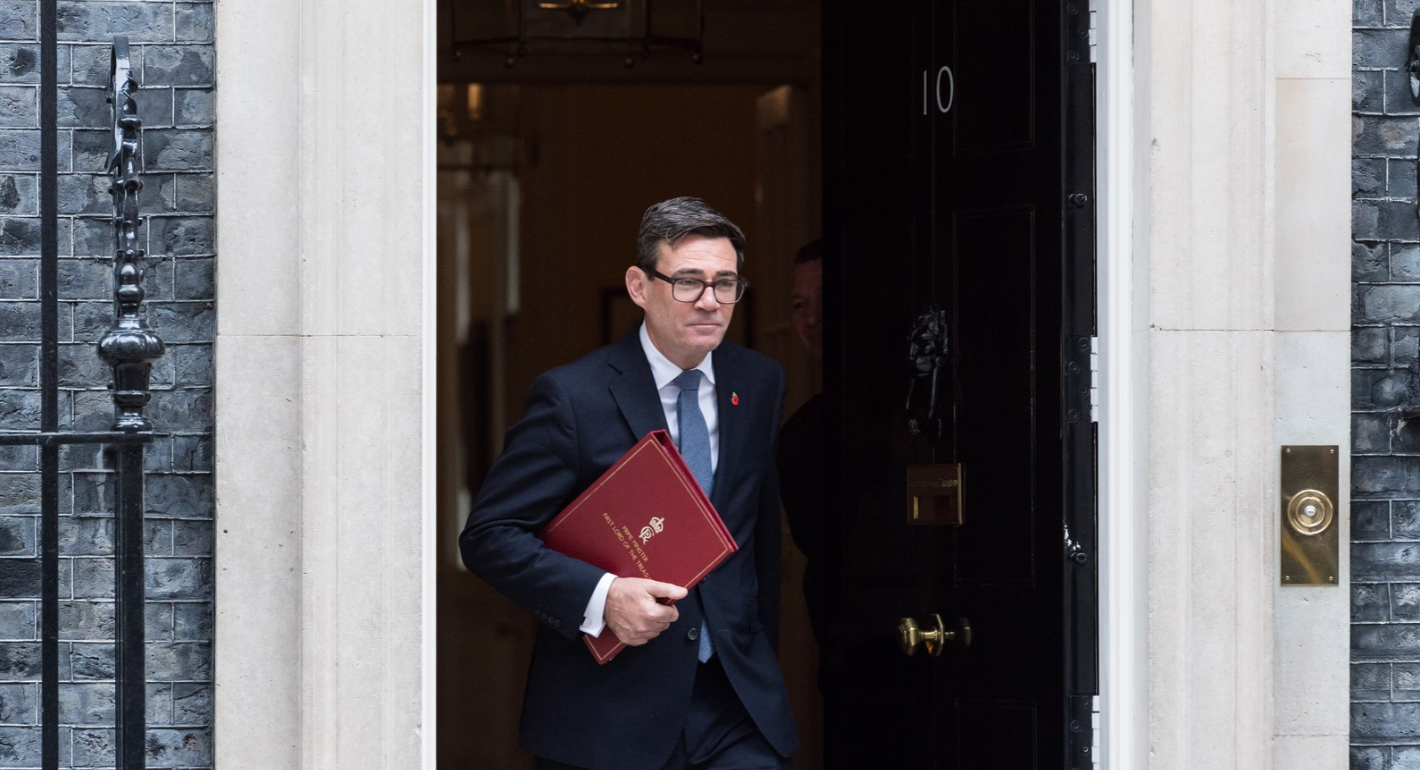
Resetting relations with the EU is a central plank of the UK’s current foreign policy. Is Andy Burnham being bold enough or is he falling into the same trap as his predecessors, misreading the power dynamic?
Professorial Research Fellow, European Institute, London School of Economics and Political Science
Is the UK on a trajectory toward rejoining the EU? Anyone reading recent pronouncements by new prime minister could be forgiven for thinking so. In a wide-ranging interview, he signaled a willingness to reopen the debate on free movement, one of the most toxic issues in the Brexit saga. Previously, he had repeatedly made clear his wish to recast Britain’s relationship with the union. Yet, he has also stopped short of promising to apply for membership, despite polling showing increasing voter disillusionment with Brexit and rejoining increasingly being advocated for as a strategic national necessity.
As with many of Burnham’s recent initiatives, big decisions on EU–UK relations will be put off to the next parliament, and there is no certainty that an explicit promise to pursue union membership will feature in the Labour Party’s next manifesto. This is sensible, because the obstacles to rejoining are daunting, despite an evidently warmer tone from many EU leaders. Michel Barnier, the EU’s Brexit negotiator has, correctly, urged caution. And the gleeful opposition to Burnham’s thoughts on free movement that has been expressed by the leaders of the Conservative Party and Reform UK testifies to the political challenge. He needs to tread carefully.
Senior Policy Fellow, European Council on Foreign Relations
For Andy Burnham, deepening the EU–UK relationship is not a foreign policy priority. Rather, it is the tool by which he believes he can deliver the change agenda he has promised the country. He knows that Britain will have to offer proof of its love for the European project, rather than approaching the reset as a means to economic and security ends. His message that freedom of movement—so toxic in the Brexit debate—is no longer a red line for London was this offer.
Burnham’s approach is bold, and there are at least two bear traps that he could fall into. The first would be failing to impress upon British citizens that this is not the same 2016 discussion dressed up in new clothes. The second would be failing to work as diligently in EU capitals as he is doing at home to have a genuine discussion about why the UK rejoining the union would be win-win. The road ahead is not smooth, but Burnham has set out on it early and with conviction. There is every chance that the outcome could be positive as a result.
Special Advisor, Jacques Delors Institute
Former prime minister Keir Starmer had ringfenced his reset with the Labour manifesto’s red lines. Andy Burnham claims he will not cross them before the next general election, while already sparking an open debate on their relevance. There is not a clear Burnham EU policy yet. For now, it’s domestic and political. He has floated trial ballons, including on rejoining, to see how they land. Refreshing the Brexit conversation is meant to attract Europhile voters from the Liberal Democrats and the Green Party and annoy the Conservatives.
But during negotiations for the upcoming EU–UK summit, Burnham’s approach looks no bolder than Starmer’s. On youth mobility for example, he is sticking to a slightly raised quota and wants to push talks about university tuition fees.
To be truly bold, he should be not transactional but geopolitical. To be included in European preference and appear in EU industrial policy, the UK must display some preference in its own public procurement. Moreover, it should move from a balancing act between Brussels, Beijing, and Washington to prioritizing the EU. Putting Europe first doesn’t necessarily mean rejoining the union or any halfway-unsatisfying solutions, but fostering strategic cooperation. It means thinking European—and not just about Britain’s GDP.
Senior Fellow and Special Advisor to the President, German Marshal Fund of the United States
On substance, Burnham’s EU policy is no different from Starmer’s: Cut trade barriers, deepen defense and security cooperation, and improve political relations. What sets him apart is his candor. The UK has already said it will align with EU rules in exchange for better market access and frictionless trade. But Burnham goes further than any of his predecessors. He says he would want to see the UK rejoining in his lifetime, and is open to revisiting freedom of movement if the British Parliament backs it.
It is politically astute. Ten years after the Brexit referendum, he is testing how far the reset can go, and courting the disappointed Remain-voting Labour and Conservative supporters he may need to stay in post after the 2029 election.
It also plays well in Brussels. The EU knows that, beyond what is already agreed, neither a radical reset nor rejoining is possible while London keeps its red lines. But a prime minister open to revisiting free movement, even if he never acts on it, builds goodwill ahead of the planned talks.
The UK’s asks have not changed. Yet, no prime minister has been willing to talk about rejoining until now. That is bolder than anything that came before.
Senior Fellow, Carnegie Europe
Andy Burnham seems to be a faithful follower of Saint Augustine who famously prayed, “Lord, grant me chastity and continence, but not yet.” On the EU, he promises not to move beyond Labour’s red lines during this parliament. And he hopes the UK will rejoin the EU during his lifetime.
For a prime minister without an electoral mandate and with deep divisions on Europe in his party, this lack of urgency is understandable. But it is out of sync with the tremendous dynamism of current international developments. Canadian Prime Minister Mark Carney gets it when he appeals to middle powers to organize. Sweden and Finland get it, when they throw out their long-standing policy of non-alignment and opt for NATO membership. And the UK public seems to get it, as a clear majority considers Brexit a failure and supports reversing it. Andy Burnham, too, needs to get it. At the very least, he should enter the next election campaign with a strong pledge to rejoin the EU as soon as possible. As for the bloc itself, which needs the UK more urgently than ever, it should do what it can to bring this about.
Senior Fellow, Bruegel
When it comes to undoing Brexit, Andy Burnham can’t even decide which red lines to talk about, let alone which ones the UK might cross. The hemming and hawing on freedom of movement shows that any talk of rejoining—or even of establishing a substantially better state of permanent relations—is still in the dreaming stage, not the doing. If Westminster is willing to grant working rights back to EU citizens, it might get closer to single market access. A rethink on the jurisdiction of the European Court of Justice, or on regulatory alignment, would help. Failing that, the UK should at least put some money on the table, along the lines of the EU contributions made by Norway or Switzerland. A full return to membership seems out of reach, particularly since Britain is unlikely to automatically win back its prior opt-outs on the euro and defense. But a custom deal is possible, as long as the UK brings something new to the table. We need arguments, not feelings. To get closer to the EU, the UK needs a real plan to give ground.
Analyst, Centre for Eastern Studies (OSW)
The Brexit negotiations and the process of establishing post-divorce relations between the EU and the UK consumed a great deal of energy on both sides at a time when that energy should arguably have been devoted to preparing more effectively for the crises ahead. It is difficult to imagine Brussels and London now embarking on an equally time-consuming process in reverse, right in the middle of a storm caused by the wars in Ukraine and the Middle East and their economic repercussions. This is all the more unlikely given the major upcoming elections in key EU member states, and while there is no consensus within the UK itself on the future of its relationship with the union.
A pragmatic approach focused on addressing people’s concrete concerns is therefore needed. London could scrap the entry fee for EU citizens and rejoin the bloc’s low-cost roaming arrangements. Access to the single market and the free movement of workers could be governed by arrangements similar to those in place for Norway or Switzerland. London and Brussels could also work closely to develop a common position on the challenges posed by the protectionist policies of the United States and China.
Subscribe to Strategic Europe, delivered every Tuesday and Thursday!
Two contributors acknowledge the use of ChatGPT and Claude as a translation tool in the production of their contributions. The writing, argument, and analysis are entirely the authors’ own.

Editor in Chief, Strategic Europe
Rym Momtaz is the editor in chief of Carnegie Europe’s blog Strategic Europe. A multiple Emmy award-winning journalist-turned-analyst, she specializes in Europe and the Middle East and the interplay between those two spaces.
Recent Work
Rym Momtaz, ed.
Rym Momtaz
Carnegie does not take institutional positions on public policy issues; the views represented herein are those of the author(s) and do not necessarily reflect the views of Carnegie, its staff, or its trustees.
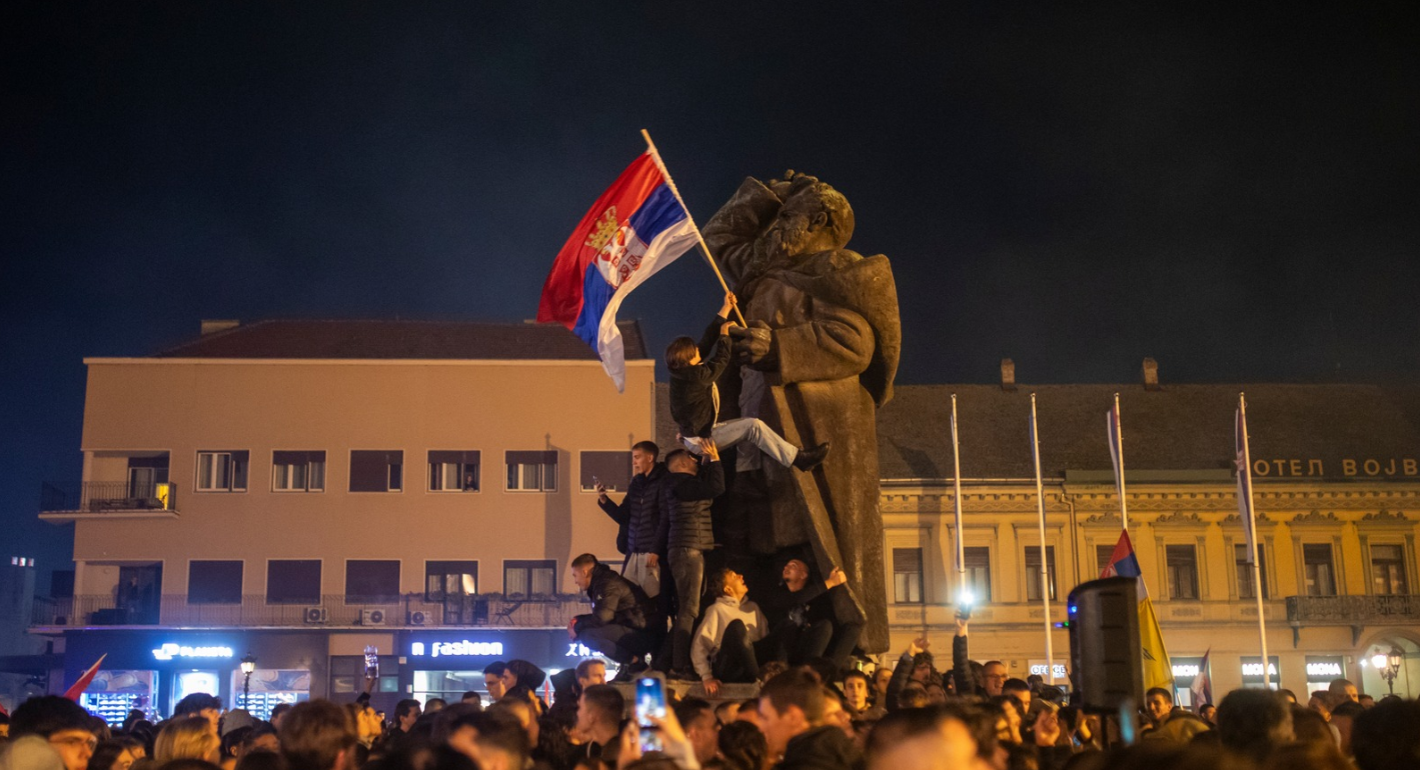
Excitement is in the air following Aleksandar Vučić’s defeat in Serbia. To build a truly democratic state, the movement that unseated the former president must learn from the mistakes of the past.

Ivan Vejvoda
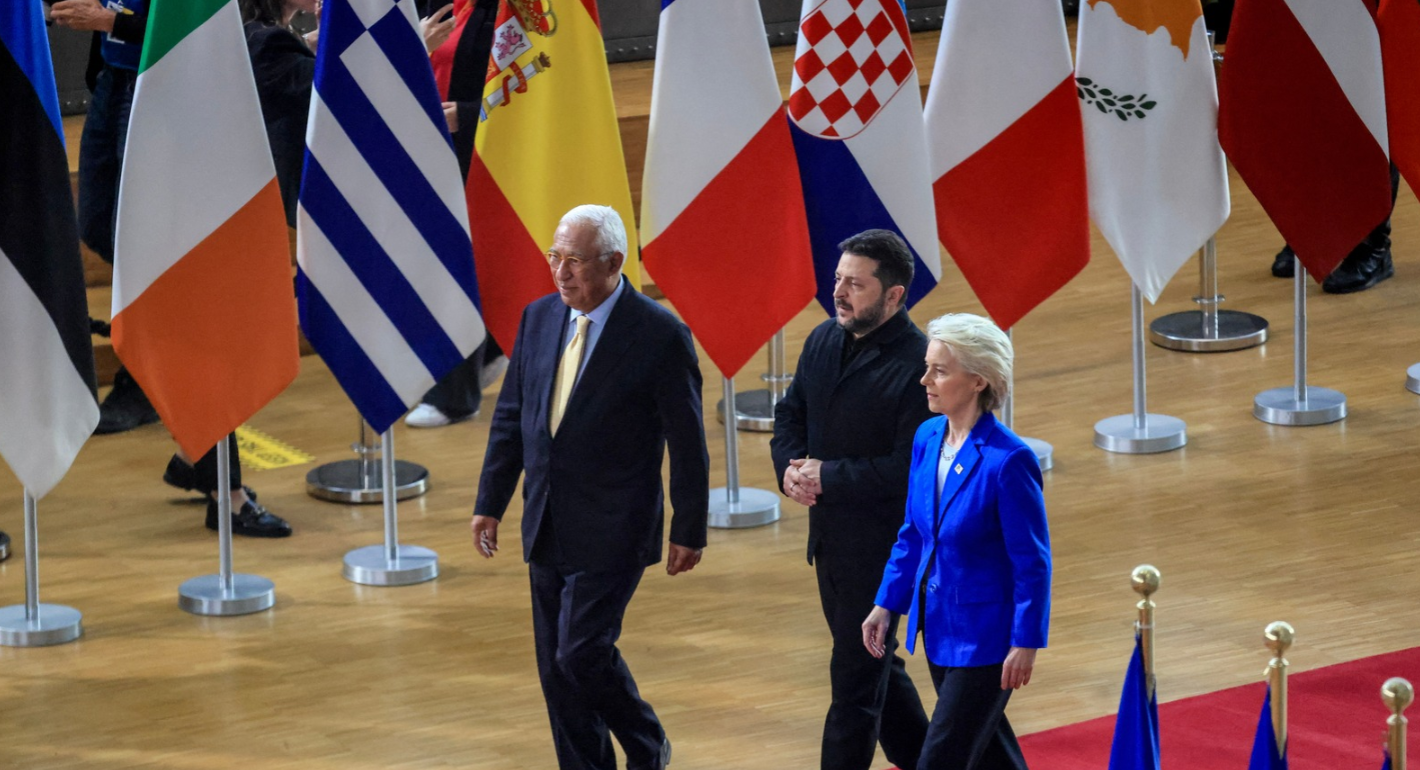
The EU can impose sanctions but struggles to enforce them without the United States. With Washington increasingly disinterested in backing European interests, the bloc must now fend for itself.
Nicu Popescu, Tiago Antunes

Russia is testing the waters of NATO’s mutual defense clause. What do strikes in Romanian territorial waters mean for the alliance’s posture toward Moscow?

Dimitar Bechev
With its public finances in shambles, the far right polling at 35 percent ahead of the 2027 presidential election, and a growing protest movement, is France’s crisis a threat to the EU’s geopolitical awakening?
Rym Momtaz, ed.
Ahead of a tough winter for Ukraine, Donald Trump’s swing back toward Russia bodes ill. But instead of panicking, Kyiv’s European allies are focusing on action.
Rym Momtaz