

Commentary
The EU can impose sanctions but struggles to enforce them without the United States. With Washington increasingly disinterested in backing European interests, the bloc must now fend for itself.
Nicu Popescu, Tiago Antunes
{
  "authors": [
    "Minxin Pei",
    "Michael D. Swaine"
  ],
  "type": "other",
  "centerAffiliationAll": "dc",
  "centers": [
    "Carnegie Endowment for International Peace"
  ],
  "collections": [],
  "englishNewsletterAll": "asia",
  "nonEnglishNewsletterAll": "",
  "primaryCenter": "Carnegie Endowment for International Peace",
  "programAffiliation": "AP",
  "programs": [
    "Asia"
  ],
  "projects": [],
  "regions": [
    "United States",
    "China"
  ],
  "topics": [
    "Democracy",
    "Economy",
    "Trade",
    "Military",
    "Foreign Policy",
    "Nuclear Policy"
  ]
}
REQUIRED IMAGE
Source: Carnegie
Summary
President George W. Bush's visit to China this month is an opportunity to do far more than make rhetorical commitments to a constructive U.S.-China relationship. The post-9/11 context, China's accession to the WTO, and Beijing's impending leadership change converge to make important improvements possible. Policy adjustments on key security issues and a new attitude toward Chinese political reform would lay the basis for a balanced, long-term China policy that could command broad political support in the United States.
Direct U.S. presidential leadership is especially crucial for managing the four core security issues: Taiwan, missile defense, non-proliferation, and counter-terrorism. Washington should reaffirm its "one China" policy, clarify its intent on missile defense, and press China to fulfill its obligations to non-proliferation agreements.
A forward-looking strategy also demands that the United States abandon its ambivalence toward the support of Chinese political reform. It should, instead, provide leadership to promote democratic institutions and the rule of law in China.
Click on the link above for the full text of this Policy Brief.
A limited number of print copies are also available.
Request a copy
About the Authors
Michael Swaine is senior associate and codirector of the China Program. He specializes in Chinese security and foreign policy, U.S.-China relations, and East Asian international relations. Previously he served as research director of the Center for Asia-Pacific Policy at the RAND Corporation.
Minxin Pei, senior associate and codirector of the China Program, conducts research in Chinese politics, economic reform, East Asian politics, U.S. relations with East Asian countries, and democratization in developing countries. Before joining the Carnegie Endowment, he was a faculty member of the politics department at Princeton University. He is the author of Future Shock: The WTO and Political Change in China (Carnegie Endowment Policy Brief No. 3).
The Endowment's new China Program was launched in October 2001. Its research on political economy, security studies, and rule of law will be conducted through partnerships with Beijing's Central Party School and the Shanghai Academy of Social Sciences.
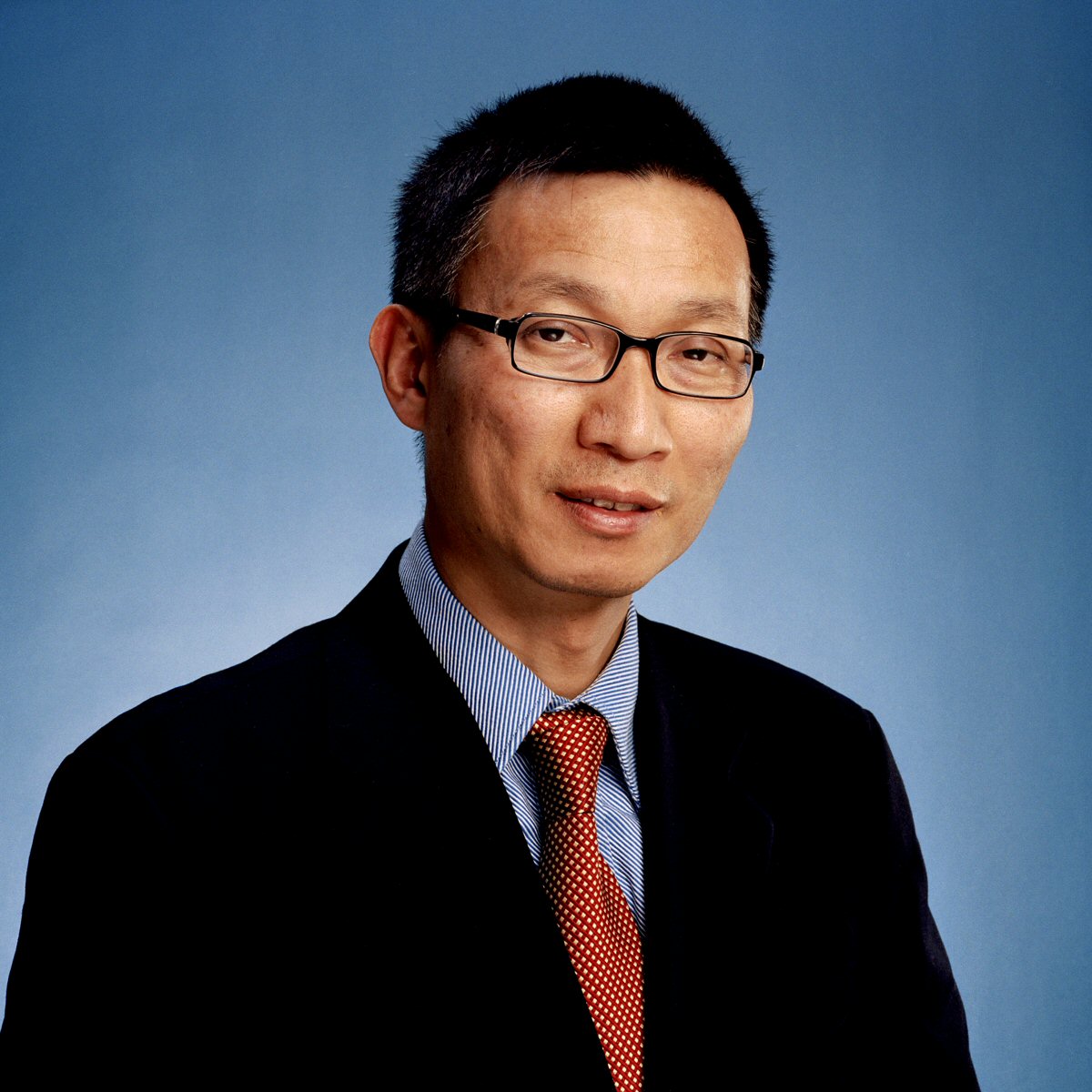
Former Adjunct Senior Associate, Asia Program
Pei is Tom and Margot Pritzker ‘72 Professor of Government and the director of the Keck Center for International and Strategic Studies at Claremont McKenna College.

Former Senior Fellow, Asia Program
Swaine was a senior fellow at the Carnegie Endowment for International Peace and one of the most prominent American analysts in Chinese security studies.
Carnegie does not take institutional positions on public policy issues; the views represented herein are those of the author(s) and do not necessarily reflect the views of Carnegie, its staff, or its trustees.

The EU can impose sanctions but struggles to enforce them without the United States. With Washington increasingly disinterested in backing European interests, the bloc must now fend for itself.


Nicu Popescu, Tiago Antunes

Russia is testing the waters of NATO’s mutual defense clause. What do strikes in Romanian territorial waters mean for the alliance’s posture toward Moscow?

Dimitar Bechev

With its public finances in shambles, the far right polling at 35 percent ahead of the 2027 presidential election, and a growing protest movement, is France’s crisis a threat to the EU’s geopolitical awakening?

Rym Momtaz, ed.

Ahead of a tough winter for Ukraine, Donald Trump’s swing back toward Russia bodes ill. But instead of panicking, Kyiv’s European allies are focusing on action.
Rym Momtaz

Funding Ukraine remains a priority for European leaders. As Russia’s war of aggression heads into another winter, two feasible options to mobilize support for Kyiv should be fast-tracked.


Vladyslav Rashkovan, Gregory P. Wilson