

In The Media
Michele Dunne, Robert Kagan
{
  "authors": [
    "Robert Kagan"
  ],
  "type": "legacyinthemedia",
  "centerAffiliationAll": "",
  "centers": [
    "Carnegie Endowment for International Peace"
  ],
  "collections": [],
  "englishNewsletterAll": "",
  "nonEnglishNewsletterAll": "",
  "primaryCenter": "Carnegie Endowment for International Peace",
  "programAffiliation": "",
  "programs": [],
  "projects": [],
  "regions": [],
  "topics": [
    "Security",
    "Foreign Policy"
  ]
}
REQUIRED IMAGE
Source: Carnegie
Originally published in the Weekly Standard, February 11, 2002
"At State, Powell and others were alarmed by the Wolfowitz drumbeat," the Washington Post's Bob Woodward reports in his series on the early days of the war on terrorism. "At the end of one early meeting of Bush's war cabinet, during which Rumsfeld had raised Iraq as a potential target, Powell approached Shelton and rolled his eyes. . . . 'What the hell, what are these guys thinking about?' asked Powell."
In the days following President Bush's historic "Axis of Evil" speech, eyeballs were rolling up and down the New York-Washington corridor and in every European capital. Not since Ronald Reagan upended U.S.-Soviet d tente for a policy of unilateral arms buildup and ideological confrontation has an American president so boldly flouted the foreign policy establishment's conventional wisdom. By declaring a new "Axis of Evil" comprising brutal dictatorships with far-advanced programs to build weapons of mass destruction, Bush has charted the course of an expansive new American foreign policy, a paradigm shift equal to the inauguration of anti-Communist containment more than a half century ago. He has taken the war on terrorism beyond a police action to round up the perpetrators of the September 11 attack, and transformed it into a campaign to uproot dangerous tyrannies and encourage democracy, making the world much safer for free peoples.
In doing so, Bush violated every rule in the establishment's book. He neglected to mention either the United Nations or the Middle East "peace process." Indeed, in his only reference to the Middle East, he reversed decades of American indifference to the peoples of the Arab and Islamic worlds, proclaiming that "America will take the side of brave men and women" who support the principles of liberty and justice around the world, "including the Islamic world." It is now time, Bush suggests, for America to assist all people who hope to enjoy rights and liberties that Americans and Europeans take for granted.
Other establishment conceits went out the window, too. By including Iran and North Korea with Iraq in the "Axis," President Bush took on the myth, so cherished in Europe and in some American quarters, that we should collaborate with today's Iranian regime, and never mind its weapons of mass destruction and arms shipments to West Bank terrorists. People are fretting about the president's calling the Iranian regime "evil," just as they fretted when Reagan called the Soviet Union "evil." But contrary to what purveyors of conventional wisdom assert, this will not discourage those Iranians who seek freedom. To the contrary, the president emphasized that "an unelected few repress the Iranian people's hope for freedom." The Iranian people know that their rulers are evil and will be encouraged, just as Soviet dissidents were, by hearing an American president tell the truth.
So many hard and important truths in one presidential address. We hope and trust the president and his trusted lieutenants are ready for the establishment backlash. And we wonder how long it will take for that establishment to accommodate itself to the realities of the Bush era.
That great fountainhead of the conventional wisdom, the New York Times editorial page, instantly expressed alarm and discomfort that "the application of power and intimidation has returned to the forefront of American foreign policy." The Times managed to bring up the Vietnam War twice, to underline their warning against the "promiscuous" use of military power. Meanwhile, assorted low-level officials from the Clinton administration complain that the president has overstated the threat and underestimated the difficulties of backing up his words with deeds. Then there are our European friends, whose fear of the "hyperpower" seems to be matched only by their disregard for the dangers Americans--and Europeans--still face. France's Le Monde actually asks, "Is the threat as pressing as all that?"
The answer is yes. As the president said Tuesday night, the danger is growing
and "time is not on our side." Bush deserves enormous credit for grasping
not simply the essential tasks in the war we now fight, but also the urgency
of accomplishing them. He seems to have thought more profoundly about the lessons
of September 11 than the foreign policy establishment and the political elites
of Europe or even of our own country. Indeed he seems to understand the requirements
of the situation better than some in his own administration. He understands
that failing to act decisively--and if need be preemptively--against the nexus
(or call it the axis) of terrorism and weapons of mass destruction will leave
this country and its friends in increasing and unacceptable peril. The president
knows what he has to do. We're confident he will do it. And we're certain he'll
have the support of freedom-loving people here and around the world. Even the
nervous nellies of the establishment, we suspect, will end up applauding.
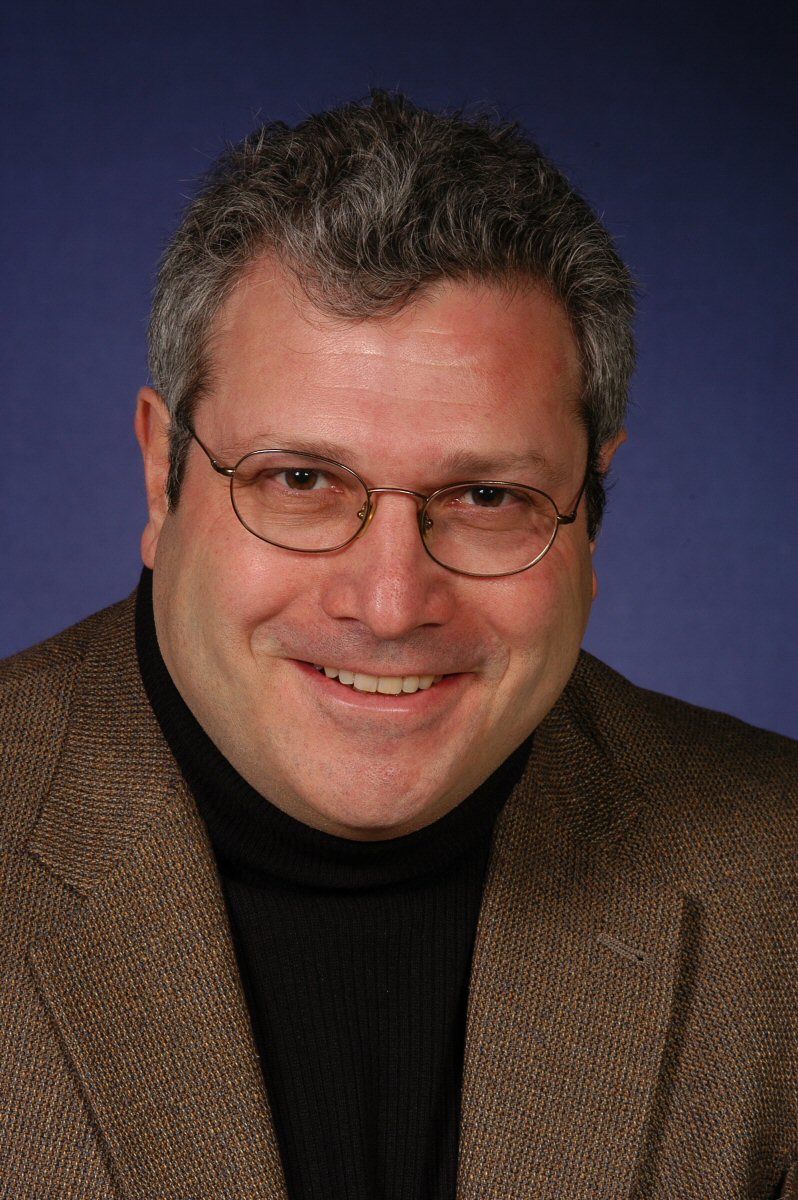
Former Senior Associate
Kagan, author of the recent book, The Return of History and the End of Dreams (Knopf 2008), writes a monthly column on world affairs for the Washington Post and is a contributing editor at both the Weekly Standard and the New Republic.
Recent Work

Michele Dunne, Robert Kagan
Robert Kagan, Michele Dunne
Carnegie does not take institutional positions on public policy issues; the views represented herein are those of the author(s) and do not necessarily reflect the views of Carnegie, its staff, or its trustees.

The EU can impose sanctions but struggles to enforce them without the United States. With Washington increasingly disinterested in backing European interests, the bloc must now fend for itself.


Nicu Popescu, Tiago Antunes

Russia is testing the waters of NATO’s mutual defense clause. What do strikes in Romanian territorial waters mean for the alliance’s posture toward Moscow?

Dimitar Bechev

With its public finances in shambles, the far right polling at 35 percent ahead of the 2027 presidential election, and a growing protest movement, is France’s crisis a threat to the EU’s geopolitical awakening?

Rym Momtaz, ed.

Ahead of a tough winter for Ukraine, Donald Trump’s swing back toward Russia bodes ill. But instead of panicking, Kyiv’s European allies are focusing on action.
Rym Momtaz

Funding Ukraine remains a priority for European leaders. As Russia’s war of aggression heads into another winter, two feasible options to mobilize support for Kyiv should be fast-tracked.


Vladyslav Rashkovan, Gregory P. Wilson