

Article
Marina Ottaway, Omar Hossino
{
  "authors": [
    "Marina Ottaway"
  ],
  "type": "legacyinthemedia",
  "centerAffiliationAll": "dc",
  "centers": [
    "Carnegie Endowment for International Peace"
  ],
  "collections": [],
  "englishNewsletterAll": "democracy",
  "nonEnglishNewsletterAll": "",
  "primaryCenter": "Carnegie Endowment for International Peace",
  "programAffiliation": "DCG",
  "programs": [
    "Democracy, Conflict, and Governance"
  ],
  "projects": [],
  "regions": [
    "North America",
    "United States",
    "Iraq"
  ],
  "topics": [
    "Political Reform",
    "Democracy",
    "Security",
    "Military",
    "Foreign Policy"
  ]
}
REQUIRED IMAGE
The Bush administration's plan for post-invasion Iraq is a blueprint for occupation but not for political reconstruction. Unless the profound difference between occupation and reconstruction is recognized early on, the U.S. will fail to create a stable Iraq, let alone one that serves as a model for other countries. Chaos there will mean the continued threat of terrorism and regional instability.
Source: Carnegie
The plan for post-invasion Iraq being aired by the Bush administration is a blueprint for occupation but not for political reconstruction. Unless the profound difference between occupation and political reconstruction is recognized early on, the United States will fail to leave behind a stable Iraq, let alone one that can serve as a model for other countries in the region. The price of chaos in Iraq, even if deprived of weapons of mass destruction, will be the continued threat of terrorism and regional instability.
The Bush administration plans to occupy the country, run it through a military and then a civilian administrator, purge the Iraqi military and the bureaucracy of pro-Saddam, Ba'athist elements, write a constitution and set up a new government. The role of Iraqis in this process will be extremely limited. Hand-picked civilians will sit on advisory councils with no real power. Iraqi-organized groups, exiled or domestic, will be prevented from playing any part at all.
As an occupation blueprint, the plan has the virtue of simplicity. Troublesome groups such as the squabbling exile organizations, the Kurdish parties that already govern northern Iraq, Shiite groups with potential ties to Iran, Sunni groups with potential ties to Saudi Arabia and tribes with their convoluted divisions would all be shunted aside, allowing U.S. administrators to set up a new, rational, secular political system for Iraq, although not necessarily one based on Western democratic standards.
This is a technocratic approach well suited to a military administration, obviating the necessity of understanding and facing the complexity of the society. Given sufficient money and personnel, it may even work, as long as the country remains under U.S. military control.
While convenient to the needs of a U.S. occupation force, this approach does not even remotely satisfy the requirements for the political reconstruction of Iraq as a country scheduled to become self-governing within one or two years. The groups that the plan deliberately seeks to isolate are precisely those that need to be stitched together to make the country viable.
A two-year U.S. occupation cannot obliterate religious and ethnic cleavages, nor eliminate long-standing political organizations such as the exiled groups or the Kurdish parties. Iraq is not a homogenous, secular, industrial society, where all citizens share a common identity. Rather, it is a society deeply divided along religious, ethnic and tribal lines.
Differences between Sunnis and Shiites go back centuries. Kurdish nationalism dates back to the dismemberment of the Ottoman Empire. The importance of the tribes, thought to be eroding as Iraq urbanized, was invigorated by Saddam Hussein in his search for supporters. U.S. military might cannot change this reality.
The future stability of Iraq - vital to U.S. interests even after the country has been cleansed of weapons of mass destruction - depends on whether the groups that the U.S. plan deliberately ignores can find a way to live together in one country and under one political system without the heavy hand of a dictator to force them together.
A plan for occupation is certainly needed as the United States prepares to invade Iraq. A plan for political reconstruction is also urgently needed if the United States is to leave the country after one or two years. And political reconstruction does not mean fantasizing about a new country, but helping to craft a new political bargain among the same old groups with conflicting interests and demands that have made Iraq a deeply troubled, dysfunctional country in the past.
Originally published March 3, 2003 in the International Herald Tribune.
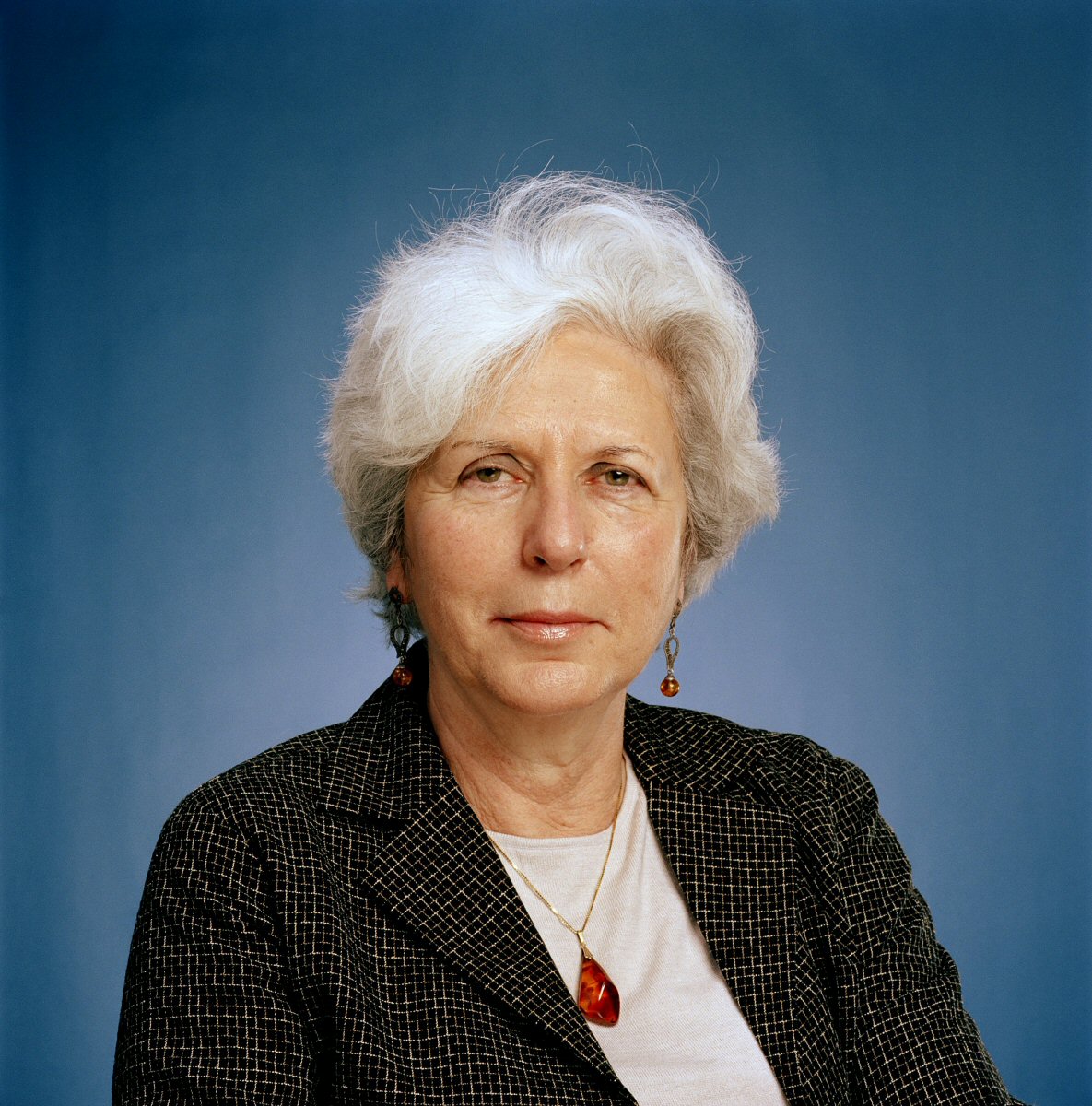
Former Senior Associate, Middle East Program
Before joining the Endowment, Ottaway carried out research in Africa and in the Middle East for many years and taught at the University of Addis Ababa, the University of Zambia, the American University in Cairo, and the University of the Witwatersrand in South Africa.
Recent Work
Marina Ottaway, Omar Hossino
Marina Ottaway
Carnegie does not take institutional positions on public policy issues; the views represented herein are those of the author(s) and do not necessarily reflect the views of Carnegie, its staff, or its trustees.

Before the next wave of EU enlargement takes place, the union needs to grapple with thorny questions of how power is distributed among its members.


Emil Sondaj Hansen, Ditte Brasso Sørensen

The new U.S.–Denmark–Greenland agreement will help Washington exert political, economic, and financial dominance under the guise of security. Yet, it acknowledged Copenhagen’s and Nuuk’s sovereignty on the island.

Marc Pierini

A summer of escalation in the Black Sea has hurt Ukraine economically and is exacerbating world food security. A truce is needed—as is a broader reframing of Europe’s Ukraine strategy.

Thomas de Waal

Are Germany’s economic, industrial, and political struggles becoming a liability for the EU’s ability to rise to the geopolitical moment?

Rym Momtaz, ed.

European Commission President Ursula von der Leyen is about to give her annual address on the state of the EU. Here’s what she won’t—but should—say.
Rym Momtaz