

Article
Леонид Гозман, Michael McFaul
{
  "authors": [
    "Michael McFaul"
  ],
  "type": "legacyinthemedia",
  "centerAffiliationAll": "dc",
  "centers": [
    "Carnegie Endowment for International Peace"
  ],
  "collections": [],
  "englishNewsletterAll": "ctw",
  "nonEnglishNewsletterAll": "",
  "primaryCenter": "Carnegie Endowment for International Peace",
  "programAffiliation": "russia",
  "programs": [
    "Russia and Eurasia"
  ],
  "projects": [],
  "regions": [
    "Caucasus",
    "Russia"
  ],
  "topics": [
    "Security",
    "Foreign Policy"
  ]
}
REQUIRED IMAGE
The problem in U.S.-Russian relations today is that the personal friendship initiated by Bush has produced little in the way of the tangible outcomes that Bush himself has defined as his major foreign policy objectives.
Source: Carnegie
Little to Show From Putin
Originally published in The Washington Post, March 14, 2004.
President Bush should be the first world leader to phone Russian President Vladimir Putin and congratulate him on his pending reelection victory today. Because Putin is one of Bush's closest colleagues among world leaders, it's appropriate that Bush be first in line to commend his Russian friend. Putin, after all, was one of the first world leaders to call Bush and send his condolences and support on Sept. 11, 2001.
In fact, Sept. 11 helped forge this unlikely friendship. After that tragic day, Bush's "war on terror" became the new strategic focus in which others around the world were either with us or against us. In this black-and-white world, Bush saw Putin as a white hat.
Bush deserves credit for forging a personal bond with Putin. The development of working relationships with leaders of strategic countries is certainly part of the job of being the U.S. president. America's national interests would not be served by bad chemistry between the American and Russian presidents.
But pleasant company should never be the objective of a foreign policy. Rather, it should be a means to pursue other ends. The problem in U.S.-Russian relations today is that the personal friendship initiated by Bush has produced little in the way of the tangible outcomes that Bush himself has defined as his major foreign policy objectives. Bush seems content to keep it simple. Putin is considered an ally in the war on terror. Therefore, keeping close to Putin is the central focus of the president's policy toward Russia. This simplicity, however, does not serve American interests.
To defend the United States after Sept. 11, Bush has correctly stressed three major goals. First, the United States must remain in hot pursuit of the terrorists who attacked and plan to attack us. This is the literal war against terrorists. Second, the United States must recommit to stopping the spread of weapons of mass destruction. Third, the United States must promote democracy around the world and especially in the greater Middle East.
Have Bush's close ties to Putin helped him pursue these three objectives? The record is mixed.
On the war against terrorists in Afghanistan, Russia did provide important military assistance to the Northern Alliance and valuable intelligence that helped destroy the Taliban regime. Two years later, however, it is difficult to identify any new battlefront in which Bush has leveraged his personal relationship with Putin to acquire Russian assistance in fighting terrorists. The one front on which Russia is allegedly engaged in directly battling terrorism -- Chechnya -- has been a disaster. Terrorists there still operate; Russia is no more secure today that it was when the war reignited in 1999, and America's war against terrorism is made no easier by Russia's brutal methods, which inspire recruits to the terrorist cause.
Bush can point to even fewer deliverables from his relationship with Putin in the struggle to stop proliferation of weapons of mass destruction. Amazingly, 21/2 years after Sept. 11, and following revelation after revelation about Iran's true intentions in acquiring nuclear technologies, Putin has done next to nothing to alter or stop the Russian contracts to build nuclear facilities in Iran. Nor is there any evidence that Putin has reinvigorated the efforts of his own government to stop the leakage of weapons of mass destruction from his own country.
And Bush shares the blame for this. Given his intimate relationship with Putin, the two presidents might have worked to develop a bigger, more robust and more transparent Cooperative Threat Reduction program. Nothing of the sort has taken place.
On the last American strategic objective, promoting democracy worldwide, Putin is a liability. He has contributed nothing to the spread of democracy in the Middle East or elsewhere but instead has acted as a real force for the erosion of democracy inside Russia. Putin has conducted an inhumane war inside Chechnya, seized control of all of Russia's national television networks, emasculated the Federal Council (Russia's equivalent of the U.S. Senate), assaulted federalism and regional autonomy, arbitrarily used the law to jail or chase away political foes, removed candidates from electoral ballots, harassed and arrested leaders of nongovernmental organizations and weakened Russia's independent political parties. Today's presidential vote, which Putin will win in a landslide, is the least competitive election in Russia's post-Soviet history. The idea therefore of having Russia contribute to a G-8 initiative for democracy promotion in the greater Middle East is absurd. Bush's unqualified embrace of Putin undermines his credibility when speaking about the need for democratization in other countries.
Complex times require complex foreign policies. The American government has the capacity to pursue multiple objectives at the same time with difficult but strategic countries like Russia. During the Cold War, some American leaders tried to keep it simple and cast the entire world as communists against us and anti-communists with us. Such simplicity made thugs such as Jonas Savimbi in Angola and the apartheid regime in South Africa our "friends." But the more effective leaders understood that the United States needed a more sophisticated approach that oftentimes included dual-track diplomacy toward the same country. In dealing with the Soviets, this meant the pursuit of arms control and democratic regime change in the Soviet bloc at the same time. A similarly complex strategy for dealing with Russia -- and for that matter, Pakistan, Iran, Egypt and Uzbekistan -- is needed today.
Michael McFaul is a Hoover Fellow and associate professor of political science at Stanford University. His latest book, with James Goldgeier, is "Power and Purpose: U.S. Policy Toward Russia After the Cold War."
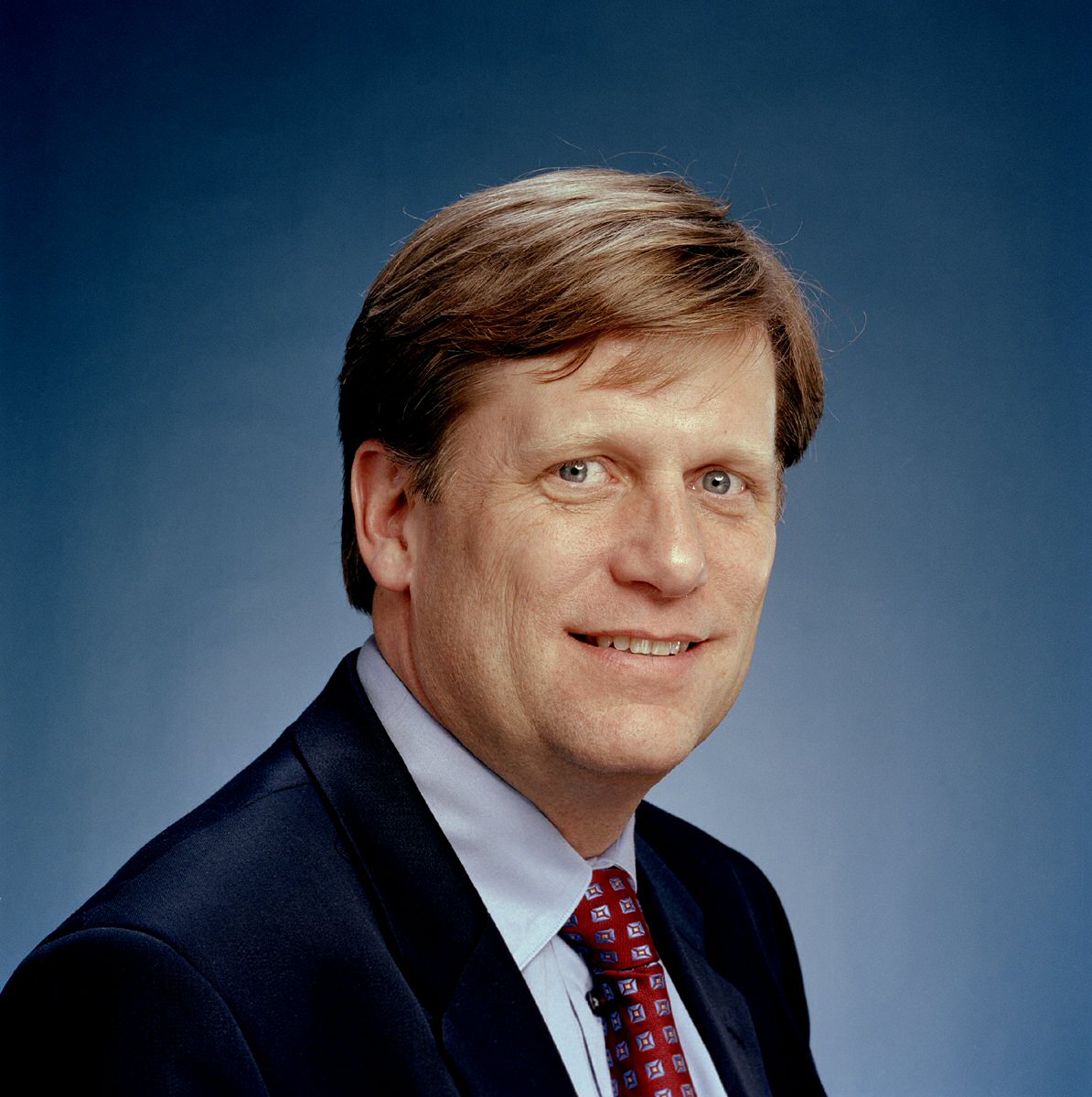
Former Senior Associate
In addition to his role at Carnegie, McFaul is Peter and Helen Bing Senior Fellow at the Hoover Institution and associate professor of political science at Stanford University.
Recent Work
Леонид Гозман, Michael McFaul
Michael McFaul, Sanja Tatic
Carnegie does not take institutional positions on public policy issues; the views represented herein are those of the author(s) and do not necessarily reflect the views of Carnegie, its staff, or its trustees.

The new U.S.–Denmark–Greenland agreement will help Washington exert political, economic, and financial dominance under the guise of security. Yet, it acknowledged Copenhagen’s and Nuuk’s sovereignty on the island.

Marc Pierini

A summer of escalation in the Black Sea has hurt Ukraine economically and is exacerbating world food security. A truce is needed—as is a broader reframing of Europe’s Ukraine strategy.

Thomas de Waal

Are Germany’s economic, industrial, and political struggles becoming a liability for the EU’s ability to rise to the geopolitical moment?

Rym Momtaz, ed.

European Commission President Ursula von der Leyen is about to give her annual address on the state of the EU. Here’s what she won’t—but should—say.
Rym Momtaz

The aftermath of the Ceuta crisis shows Europe has drawn the wrong lessons. Rather than doubling down on failed migration policies, the EU needs to address the underlying roots of such episodes.

Richard Youngs