

Commentary
Dmitri Trenin
{
  "authors": [
    "Dmitri Trenin"
  ],
  "type": "legacyinthemedia",
  "centerAffiliationAll": "",
  "centers": [
    "Carnegie Endowment for International Peace",
    "Carnegie Russia Eurasia Center"
  ],
  "collections": [],
  "englishNewsletterAll": "",
  "nonEnglishNewsletterAll": "",
  "primaryCenter": "Carnegie Russia Eurasia Center",
  "programAffiliation": "",
  "programs": [],
  "projects": [],
  "regions": [
    "Caucasus",
    "Russia",
    "Ukraine"
  ],
  "topics": [
    "Political Reform",
    "Democracy",
    "Foreign Policy"
  ]
}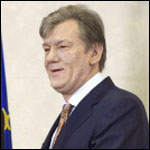
Source: Getty
Dmitry Trenin, one of the leading Russian international affairs experts and Deputy Director of the Carnegie Moscow Center, comments on the tentative results of the Ukrainian elections in an interview with Nezavisimaya Gazeta.
Source: Nezavisimaya Gazeta

Q: Dmitry, how do you assess the course of the parliamentary election campaign in Ukraine and how predictable did the results turn out to be?
A: The result is highly predictable, it brought no surprises to me. I think Ukraine has had the first free election in its history. The result is a pluralistic Rada which is becoming the center of the country's political system. The Ukrainian government will be formed through an agreement among the parties. And as long as this system is in place, it will be a coalition government. In other words, there will be no ruling party in Ukraine. Perhaps, political parties will be weak and short-lived and the infighting among clans will continue, but on the whole it is a step in the right direction.
Q: How will Yanukovich, who won the biggest number of votes, fit into this system?
A: I don't think one can speak about a Yanukovich victory. Of course, after losing a hard-fought electoral battle in 2004, Yanukovich can feel morally vindicated now. But this is not the kind of victory that delivers the whole power to him. All power in Ukraine will not belong to anyone. In fact, though he came in first at the finish, he may find himself excluded from the government.
Q: And from politics?
A: Yanukovich may be left outside the framework of the new government, but as I have said, Ukrainian political life will be characterized by weak governments and if one looks not only at the elections, but at political life in the longer term, Yanukovich, whatever you may think about him, expresses the interests of a sizable part of the Ukrainian electorate and they cannot be ignored by any Ukrainian government, so, Yanukovich's position is pretty solid.
Q: But the bloc of Yulia Timoshenko and the party of Viktor Yushchenko between them won a lot more votes. Will the spirit of the orange revolution be wafted over Ukraine? What is the current alignment of forces in the republic?
A: Actually, one has to define what exactly the spirit of the orange revolution is because Timoshenko and Yushchenko are different politicians. And the electorate is complicated: the electorate in Western Ukraine is one thing and the electorate in Kiev or the central part of Ukraine is quite another thing, and these are different electorates. So, I think that the orange lot will manage to form a new government in which Timoshenko will have a much stronger position than the President.
Q: How will the results of the elections influence the relations between Russia and Ukraine?
A: If Ukraine continues along the road of modernizing its political, economic and social systems in the direction of Europe (and I think Ukraine will be moving in that direction) it will, of course, have a serious impact on Russia and a serious impact on the development of the political situation in Russia. Ukraine will be showing a very interesting example of new methods of political modernization which no one here will ignore. Russia was learning a lot of things from Ukraine before, for example, in the period before Peter the Great, so Ukraine may play a similar role in the future. But it will be only one of the factors that will shape Russian reality, because Russia and Ukraine are countries with very different political cultures. And what is possible in Ukraine is impossible in Russia and vice versa. The Hetman tradition is very different from the tradition of Czarist power. A great power is not what the Ukrainians think about, whereas Russians, at least those who are in power, cannot help thinking about Russia except as a great power.
Q: Will Yanukovich contribute to better Russian-Ukrainian relations?
A: There have never been and never can be pro-Russian politicians in Ukraine. It is not for nothing that Leonid Kuchma titled his book "Ukraine Is Not Russia". And we should understand that any Ukrainian pursuing a pro-Russian policy is a person who wittingly or unwittingly seeks a reunification of Ukraine and Russia. So, a pro-Russian policy in effect negates Ukrainian statehood, and Yanukovich could not be a pro-Russian politician and is not one today. In my opinion, it would be a big mistake on the part of the Kremlin to regard Kuchma and Yanukovich as its own men. They are not our own men, so, every Ukrainian politician will play his game in his interests. For example, Yanukovich's interest is in having Russia subsidize Ukraine by supplying cheap energy, while Ukraine pursues an independent foreign policy and is not integrating with Russia any further than to the depth of the free trade zone. Let me remind you that the agreement on the common economic space that is so much talked about and that was initially signed by Yanukovich and Kuchma envisaged nothing more on the Ukrainian side. No economic union.
Q: Do you think that the acute economic problems existing between Russia and Ukraine can be resolved, given the new alignment of the political forces? For example, will the gas agreement be revised?
A: I think all the problems will remain. And the gas issue, if Yulia Timoshenko becomes prime minister, will certainly be revised. In any case she is sure to raise the issue, and what will happen next remains to be seen.
This transcript courtesy of the Federal News Service.
Former Director, Carnegie Moscow Center
Trenin was director of the Carnegie Moscow Center from 2008 to early 2022.
Recent Work
Dmitri Trenin
Dmitri Trenin
Carnegie does not take institutional positions on public policy issues; the views represented herein are those of the author(s) and do not necessarily reflect the views of Carnegie, its staff, or its trustees.

The European Commissioner for Trade is headed to China. But after President Xi’s bridge-building visit to Washington, can a more isolated EU overcome Beijing’s stranglehold on critical raw materials? Who will blink first?

Rym Momtaz, ed.
European NATO countries are wrestling with the possibility of U.S. disengagement from the alliance. With the continent’s security increasingly uncertain, governments must restore the credibility of their collective defense.


Hans-Dieter Lucas, Adam Thomson, Pierre Vimont

The domestic impacts of how long it is taking to end the war in Ukraine have pushed the French electorate to the political extremes and compromised the country’s diplomatic capacity.
Rym Momtaz

Before the next wave of EU enlargement takes place, the union needs to grapple with thorny questions of how power is distributed among its members.


Emil Sondaj Hansen, Ditte Brasso Sørensen

The new U.S.–Denmark–Greenland agreement will help Washington exert political, economic, and financial dominance under the guise of security. Yet, it acknowledged Copenhagen’s and Nuuk’s sovereignty on the island.

Marc Pierini