

Article
Viji Rangaswami, Lionel Johnson
{
  "authors": [
    "Viji Rangaswami"
  ],
  "type": "other",
  "centerAffiliationAll": "",
  "centers": [
    "Carnegie Endowment for International Peace"
  ],
  "collections": [],
  "englishNewsletterAll": "",
  "nonEnglishNewsletterAll": "",
  "primaryCenter": "Carnegie Endowment for International Peace",
  "programAffiliation": "",
  "programs": [],
  "projects": [],
  "regions": [
    "North America",
    "United States"
  ],
  "topics": [
    "Economy",
    "Trade"
  ]
}
REQUIRED IMAGE
The real reason more countries do not benefit from the U.S. Generalized System of Preferences is that the program excludes the very products most developing countries can competitively produce, which primarily benefits developed countries and non-GSP countries at the expense of countries with large poor populations.
Source: Comments Submitted to the US Trade Representative
In the wake of the collapse of the current WTO negotiations, the United States announced it would review whether to continue to provide trade preferences for a number of developing countries, including India, Brazil, and South Africa. The ostensible reason for the review is to ensure that advanced developing countries do not monopolize the market access opportunities under the U.S. Generalized System of Preferences. Carnegie Associate Viji Rangaswami co-authored comments to the Office of the U.S. Trade Representative arguing that the real reason more countries do not benefit from GSP is that the program excludes the very products most developing countries can competitively produce, and that revocation of eligibility for the targeted countries primarily benefits developed countries and non-GSP countries at the expense of countries with large poor populations.
Former Associate
Recent Work
Viji Rangaswami, Lionel Johnson
Viji Rangaswami
Carnegie does not take institutional positions on public policy issues; the views represented herein are those of the author(s) and do not necessarily reflect the views of Carnegie, its staff, or its trustees.

As we close out another season of Strategic Europe, it is worth taking stock of the deep shifts underway.

Rym Momtaz

The hybrid warfare landscape is evolving rapidly, leaving policymakers without clear strategies. To better inform their work in addressing emerging challenges, governments must dig deeper into the underlying dynamics at play.


Raluca Csernatoni, Alicia Wanless

Trump is distracted and Ukraine wants Europe to step up. The continent’s leaders must find their voice and assert it in talks with Russia.

Alissa de Carbonnel
Over the past ten years, NATO has held almost as many summits as it did during the entirety of the Cold War. Are they still useful, or is it time to stop holding annual meetings?
Rym Momtaz, ed.
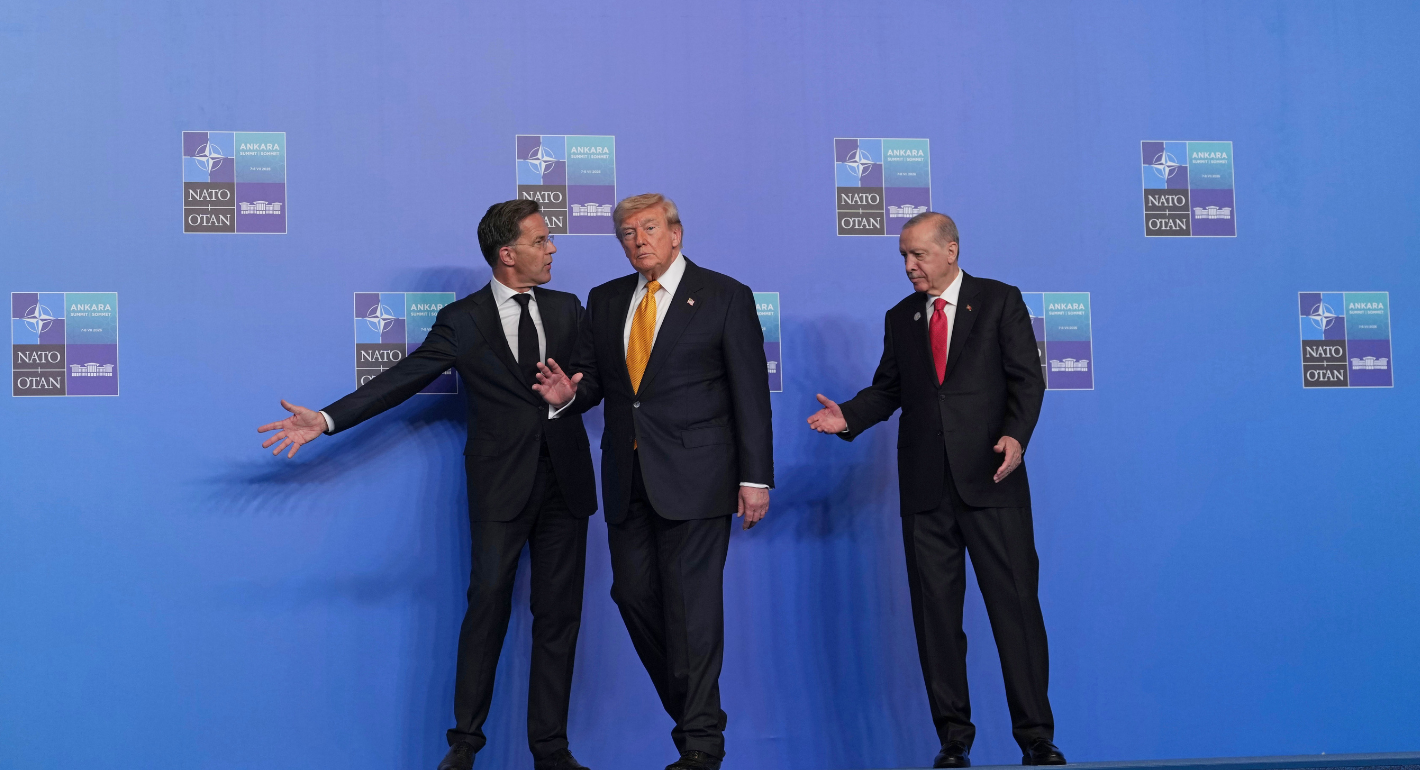
Nearly a year and a half after Europeans leaned into sucking up to Trump, the strategy has produced some benefits when it comes to Ukraine.
Rym Momtaz