

Commentary
Maria Lipman
{
  "authors": [
    "Maria Lipman"
  ],
  "type": "legacyinthemedia",
  "centerAffiliationAll": "",
  "centers": [
    "Carnegie Endowment for International Peace",
    "Carnegie Russia Eurasia Center"
  ],
  "collections": [],
  "englishNewsletterAll": "",
  "nonEnglishNewsletterAll": "",
  "primaryCenter": "Carnegie Russia Eurasia Center",
  "programAffiliation": "",
  "programs": [],
  "projects": [],
  "regions": [
    "Caucasus",
    "Russia"
  ],
  "topics": [
    "Political Reform",
    "Democracy",
    "Economy"
  ]
}
REQUIRED IMAGE
Source: Washington Post
Moscow, Russia - Since the beginning of Russian economic reforms 15 years ago, liberal scholars and experts inside and outside Russia have talked about a democratic polity, rule of law, liberal political freedoms and civic liberties as necessary prerequisites for stable economic development.
But after fifteen years the country can't boast about achieving any of these things. All political institutions except the presidency have been emasculated. All political power has been concentrated in the Kremlin. Decision-making is hidden from the public eye. Public political competition is non-existent and the mass media tightly controlled so Kremlin policy-makers do not have to worry about accountability. The judicial branch is effectively controlled by the executive, so in sensitive cases any court decision may be bent in order to further the interests of the ruling elite. The state has steadily increased control over the public space - autonomous public activism is unwelcome. Activist groups and figures are either co-opted, or, if they don't submit to the Kremlin's control, they are marginalized, neutralized and discredited. The most recalcitrant are intimidated and harassed.
Meanwhile, the GDP has steadily grown, amounting to about one trillion U.S. dollars in 2006, and the macroeconomic indices are quite impressive. Russia has radically reduced its foreign debt. The stabilization fund where excessive revenues (the fund is financed by export duties and the royalty on oil) from high oil prices have been accumulated since 2004 is close to 100 billion U.S. dollars. Moreover, it may be argued that never in Russia's history has the proportion of those who enjoy reasonably decent living standards been as high as it is today. Though the disparity of income is huge and growing, the number of those below the poverty line has decreased from about one-third to about one-quarter of the population. Substantial increase in people's salaries and pensions has resulted in a consumer boom which is registered in national statistics, and may also be observed in any of the country's shopping malls whose number is also growing. People not only buy more, they also feel better. At the end of 2006 the country's leading independent polling agency reported a noticeable improvement of general sentiments and expectations.
So has Russia defied the liberal logic? Of course what lies beneath Russia's economic success is the high prices of oil and gas, rather than improved economic policies. As a major exporter of both commodities, Russia has benefited tremendously. The question is what use Russia has made of this amazing stroke of luck.
It is increasingly evident that the opportunity created by the high energy prices has been largely squandered. Rather than taking advantage of this blessed spell in order to intensify the urgently needed reforms (the monumental distortions of the 70-year old Communist economy call for long-term and persistent reform effort), the Russian government has suspended or frozen nearly all structural change. In contrast to its macroeconomic records, in labor efficiency, transparency, and competitiveness, Russia's ratings are disgracefully low.
Diversification of the economy remains a distant dream. About 60 percent of the Russian budget's income is generated by oil and gas revenues, making Russia vulnerable to the fluctuation of the world prices on energy, metals, and a few other commodities.
The best assets are increasingly concentrated in the companies that either state-owned or controlled by the state. As a result, power and property are closely entangled. Economic and business decisions are politicized, and political decisions driven by narrow economic interests. The empowered state bureaucracy is driven by self-seeking interests and an anxiety about losing the perks of power, rather than by modernization and national development.
As in any area, in governance the lack of competition leads to a deterioration of quality. Indeed, the quality of governance is quite low. Decisions are frequently ad-hoc and not adequately prepared. But in the absence of public accountability nobody is held responsible and poor performance is not improved.
As a result, Russia faces everything from inefficient law-enforcement to inefficient health care (in Russia average life expectancy for men is barely 60, which is the official retirement age). The income-generating industries are not in good shape either.
As the government has radically expanded its role in the most lucrative areas of the economy, the growth of oil production has slowed down and the production of gas is barely growing at all. The government has strongly limited the participation of foreign companies in Russia's strategic industries, but in order to explore new deposits Russia needs large investment and technology that it does not seem to have. There is serious reason to doubt whether Russian can go it alone.
Increasingly, Russia's economic success looks temporary rather than sustainable. The paradox of the country's bad politics and good economy is thus resolved by the time factor. In the longer run, bad politics leads to economic deterioration.
The economists warn that Russia has exhausted the potential of the oil growth and point out the need to limit the involvement of the state in the economy, to counteract the anti-liberal trend of centralization and creeping nationalization and to push for modernization.
Switching to non-economic language, Russia needs to unleash public energies and initiatives rather than expand state control, and to encourage active public participation rather than passive compliance. This is impossible without a political improvement, and this is the only way to improve economic policies.
Masha Lipman is the editor of the Pro et Contra journal, published by Carnegie Moscow Center.
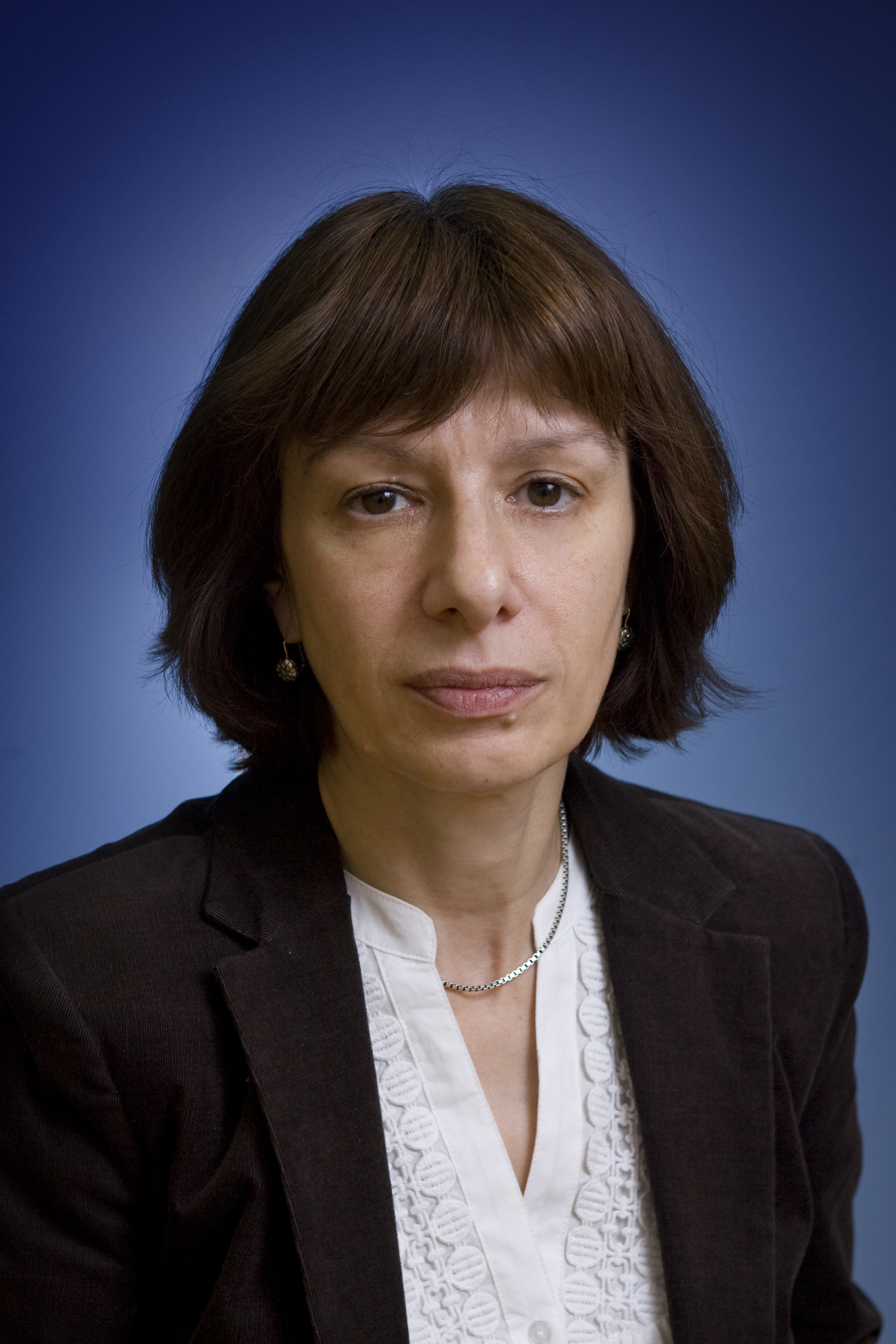
Former Scholar in Residence, Society and Regions Program, Editor in Chief, Pro et Contra, Moscow Center
Lipman was the editor in chief of the Pro et Contra journal, published by the Carnegie Moscow Center. She was also the expert of the Carnegie Moscow Center’s Society and Regions Program.
Recent Work
Maria Lipman
Maria Lipman
Carnegie does not take institutional positions on public policy issues; the views represented herein are those of the author(s) and do not necessarily reflect the views of Carnegie, its staff, or its trustees.

European Commission President Ursula von der Leyen is about to give her annual address on the state of the EU. Here’s what she won’t—but should—say.

Rym Momtaz

Radical-right parties are expected to do well in upcoming elections in four of the EU's biggest member states. If successful, they could prevent the union from addressing key challenges ahead.

Stefan Lehne

An overwhelming victory by a far-right-wing party in a small state in eastern Germany will have major repercussions for Chancellor Friedrich Merz’s coalition.

Judy Dempsey

The EU’s responses to two recent incidents expose the gulf between European perceptions and capabilities. Unless the union can bridge that gap, it will never become a real geostrategic power.
Rym Momtaz

European states control several Overseas Countries and Territories around the world that carry strategic, economic, and environmental weight. As great powers challenge the rules-based order, defending them is a geopolitical imperative for Europe.

Marc Pierini