

Commentary
Maria Lipman
{
  "authors": [
    "Maria Lipman"
  ],
  "type": "legacyinthemedia",
  "centerAffiliationAll": "",
  "centers": [
    "Carnegie Endowment for International Peace",
    "Carnegie Russia Eurasia Center"
  ],
  "collections": [],
  "englishNewsletterAll": "",
  "nonEnglishNewsletterAll": "",
  "primaryCenter": "Carnegie Russia Eurasia Center",
  "programAffiliation": "",
  "programs": [],
  "projects": [],
  "regions": [
    "Caucasus",
    "Russia"
  ],
  "topics": [
    "Political Reform",
    "Economy"
  ]
}
REQUIRED IMAGE
Source: Daily Times
The alienation between the state and the people has a long tradition in Russia, and so does public apathy. But these days the apathy is reinforced by improved living standards. Thanks to windfall revenues from oil and gas, Russians live better than ever in the post-communist times
Usually at this time of year, people are obsessed with what the coming year will bring. But in Russia, the real uncertainty concerns 2008, not 2007. Indeed, one can boil Russian politics down to one issue nowadays: Will President Vladimir Putin stay on as president after 2008, despite repeatedly stating that he won’t? And if he indeed steps down, who will he groom as his replacement? Will his chosen successor belong to one of the Kremlin’s feuding factions? Or will he pick an ‘outsider’?
Unless Putin maintains his stature as the country’s ultimate arbiter and decision-taker, there is a high risk of fierce infighting. In an environment where power and property are inseparable and all government institutions are emasculated, a major transfer of authority at the top may lead to violent redistribution. Thus, resolving these questions is vital for Russia’s political elites who are anxious to preserve the current perks and gain more.
As for the public, the vast majority appears resigned to accepting whatever is arranged by the leadership. Fully 45 percent of Russians believe that Putin will name a successor, and that this person will become the new president. Almost a quarter believes that the constitution will be changed so that Putin can have a third term. Either way, it is almost universally understood that the transfer of presidential authority is masterminded at the top and endorsed at the ballot box. The balance of forces in the legislature, too, will be determined by the Kremlin. Over the past years the configuration of the political parties and the election legislation have been repeatedly modified so as to suit the interests of the ruling elite. As a result unwanted forces have no chance in next December’s parliamentary election.
Alienated from politics, ordinary Russians are indifferent to everything that does not immediately affect them, and do not seek to hold anyone accountable. They were not bothered by the journalist Anna Politkovskaya’s recent murder or the assassination of Andrey Kozlov, first deputy chairman of the central bank, or the implications of Alexander Litvinenko’s poisoning (a majority in a recent poll said he was killed by his ‘business partners’).
The alienation between the state and the people has a long tradition in Russia, and so does public apathy. But these days the apathy is reinforced by improved living standards. Thanks to windfall revenues from oil and gas, Russians live better than ever in the post-communist times. Moreover, it may be argued that never in Russian history has the proportion of those who enjoy reasonably decent lifestyles been as high as it is today. As a result, people have become even more compliant in the face of increasingly autocratic governance.
Of course, there are plenty of reasons to complain, and people may grumble, but they won’t come together to oppose the status quo. Marginal political groups and figures who stage protests increasingly find themselves confronting official pressure and even harassment — all the more reason for the broad public to turn away from them.
Since the election results are preordained, many may simply not vote. In fact, today’s Russian state barely has a reason to muster active support. On the contrary, public participation is seen as an obstacle to the goals pursued by the bureaucracy: self-perpetuation and expanding control over lucrative assets. If any among the Russian elite ever nursed modernising ambitions, they have abandoned them, for without public participation, modernization is a fallacy.
Instead, the Kremlin increasingly draws on the conservative, Soviet-style electorate as its power base, while alienating the advanced, the entrepreneurial, and the best educated. Stephen Jennings, the chairman of the board of Renaissance Capital, an investment group with a decade of experience in Russia, recently noted the country’s ‘contradictory trends’: the emergence of a ‘burgeoning middle class’ alongside a “highly centralised government, breeding a new class of state oligarchs and a mushrooming bureaucracy”.
The problem is that Russia’s best and brightest, which Jennings praised for “high management skills, professionalism, productivity, and social and economic ambition”, don’t seem to mind their alienation from policy-making. They may resent the Kremlin’s economic policies, but they put up with Russia’s rampant corruption and its disgraceful ratings in competitiveness indices, just as they put up with the general erosion of democracy, manipulation of the judiciary, and weak law enforcement. Like their less advanced compatriots, they don’t seek to hold the government accountable or call for change. For the time being, life is good enough as it is.
Thus, if there is any threat to a smooth transition in 2008, or a risk of subsequent destabilisation, it may stem from infighting at the top, not from the public. Optimists hope that at some point Russia’s burgeoning middle class will assume responsibility for Russia’s future and demand a radical improvement in governance. But what would trigger a shift from passive compliance to active public participation?
If good times breed political apathy, and bad policies lead to a socioeconomic decline, Russia’s best and brightest may find themselves outstripped by populist forces. —DT-PS
Masha Lipman is Editor-in-chief of Pro et Contra Journal, a publication of the Carnegie Moscow Centre.
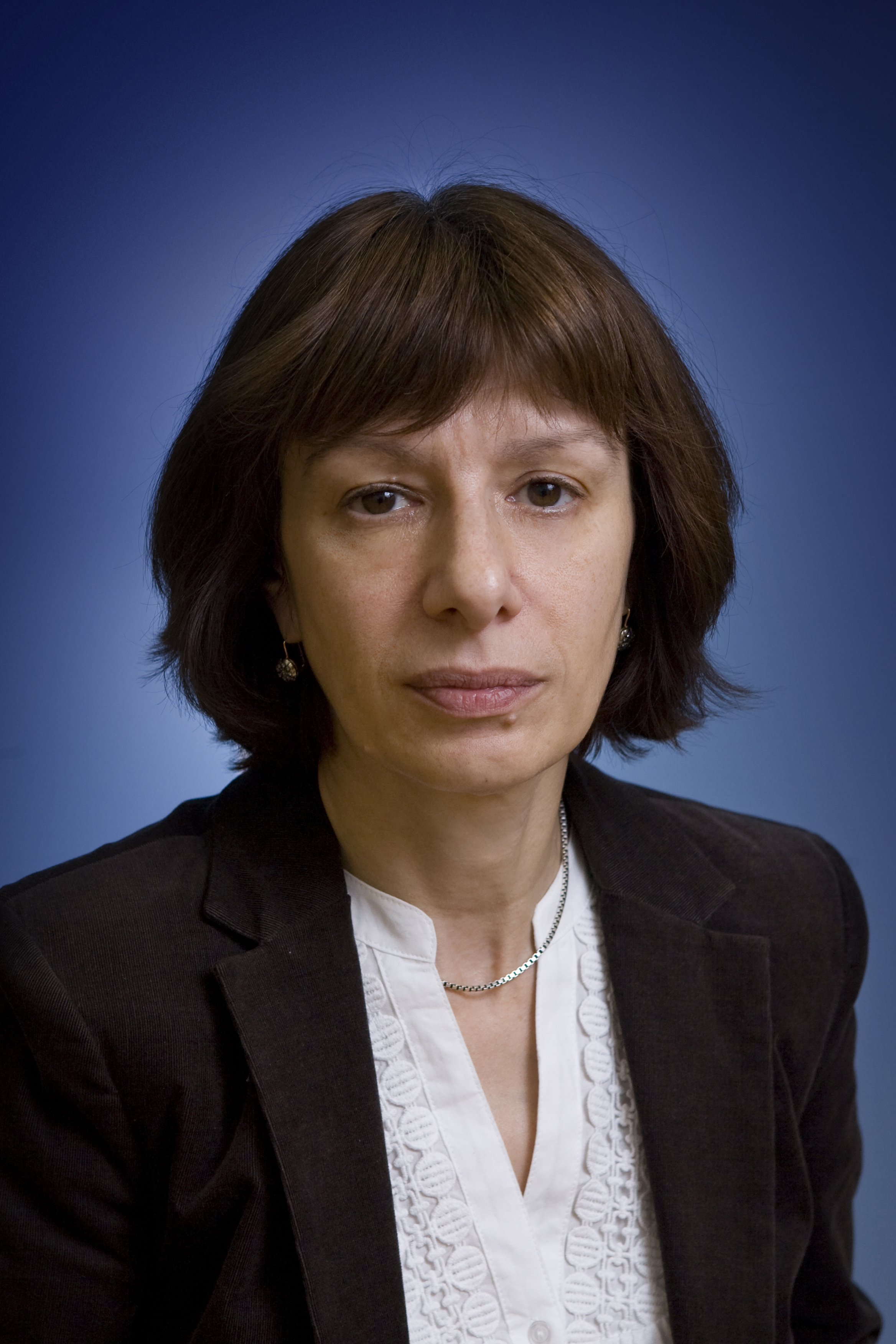
Former Scholar in Residence, Society and Regions Program, Editor in Chief, Pro et Contra, Moscow Center
Lipman was the editor in chief of the Pro et Contra journal, published by the Carnegie Moscow Center. She was also the expert of the Carnegie Moscow Center’s Society and Regions Program.
Recent Work
Maria Lipman
Maria Lipman
Carnegie does not take institutional positions on public policy issues; the views represented herein are those of the author(s) and do not necessarily reflect the views of Carnegie, its staff, or its trustees.
Russia’s maximalist demands are preventing any serious attempt at ending the war in Ukraine. To make peace a realistic prospect, Putin must recognize that diplomacy is a two-way street.
Kadri Liik
A sizeable funding shortfall looks increasingly likely to hit Ukraine in 2027. Can the Europeans, with their strained budgets and economies, come up with the cash without seizing frozen Russian assets?

Rym Momtaz, ed.
After two years of mass protests, Serbia’s student-led movement has ousted Aleksandar Vučić. Now the Student List must prove it can deliver on its promises.
Dimitar Bechev
In Germany, competing perceptions of Russia are highlighting a tension between public opinion and government policy. In the country’s east, where division is widespread, populist parties are taking advantage.
Gwendolyn Sasse
The EU can impose sanctions but struggles to enforce them without the United States. With Washington increasingly disinterested in backing European interests, the bloc must now fend for itself.
Nicu Popescu, Tiago Antunes