

In The Media
Josh Kurlantzick
{
  "authors": [
    "Josh Kurlantzick"
  ],
  "type": "legacyinthemedia",
  "centerAffiliationAll": "dc",
  "centers": [
    "Carnegie Endowment for International Peace"
  ],
  "collections": [],
  "englishNewsletterAll": "asia",
  "nonEnglishNewsletterAll": "",
  "primaryCenter": "Carnegie Endowment for International Peace",
  "programAffiliation": "AP",
  "programs": [
    "Asia"
  ],
  "projects": [],
  "regions": [
    "Southern, Eastern, and Western Africa",
    "East Asia",
    "China",
    "Southeast Asia"
  ],
  "topics": [
    "Economy",
    "Security",
    "Military"
  ]
}
Source: Getty
Over the last five years, China has laid the groundwork to become an international power. It has done so not only with high-level diplomacy but also through the tools of soft power: aid, investment, culture and skilled diplomacy. This charm offensive has proved remarkably successful. But as some countries try to model China's success, it may backfire.
Source: The Los Angeles Times

With trade booming, it has become a way station for ships delivering Chinese apples, mobile phones and other items. In the Thai city of Chiang Rai, China helped build a fancy cultural center at the local royal university and then used that to cultivate a closer relationship with Thailand's revered monarchy. Thai politicians, too, learn about China on all-expenses-paid junkets. Thousands of Chinese migrants have moved across the border to work. So many Thai businessmen are eager to learn Chinese that the local language schools cannot keep up with demand.
The north of Thailand would look familiar to people in many developing nations around the world. Over the last five years, China has laid the groundwork to become an international power. It has done so not only with high-level diplomacy but also through the tools of soft power: aid, investment, culture and skilled diplomacy. This charm offensive has proved remarkably successful. In countries where China was feared only a few years ago, Beijing's popularity has skyrocketed.
China has turned its energies, in particular, to the developing world, which has the natural resources and emerging markets it needs to fuel its growing economy. In Africa, Asia and Latin America, China woos governments with loans and aid. China recently offered $20 billion in new financing to African nations, and it has already helped support railroads in Angola and Zambia and dams in Mozambique and Sudan. In some Southeast Asian nations, China rivals Japan as the largest donor; in the Philippines, China has committed at least $500 million to a high-profile railroad project.
China promotes trade aggressively and is inking trade deals with nations from the Persian Gulf to the tip of South America. American businesses simply don't make deals abroad that directly involve U.S. government officials, lest they appear to be taking advantage of political influence. But large delegations from Chinese companies routinely join China's leaders during overseas trips, then sign deals on the spot.
China also is heavily promoting its language and culture. Beijing is funding language programs at leading universities in countries from Kenya to Australia. In Cambodia, China's Ministry of Education went so far as to directly fund or supply teachers for Chinese-language elementary and high schools. And Beijing reportedly is increasing the number of overseas students coming to Chinese universities, from about 8,000 two decades ago to about 120,000 today.
Beijing's increasingly sophisticated diplomatic corps also effectively pushes its language, culture — and interests. China keeps its diplomats focused. For example, Jiang Yuande, China's ambassador to Brazil, did tours throughout the Portuguese-speaking world before he arrived in Brasilia. "It used to be that the Chinese officials just stayed in the embassy," said one Asian diplomat. "Now they are so skilled on the ground they know more than anyone else. If someone's wife is having an affair, they know it."
The public is getting swayed too. Ten years ago, China's rising military and industrial power felt like a threat to the developing world, particularly to its neighbors. Yet today, polls in Africa, Asia and South America reveal much more warmth toward Beijing. That change has allowed, for instance, the Philippines and Vietnam to pursue joint exploration of the South China Sea with Beijing. "We can have much greater cooperation with China because we know there is public support," said one former Philippine official.
Chinese leaders present themselves as an alternative to the meddling power of the West. China, they argue, will support other countries but will not interfere in their domestic affairs; Beijing will not tell other governments what to do. This fealty to noninterference can sound reassuring in parts of the world where "intervention" seems like code for "regime change."
The charm offensive has been so successful, in fact, that some countries see China as a model for development. In Africa and Latin America, where liberal economic reforms failed to pull nations out of poverty, there's now a growing opposition to free market reforms and even to democracy. (A poll released last year by the research group Afrobarometer found that, across Africa, support for democracy had declined since 2000.) China, by contrast, has managed to slowly open its economy without freeing its political system. Officials in Vietnam, Syria, Iran and other nations have studied China's economic policies, and on visits to booming Chinese cities, African leaders marvel at China's growth. "You are an example of transformation," Madagascar President Marc Ravalomanana told Chinese leaders during a May summit in Shanghai. "We in Africa must learn from your success."
Unfortunately, many of these nations have not actually followed China's paths to success, such as investing in primary education and infrastructure. Instead, for autocratic leaders, studying the "China model" often means just mimicking China's means of political control but not the real economic reforms. In Zimbabwe, dictator Robert Mugabe has championed relations with China as a means of shunning the West, but he has done little to invest in his own people.
So in the long run, the China model may backfire. In Myanmar, Zambia and other nations, citizens worried about China's state-dominant model have launched protest movements against China's influence. "We don't want to import China's politics," said Rene Ofreneo, head of a fair trade movement in the Philippines. "We don't want to go backward."
This article was originally published in the June 23, 2007 edition of the Los Angeles Times.

Former Visiting Scholar, China Program
A special correspondent for The New Republic, a columnist for Time, and a senior correspondent for The American Prospect, Kurlantzick assesses China’s relationship with the developing world, including Southeast Asia, Africa, and Latin America.
Recent Work
Josh Kurlantzick
Carnegie does not take institutional positions on public policy issues; the views represented herein are those of the author(s) and do not necessarily reflect the views of Carnegie, its staff, or its trustees.

European states control several Overseas Countries and Territories around the world that carry strategic, economic, and environmental weight. As great powers challenge the rules-based order, defending them is a geopolitical imperative for Europe.

Marc Pierini

The hybrid warfare landscape is evolving rapidly, leaving policymakers without clear strategies. To better inform their work in addressing emerging challenges, governments must dig deeper into the underlying dynamics at play.


Raluca Csernatoni, Alicia Wanless

Mounting economic strain and battlefield losses will not necessarily make the Kremlin less dangerous. They could instead push Moscow toward a more aggressive hybrid campaign designed to test NATO’s Eastern flank, exploit allied hesitation, and fracture European resolve.

Maksym Beznosiuk

Over the past ten years, NATO has held almost as many summits as it did during the entirety of the Cold War. Are they still useful, or is it time to stop holding annual meetings?

Rym Momtaz, ed.
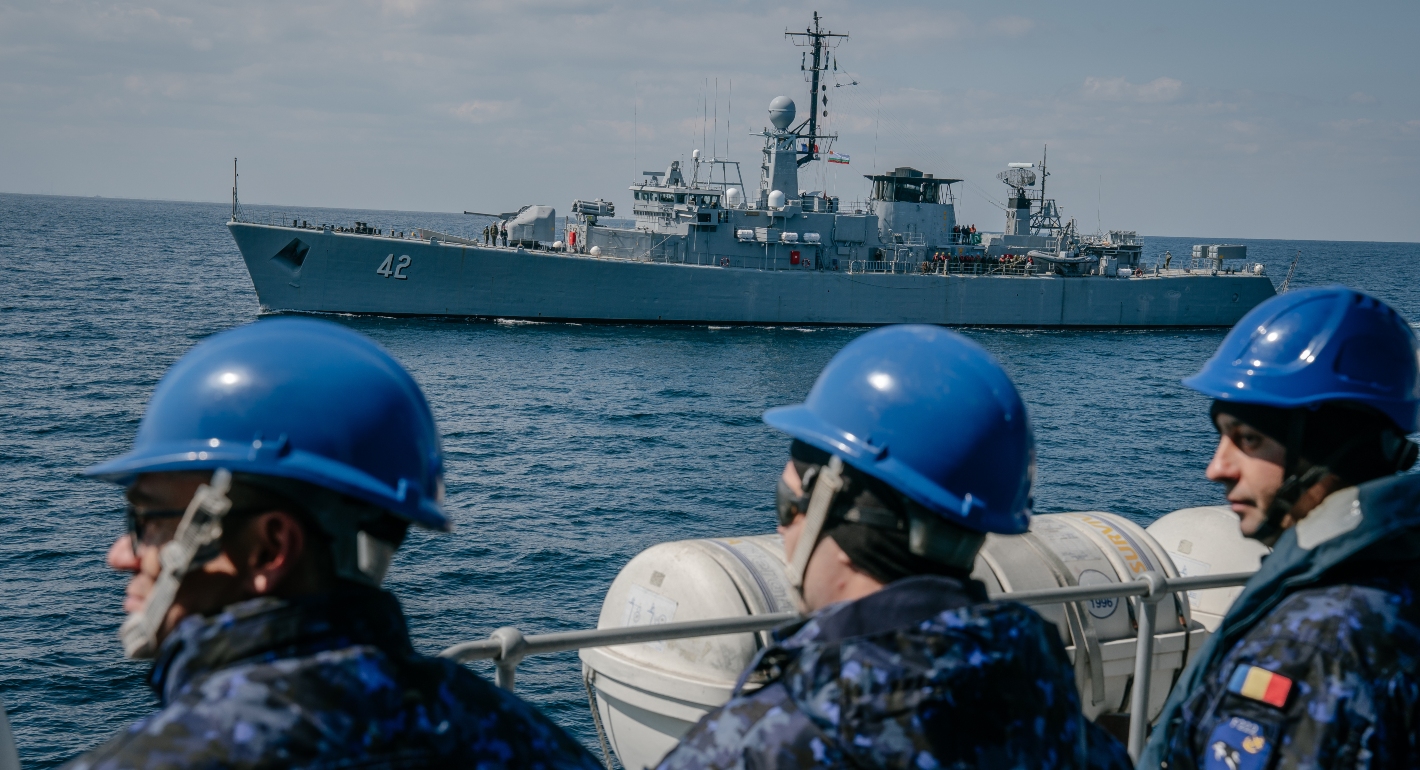
As Russia's war on Ukraine drags on, NATO is expanding its footprint in the Black Sea. Turkey, Romania, and Bulgaria are upgrading their fleets and deepening trilateral cooperation.

Dimitar Bechev