• Research
  • Strategic Europe
  • About
  • Experts
Carnegie Europe logoCarnegie lettermark logo
EUUkraine
  • Donate
{
  "authors": [],
  "type": "pressRelease",
  "centerAffiliationAll": "dc",
  "centers": [
    "Carnegie Endowment for International Peace"
  ],
  "collections": [],
  "englishNewsletterAll": "ctw",
  "nonEnglishNewsletterAll": "",
  "primaryCenter": "Carnegie Endowment for International Peace",
  "programAffiliation": "russia",
  "programs": [
    "Russia and Eurasia"
  ],
  "projects": [],
  "regions": [
    "Caucasus",
    "Russia"
  ],
  "topics": [
    "Political Reform",
    "Democracy",
    "Economy",
    "Foreign Policy"
  ]
}
REQUIRED IMAGE

REQUIRED IMAGE

Press Release

Press Release: Russia—Lost in Transition: A New Book by Lilia Shevtsova

Link Copied
Published on Oct 10, 2007
WASHINGTON, Oct 10—President Vladimir Putin, constitutionally barred from running for a third presidential term, says that he has not ruled out running for prime minister, triggering widespread speculation about his intentions. In the run up to Russia’s presidential and parliamentary elections, a new book from the Carnegie Moscow Center’s Lilia Shevtsova examines the legacies of Presidents Putin and Boris Yeltsin and how they will shape the upcoming electoral cycle and Russia’s immediate political future.Sixteen years after the dissolution of the Soviet Union, Russia has startled the international community with its assertive rhetoric and economic might.  In Russia—Lost In Transition:  The Yeltsin and Putin Legacies, Shevtsova contends that Russia’s resurgence in the global arena disguises political stagnation and failure to modernize. She argues that the political regime and the type of capitalism that have been adopted over the last fifteen years are not sustainable in the long term and are unlikely to promote further economic growth and social improvements.

Key Conclusions:

  • To avoid becoming a lame duck president, Putin will seek to perpetuate the uncertainty and suspense around the election and his own political future. Putin’s recent reshuffling of his cabinet and the appointment of a relatively unknown prime minister demonstrated his need to prove he is still in charge. A new struggle for control and influence over the incoming political regime is likely to emerge.
  • Russia’s next leader must address the pressing social problems plaguing the nation, notably population decline and economic disparity. While anti-Western rhetoric has distracted the public, Russia’s shattered social infrastructure threatens economic and social stability.
  • Russia’s recent assertiveness in foreign policy has greatly mobilized the public, and the ruling elite would like Russia to simultaneously be both friend and foe to the West.  Potential domestic crises in Russia could result in a more nationalist and authoritarian regime that eschews cooperation with the West and purges moderates from the Kremlin.
  • To create a fertile environment for Russia’s further economic and political transformation, Russia and the West must recognize that they have common interests rooted in shared values. Western policy towards Russia should avoid isolation at all costs and should be based on understanding, strategy, and engagement.
    • In particular, Western nations must understand Russia’s unique dilemmas and choices;
    • develop a coherent strategy addressing the Kremlin leadership, the political class, and society;
    • and engage with Russia on areas where their interests overlap—counter-proliferation, combating international terrorism, energy security, and climate change—but not at the expense of acquiescing to the crackdown on democracy.

“Perhaps the greatest challenge for transforming Russia will be the need for its leadership to start the new reforms, of which the most radical will be dividing state power among independent institutions.  Will a new leader be prepared to embark on political self-castration and hand over some of his power to other institutions? This is Russia’s metaproblem for which no solution was found under Yeltsin and Putin,” concludes Shevtsova.

###

Notes:

  • Lilia Shevtsova is a senior associate at the Carnegie Moscow Center and leading expert on Russian domestic and foreign policy.  As the co-chair of the Russian Domestic Politics and Political Institutions Project, Shevtsova specializes in Russian presidential politics and elections.
  • Visit www.carnegieendowment.org/publications for ordering information.
    October 2007, 368 pp.
    Paper: 0-87003-236-3 $19.95
    Cloth: 0-87003-237-0, $49.95
  • The Carnegie Russia and Eurasia Program has been a leader in its field since the end of the Cold War. The senior research team comprises an unparalleled group of experts in the United States and Russia on Eurasian security and development, economic and social issues, governance and the rule of law, as well as security issues such as strategic nuclear weapons and nuclear nonproliferation. The Program has adapted to changing policy priorities during the region’s dramatic evolution in the past fourteen years—from the collapse of the Soviet Union, through the early phase of post-Communist transitions, into the post-9/11 era, and the current period under President Putin.
  • The Carnegie Moscow Center was established in 1993 and accommodates foreign and Russian researchers collaborating with Carnegie’s global network of scholars on a variety of topical areas and policy-relevant projects. Carnegie Moscow Center Associates work independently on their own research in areas covering a broad range of contemporary policy issues—military, political, and economic. 
Political ReformDemocracyEconomyForeign PolicyCaucasusRussia

Carnegie does not take institutional positions on public policy issues; the views represented herein are those of the author(s) and do not necessarily reflect the views of Carnegie, its staff, or its trustees.
More Work from Carnegie Europe

  • Commentary
    Strategic Europe
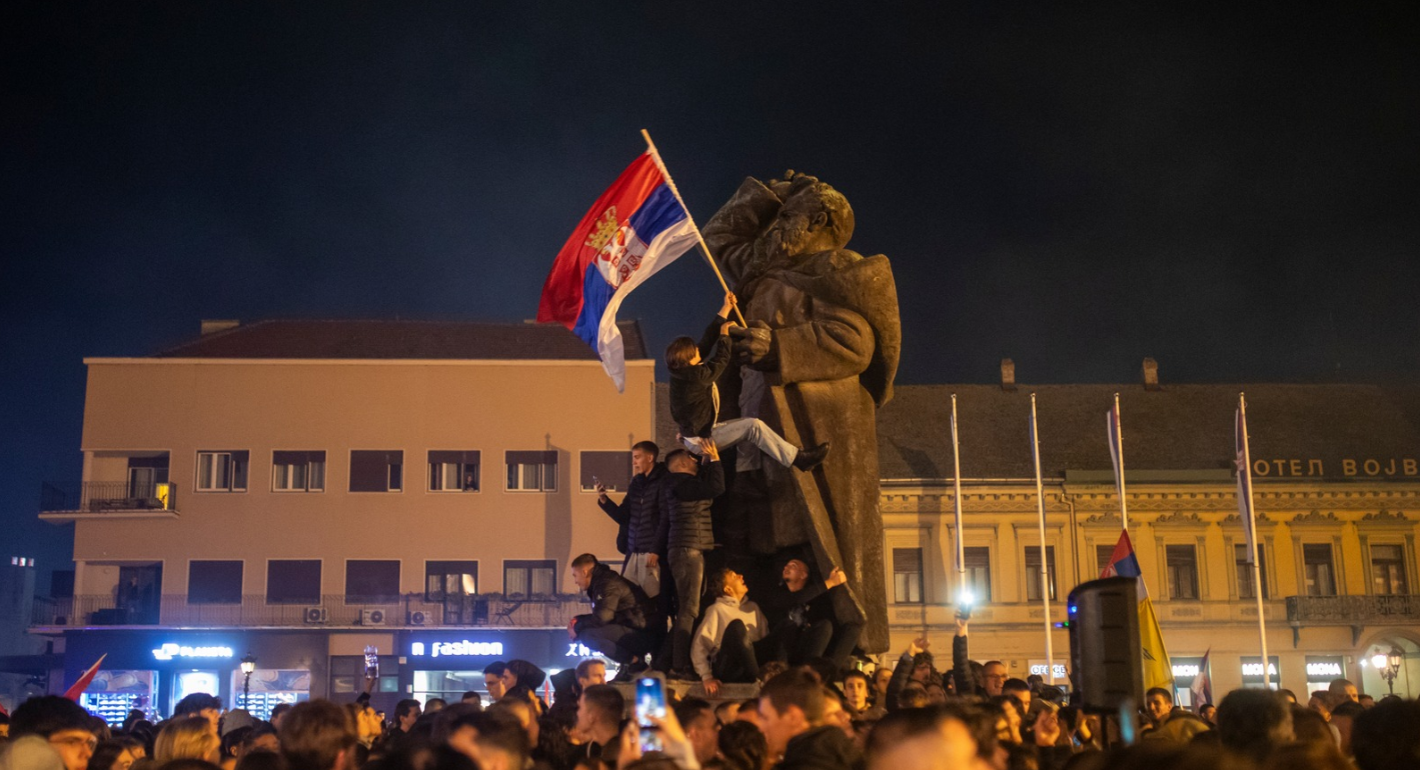
    A New Dawn for Democracy in Serbia

    Excitement is in the air following Aleksandar Vučić’s defeat in Serbia. To build a truly democratic state, the movement that unseated the former president must learn from the mistakes of the past.
      Ivan Vejvoda
  • Commentary
    Strategic Europe
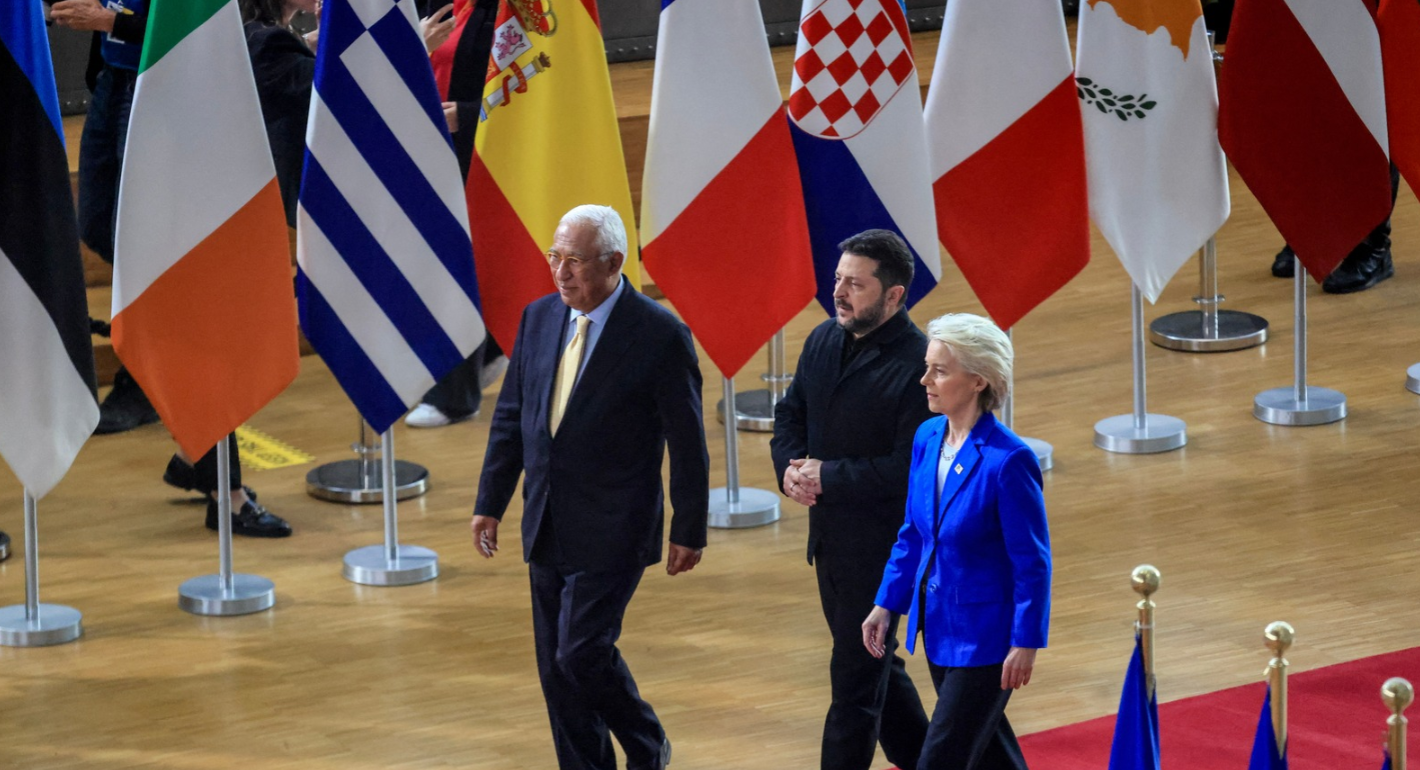
    Europe Needs its own Sanctions-Enforcement Muscle

    The EU can impose sanctions but struggles to enforce them without the United States. With Washington increasingly disinterested in backing European interests, the bloc must now fend for itself.
      Nicu Popescu, Tiago Antunes

  • Commentary
    Strategic Europe
    Containing Escalation in the Black Sea

    Russia is testing the waters of NATO’s mutual defense clause. What do strikes in Romanian territorial waters mean for the alliance’s posture toward Moscow?

      Dimitar Bechev
  • Commentary
    Strategic Europe
    Taking the Pulse: Does the EU Have a France Problem?

    With its public finances in shambles, the far right polling at 35 percent ahead of the 2027 presidential election, and a growing protest movement, is France’s crisis a threat to the EU’s geopolitical awakening?

      • Rym Momtaz

      Rym Momtaz, ed.

  • Commentary
    Strategic Europe
    Trump Blindsides Ukraine But Gives Europe an Opportunity

    Ahead of a tough winter for Ukraine, Donald Trump’s swing back toward Russia bodes ill. But instead of panicking, Kyiv’s European allies are focusing on action.

      • Rym Momtaz

      Rym Momtaz

Get more news and analysis from
Carnegie Europe
Carnegie Europe logo, white
Rue du Congrès, 151000 Brussels, Belgium
  • Research
  • Strategic Europe
  • About
  • Experts
  • Projects
  • Events
  • Contact
  • Careers
  • Privacy
  • For Media
  • Gender Equality Plan
Get more news and analysis from
Carnegie Europe
© 2026 Carnegie Endowment for International Peace. All rights reserved.